Your business deserves a security strategy that is as sophisticated as the risks you face. Instead of juggling disconnected cameras, card readers, and alarms, you need a single integrated system that actually works together. That’s where a specialized team of Commercial Security System Integrators becomes essential. The right partner designs your security around your building, your workflows, and your growth plans. With a smart integration strategy and careful infrastructure planning, you protect people, property, and reputation while gaining better control and peace of mind.
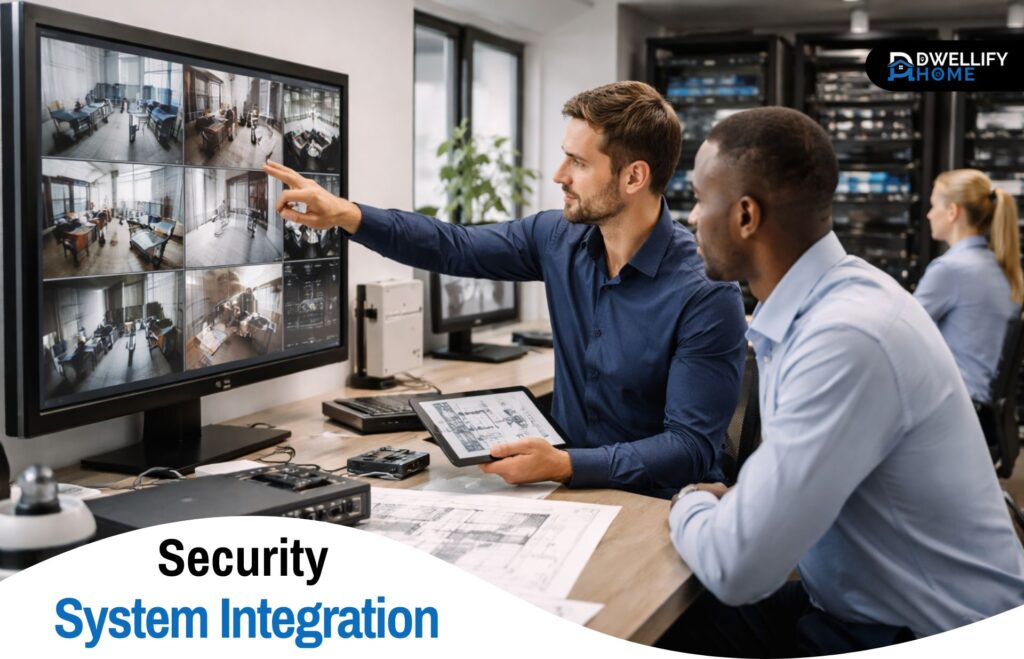
System integration combining surveillance and access control technologies
Modern commercial security is no longer about buying devices; it’s about making all of them work as one. When surveillance and access control are integrated, you see exactly who entered, where they went, and what happened, all in a single view. This reduces blind spots and eliminates gaps that intruders or internal threats can exploit. A dedicated integration partner builds this unified experience for you, instead of leaving you to figure it out alone.
Why this level of integration matters
- Link door events directly with video for instant visual verification.
- Quickly investigate incidents with synchronized timelines instead of separate systems.
- Reduce manual checks and errors through automated rules and alerts.
- Give your team a simpler, more intuitive interface so they actually use the system to its full potential.
How expert integrators add value
- They select hardware and software that are built to integrate, not just coexist.
- They design secure network architecture that keeps data protected and accessible.
- They customize user permissions and access levels to match your org chart and policies.
- They train your staff so your investment delivers real, daily operational value.
Infrastructure planning for multi-entry commercial environments
Multi-entry facilities are naturally complex, with employees, visitors, vendors, and deliveries all using different doors at different times. Without solid infrastructure planning, you end up with bottlenecks, unsecured access points, or confusing layouts for staff and guests. A specialized integration team maps your building flows first, then designs the security backbone around them. This ensures each entry point is protected, monitored, and aligned with how your business truly operates.
Key elements of smart infrastructure planning
- Door hardware, readers, and locks that match traffic levels and risk at each entrance.
- Network cabling and power redundancy so critical doors and cameras stay online.
- Visitor and delivery management that integrates with your existing access rules.
- Clear zoning between public, semi-public, and high-security areas.
What a professional site assessment includes
- Detailed walkthrough of all entry and exit points, including loading docks and emergency exits.
- Identification of weak spots where visibility, control, or response is limited.
- Recommendations for camera placement and access control devices that cover real-world scenarios.
- A phased roadmap so upgrades can be completed with minimal disruption to daily operations.
Scalability considerations for expanding business operations
Your business will change—new staff, new sites, new regulations—and your security must keep up. A system that works today but can’t scale tomorrow becomes expensive to replace. Commercial Security System Integrators plan for growth from day one, choosing platforms that can expand without forcing a full redesign. This lets you Explore More options over time, adding doors, cameras, and features when you’re ready.
What makes a system truly scalable
- Modular controllers that can add users, zones, and doors without a full overhaul.
- Software licensing that supports more devices and locations as you grow.
- Cloud or hybrid architectures that simplify multi-site management.
- Open APIs that allow new integrations, like HR systems or visitor platforms.
How scalable design protects your investment
- Avoids the cost and downtime of ripping out systems every few years.
- Keeps your teams on a familiar interface even as functions expand.
- Allows pilots at one site before rolling out to multiple locations.
- Adapts quickly to changing compliance or insurance requirements.
Real-time monitoring capabilities supporting rapid response
Incidents unfold in minutes, sometimes seconds, so delayed information is almost as bad as no information. Real-time monitoring gives your team the visibility to act before a situation escalates. Proper integration delivers instant alerts when doors are forced, access is denied repeatedly, or suspicious activity is detected on camera. With a well-designed system, your staff can respond with confidence instead of guesswork.
Benefits of real-time visibility
- See live video linked to the exact door or zone where an alert occurs.
- Receive prioritized notifications on desktops, mobile devices, or monitoring stations.
- Trigger automated actions like lockdowns or escalation workflows.
- Shorten incident response times and reduce potential loss or damage.
Options for monitoring and response
- On-site security operations centers built around unified dashboards.
- Remote monitoring support to extend coverage after hours or across locations.
- Custom alert rules tailored to your risk profile and operating hours.
- Reporting tools that help you analyze patterns and refine security policies.
Compatibility requirements across different security components
Many businesses inherit a patchwork of cameras, card readers, alarms, and intercoms from previous vendors or expansions. Without careful compatibility planning, every new device becomes a headache. The right integration partner evaluates what you already have, what can be reused, and what must be upgraded. This protects your budget while ensuring all components work together reliably.
Why compatibility should never be an afterthought
- Mismatched equipment can cause integration failures and costly workarounds.
- Proprietary systems can trap you with one vendor and limit future options.
- Software updates may break connections if compatibility isn’t carefully managed.
- Inconsistent performance erodes staff trust in the system.
How experts manage compatibility for you
- Conduct a full inventory of current hardware, firmware, and software versions.
- Recommend open-platform solutions that support multiple brands and standards.
- Test integrations in a controlled environment before deploying business-wide.
- Document all configurations so future upgrades stay smooth and predictable.
Maintenance planning ensuring consistent system performance
A security system is only as strong as its day-to-day reliability. Without regular maintenance, you risk cameras failing quietly, doors not locking properly, or software falling behind on critical updates. Planned maintenance keeps everything stable, compliant, and ready when you need it most. Professional integrators build maintenance into the project from the start, not as an afterthought.
Core elements of an effective maintenance program
- Scheduled inspections of cameras, readers, door hardware, and network devices.
- Firmware and software updates to close vulnerabilities and add features.
- Backup and recovery plans for configurations and critical data.
- Performance checks to confirm that alerts, reports, and automations still work as intended.
Service models that protect your uptime
- Service-level agreements (SLAs) with clear response times and escalation paths.
- Remote diagnostics to fix many issues without site visits.
- Proactive replacement plans for aging or end-of-life equipment.
- Clear communication so your team always knows system health and upcoming work.
Risk reduction through centralized security management
Disjointed systems create risk—gaps in visibility, inconsistent rules, and slow responses. Centralized management brings everything together: access rights, video feeds, alarms, and reporting, all from one place. This not only strengthens security but also simplifies daily operations for your team. A skilled integration partner designs this central hub around how your organization actually works.
Advantages of a centralized approach
- One login and one interface for managing multiple locations and systems.
- Consistent access policies across departments, sites, and user groups.
- Faster investigations with all data—video, logs, events—in one timeline.
- Cleaner audit trails for compliance, insurance, and internal reviews.
Take the next step to secure your business
If you’re ready to Explore More than basic locks and standalone cameras, partnering with experienced Commercial Security System Integrators is the next logical move. They handle the complexity of design, infrastructure, integration, and maintenance so you get a secure, scalable, and easy-to-manage system. Reach out to discuss your facilities, your risks, and your goals, and get a tailored integration plan that fits your budget and growth. A short conversation today can help protect your business for years to come.
Before you go, be sure to visit some of our other helpful articles for more tips and ideas. Please be aware that this article may contain affiliate or sponsored links. If you make a purchase through these links, we may receive a small commission, which helps us support and expand our website Dwellify Home. The opinions expressed in this article are solely those of the author and do not necessarily represent the official views of this website.

I’m Bilal Hassan, the founder of Dwellify Home. With 6 years of practical experience in home remodeling, interior design, and décor consulting, I help people transform their spaces with simple, effective, and affordable ideas. I specialize in offering real-world tips, step-by-step guides, and product recommendations that make home improvement easier and more enjoyable. My mission is to empower homeowners and renters to create functional, beautiful spaces—one thoughtful update at a time.