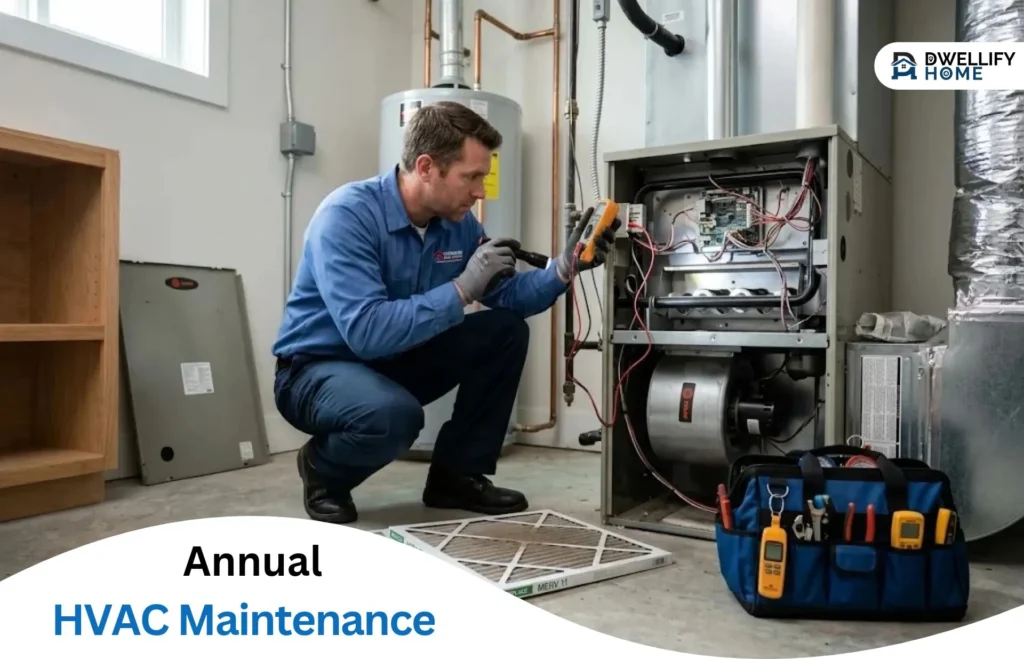
Understanding Annual HVAC Maintenance and Service Frequency
When we talk about HVAC maintenance, we are essentially discussing a physical examination for your home’s climate control system. Much like a car requires oil changes to prevent engine seizure, your furnace and air conditioner rely on routine inspections to function at peak capacity. These visits are designed to catch minor issues—such as a loose electrical connection or a slightly dirty coil—before they evolve into catastrophic failures that leave your home uncomfortable during extreme weather.
The primary goal of these inspections is to ensure safety and efficiency. During a professional visit, technicians perform a comprehensive sweep of your system’s internal components. This includes testing safety switches, inspecting heat exchangers for cracks, and verifying that the system is not drawing more power than necessary to maintain your desired temperature. By addressing seasonal wear and tear, you prevent the system from “working harder” to compensate for accumulated dust or mechanical drag.
Core Tasks Included in Professional Tune-Ups
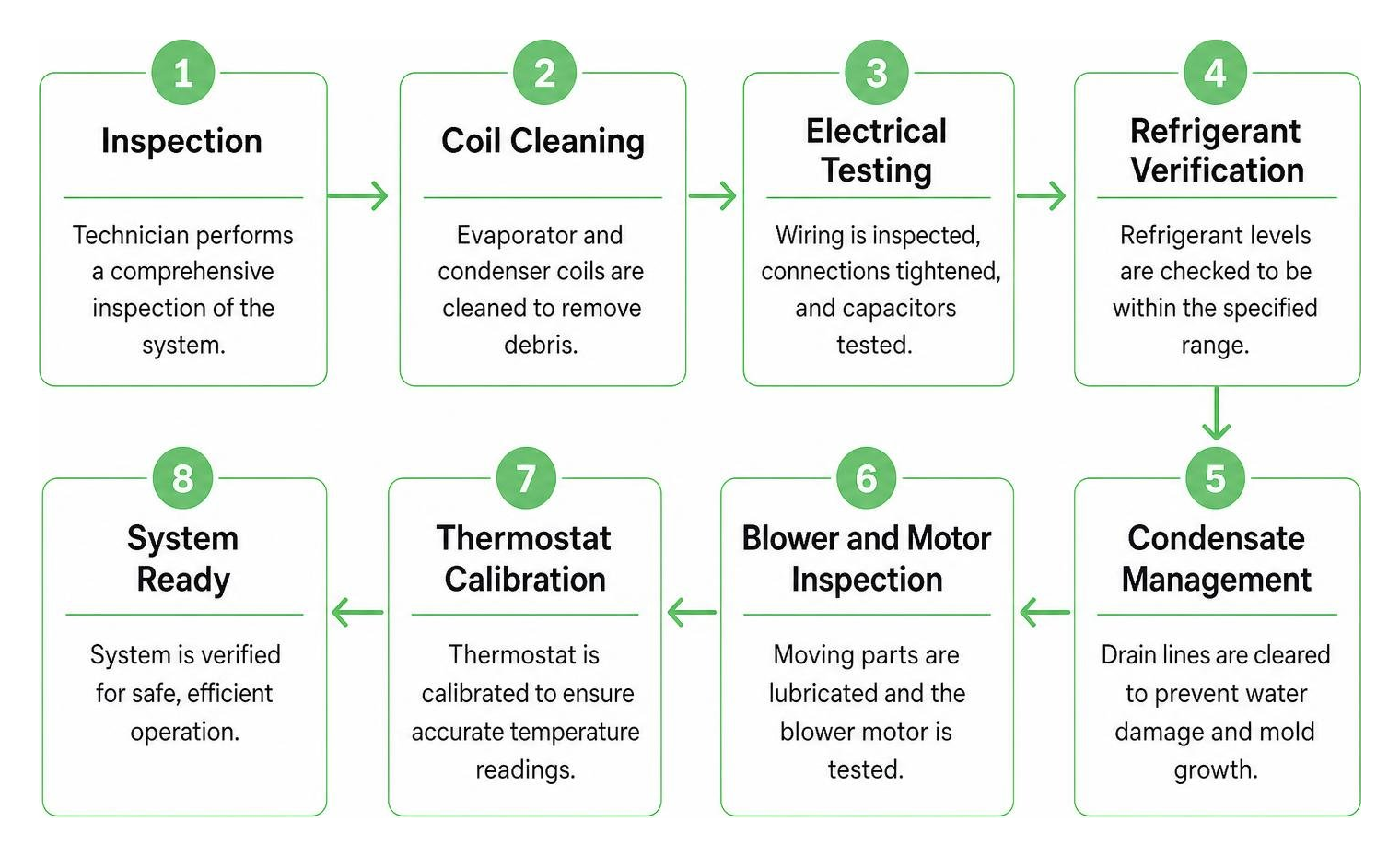
A standard professional tune-up is far more than a simple cleaning. It is a systematic verification of every critical system function. While the exact checklist varies by manufacturer and system type, most comprehensive visits include:
- Coil Cleaning: Both the evaporator and condenser coils are cleaned to remove debris, which restores heat transfer efficiency.
- Electrical Testing: Technicians inspect wiring, tighten connections, and test capacitors to prevent fire hazards and motor burnout.
- Refrigerant Verification: Ensuring refrigerant levels are within the manufacturer’s specified range is vital for both cooling capacity and compressor health.
- Condensate Management: Clearing drain lines prevents water damage and the growth of mold or algae within the unit.
- Blower and Motor Inspection: Lubricating moving parts and testing the blower motor ensures consistent airflow throughout your home.
- Thermostat Calibration: Ensuring your “brain” of the system is reading temperatures accurately prevents the unit from short-cycling.
Seasonal Timing: Annual vs. Biannual Service Visits
The frequency of your maintenance depends largely on your local climate and the type of equipment you own. For many homeowners, a biannual approach—one visit in the spring for cooling and one in the fall for heating—is the gold standard. This schedule ensures that your system is prepared for the specific stresses of the upcoming season.
If you live in a region with mild weather or possess a newer, high-efficiency system, a single annual visit may suffice. However, if you rely on a heat pump that works year-round, or if you live in an area with extreme temperature fluctuations, twice-yearly service is highly recommended. Scheduling these visits during the “shoulder months”—typically March/April or September/October—often allows you to secure an appointment before the peak rush when technicians are in highest demand.
The Financial ROI: Energy Savings, Lifespan, and Repairs
The Return on Investment (ROI) for HVAC maintenance is often measured in “loss prevention.” While it is difficult to quantify exactly how much money you save by not having a breakdown, we can look at the data regarding system efficiency. A clean, well-tuned system uses significantly less electricity to move the same amount of air. When coils are caked in dust or refrigerant levels are low, the system must run longer and harder to reach your set temperature, directly increasing your utility bills.
Beyond energy bills, the most significant financial benefit is the extension of the system’s lifespan. A neglected unit may fail in as little as 8 to 12 years, whereas a well-maintained system can reliably last 15 to 20 years. By investing in professional care, you are essentially deferring the massive cost of a full system replacement—often a five-figure expense—by several years.
How Annual HVAC Maintenance Protects Equipment Lifespan
Components like compressors and heat exchangers are the “heart” of your HVAC system, and they are also the most expensive to replace. These parts are sensitive to heat and mechanical stress. When a system is dirty or poorly calibrated, these components operate at higher temperatures and pressures than intended, leading to premature fatigue. By keeping the system clean and properly lubricated, you reduce that stress. For those interested in the long-term mechanics of this process, our guide on annual HVAC maintenance provides a deeper look at how preventive care preserves these high-value parts.
Warranty Compliance and Loss Prevention
One often-overlooked aspect of maintenance is the “paper trail.” Most major manufacturers provide a 10-year parts warranty, but these warranties often come with a caveat: the homeowner must be able to provide proof of regular professional maintenance. If a major component fails and you cannot produce records of annual service, the manufacturer may deny your claim, leaving you to foot the entire bill. Treating maintenance as a form of insurance—a way to protect your warranty and document the health of your equipment—is a smart financial strategy for any homeowner.
Service Contracts vs. Pay-As-You-Go Tune-Ups
Deciding between a recurring maintenance contract and paying for individual tune-ups is a common dilemma. Maintenance contracts often bundle two visits per year with benefits like priority scheduling, waived diagnostic fees, and discounts on repairs. For busy families or those with older equipment, the “priority” aspect is often the most valuable feature, as it ensures you aren’t waiting in a long queue during the hottest week of the summer.
Feature Maintenance Contract Pay-As-You-Go Cost Fixed annual/monthly fee Varies per visit Scheduling Often includes priority status Subject to current availability Documentation Automatically tracked Must keep your own records Repair Discounts Usually included Rare Emergency Fees Often waived or discounted Typically full price DIY Care vs. Professional Annual HVAC Maintenance
While professionals should handle the complex internal mechanics, there are several tasks homeowners can perform to support the system’s health. Changing your air filters every 1 to 3 months is the single most effective thing you can do to protect your system. Additionally, keeping the outdoor unit clear of debris, grass clippings, and overgrown shrubs ensures proper airflow. However, tasks like checking refrigerant, testing electrical voltages, or opening sealed panels should be left to EPA-certified technicians who have the training to perform these tasks safely.
When Maintenance Plans Are Worth the Investment
Maintenance plans are generally most valuable for:
- Older Systems: If your unit is over 10 years old, it is more prone to failure, and a plan acts as a safety net.
- Large Properties: Managing multiple units or complex systems makes professional oversight nearly essential.
- Extreme Climates: If your system is your primary defense against brutal winters or sweltering summers, the “priority” service is worth the cost.
- Rental Properties: If you are a landlord, a maintenance plan ensures your investment is protected and your tenants remain comfortable without you needing to manage the logistics of every minor issue.
Key Signs Your System Needs Immediate Professional Attention
Even with a regular maintenance schedule, you should stay alert for signs that your system needs a check-up. If you notice any of the following, contact a professional immediately:
- Short Cycling: The system turns on and off rapidly without completing a full cycle.
- Airflow Restrictions: Weak air coming from vents, often indicating a dirty filter or a blockage.
- Uneven Temperatures: Some rooms are significantly hotter or colder than others.
- Unusual Noises: Grinding, squealing, or banging sounds often indicate mechanical failure.
- Persistent Odors: Musty or burning smells can indicate mold or electrical issues.
Urgent Warning Signs:
- Visible ice on the indoor or outdoor coils.
- Water leaking near the indoor unit.
- The system fails to turn on entirely.
- An unexplained spike in your monthly utility bill.
Frequently Asked Questions About HVAC Maintenance
How much does professional HVAC service typically cost?
Costs vary based on your location, the complexity of your system, and the provider. Generally, you can expect to pay a set fee for a seasonal tune-up. While maintenance contracts have an upfront cost, they often pay for themselves through the prevention of a single emergency repair.
Can skipping annual service void my manufacturer warranty?
Yes, it is possible. Many manufacturers include a clause in their warranty documentation requiring evidence of annual maintenance. Always keep your service receipts or digital records in a safe place to ensure you can validate any future warranty claims.
How often should HVAC air filters be replaced?
Most filters should be replaced every 1 to 3 months. If you have pets, allergies, or live in a dusty area, you may need to change them more frequently. A clean filter is the foundation of a healthy, efficient HVAC system.
Conclusion
Is annual HVAC maintenance worth it? For the vast majority of homeowners, the answer is a resounding yes. It is not just about cleaning coils; it is about ensuring your home remains a sanctuary of comfort, protecting your equipment’s longevity, and maintaining the financial safety net of your manufacturer’s warranty. By viewing maintenance as a proactive investment rather than an optional expense, you gain peace of mind and significantly reduce the likelihood of a mid-season breakdown. Whether you opt for a comprehensive service contract or a seasonal tune-up, the consistency of professional care is the best way to ensure your system serves you well for years to come.
Your support makes it possible for us to continue sharing useful articles and resources. Some links in this content may be affiliate or sponsored links through which Dwellifyhome.com may earn a commission.