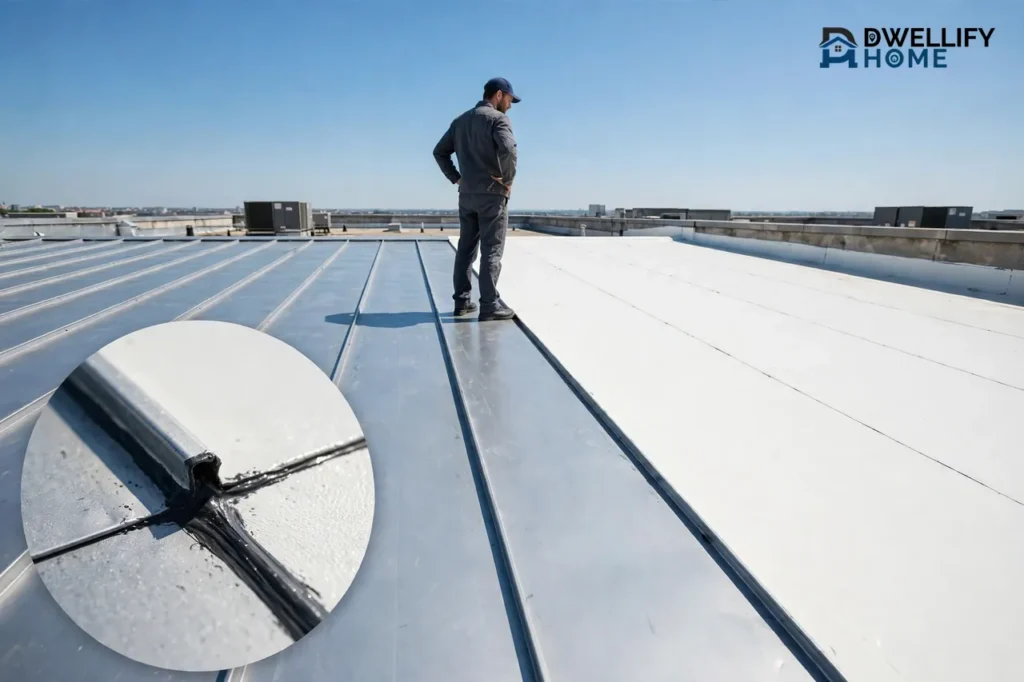
Before you purchase a single roll of insulation or a new high-efficiency heat pump, you need a clear picture of how your home currently performs. Every house has unique characteristics—its orientation, the quality of its construction, and the aging of its materials all dictate how it handles heat gain and loss. A scientific assessment takes the guesswork out of the process, allowing you to prioritize the projects that will yield the highest return on your investment.
The Role of Professional Energy Assessments
A professional assessment is the foundation of any successful energy-saving project. While you can perform a basic walk-through to look for obvious gaps, a professional technician uses specialized equipment to diagnose hidden problems.

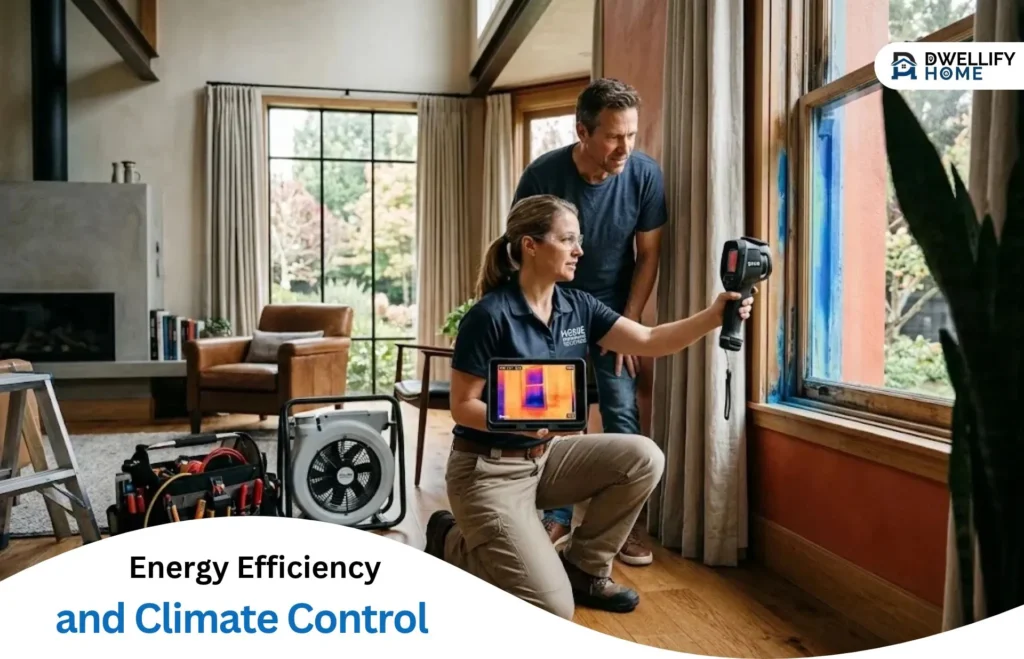
During a visit from a team providing comprehensive energy audits, they will typically use a blower-door test. This involves placing a powerful fan into an exterior door frame to depressurize the house. By measuring the airflow, they can determine the exact rate of air leakage, often expressed as air changes per hour. This data tells you exactly how “leaky” your home is and where those leaks are located. They also use thermal imaging cameras to visualize where heat is entering your home, highlighting areas where insulation may be missing or compressed. This diagnostic process is essential because it prevents you from spending money on a high-capacity HVAC system that is only working harder to compensate for an envelope that leaks like a sieve.
Prioritizing Home Energy Efficiency Upgrades with a Whole-House Approach
The “envelope-first” strategy is the golden rule of home performance. Your home’s envelope—the walls, roof, windows, and foundation—is the primary barrier between your living space and the outdoor environment. If this barrier is compromised, your heating and cooling systems are forced to work against a constant tide of outside air.
When you adopt a whole-house approach, you treat your home as an ecosystem. For instance, if you decide to seal your attic floor and add significant insulation, you are effectively reducing the cooling load on your home. This might mean that when your current air conditioner eventually fails, you can install a smaller, less expensive unit because the house no longer requires as much power to keep cool. This sequence of events—sealing, insulating, then upgrading mechanicals—is the most cost-effective way to manage your home’s energy footprint.
High-Impact Home Energy Efficiency Upgrades for Year-Round Comfort
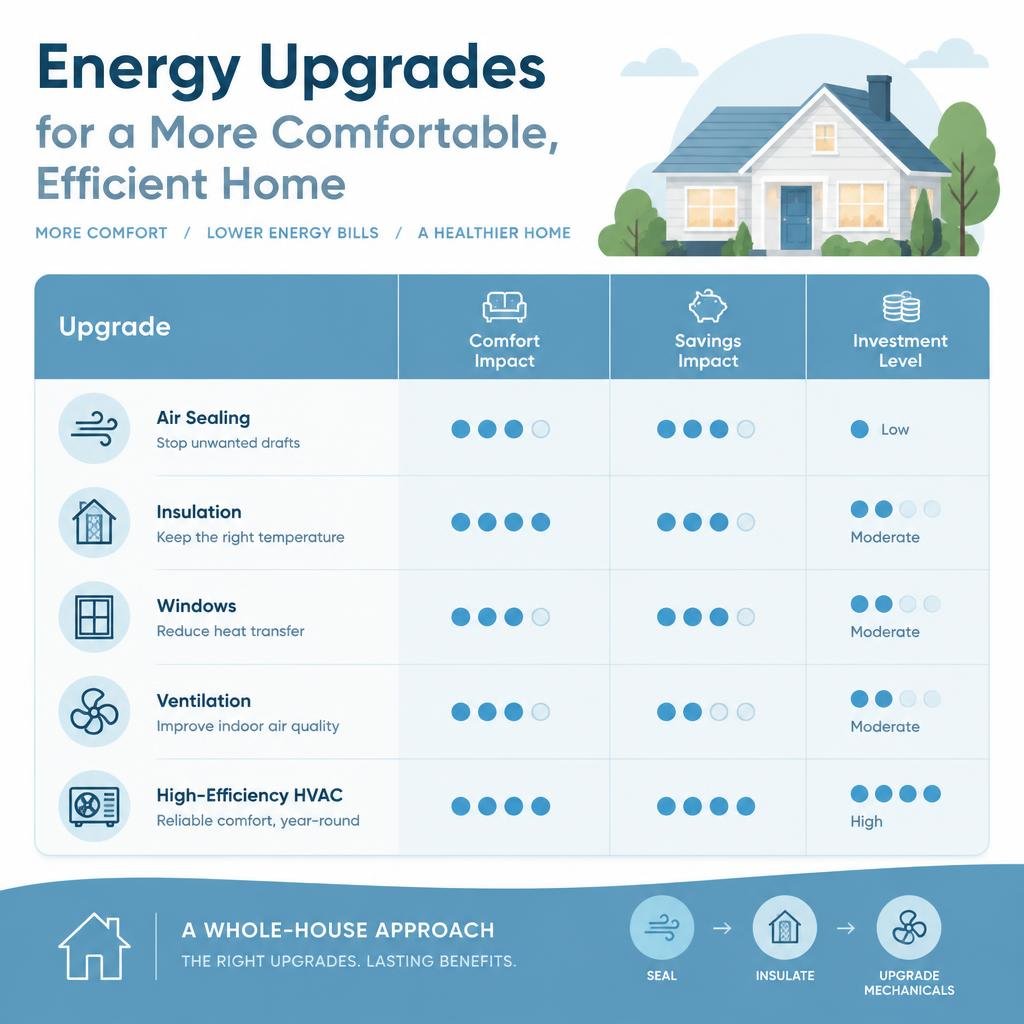
When selecting upgrades, it is helpful to categorize them by their impact. Some, like air sealing, offer immediate, low-cost improvements to comfort. Others, like high-efficiency HVAC systems, represent a larger capital investment but offer long-term operational savings.
Building Envelope: Air Sealing and Insulation
In our humid climate, air sealing is paramount. Air leaks don’t just bring in heat; they bring in moisture, which can lead to mold and structural issues. Once a home is properly sealed, the next step is to ensure your insulation is performing at its peak.
For many Florida homes, the attic is the primary source of heat gain. By utilizing professional spray-foam insulation services, you can create a seamless thermal and air barrier that traditional fiberglass batts simply cannot match. Spray foam expands to fill every nook and cranny, including the difficult-to-reach areas around electrical penetrations and rim joists. This prevents the “stack effect,” where hot air is pulled into the home through the ceiling, significantly reducing the load on your cooling system.
Efficient HVAC and Heat Pump Systems
Modern heat pump technology has revolutionized cooling and heating. Unlike older, less efficient systems, modern heat pumps use variable-speed compressors that adjust their output based on the exact needs of the home. This leads to more consistent temperatures and lower energy consumption.
When upgrading, look for high SEER2 (Seasonal Energy Efficiency Ratio) ratings. A higher rating indicates a more efficient system that can handle the humidity of the Southeast with ease. Always ensure your ductwork is inspected during the installation process. Even the most efficient heat pump will lose 20 to 30 percent of its effectiveness if the air is leaking out of poorly sealed ducts in your attic or crawl space. Using professional-grade mastic sealant on all joints is a critical step to ensure that the air you pay to cool actually makes it into your living rooms.
High-Performance Water Heating and Windows
Water heating is often the second largest energy expense in a home. Transitioning to a heat pump water heater can reduce your water heating energy usage by up to 70 percent compared to a standard electric model. These units work by pulling heat from the surrounding air and transferring it into the tank, which also has the added benefit of dehumidifying the space where the heater is located.
Windows also play a vital role in thermal performance. If you are not ready for a full window replacement, consider high-quality storm windows or low-emissivity (Low-E) window films. These can significantly reduce the amount of solar heat gain entering your home during the peak of summer, keeping rooms cooler without forcing your air conditioner to run constantly.
Financial Incentives, Tax Credits, and Rebate Programs
The federal government, through the Energy Efficient Home Improvement Credit, provides substantial financial support for these upgrades. This is a powerful tool for homeowners looking to offset the costs of making their homes more resilient.
Federal Tax Credits and Incentives for Home Energy Efficiency Upgrades
The current tax credit allows you to claim 30 percent of the cost of qualified energy-efficient improvements, up to a maximum of 3,200 dollars per year. This credit is split into two main buckets:
- Energy Property: You can claim up to 2,000 dollars annually for heat pumps, heat pump water heaters, and biomass stoves.
- Envelope Improvements: You can claim up to 1,200 dollars annually for insulation, air sealing, energy-efficient exterior doors, and windows.
It is vital to retain all documentation, including your receipts and the manufacturer’s certification statement, which proves the product meets the necessary energy efficiency standards. You will file this credit using Form 5695 when you submit your annual federal income tax return.
Utility Rebates, State Programs, and Weatherization Assistance
Beyond federal tax credits, many local utility providers offer their own rebate programs. Some utilities provide point-of-sale discounts on smart thermostats or high-efficiency appliances, while others offer cash rebates for professional insulation or duct sealing projects. We recommend checking your local utility’s website or contacting them directly to see if they offer an energy audit program, which can sometimes be provided at little to no cost to the homeowner.
Low-Cost Maintenance and Practical Operational Habits
Efficiency isn’t just about hardware; it’s about habits. A few simple operational changes can make a noticeable difference in your monthly bills:
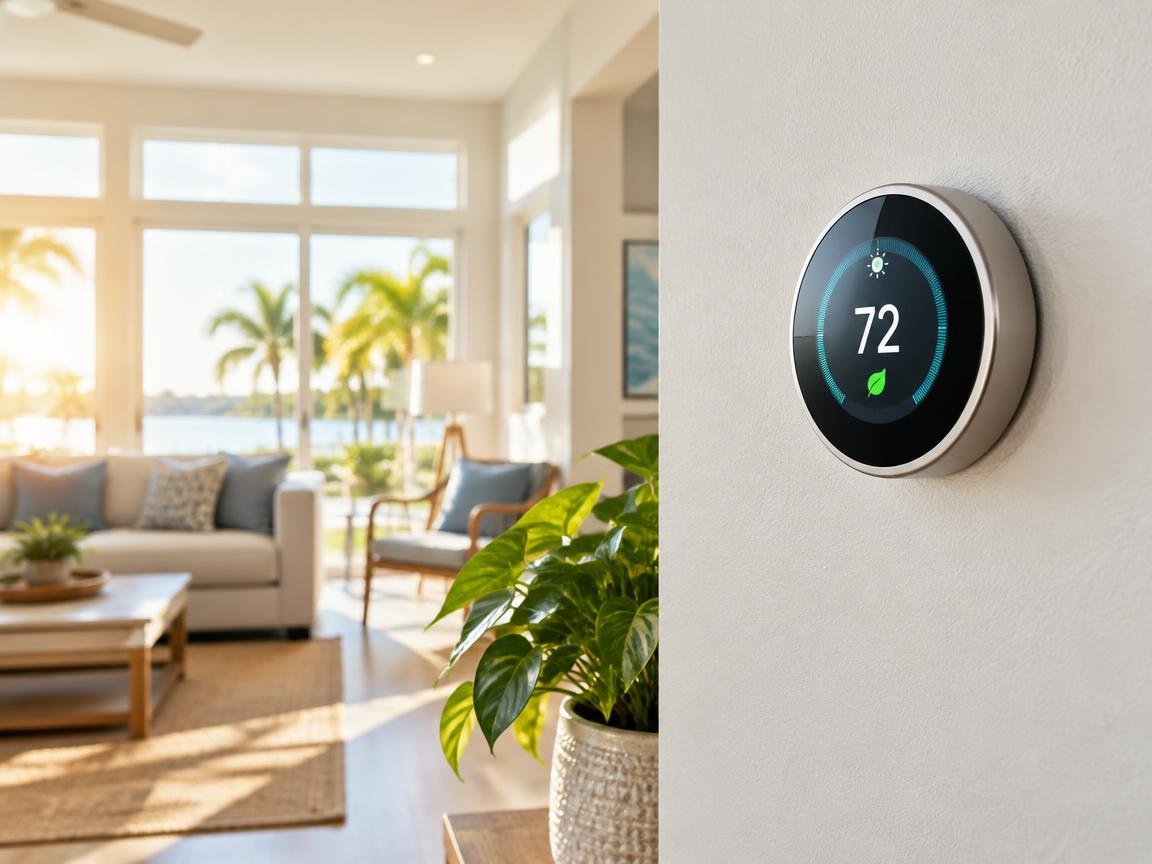
- Thermostat Management: Use a smart thermostat to program temperature setbacks when you are away. Increasing the temperature by 7 to 10 degrees for eight hours a day can save you up to 10 percent on cooling costs annually.
- Filter Maintenance: Change your HVAC air filters every one to three months. A clogged filter restricts airflow, forcing the system to work harder and increasing energy consumption.
- LED Lighting: Replacing your most frequently used light bulbs with ENERGY STAR-certified LEDs uses 75 percent less energy and generates significantly less heat, which helps keep your home cooler.
- Hot Water Pipes: Insulating the first six feet of your hot water pipes can reduce heat loss, allowing you to potentially lower your water heater temperature slightly without sacrificing comfort.
Frequently Asked Questions about Home Energy Efficiency
What is the maximum federal tax credit available for energy upgrades?
The maximum credit is 3,200 dollars per year. This is a nonrefundable credit, meaning it can reduce your tax liability to zero, but you will not receive a refund for any excess credit beyond what you owe in taxes.
Should I replace my HVAC system before sealing and insulating?
Generally, no. We recommend the “envelope-first” principle. By sealing and insulating first, you reduce the size of the HVAC unit required to cool your home, which can save you money on the equipment itself and keep your operating costs lower for years to come.
Can renters take advantage of energy efficiency incentives?
While renters may not be able to perform major structural upgrades, they can still benefit from portable solutions like smart power strips, LED lighting, and window treatments. Some utility programs also offer incentives that renters can access with landlord approval.
Conclusion
Maximizing your home’s comfort and energy efficiency is a journey, not a single project. By taking a phased, whole-house approach—starting with an energy audit, moving to envelope improvements like professional spray-foam insulation services, and then optimizing your mechanical systems—you can create a home that is both comfortable and sustainable.
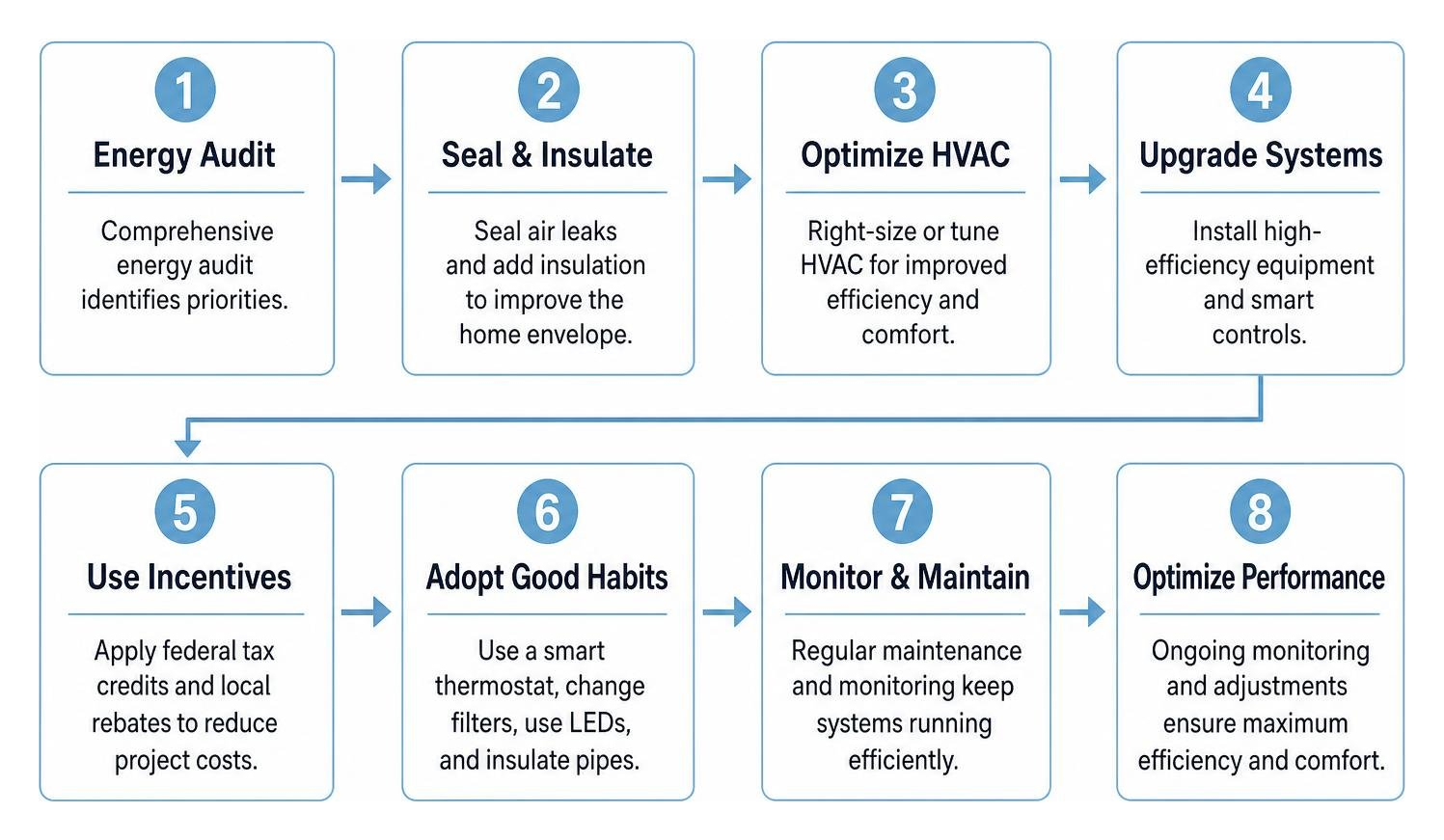
Remember to prioritize your projects based on the data provided by your comprehensive energy audits and take full advantage of available federal and local incentives. With a bit of planning, you can transform your home into a resilient, efficient space that serves you well for decades to come.
Please be aware that some links featured here may be affiliate or sponsored links. Dwellifyhome.com may receive commissions from eligible purchases or compensation for promotional placements.