Most plumbing emergencies don’t start with a burst pipe. They start with a homeowner standing in six inches of water, holding a phone, and realizing nobody in the house knows where the shutoff valve is. That’s the part you fix today, in an hour or two, long before anything actually breaks.
This isn’t a list of disaster scenarios. It’s a room by room walkthrough of the small stuff that makes a real emergency manageable: the shutoffs you can actually find, the bucket that isn’t buried in the garage, the plumber’s number saved before you need it. Do this once and the next 2 a.m. pipe situation becomes a 10 minute problem instead of a whole weekend.
Before you start, one note on where this leads. If you live in Southern California and you do end up needing a 24/7 emergency plumber riverside, the prep below is what makes that call fast and specific instead of frantic. You’ll know what’s wet, what’s leaking, and which valve you already shut off. That’s a much better phone call.
Why prep beats panic, every time
Plumbing emergencies are almost always a supply problem or an exit problem. Water coming in where it shouldn’t, or water that can’t leave. Both cases reward the same thing: fast access to the right valve and a clear head. The Environmental Protection Agency points out that plumbing is one of the least glamorous parts of a home but one of the most consequential, and I’d argue it’s the most overlooked too. People buy a new washer without checking the hose behind it. That hose is where they should look.
Here’s the honest part. Good prep doesn’t stop leaks. It stops leaks from turning into floor damage, ruined drywall, and a bill three times what it should have been. That distinction matters if you’re trying to figure out what’s actually worth doing this month versus what can wait.
The Water Clock Rule
This is a small thing I made up after a friend spent 20 minutes finding her main shutoff while her downstairs ceiling turned into a waterfall. Here’s the rule: for every room with plumbing, you should be able to reach the shutoff in under the time it takes to brush your teeth. Two minutes, tops. If you can’t, the valves need labels or you don’t know your house as well as you think.
Walk each room with a phone timer on. Kitchen first, then bathroom, then laundry, then water heater closet. If you can’t hit two minutes, that’s your project this weekend. This one habit alone is worth more than any gadget you can buy.
Kitchen: where most small emergencies live
Kitchens have more plumbing than any other room, and the failure points hide behind cabinets where you never look. Under the sink is the highest-risk spot in the house, mostly because it’s a small space with a lot going on: supply lines, a drain trap, and often a dishwasher hookup jumbled together.
What to check in 10 minutes:
- Look under the sink with a flashlight. Any dark rings or soft spots on the cabinet floor mean moisture is present now, not later.
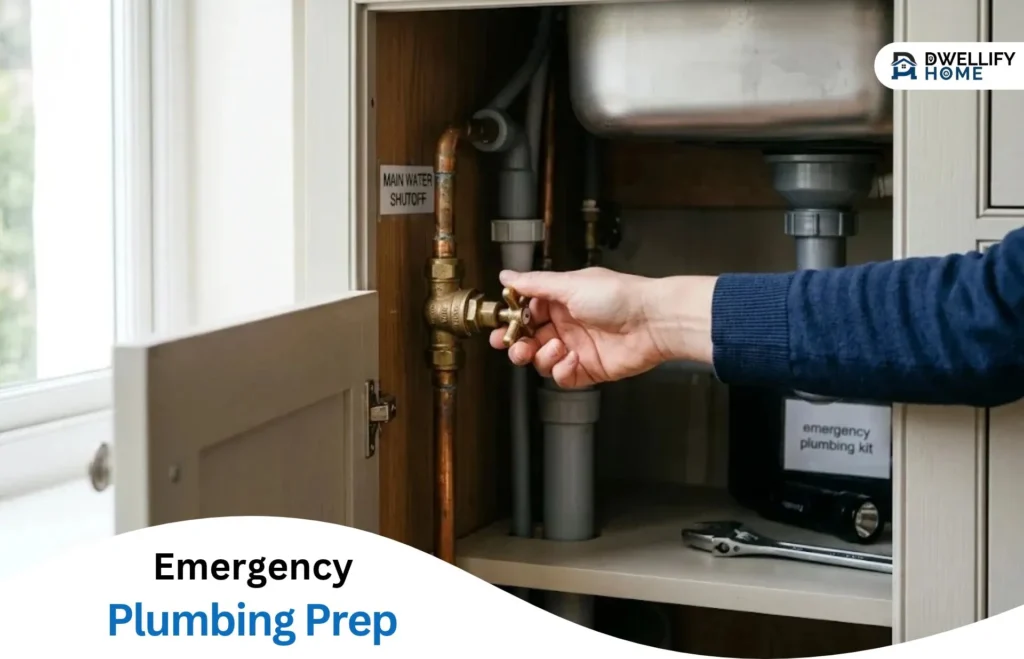
- Find the two shutoff valves just below the faucet. Turn each one a quarter turn and back so you know it moves.
- Check the dishwasher hose where it meets the cabinet. Loose connections there cause more cabinet damage than people admit.
- Keep a small bucket and a stack of old towels on a shelf you can reach without moving a chair.
One opinion I’ll commit to: if your under-sink shutoff valves are decades-old gate valves, swap them for quarter-turn ball valves. The cost is small. The difference between a valve that turns easily at 3 a.m. and one that snaps off in your hand is worth every penny.
Bathroom: the slow leak that hides
Bathrooms are where plumbers find the sneaky stuff. A running toilet you can hear at night, a shower that drips after the water’s off, a caulk line that’s pulling away from the tub. These are all clues about supply and drainage you’re not seeing directly.
Two things to do this week. First, put a few drops of food coloring in the toilet tank before bed. If you see color in the bowl in the morning without having flushed, the flapper is leaking and you’re paying for water you don’t use. Second, look at the base of the toilet for soft flooring. If the floor gives, you have a slow leak that’s been going on long enough to rot the subfloor.
Shower heads with mineral buildup are annoying but not urgent. Shower valves that won’t fully shut off are. That’s a slow drip you can watch turn into a real leak if you leave it alone for a season.
Laundry and water heater closet
The laundry room is one of the highest-risk rooms in the house because supply hoses fail under pressure while you’re not looking. The steel-braided hoses sold today are a worthwhile upgrade over the standard rubber ones, especially on a machine that runs most days.
In the water heater closet, the main thing is knowing where the gas shutoff and the water shutoff are, and checking the age of the unit. Water heaters past 10 or 12 years fail more often than younger ones, and the failure is often a tank that gives way with no warning. If you’re close to that line, plan for replacement instead of hoping.
According to the Department of Housing and Urban Development, home safety and systems maintenance are a regular concern for homeowners of every income level, and the plumbing prep list is one of the topics that consistently comes up. Reading that line the first time, I laughed a little. Then I remembered my own water heater.
Save these three things before you need them
Three separate items, each one small, each one the difference between a chaotic emergency and a controlled one.
- Save your plumber’s number in your phone under a name that sorts to the top of your contacts. “Plumber” works fine. Scrambling through a search bar at midnight is a different experience.
- Keep a shutoff tag on the main valve. A zip-tied label costs almost nothing and reminds every person in the house where the valve lives.
- Photograph your main valve and your water heater data plate. The photos matter when you’re on the phone with a plumber or an insurance adjuster, because you can describe exactly what you have instead of guessing.
I’d pick the shutoff tag over the other two if I could only have one. Labels beat memory when the water’s rising.
A quick note on tooling and standards
There’s a reason the plumbing supply aisle feels like it has three of everything. Standards vary, and knowing which one your house was built to matters more than you might think. The National Institute of Standards and Technology does work on pipe and plumbing material standards that most homeowners never see, but it underpins the fittings and hoses you buy at the hardware store. That isn’t a fun fact. It’s the reason you should trust the label on the fitting more than the price tag.
What a real emergency looks like, and what to do
Three signals mean stop prepping and act now: water you can hear running behind a wall, a water heater that’s leaking from the tank itself, and a toilet or sink that won’t drain at all while other fixtures in the house are fine. Those three are plumber calls, not weekend projects.
In each case, the first step doesn’t change. Find the closest shutoff and turn it. If you can’t find one for that fixture, go to the main. Then call. You’ve bought time, which is the entire point of everything above.
If you skip the prep and wait for a problem, that’s okay too. Most of us do. Just know the phone call is longer, the cleanup is bigger, and the plumber is walking into a mess they didn’t create. Prep is the cheaper version of the same story.
So what’s the one room in your house you can’t find a shutoff in under two minutes? That’s your weekend, and it’s a good one.
Disclosure: This article may contain affiliate links or paid promotional references. Dwellifyhome.com may receive commissions or other compensation through these arrangements, which help support our publishing activities.