Every winter, the same call comes in: the house is cold, the thermostat says 62, and the family is already in coats. The furnace didn’t fail in October when there was time to fix it. It failed at 9 p.m. on the one night the temperature dropped into the thirties. That’s not bad luck. That’s a system that was never tested under load.
Most furnace breakdowns announce themselves weeks before they happen. A rattle here, a longer heat-up there, a faint smell you talked yourself out of. If you’ve been ignoring those signals and you now need furnace repair in lake elsinore, the smart move is to understand what’s likely wrong before anyone shows up at your door. This guide gives you the checks, the sounds, and the triage rules so you’re not guessing in the dark.
Here’s the short version: you can safely rule out about half of common furnace failures yourself in under an hour. The other half need a technician with a multimeter and a combustion analyzer. Knowing which is which saves you money and gets the heat back faster.
Why Furnaces Pick the Worst Night to Quit
Furnaces don’t break randomly. They break when demand spikes. That first cold snap forces the system to run longer cycles than it has in months, and every weak point gets stressed at once: a clogged filter that was borderline, a flame sensor coated in dust, a dirty blower wheel that was getting by on short runs.
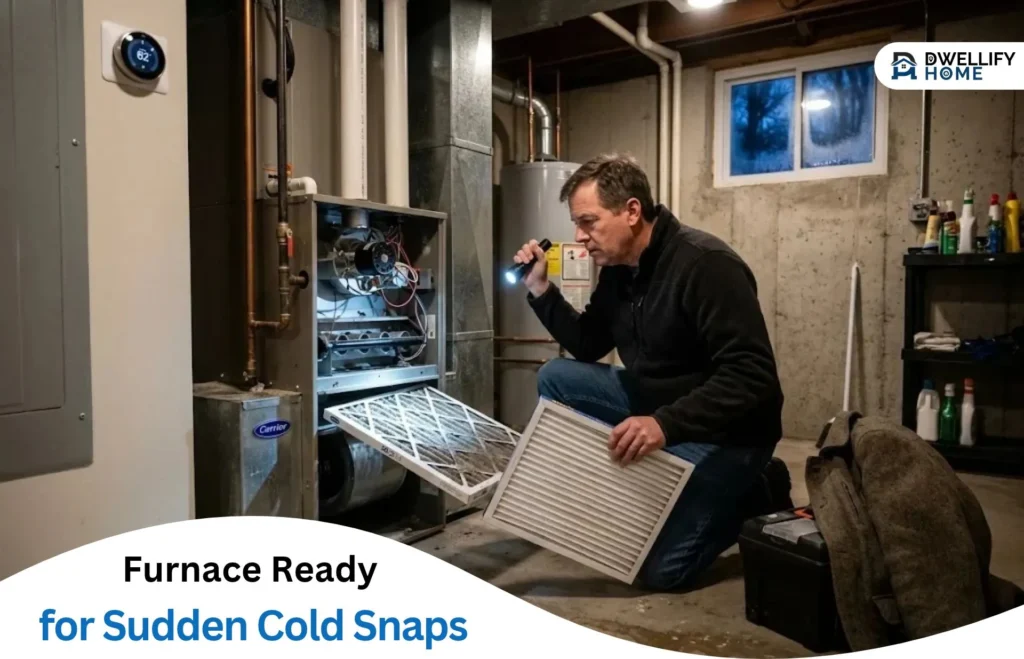
I’d argue the filter is the single most overlooked part in any home. Homeowners replace it in spring, forget it through summer, then wonder why airflow is weak in December. A filter choked with dust forces the blower to work harder, and on many modern units the high-limit switch will trip and shut the burner down before anything actually breaks. That shutoff looks like a dead furnace. It’s often just airflow. According to the U.S. Department of Energy, regular maintenance on heating systems helps them run more efficiently over their service life, and filter changes sit at the top of that list for a reason.
So before you panic, check the filter. Pull it out, hold it up to a light. If you can’t see through it, that’s your problem more often than you’d expect.
The Three-Tier Triage: What to Check Before You Call Anyone
I use a simple tier system with my own house, and it works for just about any forced-air furnace. Work down the tiers in order. Stop when you hit something you can’t safely touch.
Tier one: the free stuff
- Confirm the thermostat is set to heat, not auto or cool, and the batteries aren’t dead.
- Check the breaker at the panel and the furnace’s own power switch, which often looks like a light switch near the unit.
- Find the furnace door switch. Many units won’t fire with the panel off, so make sure it’s seated.
- Replace the filter if it’s even close to dirty.
- Look at the gas valve. It should be parallel to the pipe, not perpendicular.
I’d say a solid third of “my furnace is dead” calls get resolved in tier one. That’s not a knock on homeowners. It’s just that these switches are easy to bump and easy to miss.
Tier two: the diagnostic clues
Turn the thermostat up five degrees and listen at the unit. You’re trying to identify which stage the furnace is failing at. Here’s what the sounds tell you.
| What you hear or see | What it usually means
|
| Blower runs, no heat, igniter never glows | Igniter failure or a tripped safety switch |
| Clicking, then shutoff after a few seconds | Flame sensor needs cleaning, or gas supply issue |
| Short cycles every few minutes | High-limit switch tripping, often airflow or a dirty filter |
| Loud banging or rumbling on startup | Delayed ignition, which needs a pro |
| Blinking LED code on the control board | Look up the code on the door label, it tells you exactly what the board sees |
That blinking light is the most underused tool in the house. Every furnace made in the last few decades has a diagnostic code chart printed right on the access panel. Count the blinks, match the code, and you know more than most people who call for service.
Tier three: stop and call
If you smell gas, get out and call your utility from outside. If the burners light but the blower never comes on, or the unit keeps tripping its limit switch after a clean filter, stop. Those point to components that need testing with a meter. Don’t start pulling wires on a gas appliance. That’s where the cost of a repair visit becomes worth every dollar.
What Actually Wears Out First
In most homes, the flame sensor is the first part to fail. It’s a small metal rod that sits in the burner flame and tells the control board heat is present. It coats with oxide over a few seasons and stops sensing correctly, so the furnace lights and then shuts off after a few seconds. Cleaning it with fine steel wool fixes it most of the time, and plenty of homeowners learn this one themselves.
Next up is the igniter, which is fragile and cracks. Then the draft inducer motor, which gets noisy before it dies. Then the blower capacitor, which fails on hot days as often as cold ones. Knowing this order helps you sanity-check whatever a technician tells you. If someone says your heat exchanger is cracked on a fifteen-year-old furnace that’s been running fine and passing its combustion test, ask for the test readings. That said, a real crack is a serious safety issue, and a carbon monoxide alarm near the furnace is not optional.
The EPA notes that combustion appliances should be properly vented, and that’s worth taking seriously. If you haven’t added a CO alarm to the room where your furnace sits, do it this week. It’s one of the cheapest safety upgrades you can make in a home.
Your End-of-Fall Checklist
This is the part that prevents the cold-night call in the first place. Run it once before the season starts, then again right after the first hard temperature drop.
- Test the heat cycle by setting the thermostat five degrees above room temperature and timing how long until warm air reaches a vent.
- Replace the filter and note the date on the edge with a marker.
- Clear anything stored within three feet of the furnace, especially paint cans and cardboard.
- Vacuum the return grilles and the area around the base of the unit.
- Run the thermostat’s fan-only mode for a few minutes and listen for the blower.
- Test every CO alarm in the house, including the one near the furnace.
- Book a professional tune-up before the calendar fills up, which around most towns means late fall.
The timing matters more than people think. Heating contractors get slammed right after the first cold weekend. If you book the service in September or early October, you get an open schedule and an easier conversation about anything the tech finds.
Fixing After a Breakdown
Once the heat is back on, resist the urge to forget the whole thing. Take five minutes to write down what failed, what the symptoms were, and how the fix went. That record becomes genuinely useful three winters from now, when the same code shows up on the same board. It also tells you whether the unit is on a repair spiral. One repair in a season is normal. Three in one year, on a furnace past its warranty, is a signal to start pricing replacement rather than sinking more into repairs.
One more thing I’d push you on: ask the technician for the combustion test numbers and the part they replaced. They should name it in plain English, not just hand you an invoice line. A good tech explains what the old part was doing and why it failed. If you get a vague answer, ask again.
Stay ahead of the next cold snap by running the checklist now, before the house gets cold and the phone lines get long. What failed on your furnace the last time it quit, and did you see it coming?
Please note that certain links on this page may be affiliate or sponsored links. Dwellifyhome.com may earn compensation when readers complete qualifying transactions through these links or applicable promotional partnerships.