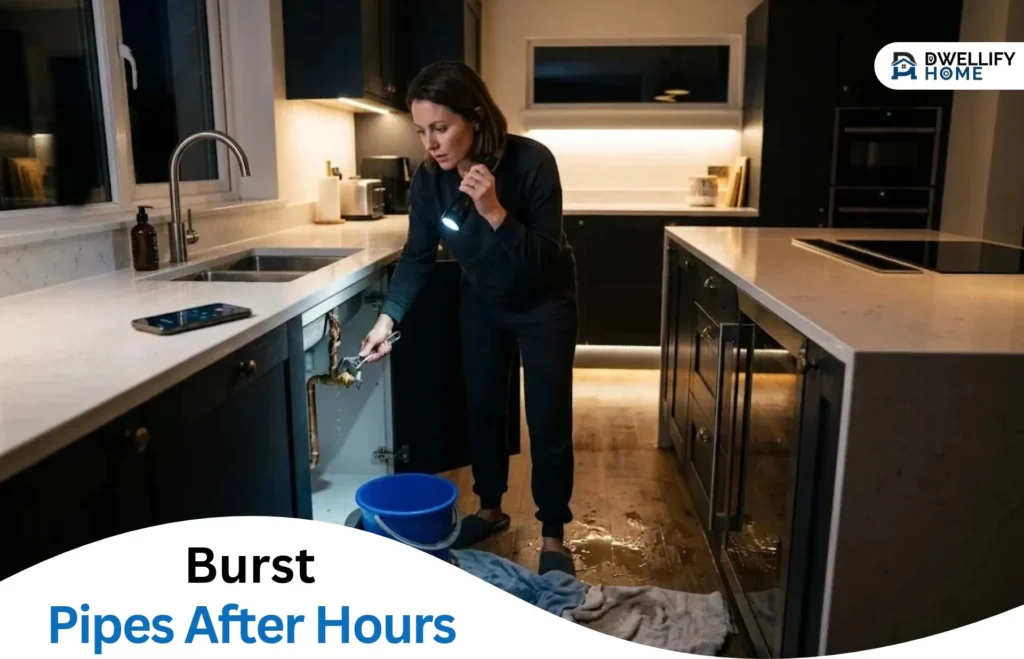
A burst pipe at 11pm is stressful, but the first ten minutes matter most. What you do before help arrives can decide if you end up with a wet floor or a ruined kitchen.
Call for help early, then work through the steps below while you wait. The 24 hour plumbers in Perth at Proud Plumbing and Gas can be on the way while you get the water under control.
Step 1: Turn Off the Water at the Main
This is the most important thing you can do. In most Perth homes, the main stop tap sits next to the water meter, which is usually near the front boundary or verge. Turn the tap clockwise to close it.
If it is stiff, Water Corporation suggests turning it slightly anticlockwise first to break the seal, then clockwise again. If it still will not close, call their faults line on 13 13 75.
Some homes also have an isolation valve under sinks or behind toilets. If the leak is clearly from one fixture, closing that valve may be enough, but shutting the main is the safer choice when in doubt.
It helps to find your stop tap now, on a calm day, so you are not hunting for it in the dark with a torch.
Step 2: Switch Off the Hot Water System
With the water off, your hot water system can be damaged if it keeps heating. For an electric unit, switch it off at the switchboard. It usually has its own labelled circuit. For a gas unit, turn the control knob to the off or pilot setting, following the instructions on the unit.
Step 3: Keep Electricity Safe
Water and power are a dangerous mix. If water is near power points, appliances or light fittings, or dripping through a ceiling, do not touch anything electrical while standing in water. If you can reach the switchboard safely from a dry spot, turn off the power to the affected area. If you cannot do that safely, stay out of the room and wait for help.
A sagging, wet ceiling can collapse, so keep everyone clear of it.
Step 4: Drain the Remaining Water
Even with the main closed, water stays in the pipes. Open the cold taps at the lowest point in the house, such as a laundry trough or outside garden tap, to drain the lines. Flush the toilets once to empty the cisterns. This takes pressure off the damaged pipe and slows the leak.
Step 5: Contain the Damage
Now focus on limiting the mess:
- Put buckets or containers under drips
- Use towels to soak up water and block it from spreading
- Move rugs, electronics, furniture and important papers to a dry area
- Open windows to help the area start drying out
Step 6: Record Everything for Insurance
Before you clean up too much, take clear photos and videos of the damage, the leaking pipe and any affected belongings. Note the time you found the problem and the steps you took. Keep receipts for any emergency costs. Many insurers ask for this kind of record, so check your policy and contact your insurer as soon as practical.
When the Plumber Arrives
Tell the plumber where the leak started, what you have switched off and anything you noticed beforehand, like a noise or a damp patch. Once the pipe is repaired, they can restore the water and check the rest of the system before you turn everything back on.
Some references in this article may be associated with third-party commercial partnerships. These relationships may include paid placements or affiliate arrangements that provide compensation to Dwellifyhome.com.