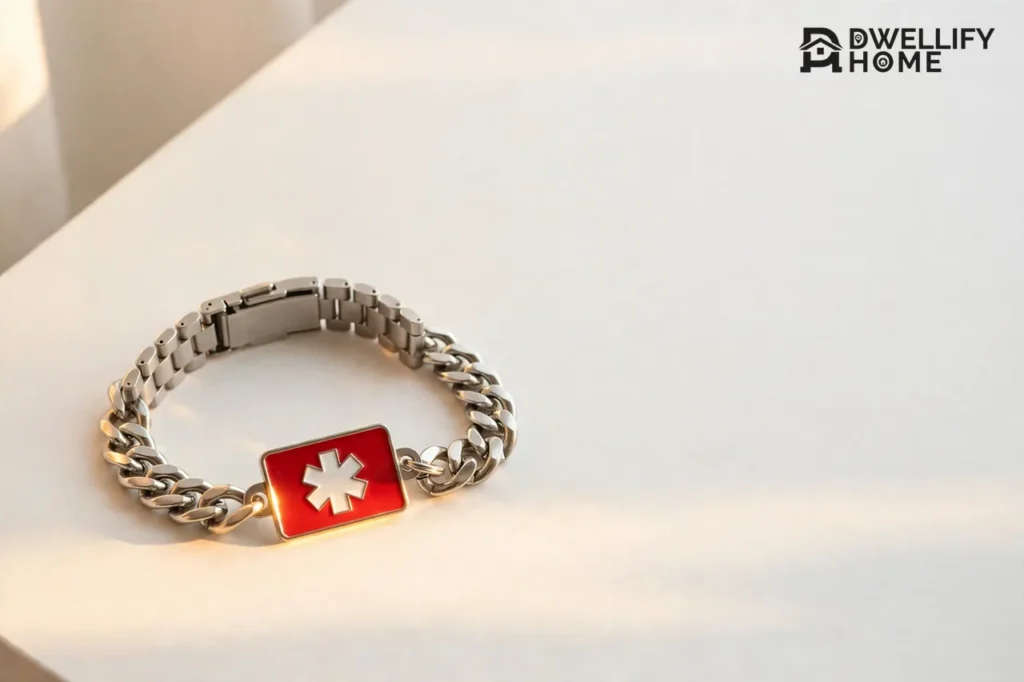
Put your most urgent confirmed medical detail first on a medical alert bracelet: a severe allergy, a critical medication, a primary condition, or an implanted device. Then add your name and at least one ICE emergency contact number with its area code. A bracelet is a rapid-alert tool for first responders, not a full medical record, so every line must earn its space.
Lauren’s Hope, a medical ID maker since 2001, puts it the same way: include the confirmed information a first responder may need quickly in an emergency, such as a severe allergy, critical medication, medical condition, or implanted device, then add an ICE contact when space allows. One line on the bracelet often decides what happens in the first minutes of an emergency, and the engraving guide below shows you how to choose it.
The Short Answer: What Goes on the Bracelet
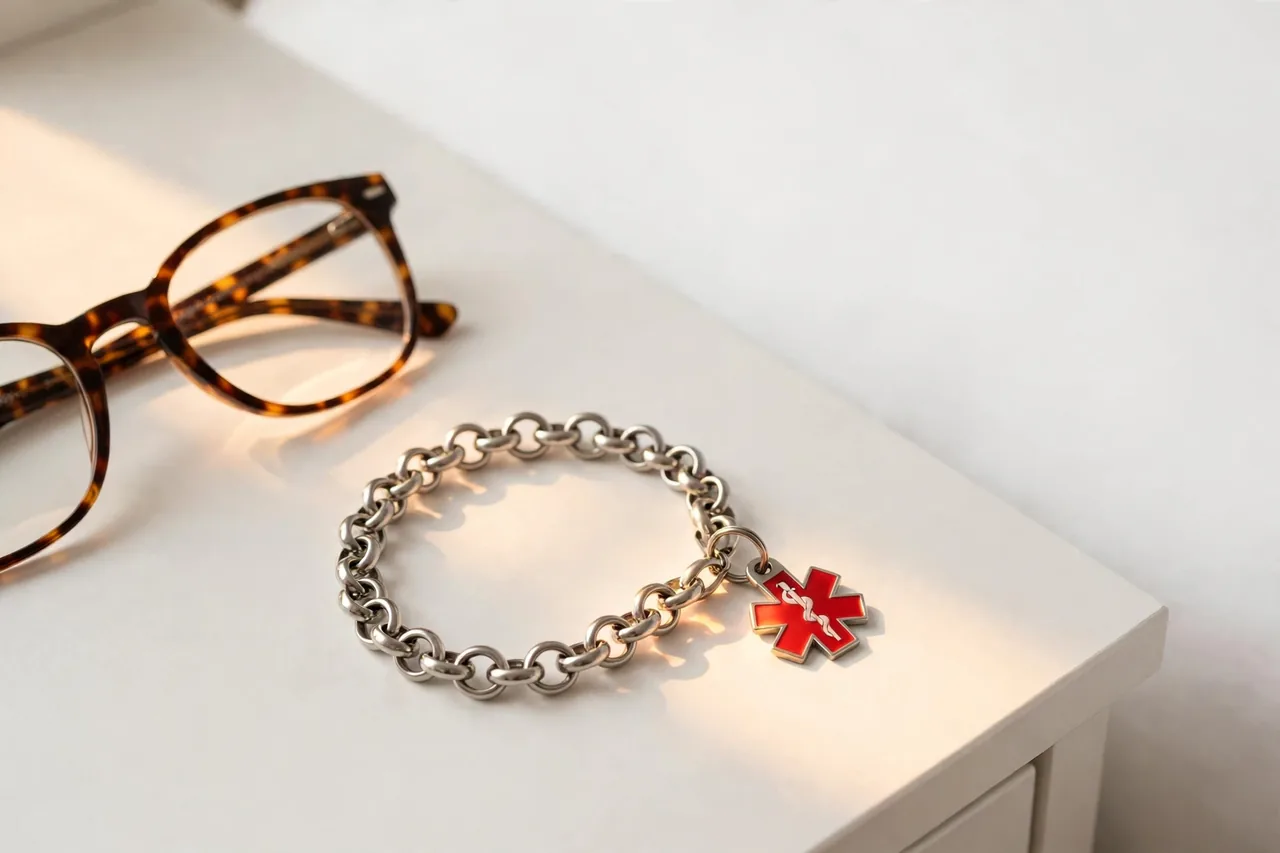
Engrave six things when space allows: your first and last name, your primary condition, your severe allergies, your critical medications, any implanted device, and one ICE phone number. Lead with whichever of those could matter most in your emergency. A severe penicillin allergy outranks a name, because the allergy changes what medicine a paramedic can give you in the first minute.
Use short standard markers so responders read the bracelet fast. Write ON before a medication you take, and ALGY or ALGYS before an allergy. A bracelet that reads “ON WARFARIN, PENICILLIN ALGY, ICE 555-014-2280” tells a paramedic in one glance that you take a blood thinner, cannot have penicillin, and who to call.
Confirm every detail with your doctor before you engrave it. A bracelet with a wrong medication or an outdated allergy is worse than a blank one, because responders trust what they read. Check the engraving every year and after any medication change.
Start With the Most Urgent Detail
There is no single order that fits everyone. The detail that goes first is the one that could change emergency care the fastest. For most people that is a life-threatening allergy, especially to a medication a paramedic might give, or a blood thinner that changes how bleeding is treated. For others it is a device such as a pacemaker, which changes where defibrillator pads can go.
Think about what a stranger would need to know if you could not speak. A paramedic has seconds to read a bracelet, so the first line must carry the highest-stakes fact. Lead with the detail that could kill you if it is missed, and put your name second when space is tight.
GoodRx lists the same priority in its guide to medical alert bracelets: a severe allergy, a condition such as diabetes or epilepsy, a blood thinner, or a device that affects treatment. See the GoodRx guide to medical alert bracelet conditions for the nine common conditions where a bracelet helps most.
Your Name and an ICE Contact
Your first and last name lets responders identify you and pull up your records. Add it when space allows and identification matters, which is almost always. For a child or a person with Alzheimer’s who may wander, the name matters even more, because it helps a stranger get them home safely.
ICE stands for In Case of Emergency, and the ICE number is the person responders call when you cannot speak for yourself. Pick someone who knows your medical history, answers the phone reliably, and can make decisions or reach your doctor. Include the area code, because a bracelet travels with you and the responder may be calling from another state.
Keep the ICE number current. A bracelet with a dead number wastes the minutes it was meant to save. Check the number every time you change phones, move, or change who your emergency contact is, and update the engraving the same week.
Conditions Worth Engraving
Engrave a condition when it changes emergency care or explains why you cannot communicate. Diabetes matters because a low-blood-sugar episode can look like confusion or drunkenness, and responders need to know to check glucose first. Epilepsy matters because a seizure needs space and time, not restraint. Asthma matters because an attack can steal your voice just when you need to explain your medicines.
Heart conditions, bleeding disorders such as hemophilia, and conditions that affect thinking, such as Alzheimer’s disease or autism, all belong on a bracelet when they could change how responders treat you. The MedicAlert Foundation lists more than 100 conditions where a medical ID helps, and GoodRx names diabetes, severe allergies, epilepsy, asthma, blood thinners, and heart conditions among the most common.
When space is tight, keep the condition that poses the greatest immediate threat. Type 1 diabetes with insulin dependence outranks a mild condition every time. When in doubt, ask your doctor which single condition matters most in an emergency, and engrave that one first.
Allergies: How to Write Them
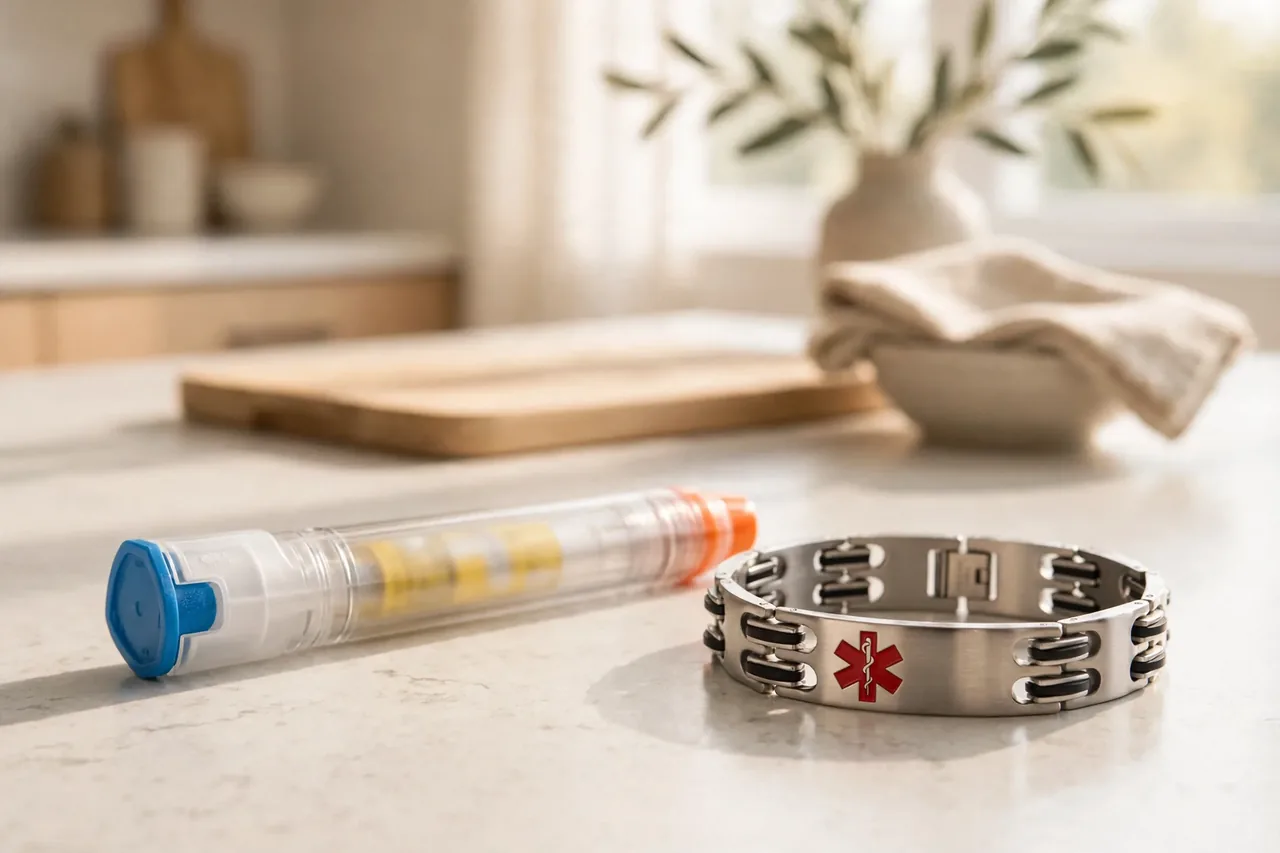
Severe allergies go near the top of the bracelet, because they decide what a responder can safely give you. Drug allergies matter most, since penicillin or sulfa drugs are common emergency medicines. Food allergies to peanuts, tree nuts, or shellfish matter when they can trigger anaphylaxis, and a latex allergy matters because gloves and medical equipment often contain latex.
Write allergies with the ALGY marker: “PENICILLIN ALGY” or “LATEX ALGY”. If you carry an EpiPen, add “USE EPI PEN” so responders know treatment is at hand and should be used fast. That single line can decide whether epinephrine is given in the first minutes, when it works best.
Do not list mild allergies that never caused a serious reaction. Space is precious, and a bracelet crowded with minor details hides the dangerous one. A mild seasonal allergy does not belong on a bracelet. An allergy that once sent you to the emergency room does.
Critical Medications and Implanted Devices
You cannot list every medication, so list the ones that change emergency treatment. Blood thinners such as warfarin or Xarelto raise bleeding risk after a fall or a car accident, and responders must know before they treat you. Insulin matters because it changes how glucose is managed. Daily steroids matter because they affect anesthesia and stress dosing.
Write medications with the ON marker: “ON WARFARIN” or “ON INSULIN”. That one word makes the meaning clear at a glance, which is the whole point of a bracelet. A medication name alone can be misread as an allergy, and the ON marker removes that doubt.
Implanted devices matter because standard emergency procedures can damage them or become unsafe around them. A pacemaker or an ICD changes where defibrillator pads go. A metal implant or a cochlear implant may mean “NO MRI”. A bracelet that reads “PACEMAKER, NO MRI” tells the emergency team two things they cannot afford to learn the hard way.
What to Leave Off the Bracelet
Leave off your full address, your Social Security number, and your insurance details. A bracelet is visible to everyone, and those details invite theft and fraud. Responders do not need them in the first minutes, and your wallet card or phone can carry them instead.
Leave off minor conditions, old surgeries that no longer affect care, and medications that do not change emergency treatment. A daily vitamin does not belong on a bracelet. A bracelet is a rapid-alert tool, and every extra line makes the critical lines harder to read.
Leave off anything you have not confirmed with your doctor. A condition you suspect but never had diagnosed does not belong in engraved metal. If the diagnosis changes, the bracelet must change with it, so review the engraving at every annual checkup.
Guess which mistake wastes the most bracelet space? Listing every pill you take. Most people take five or more medicines, and a bracelet holds six short lines. Pick the two or three that change emergency care, and let your wallet card carry the rest.
A Simple Engraving Plan for Common Situations
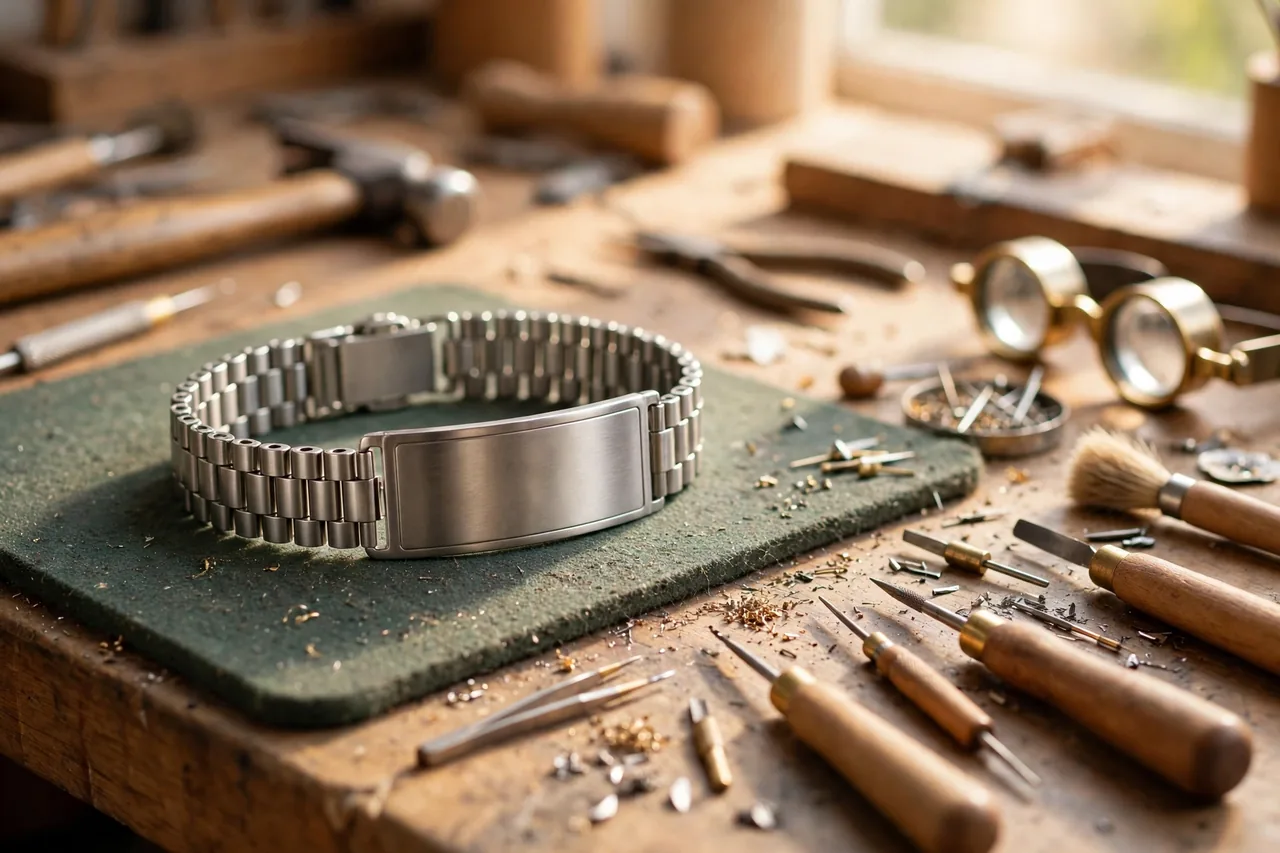
Caption: Example engraving layouts — adapt the lines to your own confirmed details, and check them with your doctor.
| Situation | Line 1 | Line 2 | Line 3 |
|---|---|---|---|
| Diabetes, insulin dependent | DIABETES TYPE 1 | ON INSULIN | ICE 555-014-2280 |
| Severe penicillin allergy | PENICILLIN ALGY | USE EPI PEN | ICE 555-014-2280 |
| Pacemaker, blood thinner | PACEMAKER | ON WARFARIN | ICE 555-014-2280 |
| Epilepsy | EPILEPSY | DO NOT RESTRAIN | ICE 555-014-2280 |
| Child with nut allergy | NUT ALLERGY | USE EPI PEN | ICE 555-014-2280 |
Most medical ID bracelets allow about six lines, and many let you use the back as well. A good layout puts the primary condition and the most critical allergy on the front, and the ICE contact and secondary details on the back. Lauren’s Hope, which has made medical IDs since 2001, lays out the same six-line plan in its engraving guide, with the most urgent confirmed detail first. See the Lauren’s Hope guide to what to engrave on a medical ID bracelet for the full priority plan.
If your details will not fit, add “SEE WALLET CARD” as the last line and carry a card with the full list. That line tells responders there is more information close by, and it keeps the bracelet readable. Update the card and the bracelet together, every time something changes.
Choosing and Wearing the Bracelet
Pick a bracelet with the medical symbol, the staff of Asclepius, clearly visible. Responders are trained to look for that symbol on the wrist, and a plain bracelet without it may be missed. A necklace works too, but the wrist is where responders check first.
Wear it every day, not only when you feel unwell. Emergencies do not wait for a good day, and a bracelet in a drawer helps no one. If a metal bracelet irritates your skin, look at silicone or fabric bands, which carry the same engraving and cost less.
For children, use a band that fits snugly and cannot slide off during play, and put the parent’s ICE number on it rather than the child’s own phone. For seniors, a larger engraving font and a clasp that is easy to open and close matter more than style. The best bracelet is the one that stays on the wrist.
Bracelet, Necklace, or Wallet Card: Which Carries the Facts Best?
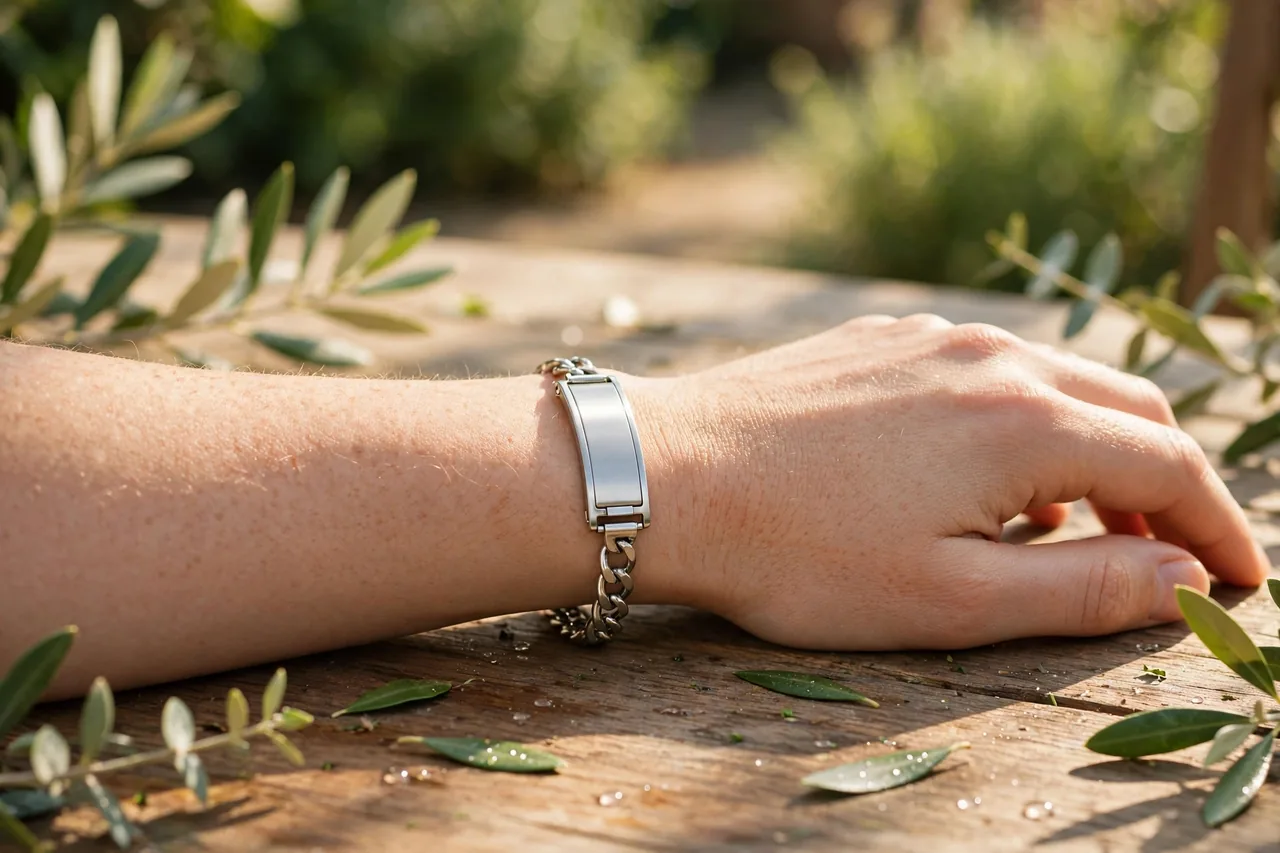
A bracelet is the best first choice, because responders check the wrist first. It is visible during an examination, it stays on during most daily activity, and the medical symbol on it is a signal every paramedic is trained to spot. A bracelet that is always on the wrist is worth more than a perfect card left in a wallet at home.
A necklace works well for people who cannot wear a bracelet because of work, a skin condition, or a wrist injury. It carries the same engraving, and responders check the neck second. The risk is that a necklace can slip under clothing and be missed in the first minute, so wear it outside the collar when you can.
A wallet card carries the most detail, because a card holds a full medication list, doctor names, and insurance information that no bracelet can fit. Its weakness is that a wallet is not always with you, and responders do not open a wallet first. Use the bracelet for the urgent facts and the card for the full story, and point the bracelet at the card with a “SEE WALLET CARD” line when the details will not fit.
For children, a bracelet or a necklace tag on a backpack both work, and a shoe tag is a good backup for a child who removes jewelry. For seniors with dementia, an ID bracelet with a name and an ICE number helps a stranger bring them home even when there is no medical emergency at all.
Related Guides
. A watch with fall detection can back up a bracelet, and a monitored alert system adds a call center behind the button.
Frequently Asked Questions
What should you put on a medical alert bracelet?
Put your most urgent confirmed medical detail first, such as a severe allergy, a critical medication, a primary condition, or an implanted device. Then add your name and at least one ICE emergency contact number with its area code. Confirm every detail with your doctor before engraving.
What information should you put on a medical alert bracelet?
Include your name, your primary condition, severe allergies, critical medications, implanted devices, and an ICE phone number. Use ON before medications and ALGY before allergies so responders read them fast. Leave off your address, Social Security number, and minor conditions.
What information to include on a medical alert bracelet?
Include only what changes emergency care: life-threatening allergies, conditions that affect consciousness or breathing, blood thinners or insulin, devices such as a pacemaker, and an ICE contact. A bracelet is a rapid-alert tool, not a full medical record, so every line must earn its space.
Who should wear a medical alert bracelet?
Anyone with a condition that could leave them unable to speak in an emergency should consider one, including people with diabetes, severe allergies, epilepsy, asthma, heart conditions, or blood thinner use. The MedicAlert Foundation lists more than 100 conditions where a medical ID helps.
Should I put my name on a medical alert bracelet?
Yes, when space allows. Your name lets responders identify you and pull up your records, and it helps a stranger get a wandering child or a person with Alzheimer’s home safely. If space is tight, the most urgent medical detail comes first and the name second.
This article is general information, not medical advice. Talk with your doctor about which details belong on your bracelet, confirm every line before you engrave it, and review the engraving at least once a year. A bracelet only helps when the words on it are right, current, and easy to read in an emergency.