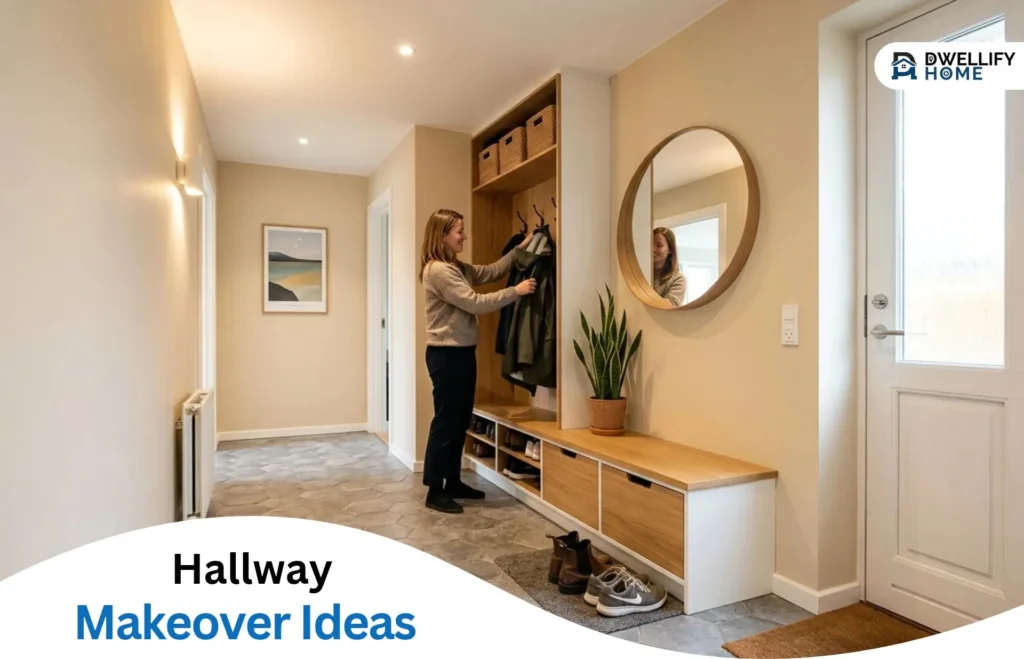
The best hallway makeover for a Danish home combines a hard wearing tiled floor that handles wet boots and street gravel with washable paint in light, warm colours that make the space feel bigger and brighter. Add good lighting and smart storage, and the hallway becomes a welcoming first impression of your home.
The hallway is the first space guests see, yet it is often the last room people think about when planning a renovation. In many older homes in Ballerup, Skovlunde and Måløv, it is dark, narrow and worn after years of daily use.
Danish weather makes it work even harder. Rain, snow, wet leaves and gravel from the streets damage floors and mark the walls. Byggruppen, a renovation company based in Ballerup, often sees hallways left until last in a renovation, even though they take more daily wear than almost any other room.
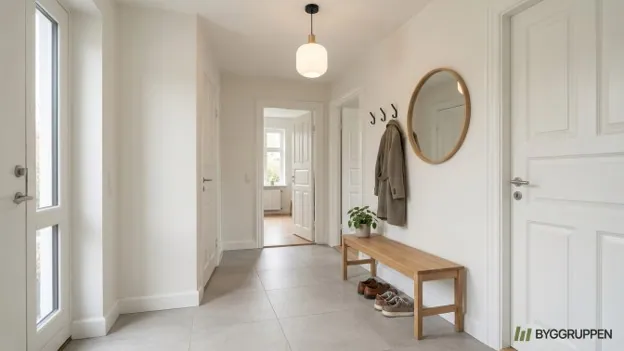
Why is the hallway the hardest working room in a Danish home?
The hallway takes more daily traffic than almost any other room, so it needs durable materials, practical storage and plenty of light.
On a normal weekday, it handles everyone leaving for work and school, children coming home with muddy shoes, and shopping bags, prams and bikes. In autumn and winter, homes around Ballerup and Herlev also get wet boots, dripping coats and small stones that scratch the floor. Bags and coats leave marks on the walls.
Older terraced houses and villas often have narrow hallways with little daylight, which quickly feel cramped and cluttered. A good makeover focuses on three things:
- Durable materials that handle everyday wear.
- Storage that keeps shoes, coats and bags in order.
- Light colours and good lighting that make the space feel open.
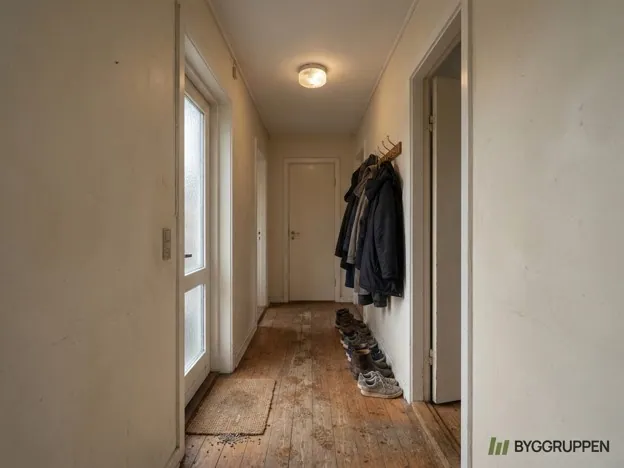
Why are tiles the best floor for a Danish hallway?
Tiles are the best floor for a Danish hallway because they resist water, are easy to clean and handle heavy foot traffic for decades.
Unlike wood or laminate, tiles are not damaged by rain, snow or muddy footprints, which can simply be wiped away. Porcelain and ceramic tiles are the most popular choices for entrances, offering both durability and a wide range of designs. A well chosen klinkegulv can also run from the hallway into the kitchen or utility room for a seamless look.
Tiles also work very well with underfloor heating. They spread the heat efficiently, keep the hallway warm in the cold Danish months and help wet shoes dry faster.
How do you choose the right tiles for your hallway?
The right hallway tiles balance looks, easy cleaning and safety, and suit the style of the rest of your home.
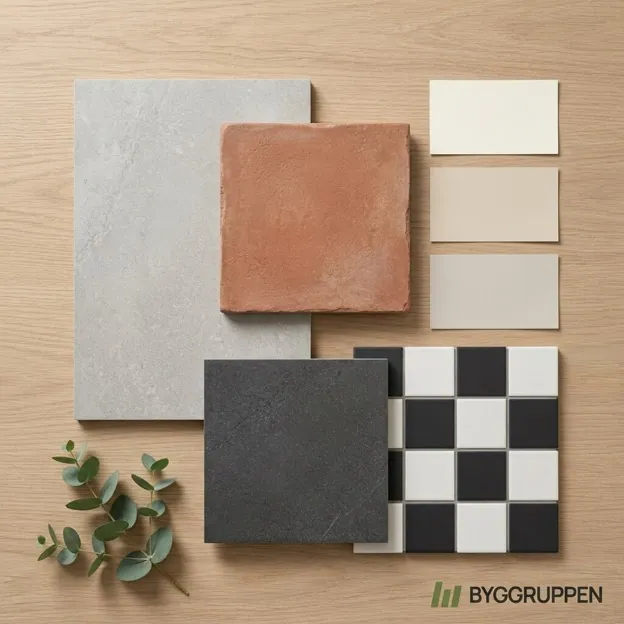
- Colour: mid tones like grey, greige and warm terracotta hide everyday dirt better than pure white or black.
- Size: larger tiles make a small hallway feel bigger and mean fewer grout joints to clean.
- Surface: a matt, slip resistant finish is safer when the floor is wet. Glossy tiles become slippery.
- Pattern: chequerboard or herringbone layouts add personality, especially with calm walls around them.
Large, neutral tiles suit modern Scandinavian interiors, while smaller patterned tiles add character to older villas.
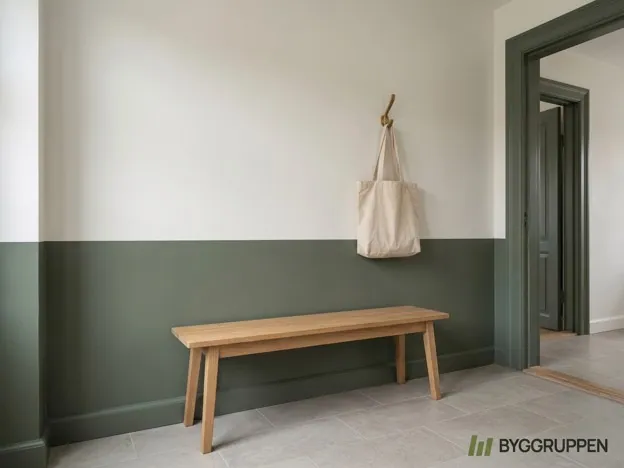
What paint colours make a hallway feel bigger and brighter?
Light, warm colours such as warm white, cream and soft greige reflect daylight and make a narrow hallway feel wider and more welcoming.
Many Danish hallways have few or no windows, so wall colour makes a big difference. Ideas that work well:
- Warm white walls for a clean, Scandinavian look.
- Soft beige or greige to add warmth without closing in a small space.
- A darker lower wall or painted panel to hide marks from shoes and bags.
- A bright white ceiling to make the room feel taller.
- Doors, frames and skirting boards in a slightly stronger tone for a modern finish.
The type of paint matters as much as the colour. Use washable, hard wearing paint made for busy areas, so fingerprints and scuffs wipe off without damaging the finish. Professional indvendig malerarbejde gives smooth walls, sharp edges and even coverage, which makes even a small, older hallway feel new.
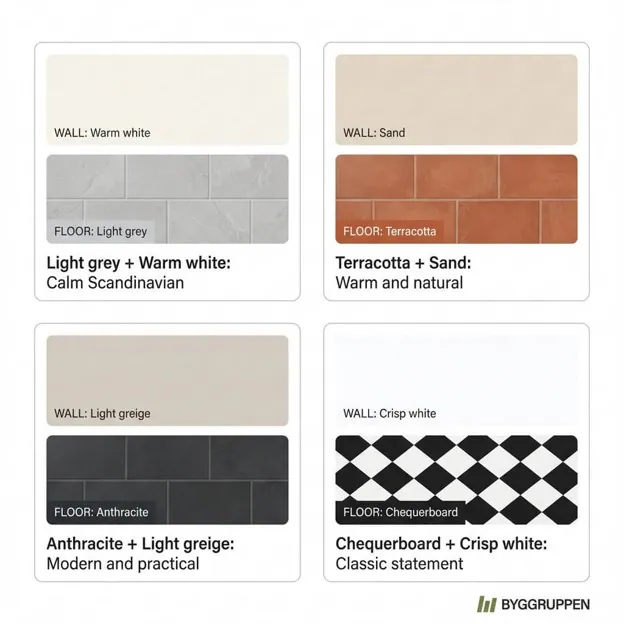
Tile and wall colour combinations for a Danish hallway
| Floor tiles | Wall colour | Style |
| Light grey | Warm white | Calm Scandinavian |
| Terracotta | Soft beige or sand | Warm and natural |
| Dark grey or anthracite | Light greige | Modern and practical |
| Black and white chequerboard | Crisp white | Classic statement |
In smaller hallways in Ballerup and Skovlunde, the lighter combinations work best. Larger, brighter entrances can handle darker floors for contrast.
How can lighting and storage complete the hallway?
Good lighting and storage planned around how your family uses the hallway make it both practical and welcoming.
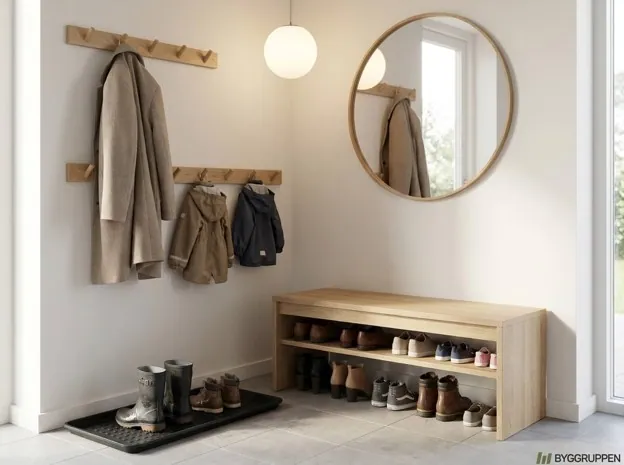
- Built in wardrobes keep coats and seasonal clothing out of sight.
- Wall hooks at different heights for adults and children.
- A shoe bench to sit on, with storage underneath.
- A boot tray by the door for rainwater and dirt.
- A large mirror to reflect light and double the sense of space.
- Ceiling spots or a statement pendant, plus a wall light by the mirror.
In older Danish homes with little daylight in the hallway, combining ceiling lights with softer wall lights makes the biggest difference.
In what order should you do a hallway makeover?
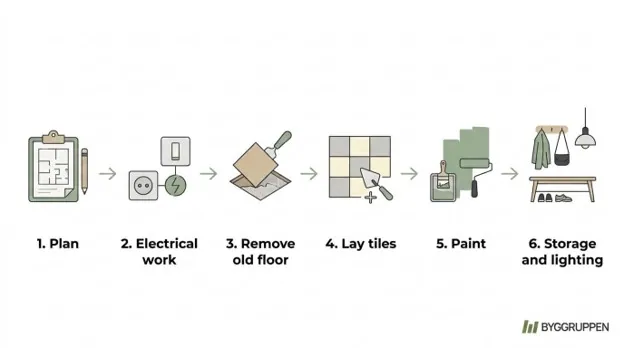
Do the technical work first, then the floor, then the paint, and finish with storage and lighting.
- Plan the layout, storage and lighting.
- Electrical work for new lights, switches or sockets.
- Remove the old floor and prepare the subfloor.
- Lay the new tiles.
- Paint walls, ceiling, doors and skirting boards.
- Fit storage, mirror and lighting.
Laying the tiles before the final coat of paint means the fresh walls are not damaged during the floor work.
Frequently Asked Questions
What is the best floor for a hallway in Denmark?
Tiles are the best choice for most Danish hallways. Porcelain and ceramic tiles handle wet boots, rain and winter gravel without damage, and are easy to clean. Choose a matt, slip resistant surface for safety.
What colour should I paint a small, dark hallway?
Warm white, soft beige or light greige. These colours reflect daylight and make the space feel more open. A darker shade on the lower part of the wall hides scuffs while keeping the hallway bright.
Can I have underfloor heating under hallway tiles?
Yes. Tiles are one of the best floors for underfloor heating, because they spread heat efficiently. It keeps the hallway warm in winter and helps wet shoes dry faster.
Which tile colour hides dirt best?
Mid tones such as grey, greige and warm terracotta hide dust, gravel and muddy marks better than very light or very dark tiles. A slightly textured matt finish helps too.
How do I protect hallway walls from scuffs and marks?
Use washable, hard wearing paint made for busy areas. A darker lower wall, a painted panel or well placed hooks and storage also stop coats and bags from rubbing against the walls.
Please be aware that selected links within this article may be commercially affiliated or sponsored. Dwellifyhome.com may receive compensation when readers make qualifying purchases or when paid promotional content is published.