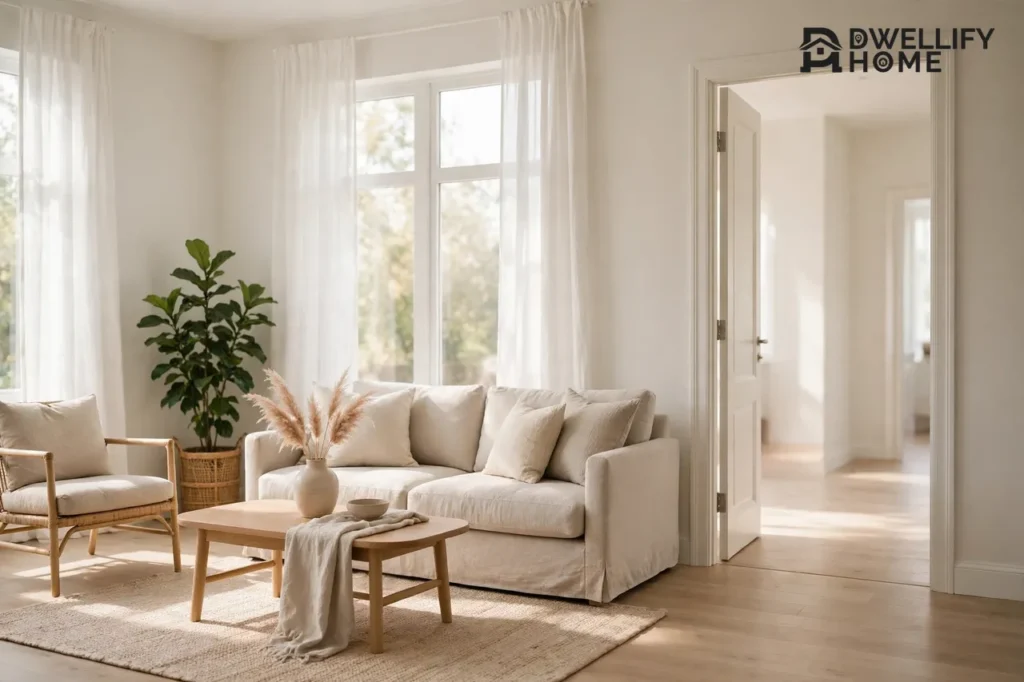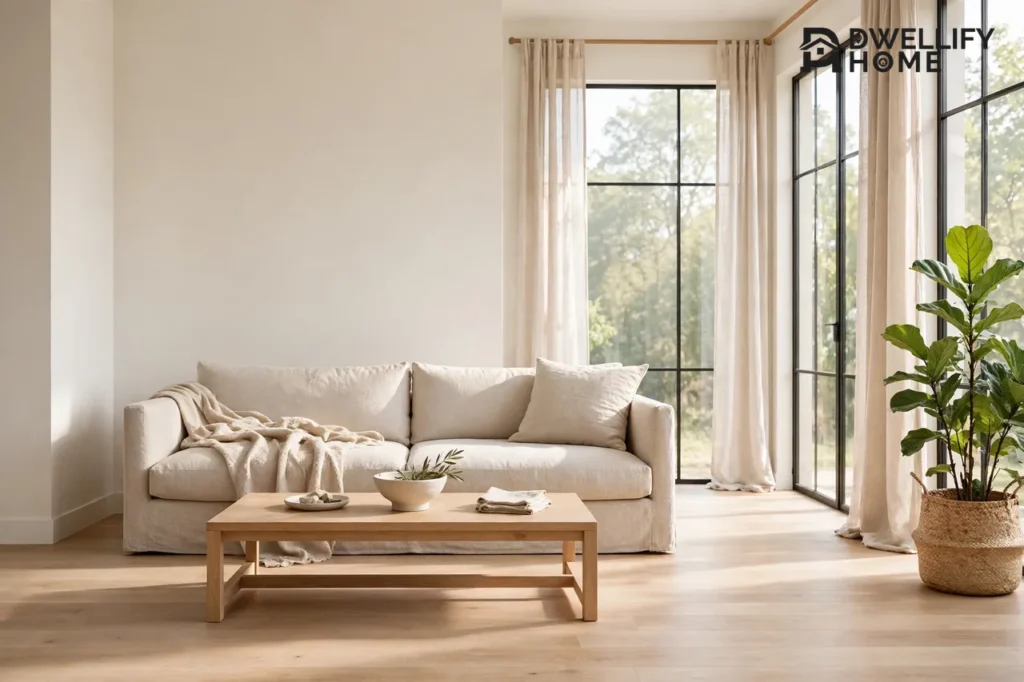
Minimalist home decor essentials are the few pieces that are either useful, loved, or both, and they make a simple room feel finished instead of empty. The full list fits in one short shopping trip: comfortable seating, a good rug, layered warm lighting, natural textiles, closed storage, and one or two meaningful accents.
That is the whole secret. A calm home does not come from owning almost nothing. It comes from choosing each piece on purpose and giving it room to breathe. This guide walks through the 15 essentials, room by room, so you can build a modern minimalist home decor look without guessing, overspending, or stripping the warmth out of your rooms.
What Minimalist Home Decor Essentials Really Are
Minimalist home decor means every item in a room serves a purpose or brings genuine value. A chair holds people. A lamp gives light. A vase holds flowers you actually cut. If a piece does neither job, it is clutter wearing a nice color.
Architectural Digest’s design experts describe minimalism as resisting the urge to fill every void, while choosing objects, colors, and patterns with care. That is a useful test. Look at any surface in your home and ask one question: does this earn its place? Most rooms fail the test on the shelves first, not the furniture.
Minimalist home decor is not one style. It shows up as Scandinavian pale wood, warm Japandi calm, or a modern minimalist home decor look with black accents and stone. The pieces below work in all three, because they are about function first and looks second. The style itself traces back to the 1960s, when minimalism began as an extension of midcentury modern design.
Start With the Room, Not the Shopping List
Before you buy anything, walk each room with three questions. What do you do here every day? What do you reach for most? What gets in your way? The answers tell you which essentials matter and which ones you can skip.
Then use the useful-or-loved test on everything already in the room. Keep a piece if you use it weekly or you genuinely love looking at it. Move the rest to another room, donate it, or store it out of sight for a month. If you never miss it, you have your answer.
A good order saves money. Clear first, then fix the light, then buy the missing pieces. Many rooms feel finished after the clearing step alone, and the shopping list shrinks by half. That is the cheapest upgrade in this guide.
The Furniture Essentials
Furniture does the heavy lifting in a simple home, so buy fewer pieces and buy them well. A sofa you sit on every evening deserves more of your budget than five small tables you never touch.
A comfortable, well-sized sofa
Pick the sofa by how your household actually sits. A two-seat sofa fits most living rooms better than a bulky sectional that eats the floor. Sit on it in the store if you can. The seat should feel firm enough to stand up from easily and soft enough to stay on for a movie.
Choose a plain fabric in a neutral tone. It forgives crumbs, matches every throw you will ever buy, and still looks right in five years. Removable covers are worth paying for if you have kids or pets.
A table that fits the room
A coffee table should sit about the same height as the sofa seat and leave room to walk around it. A dining table needs one clear job: meals, work, or both. If it does both, pick a hard surface that wipes clean in one pass.
Round tables soften a square room and make small spaces easier to move through. A simple wooden top with slim legs beats a heavy carved base in a minimalist room every time.
Multifunctional pieces that work twice as hard
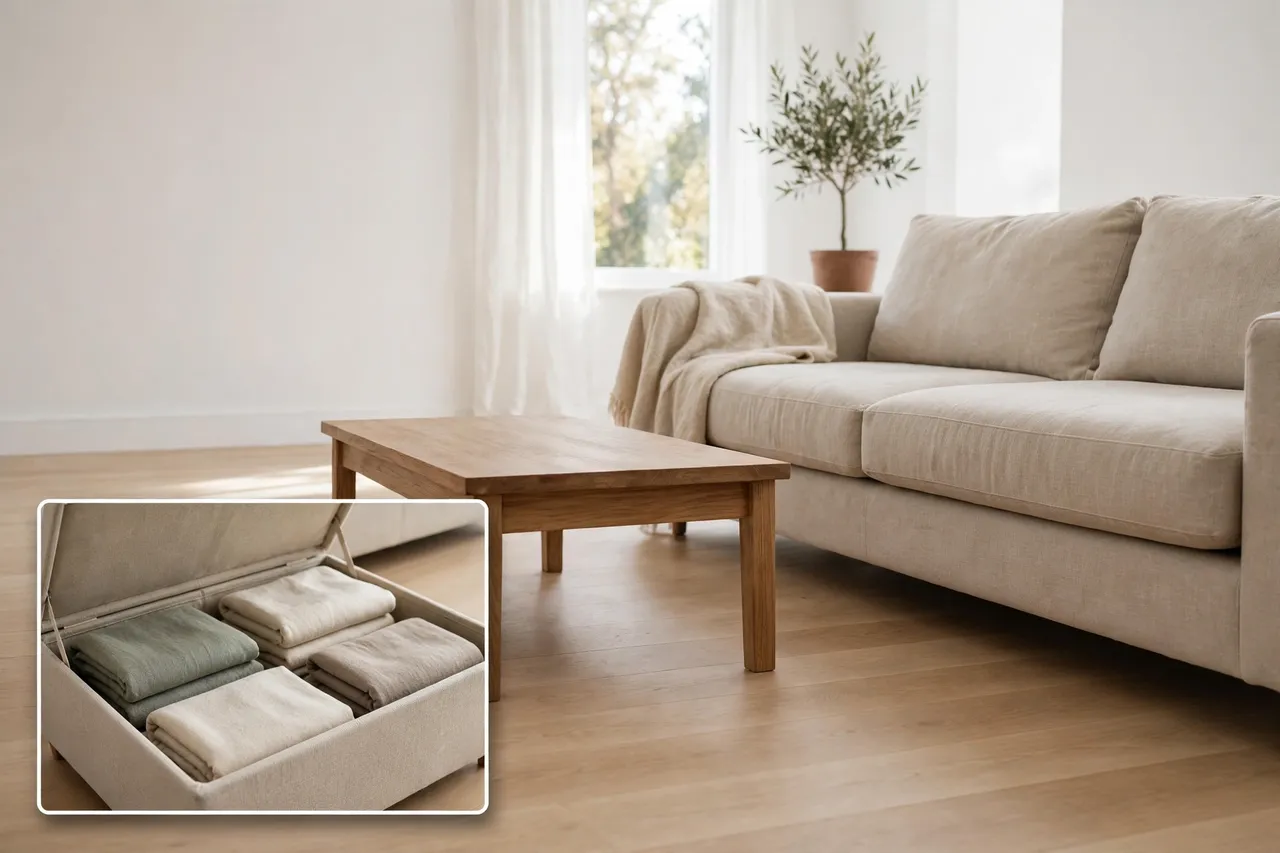
In a minimalist home, furniture has to work harder. A storage ottoman doubles as a coffee table and hides blankets. A bed frame with drawers swallows spare bedding. A bench by the door holds shoes and gives you a place to sit while you put them on.
One good multifunctional piece often replaces two or three small ones. That is how a room gains open floor space without losing any real function.
Lighting That Makes a Simple Room Feel Warm
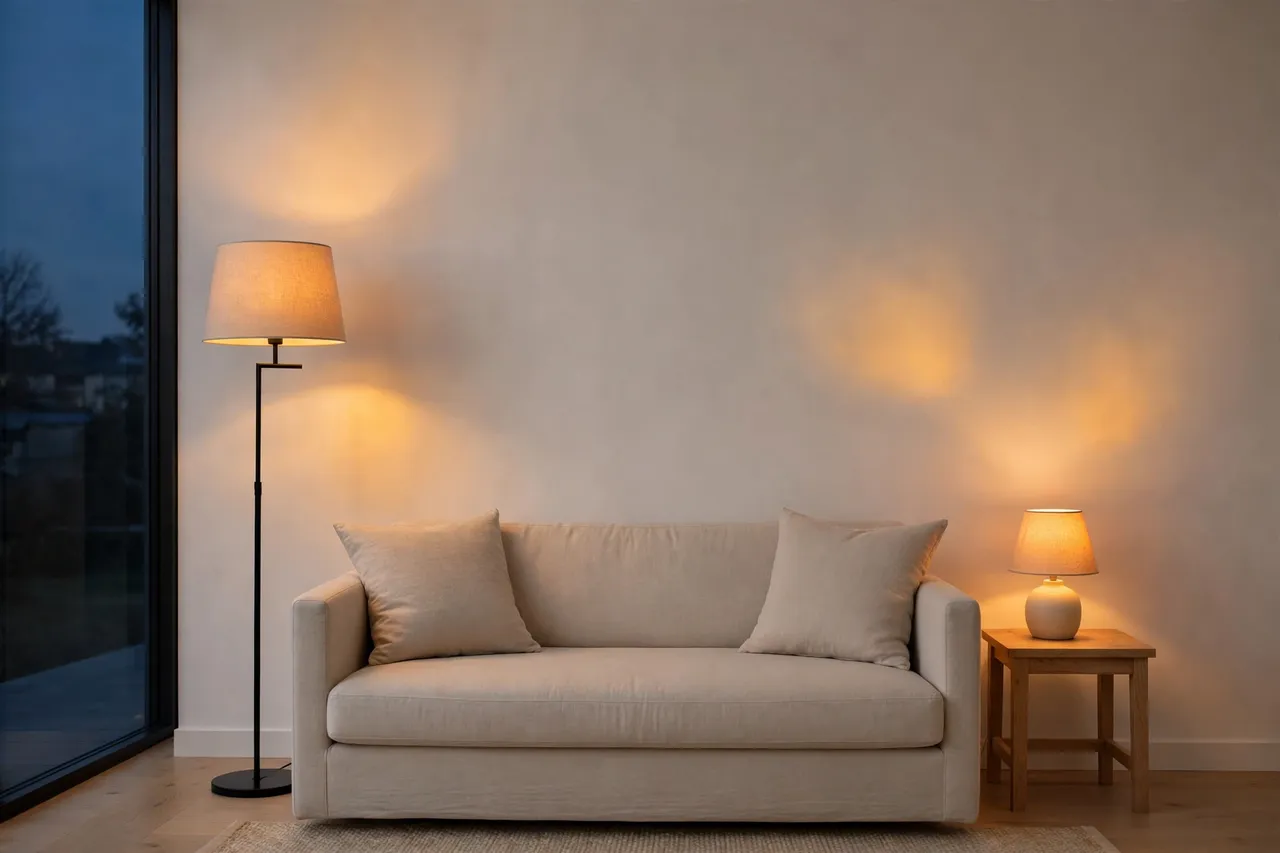
Lighting does more for a minimalist room than any other single thing. One ceiling light alone makes a room feel flat and cold, no matter how nice the furniture is. Layer the light instead, at three heights if you can.
Start with one floor lamp beside the sofa and one table lamp on a sideboard or bedside table. Warm bulbs around 2700K give the amber glow that makes wood and linen look expensive. Add a dimmer switch if you can, because the same room needs bright light for cleaning and soft light for evenings.
Daylight matters just as much. Keep windows clear of heavy curtains and tall furniture. A mirror opposite a window bounces light across the room and makes a small space feel twice as big. If your room feels tired, these easy ways to refresh a living room can help before you buy anything new.
Textiles: Rugs, Curtains, Throws and Cushions
Textiles are where a simple room gets its warmth. Hard floors, plain walls, and smooth furniture need something soft to touch, or the room feels like a showroom.
One good rug
A single, generously sized rug grounds a room and softens the echo. It should be big enough for the front legs of the sofa and chairs to sit on it. A rug that is too small is the most common mistake in minimalist rooms, and it makes everything else look lost.
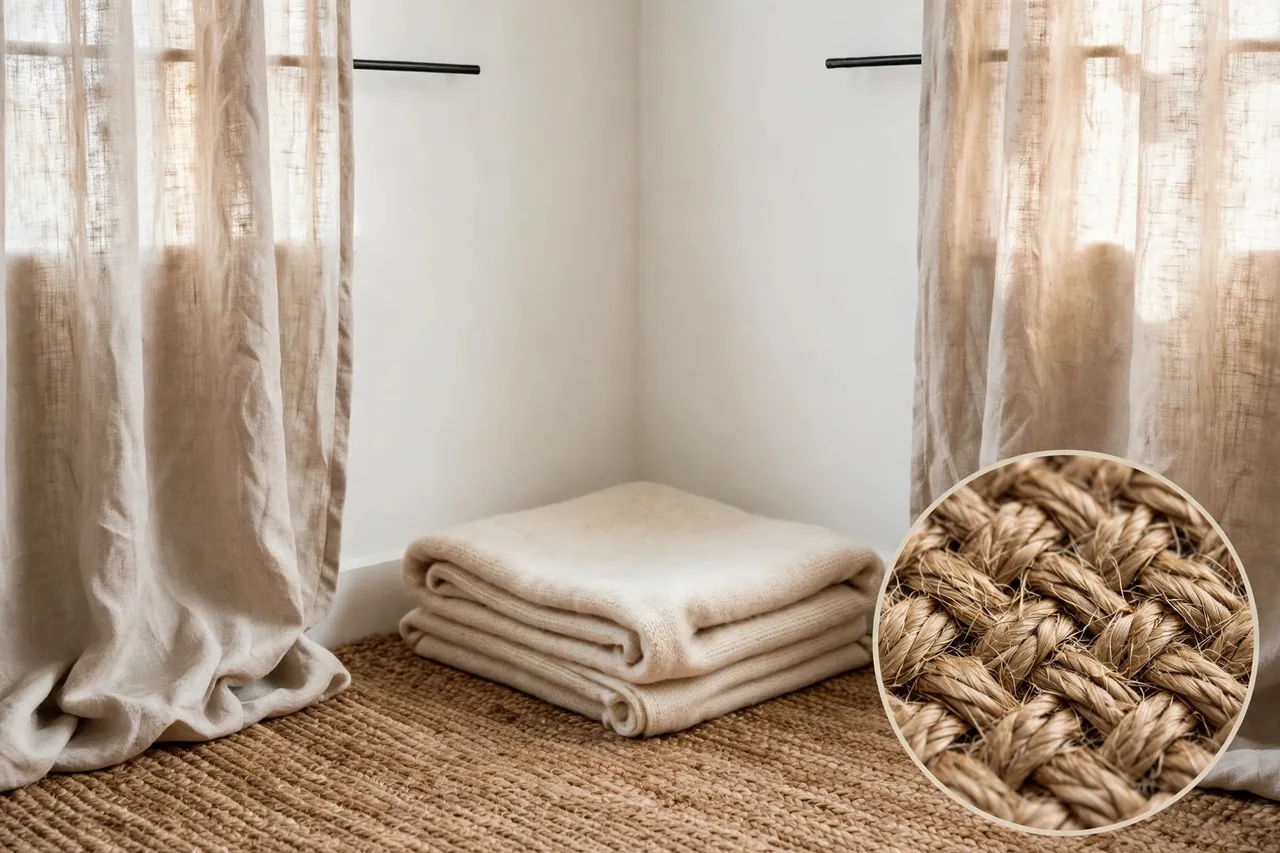
Natural fibers like wool or jute look better for longer and hide wear well. Pick a plain weave or a quiet pattern. The rug is the base, not the star.
Curtains, throws and cushions
Linen or cotton curtains let in soft light and add texture without adding clutter. Hang them high and let them touch the floor. One good throw blanket on the sofa, in a texture you like touching, is both decor and something you will use every week.
Two or three cushions are enough. Mix the textures, not the patterns: wool, linen, and cotton in the same color family. When the textures do the work, the room stays calm and still feels rich.
Natural Materials and Texture
When a room holds few objects, the quality of surfaces matters more. Oak, linen, wool, stone, and matte ceramic each carry their own texture, and a restrained room leans on that texture for interest instead of pattern.
Mix three materials per room at most. Warm wood against soft white walls, a woven basket beside a smooth ceramic vase, a wool throw over a leather chair. That contrast keeps the eye moving without adding a single extra object.
Real materials age well, which is the point. A solid wood table gains marks that tell its story. A linen curtain softens with every wash. Cheap shiny finishes do the opposite: they look tired fast and date the room.
Storage That Hides the Mess
Clear surfaces depend on storage, and minimalist home decor essentials are not complete without it. Every item you use daily needs a home within arm’s reach of where you use it, or it ends up on the counter.
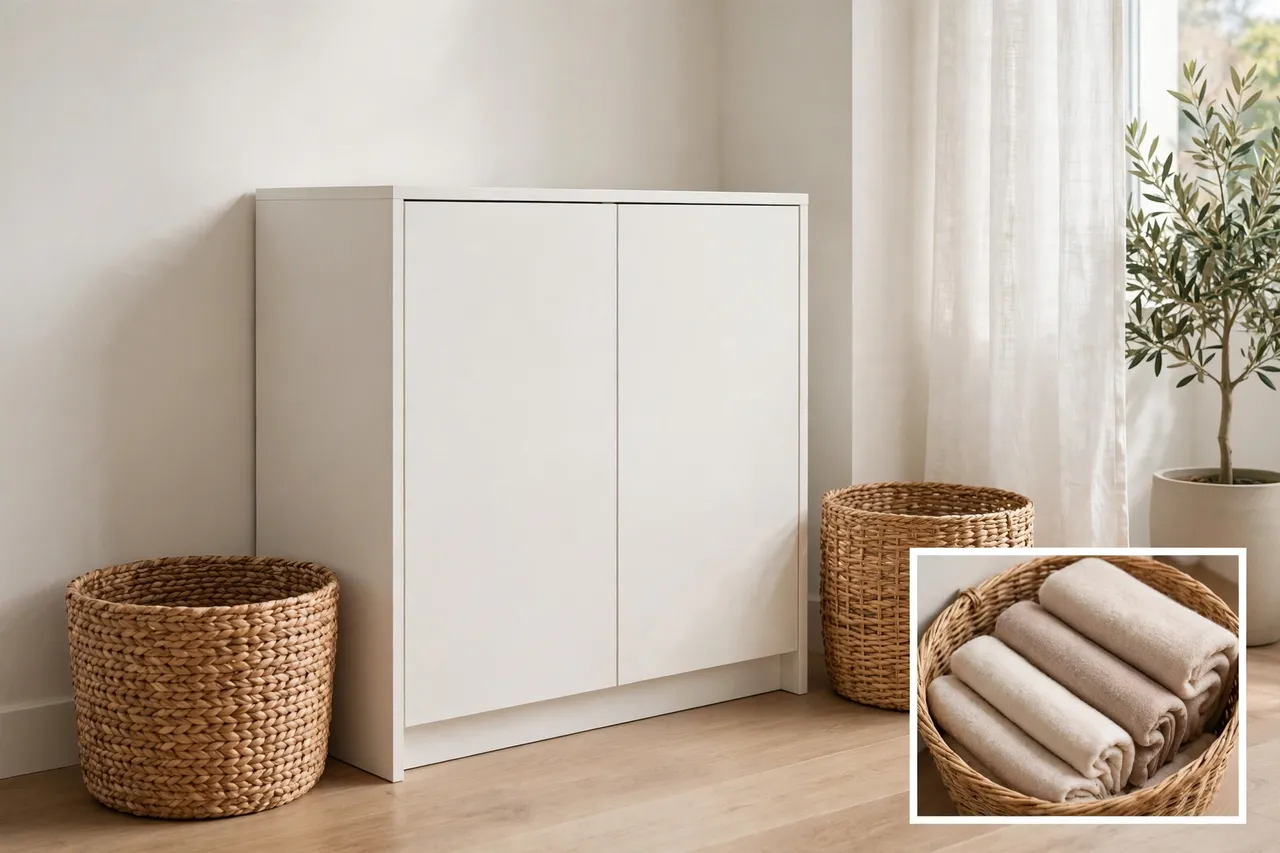
Closed storage beats open shelves in a simple home. A plain cabinet with doors hides the mess and shows a calm face to the room. Open shelves work only when they hold a few beautiful things with space around them.
Woven baskets are the friendliest fix. A couple of baskets hide blankets, toys, or cables and add texture at the same time. Keep one by the sofa, one by the door, and one in each bedroom. If a basket fills up, it is time to edit, not time to buy a bigger basket.
The Few Decor Pieces That Earn Their Place
Decor is the last step, not the first. Once the furniture, light, and textiles are right, a room needs only a handful of accents to feel personal.
One piece of art you love
One large piece of art beats ten small frames. Hang it at eye level where you see it daily, not where guests see it first. If you love it, the room has a heart. If you bought it to fill a wall, the wall still looks empty.
Plants, a mirror and a vase
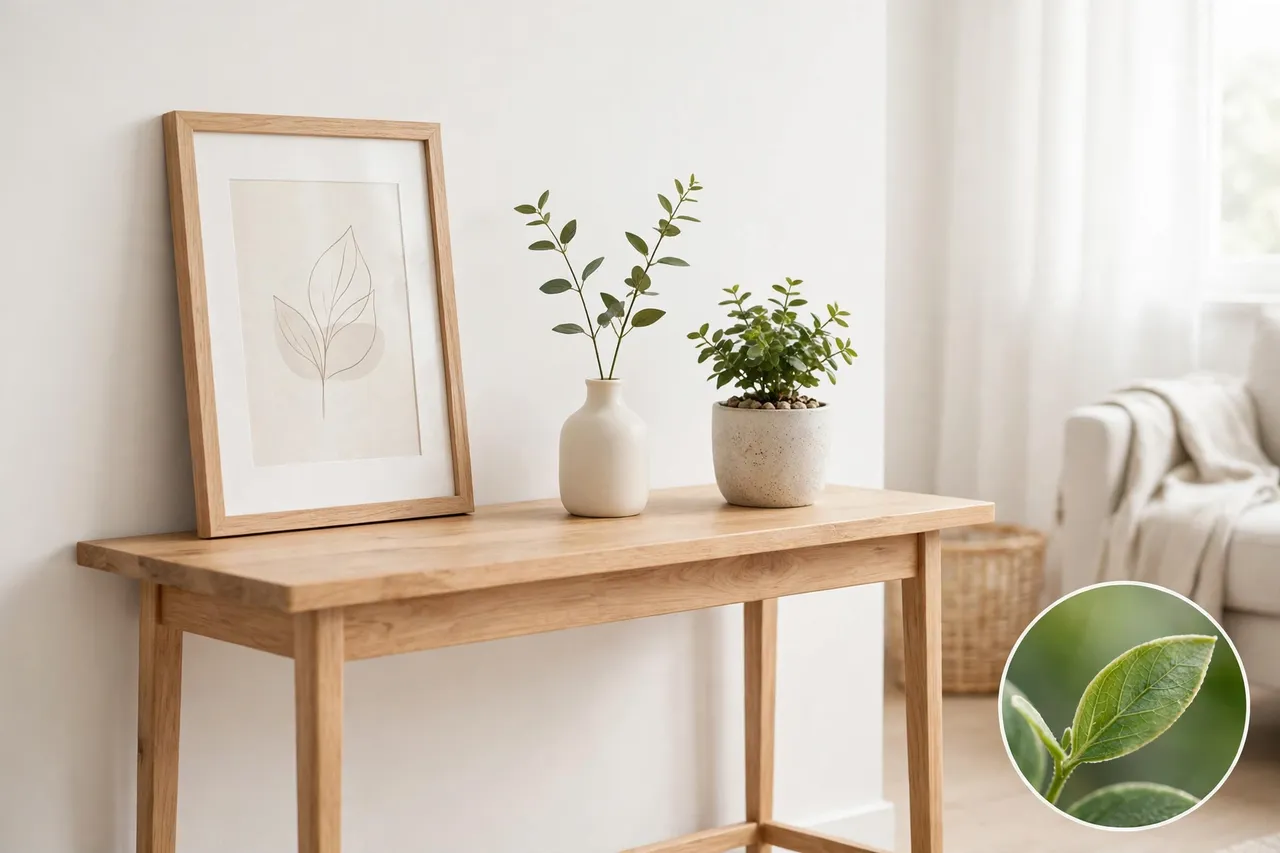
A few healthy plants bring life into a room that nothing else can. Pick one medium plant for a corner and a small one for a table, and learn what each one needs. A large mirror adds light and makes the room feel open. A simple ceramic vase, empty or holding one stem, finishes a surface without crowding it.
Group small accents in odd numbers, three at most, and leave the rest of the surface empty. The empty space is what makes the three pieces look intentional.
A Calm Color Palette That Ties It Together
Neutral tones like white, beige, soft gray, and warm earth colors work best for minimalist interiors. Natural wood and small black accents add contrast and depth, so the room never looks washed out.
Use the 60-30-10 rule as a guide. About 60 percent of the room is the main neutral, walls and sofa. About 30 percent is a secondary tone, wood or a muted earth color. About 10 percent is the accent, a deep green cushion or a black lamp. One accent color is enough. Two accents start an argument.
Paint is the cheapest way to set the palette. A warm white on the walls suits almost every minimalist room, because it bounces light and lets the wood and textiles carry the warmth. Test the paint on the wall at morning and evening before you commit, since the same white can look pink at dawn and gray at dusk.
Room-by-Room Essentials Checklist
Use this table as a shopping list. Start with the rooms you live in most, and buy only what your room is missing.
| Room | Start with these essentials | Add only if needed |
|---|---|---|
| Living room | Sofa, rug, floor lamp, coffee table | One art piece, one plant, baskets |
| Bedroom | Bed, plain bedding, bedside lamp | One throw, one plant, closed storage |
| Kitchen | Clear counters, one good light, closed storage | Wood board, ceramic jars, one plant |
| Bathroom | Plain towels, one mirror, closed cabinet | One plant, one tray, wood stool |
| Entryway | Bench or hooks, one basket, one mirror | One tray for keys, one small rug |
A simple living room needs fewer pieces than you think, and our guide to it shows how to arrange them. For the rest of the house, start with the minimalist home pillar, which covers the whole-house plan room by room.
What to Skip in Minimalist Decor
Knowing what to skip saves more money than any sale. Skip decor bought to fill a space rather than because you love it. Skip matching sets of everything, which make a room feel like a showroom. Skip trend pieces you will be tired of in a year.
Skip lots of small ornaments that clutter surfaces. Five tiny objects on a shelf look like dust collectors, while one good vase looks like a choice. Skip the second rug, the third cushion set, and the extra side table until the room proves it needs them.
If you already own these things, you do not need to throw them away. Move them to a drawer for a month. The pieces you go back for are the ones that matter. For a full clear-out first, our guide on how to declutter your living room walks through it step by step, and the declutter your home guide covers the whole house.
How to Build Your Essentials on a Budget
Minimalism often costs less over time because you buy fewer, better items instead of constantly replacing cheap decor. The upfront cost of quality pieces can be higher, but the long-term spending tends to drop.
Start by rearranging existing furniture, adding plants, and choosing a simple paint color. Those three moves cost almost nothing and change a room more than a new side table does. Then buy one essential at a time, starting with the rug and the lighting.
Secondhand shops, flea markets, and thrifted wood furniture are a minimalist’s best friends. A solid wood table with a scratch costs little and lasts decades, while a new flat-pack table costs more and lasts a few years. Check charity shops first for baskets, vases, and lamps, and buy the sofa and mattress new.
Set a simple rule before you shop: wait thirty days before buying any decor, and if you still want it, buy it. Most wants fade in a week. The ones that survive the month are the pieces your home actually needs.
Related Guides
If this list helped, these guides take the next step with you. Read the minimalist home pillar for the whole-house plan, then see how to declutter your living room before you buy anything new. For calmer mornings, the guide to decluttering your bedroom and the home organization systems guide keep the calm going after the decor is done.
Frequently Asked Questions
What are the essentials of minimalist home decor?
The essentials include a neutral color palette, quality furniture, natural materials like wood and linen, functional storage, simple lighting, and a few meaningful decorative pieces like art, plants, or ceramics. Start with the sofa, rug, and lighting, then add textiles and storage before any decor.
How do I decorate a minimalist home without making it feel empty?
Focus on texture, warm lighting, and a few personal touches rather than filling every surface. Layer fabrics like wool and linen, add greenery, and use warm bulbs so each piece stands out. Empty space is part of the design, not a gap to fill.
Which colors work best for minimalist interiors?
Neutral tones like white, beige, soft gray, and warm earth colors work best. Natural wood and small black accents add contrast and depth. Keep to one main neutral, one secondary tone, and one accent color so the room stays calm.
How can I make my home look minimalist on a budget?
Rearrange existing furniture, add plants, use linen textiles, and choose a simple paint color. Buy secondhand wood furniture and baskets, buy one essential at a time, and wait thirty days before buying any decor so only real needs survive.
Is minimalist decor still in style?
Yes. Minimalist decor continues to grow in popularity because it prioritizes comfort, function, and timeless design over passing trends. Warm minimalism, with natural materials and soft textures, keeps the style feeling current and lived in.
A calm home is not a finished project. It is a habit of choosing well, keeping little, and letting each piece earn its place. Start with one room this weekend, clear it, fix the light, and add only what it is missing. The rest of the house will follow.