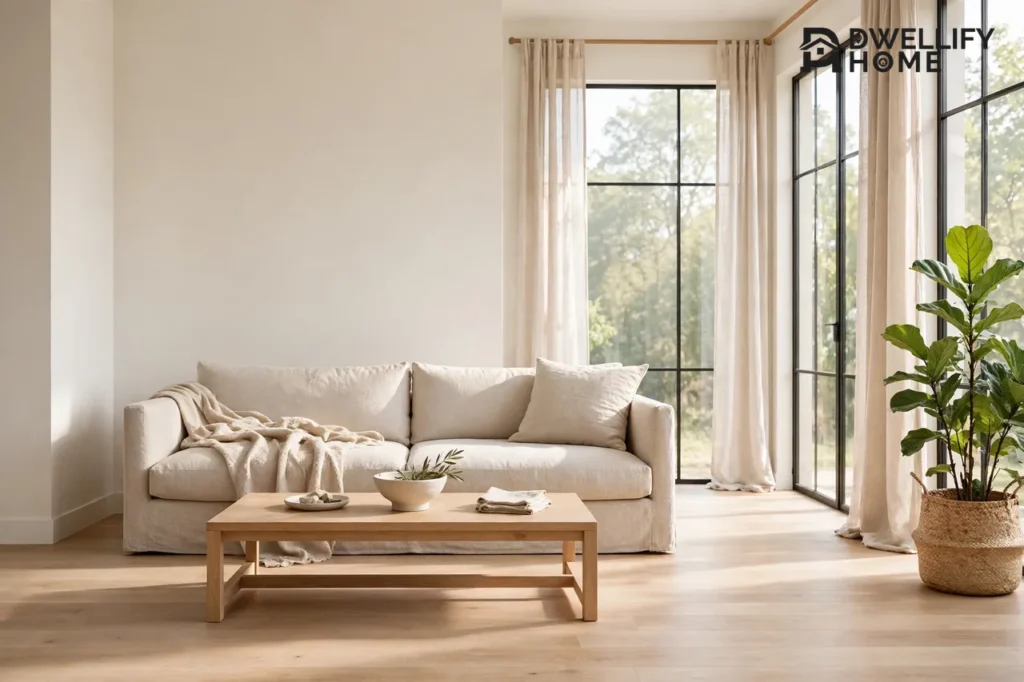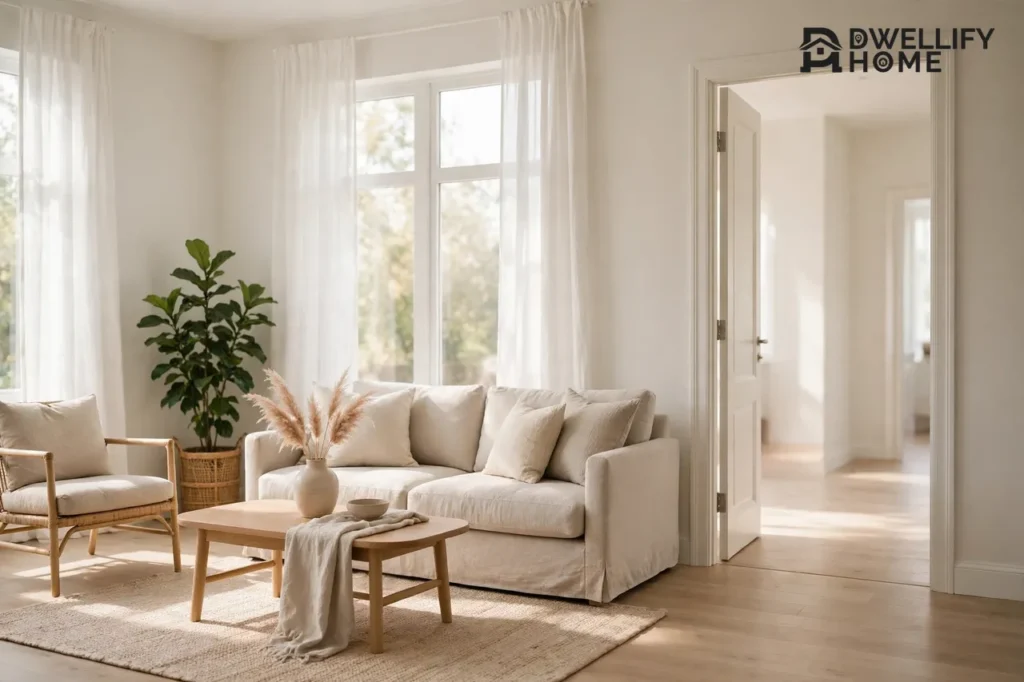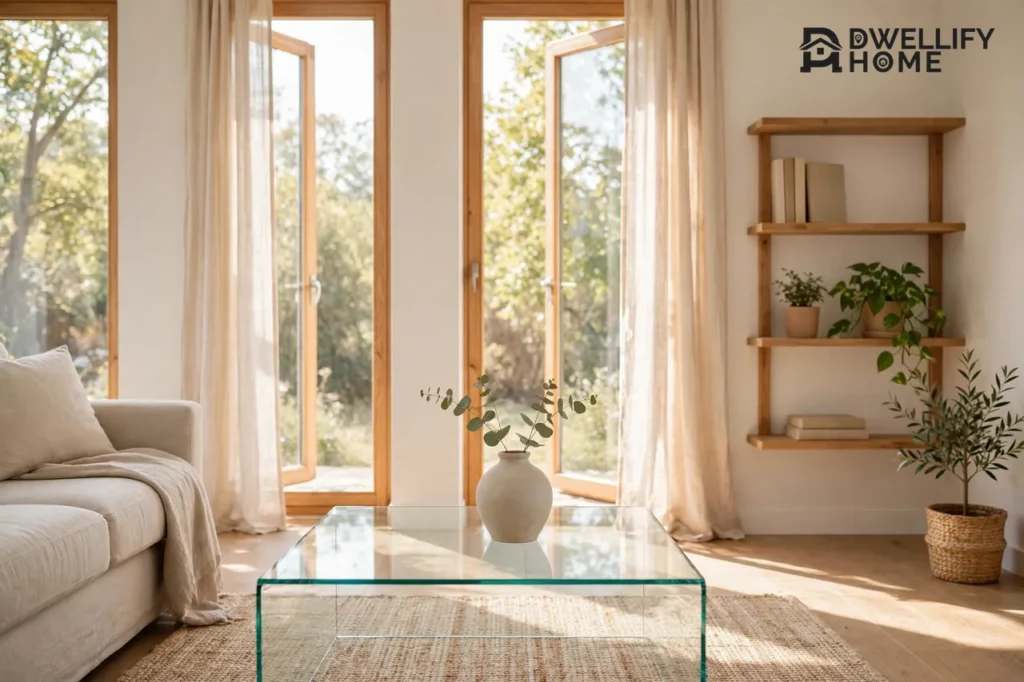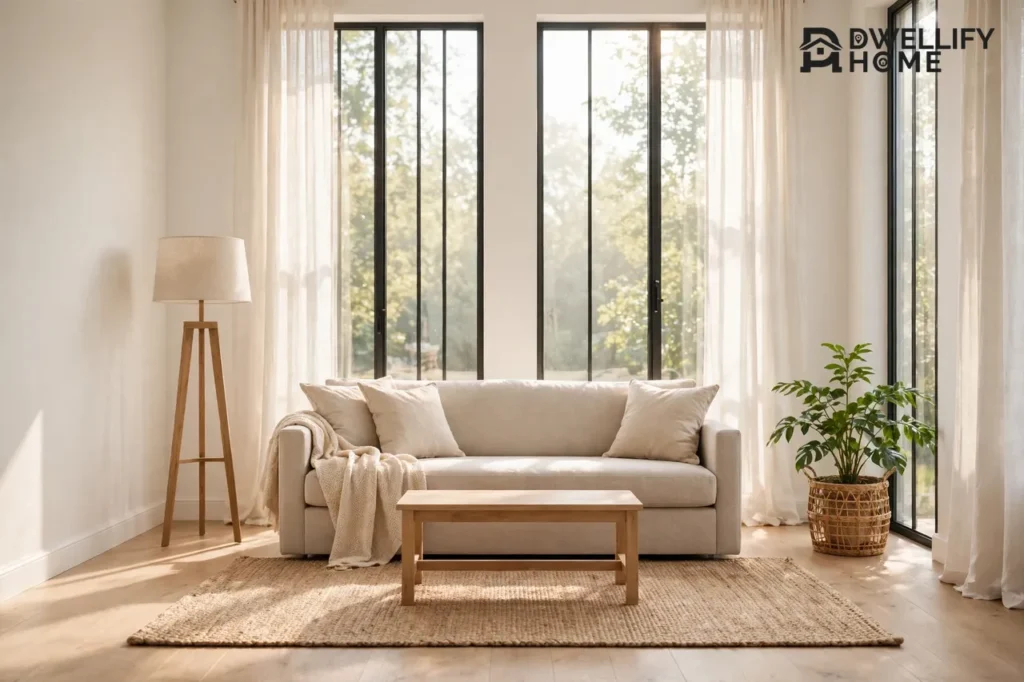
A simple living room is a pared-back room built on one clear layout, a three-color palette, layered warm light, and a few comfortable pieces. It is about harnessing the power of a clean space that is easy on the eye, restful, and budget-friendly, and it works in a big family room just as well as in a small apartment.
The trick is that simplicity is a plan, not a purchase. You do not need a new sofa to get there. You need to decide what the room is for, clear what fights that purpose, and arrange what is left so the room breathes. This guide shows each step, with the mistakes to avoid and the cheap fixes that matter most.
What a Simple Living Room Really Is
Simple living room design is rooted in one principle: rid the home of clutter and let the room do its job. A pared-back scheme is not empty. It holds the pieces you use every day, arranged with space around them, and nothing else competing for your eyes.
That is different from a bare room. A bare room has nothing to sit on and nowhere to put a cup. A simple living room has a good sofa, a table within reach, light at two heights, and a rug underfoot. What it does not have is five side tables, three patterns fighting each other, and a shelf of objects nobody dusts.
Designers call the feeling “quiet.” A room with little ornamentation and few competing objects reduces visual noise, so your mind can actually rest when you sit down. That calm is the whole point of keeping the room simple.
Start With the Room’s Job
Before you move a single chair, name what the room must do. A room for quiet reading needs a different layout than a room built around a big TV and family movie nights. A room where kids play needs hidden toy storage. A room where you host friends needs chairs that face each other.
Write the top two jobs down. Everything in the room should serve one of them. If a piece serves neither, it belongs in another room or out of the house. This one decision makes every later choice easy, because you stop decorating for a magazine and start arranging for your life.
Our guide to minimalist home design covers the same idea for the whole house, and it is worth reading before you buy anything new. The living room is the easiest place to start, because you use it every day and you will feel the change the same evening.
A Layout That Gives You Room to Breathe
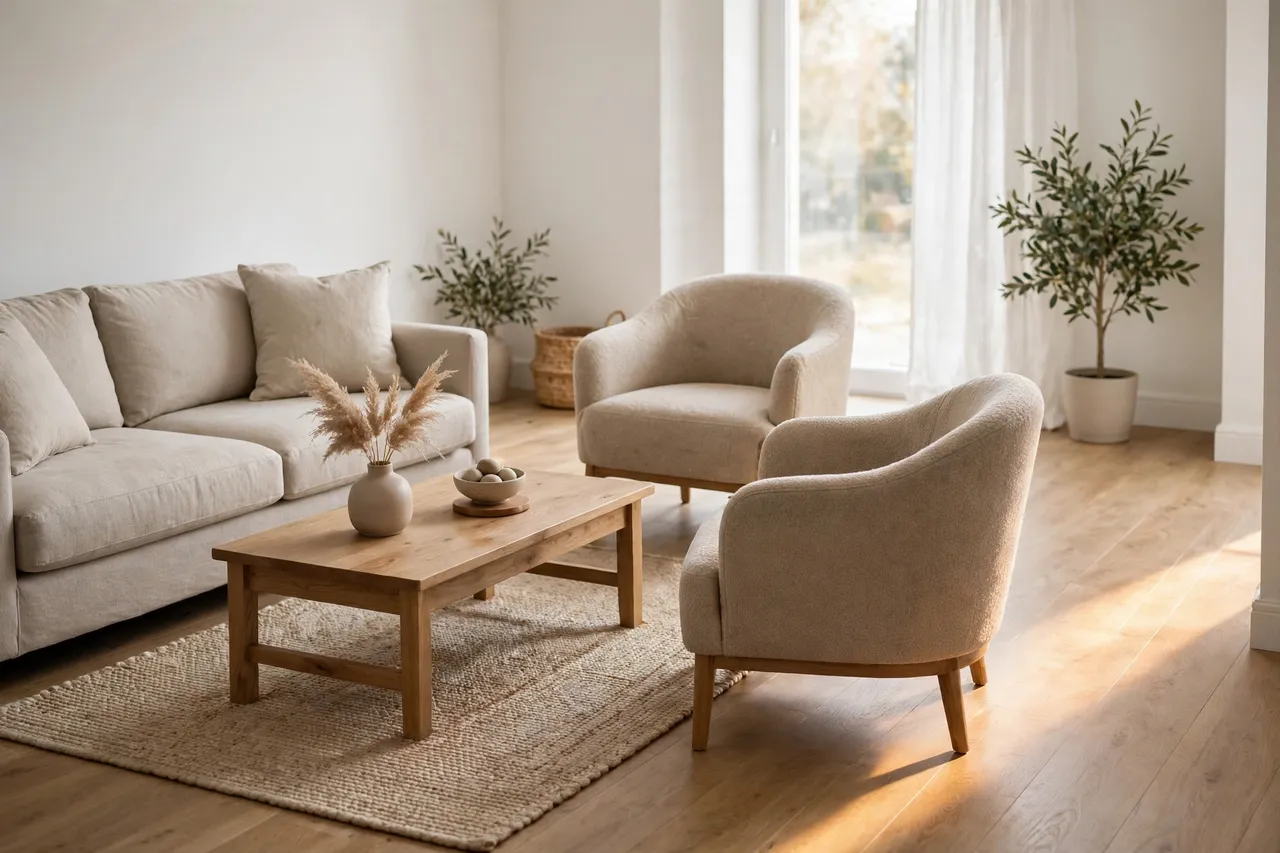
Layout is the foundation of a beautiful living room. Start by picking one focal point: the window with the best light, the fireplace, or the TV if movie nights rule the room. Group the seating around it, not against the walls.
Pull the sofa a few inches off the wall. It feels wrong the first time, and then the room suddenly looks bigger, because the eye reads the gap as space. Leave a clear walking path between the seating and the door, wide enough to pass without turning sideways.
Keep the big pieces to three or four: sofa, one or two chairs, a coffee table, and maybe a sideboard. Fewer large pieces always look calmer than many small ones, because small furniture in a small room actually makes it look cluttered, with too many legs and gaps. One big, well-placed sectional that fits the wall looks far calmer than four small chairs scattered around.
Pick the Right Sofa and Chairs
The sofa is the room’s anchor, so choose it for comfort first and looks second. Sit on it the way you sit at home: curled up, stretched out, with a book. A sofa that looks perfect and feels like a bench will not stay simple for long, because you will pile cushions on it to fix the comfort.
Measure before you buy. A small sofa in a big room feels lost, while an oversized sofa in a small room feels suffocating. Leave at least 45 centimeters of walking space around the main pieces, and check that the coffee table sits about the same height as the sofa seat.
Pick a plain fabric in a neutral tone. It matches every throw you will ever own and still looks right in five years. Removable covers are worth paying for in a house with kids or pets. Add one accent chair in a different texture, not a matching set, so the room feels collected rather than bought in one afternoon.
The 60-30-10 Color Rule
A limited color palette eliminates visual noise and decision fatigue. The easiest way to do it is the 60-30-10 rule. About 60 percent of the room is the main color, walls and sofa. About 30 percent is a secondary color, accent chairs or curtains. About 10 percent is the accent, pillows, art, or a vase.
Start with warm neutrals: soft white walls, a beige or light gray sofa, and natural wood. Then add one muted earth tone, like sage green or warm clay, for the 30 percent. The accent can be one deeper color you love, but only one. Two accents start an argument.
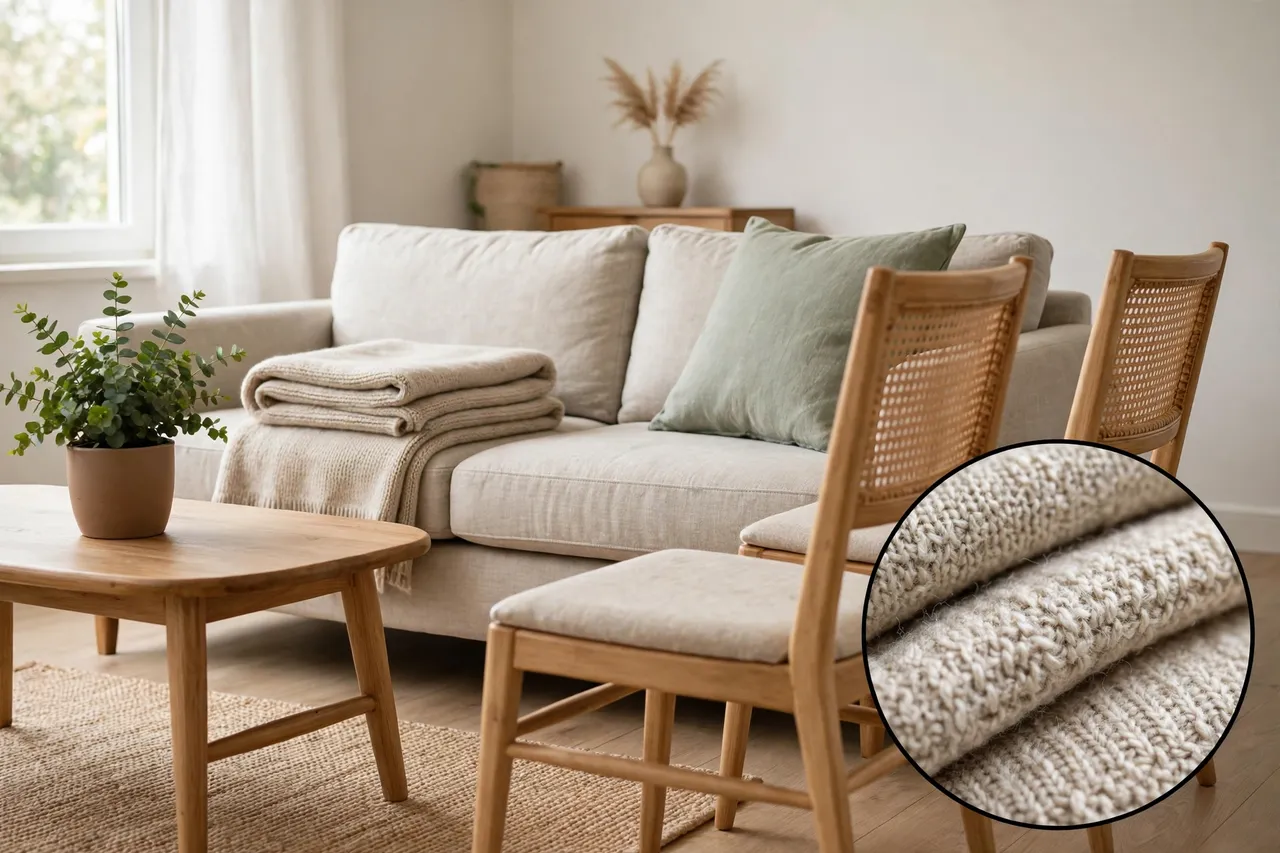
Texture does the work that pattern used to do. Linen curtains, a wool throw, a jute rug, and smooth wood give the eye plenty to enjoy without a single busy print. If you love pattern, keep it to one small thing, a cushion or a throw, and let the rest of the room stay quiet.
Layer the Lighting
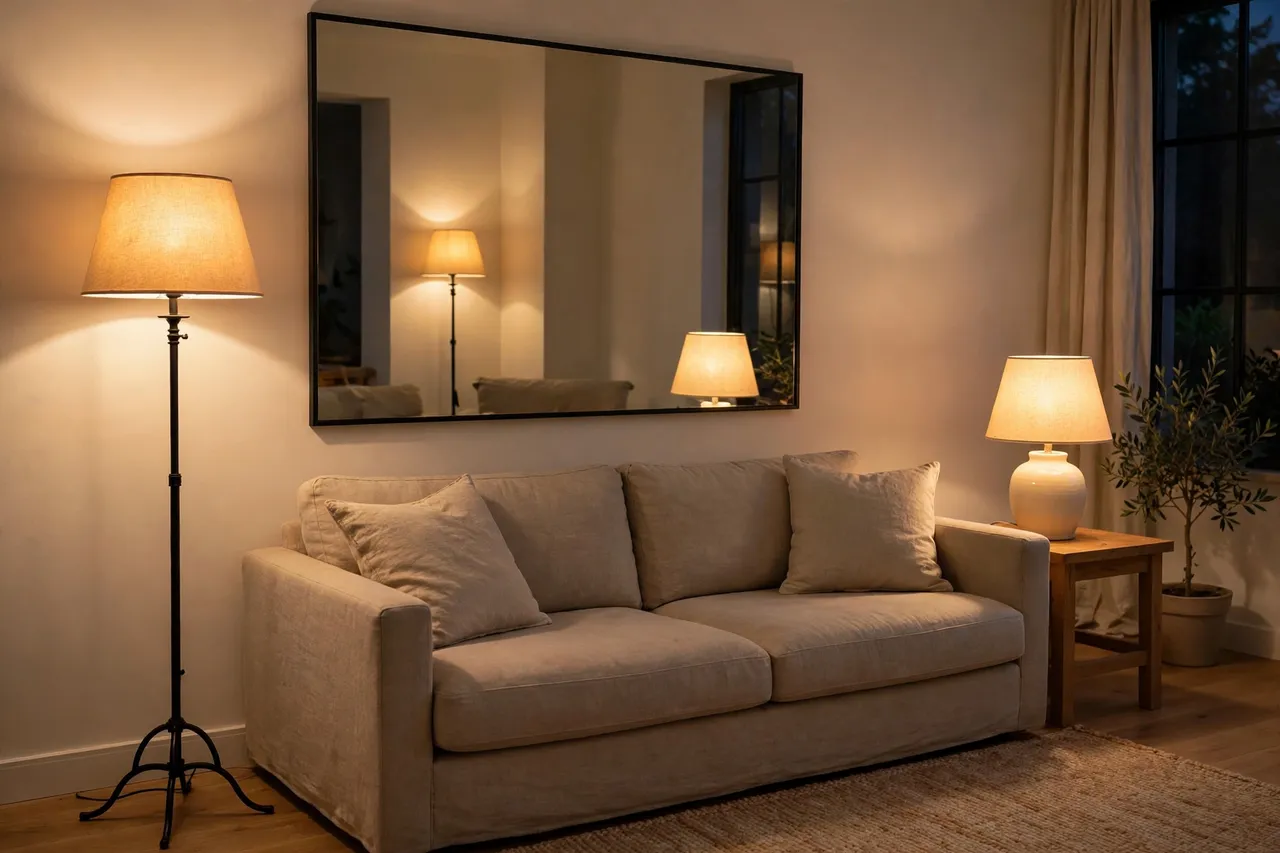
Relying only on harsh ceiling light leaves a room uninviting and cold. Layer your lighting instead: a floor lamp by the chair for ambient light, a table lamp for reading, and the ceiling light only when you need it bright.
Warm bulbs around 2700K give the amber glow that makes wood and linen look expensive. Add a dimmer switch if you can, because the same room needs bright light for cleaning and soft light for evenings. Place a large mirror on the wall opposite your main window and it will nearly double the amount of light in the room.
Natural light is a non-negotiable for well-being, so spend a day watching where the light falls in your room. Then move anything blocking it. Heavy drapes become sheer ones, and a big dark bookshelf moves away from the window. Simple living room decor starts with light, and light is free.
One Rug, Done Right
Choose the right-sized rug and half the room falls into place. It should be big enough for the front legs of the sofa and chairs to sit on it. A rug that is too small makes everything else look lost, and it is the most common mistake in simple living rooms.
Pick a plain weave in wool or jute. Natural fibers look better for longer and hide wear well. The rug is the base of the room, not the star, so let the color stay quiet and let the texture do the talking.
If the budget is tight, buy the rug before you buy decor. A room with the right rug and warm light already feels finished, even with bare walls. Decor bought before the rug usually ends up in a drawer.
Walls, Art and the Rule of Three
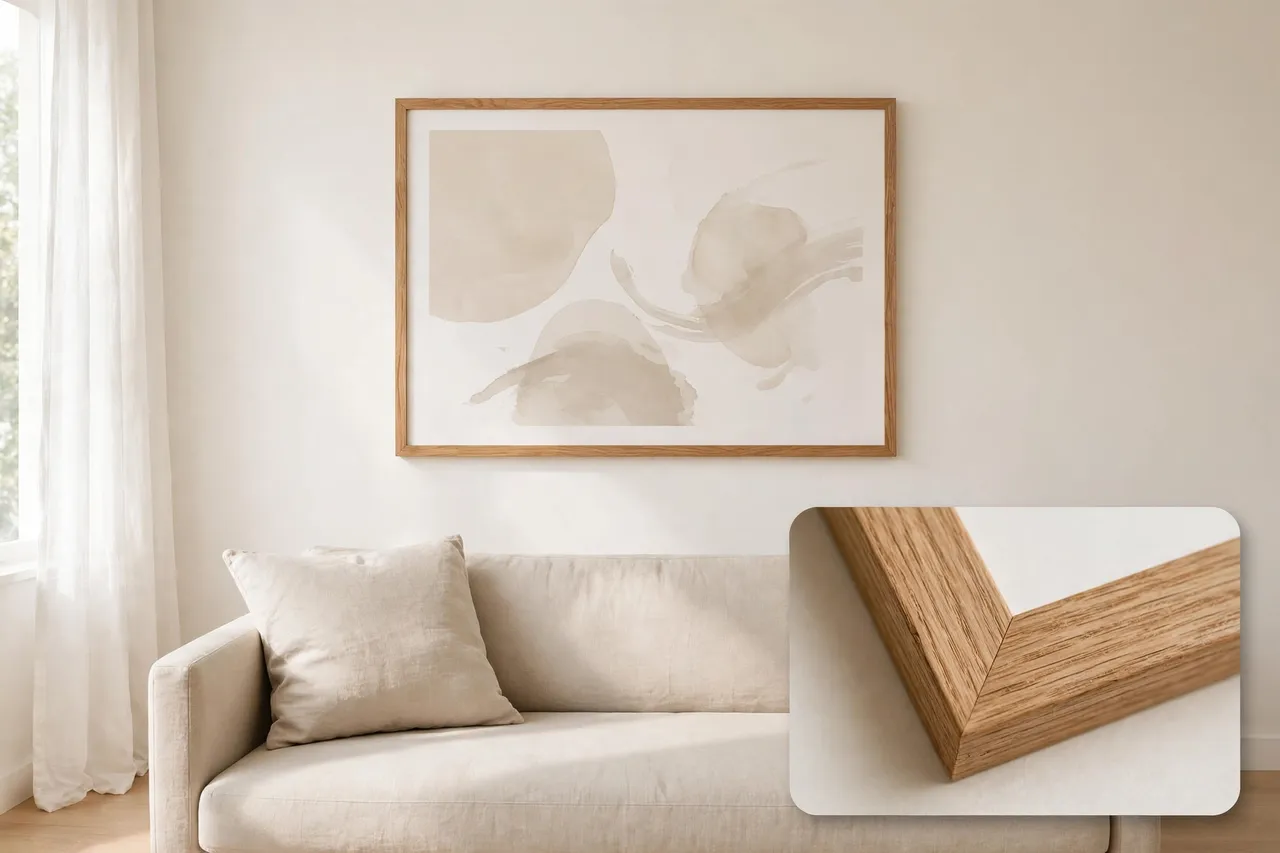
Bare walls feel cold, while overloaded walls make the room feel chaotic. Choose one large piece of art or a small curated set of two or three frames, and hang it at eye level where you see it daily.
Group small decor in odd numbers, three at most, and leave the rest of the surface empty. A small plant, a candle, and a book on a coffee table look intentional. Five objects on the same table look like a shelf that needs dusting. Rotate the pieces occasionally to refresh the look without buying new things.
Lean framed art on a shelf or mantel instead of hanging everything if you want flexibility. One large piece above the sofa beats a gallery wall of ten small frames in a simple room, because the eye rests in one place instead of darting around.
Plants and Texture Bring the Room to Life
A few plants bring life into a room that nothing else can. Choose a medium-sized plant for a corner, or small potted plants for tables and shelves. Vary the height and size so the greenery feels natural, not lined up like soldiers.
If you lack sunlight or time, realistic faux plants work too, and they never drop leaves on the rug. Use decorative pots that match your color palette, or add one pop of color with a single pot.
Texture is what keeps a simple room from feeling boring. A chunky wool throw, a linen curtain, a woven basket, and a smooth ceramic vase give your hands and eyes four different things to enjoy. When texture does the work, you do not need pattern, and the room stays calm.
Storage and the Clear-Surface Habit
A simple living room is a maintenance project, not a one-time setup. The minute magazines and decorative objects pile up, the design starts to suffocate. Keep the surfaces clear, and the room stays simple.
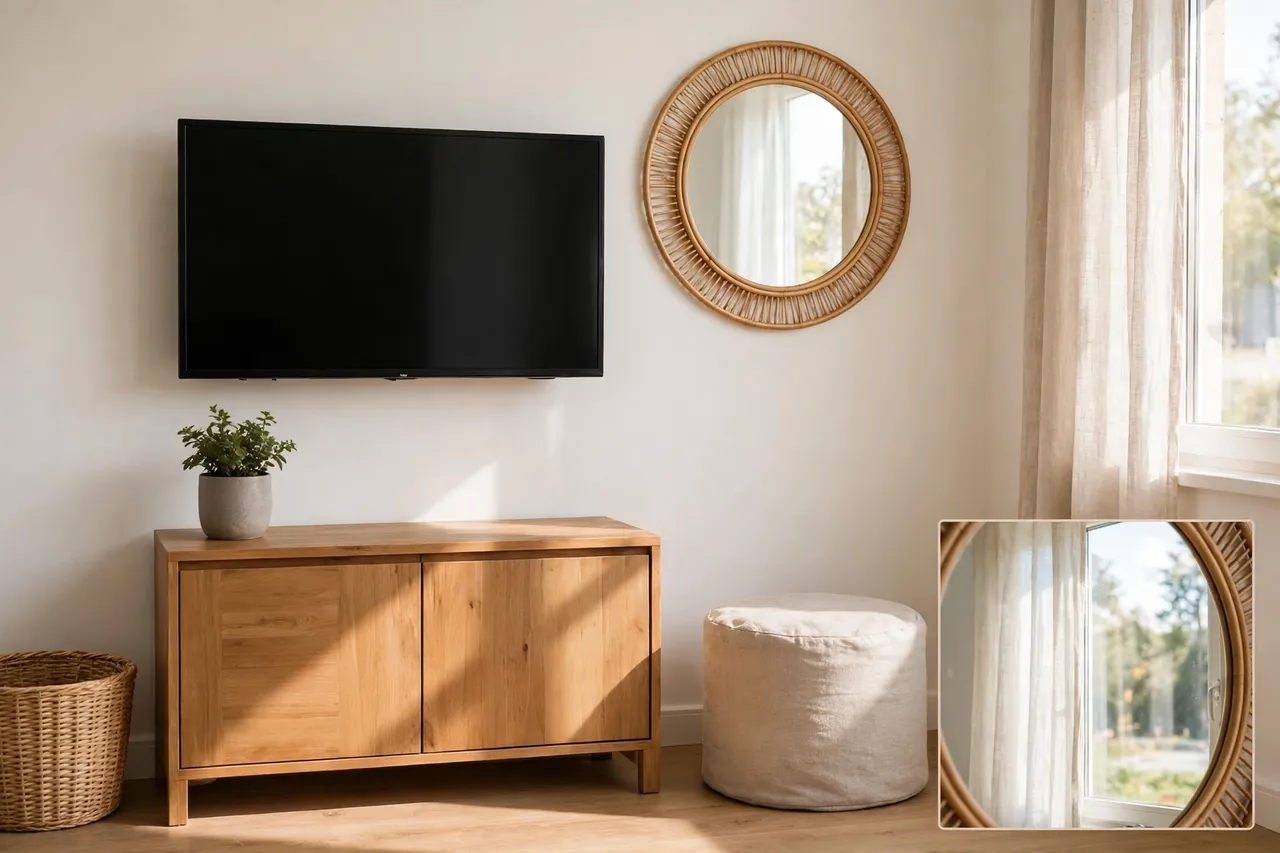
Give everything a home near where you use it. Remote controls live in a tray on the coffee table. Blankets live in a basket by the sofa. Books live on one shelf, not on every surface. Closed storage hides the rest, and a plain cabinet shows a calm face to the room.
Use the three-box method when the room drifts: one box for what stays in this room, one for what moves elsewhere, and one for what leaves the house. Ten minutes with three boxes, once a month, keeps a simple living room simple. For a deeper reset, our guide on how to declutter your living room walks through the whole room, and the minimalist home decor essentials list shows which pieces are worth keeping.
Small Living Room Fixes
A small living room benefits most from thoughtful simplicity. Choose multifunctional furniture like storage ottomans and nesting tables. Light-colored walls and compact furniture make the room feel larger, and mirrors reflect light to expand the space.
Keep the furniture legs visible to create an open and airy feel, and avoid heavy curtains. Sheer or light fabrics let the daylight in and keep the room bright. One big piece of furniture that fits the wall beats four small pieces that chop the room into corners.
Use the corners well. A tall plant, a floor lamp, or a small reading chair turns a dead corner into the coziest spot in the room. If the room must hold a TV, mount it on the wall and keep the unit below it low and closed, so the screen does not dominate the wall.
Seven Mistakes That Make a Simple Room Feel Messy
Overcrowding the room with many items creates visual clutter. Keep only the essential furniture and a few statement decor pieces, and leave some open space to create a sense of flow.
Ignoring scale or proportion makes the room feel off-balance. Measure the room before buying furniture, and remember that a small sofa in a big room feels lost while an oversized sofa in a small room feels suffocating.
Random decor placement results in visual chaos. Arrange accessories in groups of three, mix heights, and leave some surfaces intentionally empty. Decorating for looks only, without thinking about function, leaves a pretty room you cannot actually live in, so keep frequently used items within reach and make sure the furniture supports both movement and conversation.
Finally, do not buy everything at once. A room collected over time, one good piece at a time, always feels more personal than a room bought in a single afternoon. The empty corner can wait for the right chair.
A Simple Living Room on a Budget
A simple living room does not need to be expensive or complicated. Rearrange the furniture first, because moving the sofa off the wall and grouping chairs around one focal point costs nothing and changes everything.
Change cushion covers or add a throw to introduce a new color. Add indoor plants or fresh flowers to bring life into the room. Declutter the shelves and tables to make the area look and feel larger, and try reusing items you already own in a new place.
When you do spend, spend on the rug and the lighting first. Then buy one good piece at a time, and start with one small area at a time instead of trying to redo the whole room in a weekend. Small steps stick, and the room improves every week instead of overwhelming you once.
Related Guides
Keep going with the guides that match this room. The minimalist home pillar covers the whole-house plan, and the minimalist home decor essentials list shows the fifteen pieces worth owning. When the room needs a reset first, read how to declutter your living room, and for the rest of the house, the home organization systems guide keeps it that way.
Frequently Asked Questions
How do you decorate the living room with simple things?
Start with decluttering and cleaning, then rearrange the furniture for flow, add cushions and throws, bring in greenery, and layer the lighting. Use everyday items like books, trays, and glass jars, and keep every surface mostly clear so each piece stands out.
What are the easiest ways to refresh a living room on a budget?
Change cushion covers or add a throw, rearrange the furniture, add indoor plants, declutter the shelves and tables, and improve the lighting. Reuse items you already own and try simple DIY decor before buying anything new.
What simple interior decoration ideas for the living room can use everyday items?
Books can be neatly stacked to act as both decor and storage. Glass jars or bottles can hold fairy lights or flowers, and trays can organize small items such as candles or remote controls. Everyday objects work best in groups of three.
How to decorate a small living room?
Choose multifunctional furniture like storage ottomans and nesting tables, use light-colored walls and compact furniture, and place mirrors to reflect light. Keep furniture legs visible, avoid heavy curtains, and use sheer or light fabrics.
What is simple living room design?
Simple living room design is a pared-back scheme rooted in ridding the home of clutter. It creates a clean space that is easy on the eye, restful, contemporary, and budget-friendly, with a few good pieces and plenty of open space.
A simple living room is not a room with nothing in it. It is a room where everything in it earns its place, the light is warm, and you can sit down and breathe. Start with the layout this weekend, and let the rest follow one good piece at a time.