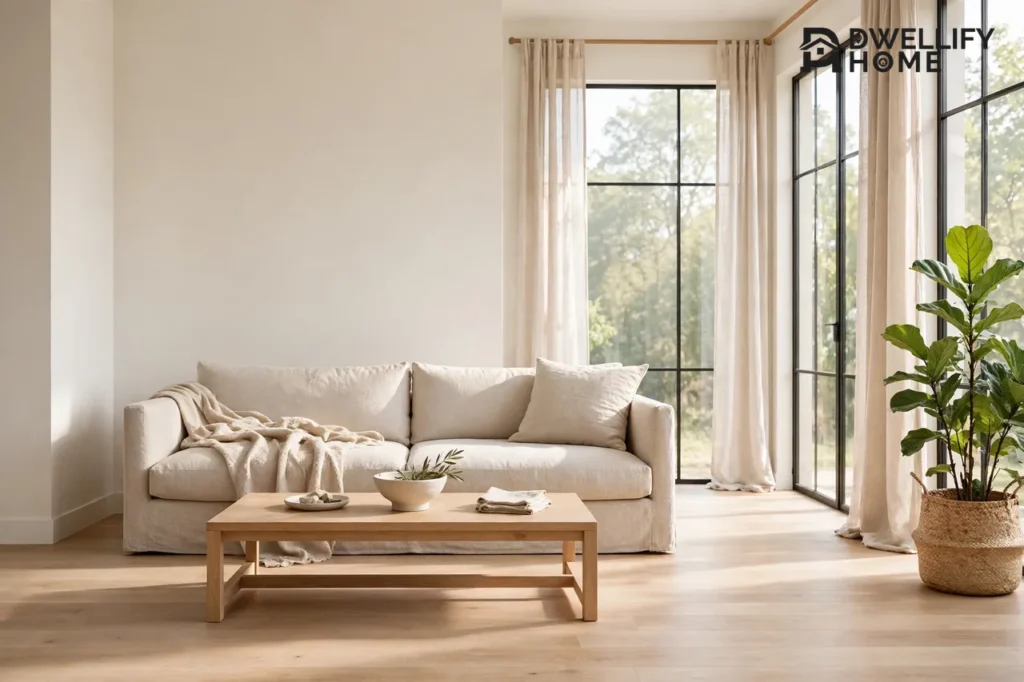
To declutter a living room, clear every flat surface first, sort what is left by category, give each category a zone, and finish with a nightly five-minute reset. The living room is the hardest room to keep tidy because everyone uses it for something different — and that is exactly why it rewards one focused afternoon. When you declutter living room clutter with zones instead of willpower, the room stays clear long after the afternoon ends.
Leftovers from every part of the house end up here: mail, books, empty glasses, toys, chargers, and blankets nobody folded. The room does not need to look empty. It needs to hold what your family actually uses, with a home for each thing and clear surfaces in between. This guide walks through the reset step by step, from the first trash bag to the nightly habit that keeps it done. For the whole-house plan, start with our full decluttering guide, then use this page for the living room itself.
Start With a Vision for the Room
Before you move anything, decide how your family actually uses the room. Is it a place with no toys and no projects, or a multi-use space with zones for each person? Is it for watching films together, reading in a quiet corner, or hosting friends? Every family answers differently, and comparing your room with someone else’s only makes the job harder.
Ask three questions as you look around: does the room hold everything my ideal living room needs? Is anything here catching my eye and causing stress? When I walk in, where does my eye go first? The answers show you what to remove, what to keep, and where the worst clutter collects. Write the vision down in one sentence, such as “a calm room for films, reading, and talking, with toys in one zone only.” That sentence decides every keep-or-go choice that follows.
Get the whole family involved before you start. Ask everyone to claim the items that matter to them, so nothing precious gets tossed by accident. Kids can choose which toys stay in the living room and which move to their bedrooms. When the family helps decide, the family helps keep the room clear afterward.
Clear Every Flat Surface First
Start with the surfaces, because they show the fastest change. Walk the room with a trash bag and remove anything that is actually garbage: old magazines, empty cans, water bottles, dead mail, and snack wrappers. Then clear the coffee table, side tables, media unit, and shelves completely. A bare surface shows you how much room you really have, and it makes the rest of the sorting easier.
Put back only what belongs on each surface, and keep it to three items or fewer per surface: a tray with remotes and coasters on the coffee table, a lamp and one book on a side table. The rule of three keeps surfaces looking styled instead of crowded. The three-item surface rule is the simplest habit in this whole guide, and it changes the room the most.
While the surfaces are clear, dust and wipe them.

Clean surfaces make you think twice before putting junk back on them, and a wiped coffee table feels like a fresh start. If the room still feels big to face, our guide on how to start decluttering when overwhelmed breaks any room into the same small steps.
The Basket Trick: Relocate Before You Sort
Before you sort anything, grab a basket and collect everything that belongs in another room. The living room collects strays from everywhere: kids’ toys, chargers from the office, books from the bedroom, dishes from the kitchen. Walk the room once with the basket, drop the strays in, and carry the full basket to their real homes at the end of the session.
Keep a basket in the living room permanently, in a spot the family knows.
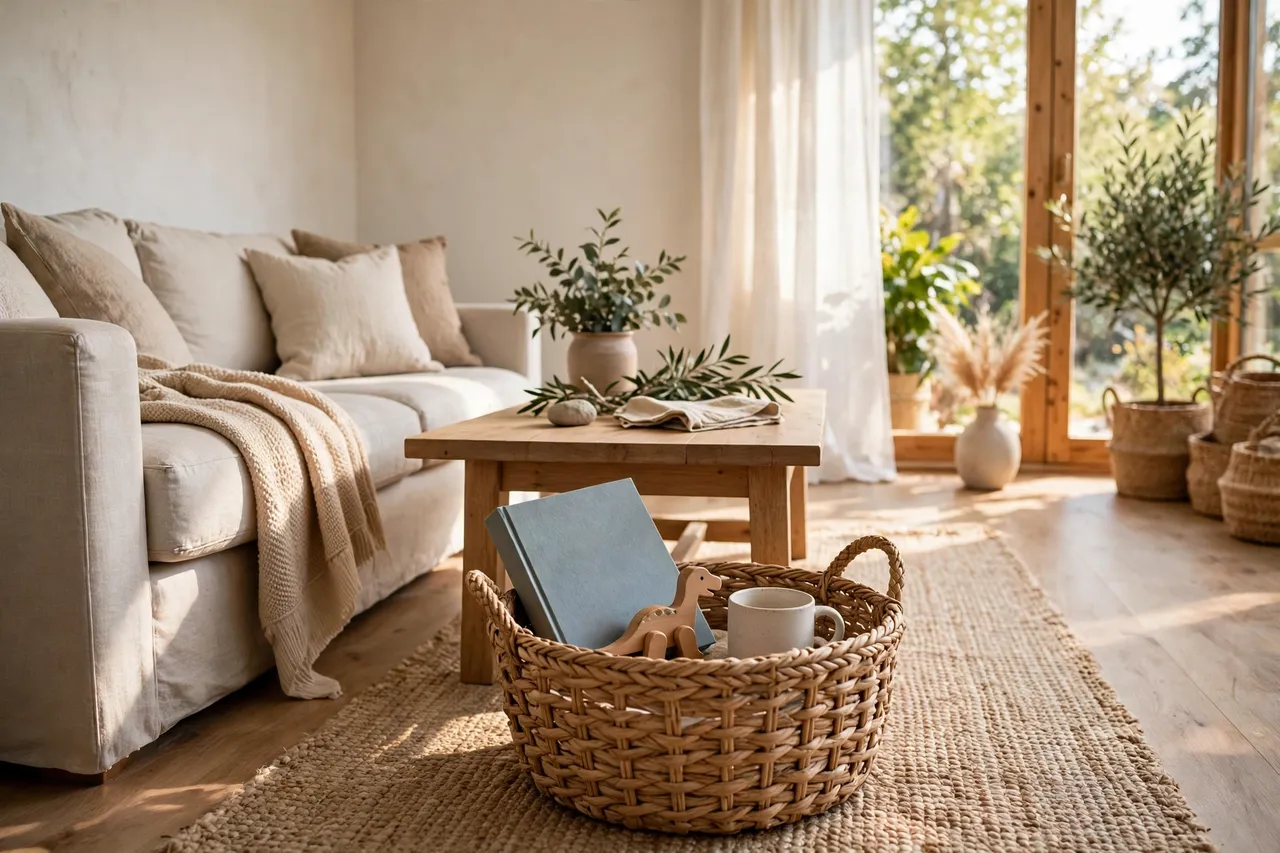
When something wanders in from another room, it goes in the basket, and the basket gets emptied every evening. One basket stops the whole room from becoming the house’s lost-and-found box. This single habit prevents more clutter than any organizer you can buy.
Sort what is left into four piles: keep in this room, donate or sell, trash or recycle, and relocate. Strays that belong in the coat closet go straight there instead of back on a shelf. Do the trash pile first, because it needs no hard thinking. Then handle the donations: bag them and put them in the car right away, because a donation pile that sits in the corner is just clutter with good intentions.
Books, Magazines, and Paper
Bookshelves fill up quietly, one book at a time. Take every book off one shelf and ask the honest questions: will I read this again? Do I own two copies? Is this a book I keep for show, or for reading? Keep the books you love and will re-read, and let the rest go to a library, a friend, or a donation box. A shelf with breathing space looks better than a shelf packed tight.
Magazines and old mail go faster. If a magazine is more than a month old and you have not read it, recycle it. Old mail gets opened, filed, or shredded the day it arrives — never stacked on the coffee table “for later.” Set up one small tray near the entrance for incoming mail, so the family knows where it goes and the coffee table stays free.
For books you keep, group them by size or subject and leave gaps on the shelf.
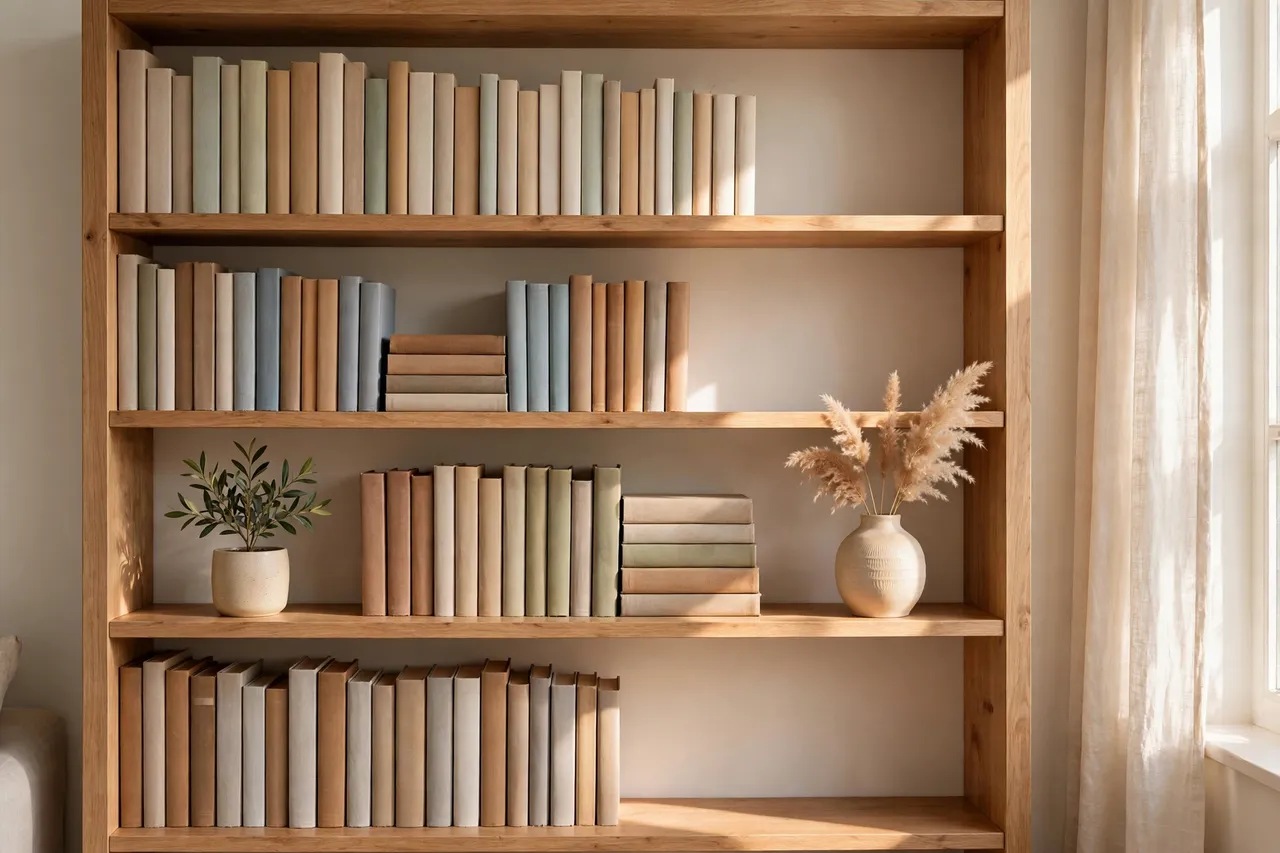
A few gaps make the shelf feel calm and give you room for a plant or a photo. If the books keep multiplying, a small “one in, one out” rule helps: a new book in means an old book out. For the deeper book habit, see our guide on how to declutter your bedroom — the same shelf logic works there too.
Pillows, Blankets, and Soft Furnishings
Soft furnishings multiply faster than any other living room clutter. Count your throw pillows: five is plenty for a large sofa and three for a smaller one. Any more, and the sofa is a pillow store, not a place to sit. Keep the ones you love most, wash the covers, and donate the rest. The same goes for blankets: one big blanket the whole family shares beats five small ones draped over every chair.
Give blankets a home. A basket beside the sofa, an ottoman with storage inside, or a shelf in a nearby closet all work. When everyone knows where the blanket lives, it goes back there instead of staying on the sofa arm. Fold the blanket after use — it takes ten seconds and makes the whole room look finished.
Old decor follows the same rule. If a cushion cover is faded, a throw is worn thin, or a decorative piece no longer fits the room, let it go. A room with fewer, better-chosen soft furnishings feels calmer than a room crowded with tired ones. Keep the pieces that make the room feel like home, and release the rest.
Cables, Remotes, and Tech Clutter
Every living room hides a tangle: TV cables, game console wires, chargers, and a drawer of remotes nobody can name. Gather every cable, test each one, and toss the ones that fit nothing you own. Label the keepers with a small tag, coil them with a tie, and run the daily-use cables through a box or tray behind the media unit so they stop hanging in a knot.
Give remotes a single home: a tray on the coffee table, a caddy on the side table, or a small basket on the media unit. When a remote has one place to live, it stops vanishing between cushions. The same goes for game controllers and headphones: one basket, one shelf, one home each.
Check the media console for dead tech: old DVDs nobody watches, game cases for consoles you sold, chargers for phones you no longer own. Donate or recycle what is still useful, and toss what is broken. If one corner of the room doubles as a home office, keep its tools in one tray so work clutter never spreads across the room. A media unit with only the tech you use looks calm, works better, and takes half the time to dust.
Create Zones the Family Understands
Once the clutter is gone, divide the room into zones by how you use it. Zones stop clutter from wandering, because every item has a place inside its zone. Keep the zones simple enough that a child can remember them.
| Zone | What it is for | What lives there |
|---|---|---|
| Entertainment | Films, games, and music | TV, remotes, controllers, media storage |
| Reading | Quiet time with a book | Armchair, lamp, side table, book basket |
| Social | Talking and sitting together | Sofa, coffee table, coasters |
| Storage | Hidden homes for daily items | Ottoman, closed cabinet, baskets |
Kids’ toys get one zone only, with a basket or bin the family knows.
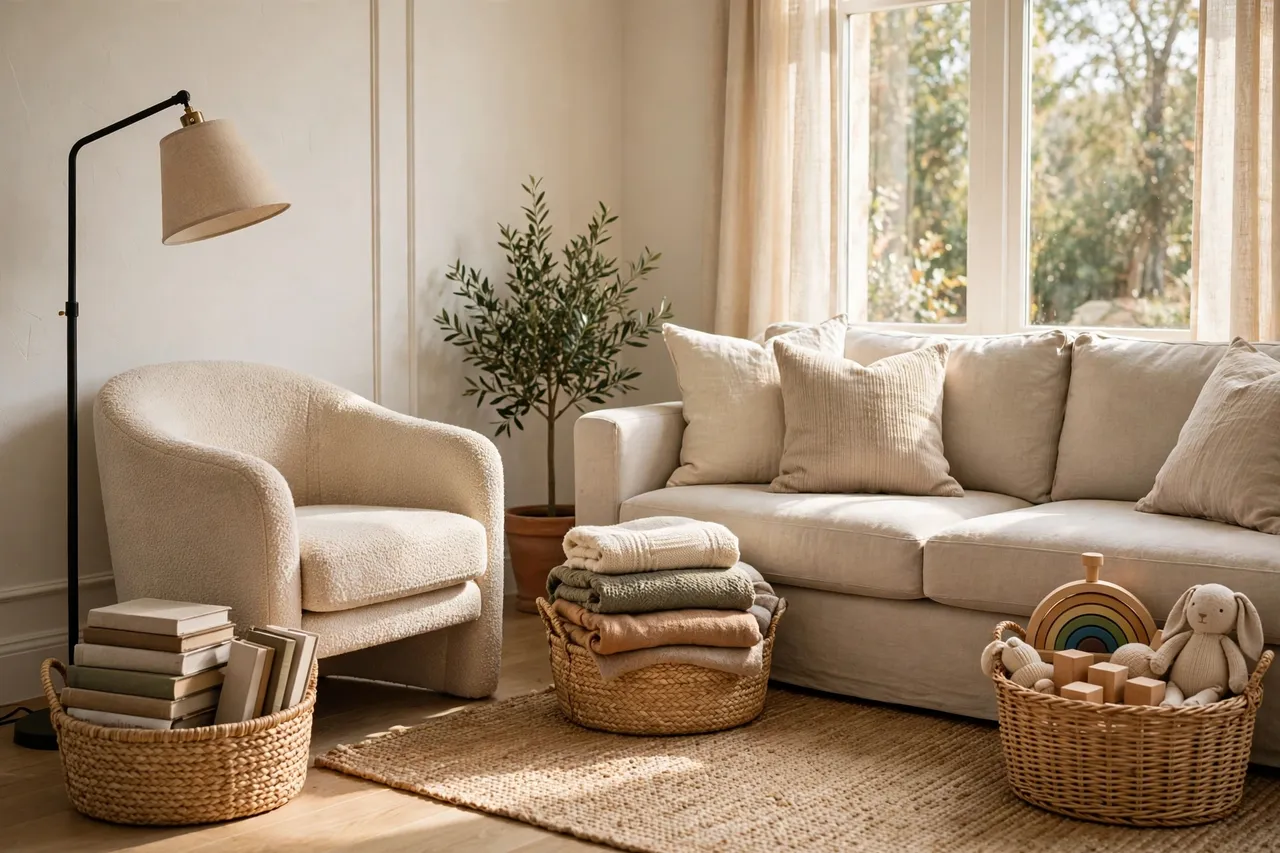
When playtime ends, toys go back to that zone — not all over the room. The one toy zone rule keeps the living room a living room instead of a second playroom.
Use furniture that stores as well as it sits. An ottoman with storage inside holds blankets, a storage bench holds games, and deeper shelves hold baskets that hide visual clutter. Baskets are decorative pieces that also act as a barrier for clutter, so the room looks tidy even when it holds real family life. For more ideas on a calm, simple room, see our simple living room guide and our minimalist home decor essentials.
The Nightly Five-Minute Reset
A decluttered living room stays clear because of a nightly habit, not a heroic afternoon. Spend five minutes every evening resetting the room: return the basket items, fold the blanket, clear the coffee table, and put the remotes back in their tray. Set a timer if it helps. Five minutes is short enough that the whole family will actually do it.
Make the reset a family job, not one person’s chore.

Kids return their own toys to the toy zone, adults clear the mail and cups, and everyone checks the sofa cushions for strays. A room that gets reset nightly never builds up enough mess to need another big declutter.
Do a ten-minute check every weekend: check under and between the sofa cushions, clear the media console, and look at the bookshelf for anything that crept back. If the room starts filling again, run one zone through the four piles before the mess spreads. That is the whole secret: small resets beat big cleanouts, every single time. Fifteen minutes a day is enough for the whole house — see our guide on how to declutter your home in 15 minutes a day.
Related Guides
Keep going with these room-by-room guides from the same series:
Frequently Asked Questions
How do I organize my living room with too much stuff?
Start by getting rid of what must be thrown out first, like empty cans, water bottles, and old mail. Then edit the objects you do not need, group what is left by category, and give each category a zone. Use baskets and multipurpose furniture to hide what stays.
What should I remove first when decluttering a living room?
Remove the trash first: old magazines, empty cans, water bottles, and dead mail. Then clear the flat surfaces completely before you sort anything else. Starting with trash gives you a fast visible win and frees space to work in.
How do I start decluttering my living room when I feel overwhelmed?
Break the room into tiny steps and start with a single surface, like the coffee table. Set a ten-minute timer, grab the trash and cups, and stop when it beeps. One small win makes the next step feel possible.
How do I declutter my living room in one day?
Work in four one-hour blocks: first purge with trash, donate, and relocate bags; then reset the surfaces; then clear the floor and fabrics; and finally take the bags out to the car. Be ruthless, stick to the timer, and finish by enjoying the clear room.
Your living room does not need to look perfect. It needs to welcome your family in the evening without a pile of stuff in the way. Clear it once, reset it nightly, and let the calm room do its quiet work for you.