
The KonMari method is Marie Kondo’s signature approach to tidying: keep only the items that spark joy, tidy by category instead of by room, and finish discarding before you organize anything.
It was introduced to a worldwide audience through her book The Life-Changing Magic of Tidying Up and her television programs.
The method is more structured than an ordinary room-by-room cleanup, and some of its practices need adjusting for real life. But its core idea is simple and powerful: instead of asking what to throw away, you ask what deserves to stay. That shift turns tidying from a chore about loss into a decision about the life you want to live.
What Is the KonMari Method?
The KonMari method is a tidying philosophy created by Marie Kondo, a Japanese organizing consultant. The goal is a home that supports the life you want to live, and the core principle is simple: keep only the items that spark joy. It is not just a cleaning routine, and it is not about owning as little as possible. Useful things that serve a purpose count too; the question is whether each item earns its place.
The method differs from traditional decluttering in three important ways. You tidy by category, not by room. You focus on what to keep, not just what to discard. And you aim for a one-time, complete reset, often called a tidying festival, instead of decluttering a little bit forever. Tidying, in Kondo’s framing, is really just two physical acts: deciding whether you want to keep something, and then deciding where to put it.
If you have tried ordinary decluttering and stalled, the category approach is often the reason KonMari works where room-by-room failed. Gathering every item in one category from the whole house shows you the true total: five half-used notebooks, eleven black T-shirts, three broken phone chargers. You cannot unsee the pile, and the pile makes the decisions honest.
The Six Rules of the KonMari Method
Kondo sets out six rules, and they work as a set. Skipping one, especially the order or the discard-first rule, is how most people get stuck halfway through.
| Rule | What it means |
|---|---|
| Commit to tidying | Treat decluttering as a defined household project, not a vague wish |
| Imagine your ideal lifestyle | Decide how you want your home to look and function before you start |
| Finish discarding first | Choose what to keep before buying organizers or storage |
| Tidy by category | Gather similar belongings from every room, not one room at a time |
| Follow the recommended order | Begin with clothes and finish with sentimental items |
| Ask whether it sparks joy | Consider how each item fits your life today |
The second rule matters more than it looks. Before touching anything, picture the life you want in the room: cooking without clearing the counter first, getting dressed without digging, reading in a chair that is actually free. That picture becomes the standard every item is measured against, and it stops the process from drifting into keeping things out of habit.
The third rule is the one people break most often. Do not buy organizers before decluttering. You will not know what storage you need until you know what is staying, and a new set of matching bins full of things you should have let go is just tidy-looking clutter.
The Five Categories in Order
The official category order is clothes, books, papers, komono (miscellaneous belongings), and sentimental items. The order is deliberate: it helps you practice making decisions on easy things before reaching photographs, keepsakes, and other belongings that are harder to evaluate.
1. Clothes
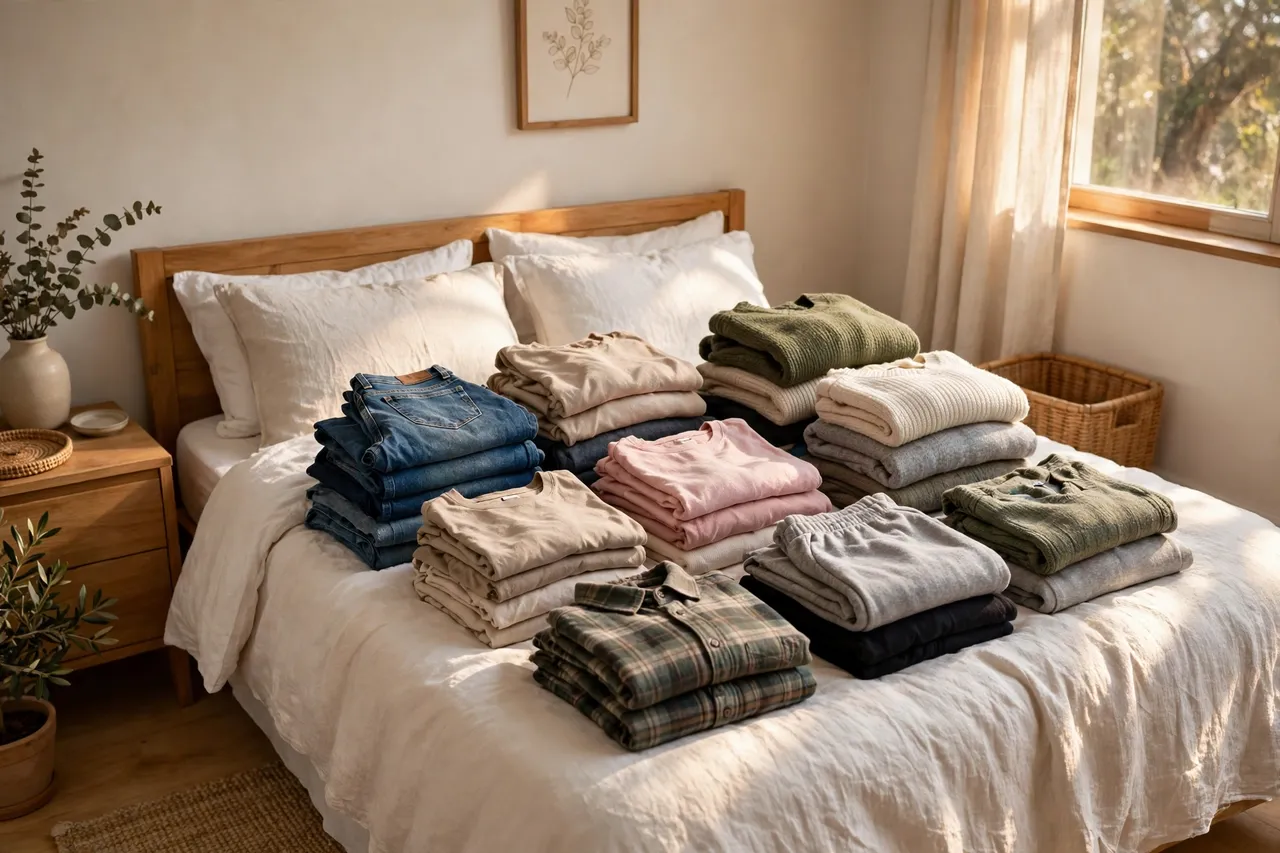
Gather every item of clothing from every room, closet, drawer, and laundry pile, and put it all in one pile. Pick up each item and ask whether it sparks joy. Keep the ones that do, and thank the rest before letting them go. Clothes are first because the decisions are fast: you know within seconds whether you love a shirt or have been avoiding it for a year.
2. Books
Gather all the books, then keep the ones you love and will genuinely reread or refer to. Books are the category where people over-keep out of aspiration: the unread classics, the textbooks from a finished course, the novels you did not enjoy. A small shelf of books you love serves you better than three shelves of books that make you feel guilty.
3. Papers
Papers are the category that grows fastest and matters least. The rule here is strict: discard almost everything. Keep only papers that need action, papers that must be kept for a limited time, and papers that must be kept indefinitely. Everything else is recycled. A single afternoon on papers often removes more volume than a week on anything else.
4. Komono, or miscellaneous
Komono covers everything else: kitchen tools, bathroom products, electronics, hobby supplies, and the contents of the junk drawer. Work through it in subcategories, one at a time, so the category stays manageable. The kitchen is a good place to start within komono, and decluttering the kitchen cabinets covers the trickiest storage in the house.
5. Sentimental items
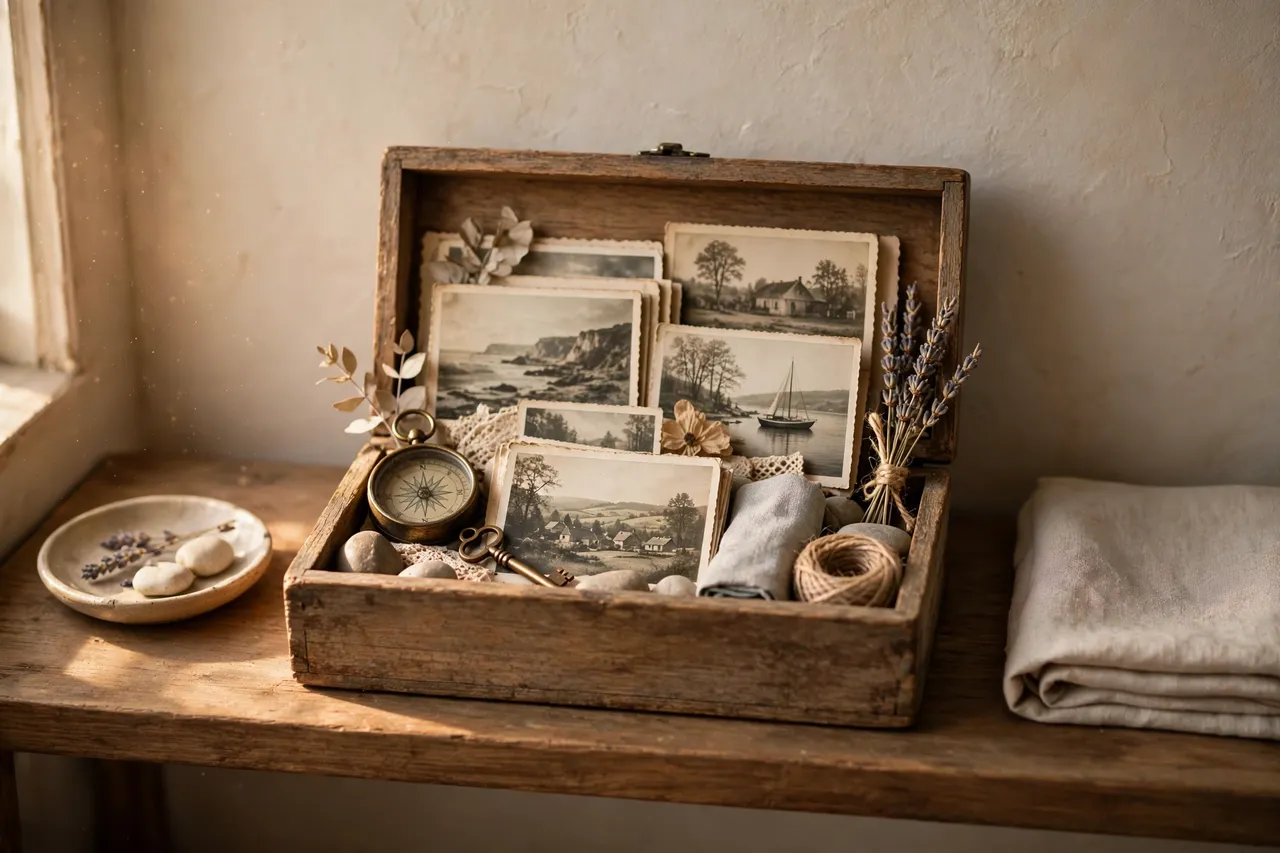
Sentimental items come last, when your decision-making is practiced and your home is already lighter. Photos, letters, childhood keepsakes, and inherited things get the same joy question, but with more patience. Keep a small, deliberate selection and display it where you can enjoy it, rather than storing boxes you never open.
The Joy Check: How “Sparks Joy” Actually Works
The joy check is the heart of the method, and it is also the part people misunderstand most. You hold the item in your hands, never tidy by simply looking at items on a shelf, and notice your body’s reaction. When you hold an item that sparks true joy, you will often feel a physical lift: lighter, more energized, or simply at peace. When you feel nothing, or a small sigh, that is information too.
Practical items still count. A screwdriver does not need to thrill you; it needs to be the one you reach for when something needs fixing. Kondo’s own guidance is that useful items that serve a meaningful purpose in your life belong. The test is not excitement, it is whether the item supports the life you pictured at the start.
If you are truly stuck on an item, use a maybe box. Put it in a clearly labeled box with a date about three months out. If you have not reached for it by then, let it go unopened. The maybe box is a pause button for hard calls, not a storage plan, so keep it small and dated.
One distinctive practice is thanking belongings before letting them go. It sounds odd until you try it: saying thank you for a coat that kept you warm for five winters makes letting it go feel like completion instead of loss. Whether you say it aloud or simply pause for a moment, the gratitude reframes the whole process.
KonMari Method Folding: The File-Fold Technique
The KonMari method of folding is what keeps drawers tidy after the sort, and it is worth learning properly. Instead of stacking clothes flat, you fold each piece into a small rectangle that stands upright, then file the pieces side by side like books on a shelf. Everything stays visible, nothing gets buried at the bottom of a stack, and pulling one item out does not disturb the rest.
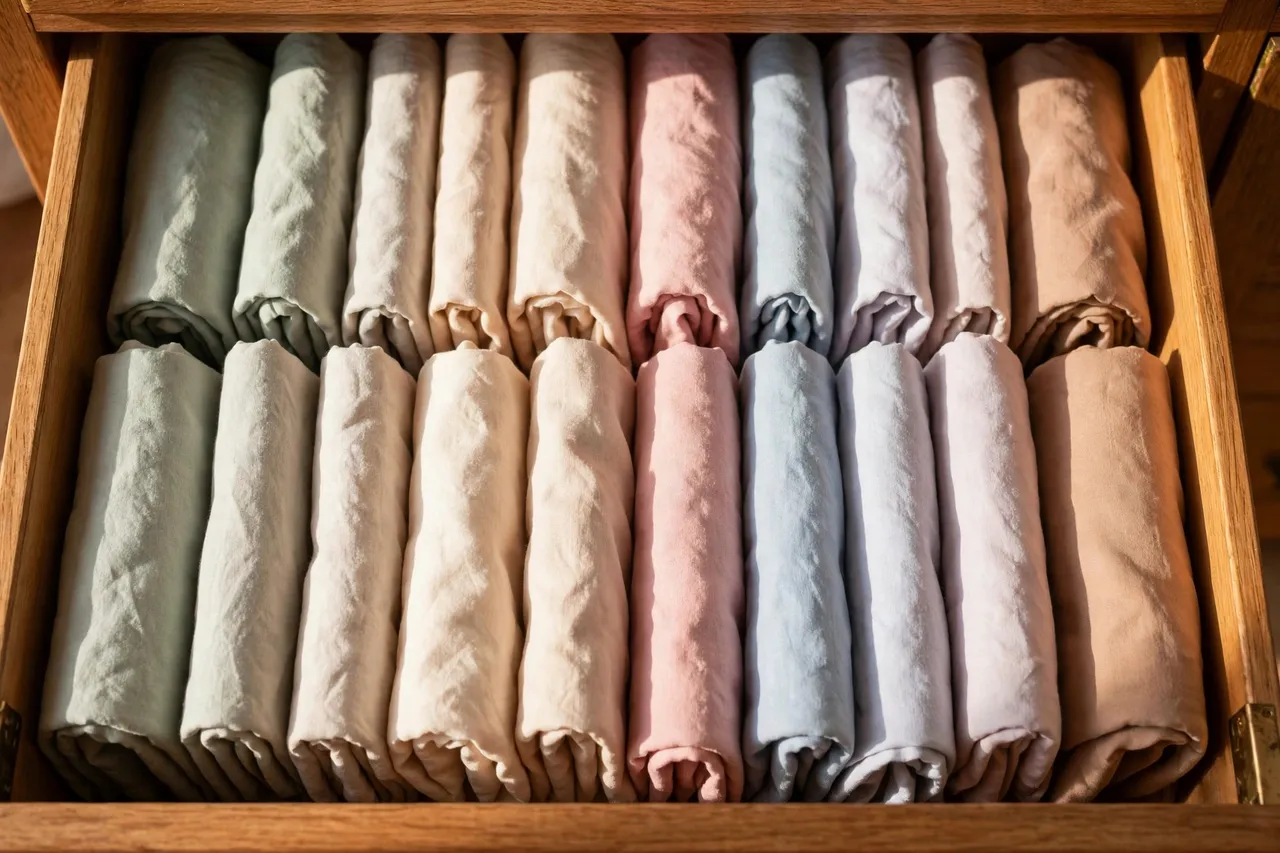
To fold a shirt the KonMari way, lay it face down, fold both sides in toward the center, fold the sleeves back, then fold the long rectangle into thirds so it stands on its own edge. T-shirts, trousers, and underwear all follow the same idea: fold into a rectangle, then fold again until the piece stands upright. Socks are folded in half and stood on edge rather than rolled into balls, which stretches them out of shape.
Konmari method folding works best in shallow drawers and small boxes, where the filed rows stay upright on their own. If your drawers are deep, use small boxes or dividers as supports so the rows cannot topple. For a deeper wardrobe pass, our guide on how to declutter your wardrobe pairs the folding method with a full closet sort.
Do not try to fold everything the KonMari way on day one. Learn the fold on one drawer, live with it for a week, and then roll it out. A drawer that stays tidy is worth more than five drawers folded once and abandoned.
KonMari Method Decluttering Step by Step
Here is the whole method as a single sequence, so you can follow it without flipping back through the sections. This is the konmari method decluttering step by step path, from commitment to the final drawer.
- Picture your ideal lifestyle in detail, room by room, and write down one sentence for each room.
- Schedule the work in real blocks on your calendar, like appointments, and protect them.
- Start with clothes: gather every item from the whole house into one pile.
- Hold each item, ask whether it sparks joy, and sort into keep, donate, sell, recycle, or discard.
- Thank the items you let go, and get the outbound bags out of the house the same week.
- Move to books, then papers, then komono, then sentimental items, in that order.
- Only when discarding is finished, give every kept item a home, using the file-fold for drawers.
- Run a short weekly reset to keep the system working.
The method encourages a concentrated period rather than decluttering indefinitely, but that does not mean every home must be finished in one day. Most homes take several weekends, and that is fine. The point of the concentrated push is that you finish, not that you finish fast.
Common Mistakes and How to Avoid Them
The first mistake is tidying by room instead of by category. Room-by-room tidying hides the true total of each category and lets duplicates survive in different closets. If you catch yourself sorting a single room, stop and gather the category from the whole house instead.
The second mistake is organizing before discarding. Buying storage first feels productive, but it locks the clutter in place. Discard first, then organize what remains. If the kept items need a home, a few pantry shelving ideas or small closet storage ideas can help, but only after the sort is done.
The third mistake is starting with sentimental items. Photos and keepsakes are the hardest calls in the house, and starting there burns out your decision-making before the easy wins. Save them for last, when you have had practice and the house is already lighter.
The fourth mistake is treating the joy question as a test you can fail. The method is a framework, not an exam. If an item is useful, loved, or genuinely needed, it stays. If you are unsure, the maybe box exists for exactly that moment. For the general sorting method behind all of this, the pillar guide to decluttering is the best next step.
Related Guides
For the wardrobe specifically, how to declutter your wardrobe applies the KonMari order to clothes alone. For linens and towels, decluttering the linen closet covers the small storage that fills up fastest. And if you prefer a simpler starting point, minimalist home shows how to keep the calm after the clear-out.
Frequently Asked Questions
What is the KonMari Method?
The KonMari Method is Marie Kondo’s signature approach to tidying, built around a simple principle: keep only the items that spark joy. It is less about cleaning and more about choosing what deserves to stay in your life.
What are the six rules of the KonMari Method?
The six rules are: commit to tidying, imagine your ideal lifestyle, finish discarding first, tidy by category, follow the recommended order, and ask whether each item sparks joy. Together they turn tidying from a chore into a defined project with a clear finish.
Do you have to complete KonMari in one day?
No. The method encourages people to complete their tidying project in a concentrated period rather than decluttering indefinitely, but that does not mean every home must be finished in one day. Most homes take several weekends.
How long should the KonMari method take?
The KonMari method is a complex method that should be used very carefully. If you follow the steps to the letter, you can complete this method in about six months, though many households finish the main categories in a few focused weekends.
Does KonMari require vertical storage?
Vertical storage is commonly associated with the KonMari Method, particularly for folded clothing. Instead of stacking shirts in a drawer, clothing is folded so the pieces stand upright and remain visible, which keeps drawers tidy and makes every item easy to find.
The KonMari method asks one question of everything you own: does this spark joy? Answer it honestly, category by category, and the house that remains is not emptier. It is lighter, calmer, and full of only the things that belong in the life you want to live.