When people walk into my showroom and ask about Lumataj quartz, they usually want one of three things: a warm, elegant look similar to Taj Mahal stone, a surface that’s easy to live with, and a clear idea of what it will cost them in the real world. That’s exactly what this guide is about.
I’ve worked hands-on with engineered stone for more than a decade, from selecting slabs at the yard to fabricating, installing, and fixing mistakes made by rushed decisions. I’ll explain what Lumataj quartz really is, how it performs in daily life, what homeowners love and complain about, and how to decide if it’s right for your kitchen or bathroom.
Snippet-Ready Definition:
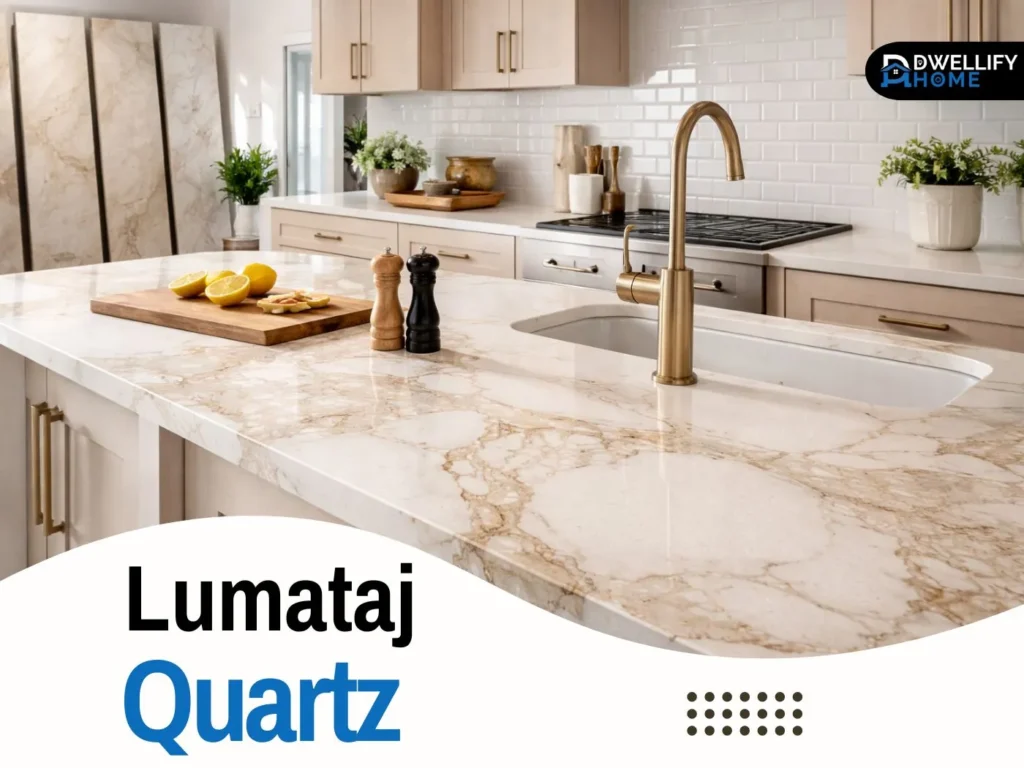
Lumataj quartz is a warm, elegant engineered stone with soft gold veining, designed to resemble Taj Mahal stone while offering low maintenance, consistent patterns, and strong performance for kitchens and bathrooms.
Our Mission:
At Dwellify Home, our mission is to help homeowners make confident, informed decisions about interior surfaces by sharing honest, experience-based guidance that values quality, practicality, and long-term satisfaction.
What Is Lumataj Quartz?
Lumataj quartz is an engineered stone surface designed to give you a soft, warm, natural-stone look without the maintenance headaches that come with many natural stones. It’s made by combining natural quartz minerals with resins and pigments, then pressing everything into slabs under high pressure.
From a practical point of view, this means consistency. Unlike natural stone, where every slab behaves differently, quartz is predictable. That’s one reason builders and homeowners alike gravitate toward it. You get reliable performance, even coloring, and fewer surprises during fabrication and installation.
Quick Comparison / Buyer Guide Table
| Feature | Lumataj Quartz |
| Material Type | Engineered Quartz |
| Look | Warm white with soft gold/taupe veining |
| Best Use | Kitchen countertops, islands, backsplashes |
| Maintenance | Very low, no sealing required |
| Heat Resistance | Heat resistant, not heat proof |
| Thickness Options | 2 cm and 3 cm slabs |
| Typical Finish | Polished |
| Compared To | Taj Mahal quartzite look-alike |
| Price Range | Mid to upper-mid quartz pricing |
Step-by-Step: How to Choose Lumataj Quartz the Right Way
- See a full slab, not just a small sample
- Check it under your home lighting, especially warm vs cool bulbs
- Decide slab thickness early (3 cm for islands is usually best)
- Ask for a seam layout preview before fabrication
- Confirm what’s included in the quote (edges, cutouts, installation)
Lumataj Quartz Look and Color: What It Actually Looks Like in Real Homes
On display boards, Lumataj looks like a creamy off-white base with gentle gold and taupe veining. In real homes, though, it can shift slightly depending on lighting and surrounding finishes. I’ve seen it read warmer in kitchens with wood cabinets and cooler in rooms flooded with daylight and white paint.
Here’s a tip I always share face-to-face: never choose this color from a tiny sample alone. Quartz reflects light differently across a full slab. If you can, view a large piece under lighting similar to your kitchen. It saves you from that “this isn’t what I expected” moment after installation.
Lumataj Quartz Slab Details: Sizes, Thickness, and Finish
Most homeowners encounter Lumataj quartz as a full slab rather than prefab pieces, which gives you more flexibility for seams and layout. Slabs are typically available in standard jumbo sizes suitable for large islands and long countertops.
Thickness usually comes down to two choices. Two-centimeter slabs are lighter and often laminated at the edges, while three-centimeter slabs feel more substantial and are what I recommend for islands and high-traffic kitchens. The finish is almost always polished, which enhances the veining and keeps cleaning simple.
Best Uses for Lumataj Quartz Countertops
This surface shines in kitchens. I’ve installed it on main countertops, oversized islands, and waterfall edges, and it holds up well to daily cooking when treated with basic care. It also works nicely for backsplashes where you want a seamless, upscale look without grout lines.
Bathrooms are another good fit, especially for vanities where moisture resistance matters. I usually advise against outdoor use or areas with direct, prolonged heat exposure. Quartz is durable, but it’s not meant to sit under a blazing sun or next to an outdoor grill.
Lumataj Quartz Price: What You’ll Really Pay
Lumataj Quartz Price Per Square Foot
Let’s talk numbers, because this is where confusion often starts. Lumataj quartz price per square foot can vary widely depending on whether you’re looking at material-only pricing or a fully installed countertop.
Material-only prices are lower, but most homeowners pay for fabrication and installation as a package. Installed pricing reflects cutting, edging, sink cutouts, polishing, delivery, and labor. That’s why two quotes for the same slab can look very different.
Why Prices Vary So Much
Several factors affect the final cost:
- Slab thickness and size
- Edge profile choice
- Number of cutouts for sinks or cooktops
- Seam placement and complexity
- Waterfall edges or full-height backsplashes
- Local labor rates
A real-world tip from my side of the table: keep your design clean. Simple edges and smart seam placement often save money without sacrificing appearance.
Lumataj Quartz Reviews: What Homeowners Actually Say
Most Lumataj quartz reviews I hear are positive, especially when expectations are realistic. People love the warm tone, the consistent pattern, and the low maintenance. It’s easy to clean, doesn’t need sealing, and resists everyday stains better than many natural stones.
Complaints usually come from two areas. First, lighting. Some homeowners expect it to look identical to a showroom sample at home. Second, heat misuse. Quartz is heat resistant, not heat proof. Trivets matter. Once people understand these points, satisfaction goes way up.
Lumataj Quartz vs Taj Mahal Quartzite: An Honest Comparison
This comparison comes up constantly. Visually, Lumataj quartz mimics the soft, flowing look of Taj Mahal quartzite quite well. The difference shows up in consistency and care.
Quartzite is natural stone, so every slab varies and often needs sealing. It can etch or stain depending on the specific slab. Lumataj quartz stays consistent from slab to slab and doesn’t require sealing. Budget-wise, quartz usually comes in lower once fabrication and maintenance are factored in.
If you want natural variation and don’t mind upkeep, quartzite may appeal to you. If you want a worry-free surface that still looks refined, quartz often wins.
Durability and Care: How It Holds Up Day to Day
Quartz is tough, but it still benefits from smart habits. Daily cleaning is simple: warm water, mild soap, and a soft cloth. Avoid harsh chemicals or abrasive pads.
Heat is where people get tripped up. Always use trivets or heat pads. I’ve repaired chips caused by sliding heavy appliances across the surface, so lifting instead of dragging makes a big difference. Follow these basics, and your countertops will look great for years.
Design and Styling: Making Lumataj Quartz Look Its Best
Lumataj pairs beautifully with warm white cabinets, light wood tones, and soft greige palettes. I often suggest brushed brass or champagne bronze hardware to complement the veining without overpowering it.
For backsplashes, keep it calm. Simple tile or a full quartz backsplash lets the surface breathe. Flooring and paint undertones should lean warm to avoid clashing with the stone’s natural character.
Lumataj Quartz Near Me: How to Shop Smarter
Searching for lumataj quartz near me usually leads people to local stone yards or fabricators. That’s a good thing. Seeing slabs in person helps you understand variation and finish quality.
When getting quotes, ask the same questions every time. Where will seams go? What edge profile is included? How are sink cutouts reinforced? Comparable quotes make decisions easier and avoid surprises.
Certifications, Safety, and Trust Signals
Reputable quartz products come with documentation related to indoor air quality and manufacturing standards. For homeowners, this mostly means peace of mind. For fabricators, it means following proper cutting and installation practices to protect everyone involved.
My advice is simple: work with established professionals who are transparent about materials and processes. Trust is built through clarity, not sales talk.
Alternatives to Consider
If Lumataj isn’t available or doesn’t fit your undertone preferences, there are other warm, Taj Mahal-inspired quartz options on the market. Some lean slightly creamier, others a bit grayer.
This is where seeing multiple slabs side by side helps. Small differences matter once installed across an entire kitchen.
FAQs
1. What is LumaTaj quartz?
LumaTaj quartz is an engineered quartz surface with a warm, creamy base and soft veining, designed to mimic the look of Taj Mahal stone while being easier to maintain.
2. How much does LumaTaj cost?
LumaTaj quartz price varies by location and fabrication, but it’s typically priced in the mid-to-upper range of quartz, especially when installed.
3. Is LumaTaj quartz safe to put in water?
Yes. Quartz is non-porous, so it does not absorb water, making it safe for kitchens, bathrooms, and vanity areas.
4. What brand of quartz is the best quality?
There’s no single “best” brand. Quality depends on consistency, fabrication, installation, and warranty support. Reputable brands paired with skilled installers deliver the best results.
5. Does LumaTaj quartz need sealing?
No. Unlike many natural stones, quartz does not require sealing and is easy to maintain with simple daily cleaning.
Conclusion: Is Lumataj Quartz Worth It?
If you want a warm, elegant countertop that’s easy to maintain and predictable in performance, Lumataj quartz is a solid choice. It offers the visual appeal many people love about Taj Mahal stone without the ongoing maintenance concerns.
My final advice is one I give every client. View the slab, understand how it behaves in your lighting, and work with an experienced fabricator. Do that, and you’ll end up with a surface you’ll enjoy every single day.
Disclaimer
The information in this article is based on professional experience and general industry practices. Pricing, availability, and performance may vary by location, installer, and project conditions. Always consult a local fabricator or professional before final decisions.

I’m Bilal, the founder of Dwellify Home. With 6 years of practical experience in home remodeling, interior design, and décor consulting, I help people transform their spaces with simple, effective, and affordable ideas. I specialize in offering real-world tips, step-by-step guides, and product recommendations that make home improvement easier and more enjoyable. My mission is to empower homeowners and renters to create functional, beautiful spaces—one thoughtful update at a time.