If you’re asking about stiltz elevator cost, you’re probably not just looking for a number. You want to know what you’ll actually pay, why quotes can feel all over the place, and whether this kind of elevator really makes sense for your home.
I’ve been helping homeowners plan and install residential elevators for more than 15 years. I’ve sat at kitchen tables, reviewed floor plans, walked through tight hallways, and explained costs line by line. So let me walk you through this the same way I would in a real, face-to-face consultation. Calm, honest, and practical.
Snippet-ready definition:
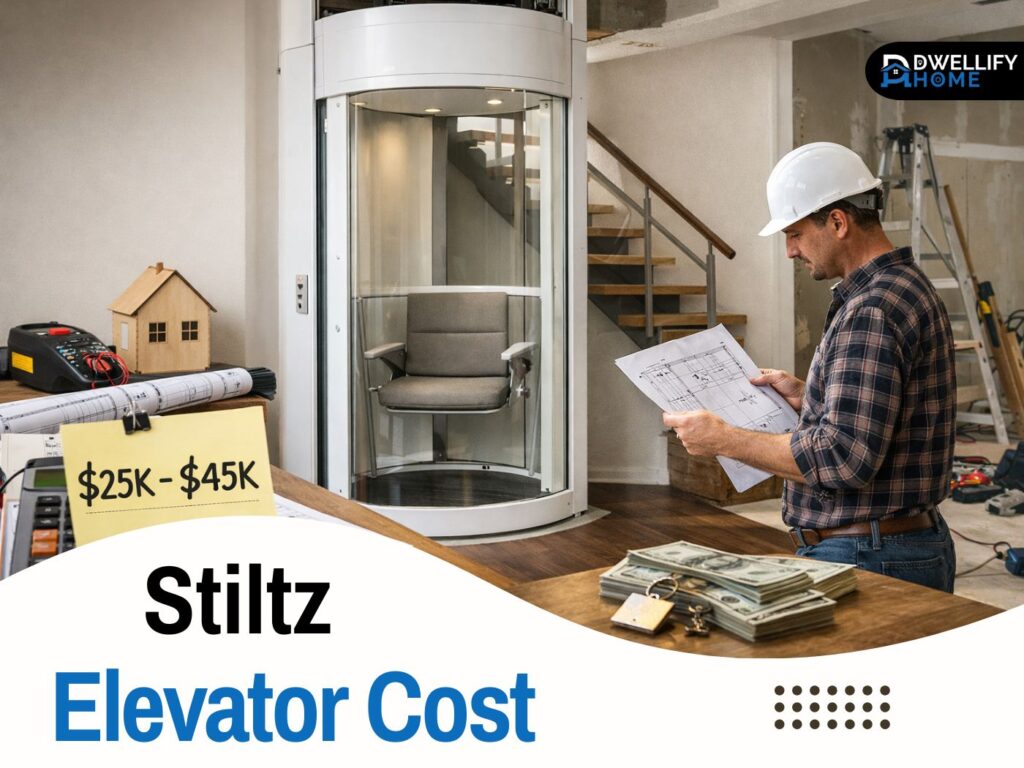
Stiltz elevator cost typically ranges from $25,000 to $45,000 installed, depending on the model, number of floors, and required home preparation like floor openings, electrical work, and finishing.
Mission Statement:
Our mission at Dwellify Home is to help homeowners make confident, informed decisions about home improvements by providing clear, practical, and experience-backed guidance—without hype or confusion.
Quick answer: What does a Stiltz elevator cost installed?
Here’s the straightforward answer most homeowners want first.
In real-world projects, a fully installed Stiltz elevator typically lands somewhere between $25,000 and $45,000, depending on the model and how much work your home needs. Smaller, simpler installs tend to sit on the lower end. Larger models or homes that need more prep usually push the price higher.
Here’s the thing. The elevator itself is only part of the story. Two homes can buy the same model and still end up with very different final numbers. That’s because most of the price swing comes from what has to be done to your house, not just the lift.
Quick Guide: Stiltz Elevator Cost Breakdown
| Cost Component | Typical Range | What It Covers |
| Elevator unit + basic install | $25,000–$30,000 | Lift system, setup, testing |
| Duo vs Trio upgrade | +$5,000–$10,000 | Larger size, wheelchair access |
| Site prep & construction | $3,000–$10,000+ | Floor opening, framing, finishing |
| Electrical work | $500–$2,000 | Dedicated circuit, wiring |
| Permits & inspections | $500–$2,500 | Local code compliance |
| Estimated total | $25,000–$45,000+ | Fully installed system |
Step-by-Step: How to Budget for a Stiltz Elevator
- Choose the model (Duo or Trio based on space and accessibility needs)
- Confirm number of floors/stops (2 floors vs 3 floors changes prep work)
- Assess site prep needs (joists, ducts, finishes)
- Check permits & electrical requirements
- Compare quotes line by line, not just the final number
What a Stiltz elevator is (and why its pricing is different)
A Stiltz elevator isn’t built like a traditional home elevator. It’s a shaftless, self-supporting through-the-floor lift, which means it doesn’t need a full elevator shaft or machine room.
In plain English, the lift supports itself and travels through a neatly cut floor opening. When it’s parked upstairs, the opening below is automatically sealed. This design is the main reason Stiltz often costs less than traditional hydraulic or traction elevators.
That said, “less expensive” doesn’t mean “cheap.” You’re still buying a precision accessibility system, not a simple appliance. The advantage is reduced construction, faster installation, and more flexibility in where it can go.
Stiltz elevator models and capacity (Duo vs Trio) and how they change cost
Stiltz Duo home lift price: who it’s best for
The Duo is the most popular option I see in private homes. It’s designed for one or two standing passengers and works well for aging-in-place situations where stairs are becoming difficult.
From a pricing standpoint, the Duo usually sits at the lower end of the Stiltz range. It fits into tighter spaces and often requires less structural adjustment, which keeps site prep manageable.
I often recommend the Duo to homeowners who want future-proofing without overbuilding. If you don’t need wheelchair access, this model usually delivers the best balance of function and cost.
Trio model: when the upgrade makes sense
The Trio is wider and designed to accommodate a wheelchair or three standing passengers. It’s a great option, but it does come with added cost.
Not because the lift is wildly more expensive, but because a larger platform means:
- A bigger floor opening
- More framing and finishing
- Sometimes more electrical or layout adjustments
If wheelchair access is a must, the Trio is worth every penny. If not, I usually advise homeowners to think carefully before upgrading.
Stiltz elevator cost breakdown (where the money actually goes)
This is the part most online articles gloss over, but it’s the most important.
Base lift and standard installation
The base price covers the elevator unit itself and the manufacturer’s standard installation. This includes setting the lift, assembling it, and making sure it runs safely and smoothly.
This portion alone often falls in the mid-$20,000 to low-$30,000 range, depending on the model.
Site prep costs (often the biggest variable)
Here’s where budgets can shift.
Every Stiltz elevator needs a clean floor opening between levels. That means cutting flooring, adjusting framing, and finishing everything so it looks intentional, not patched.
Common site prep work includes:
- Creating the through-floor opening
- Reinforcing joists if needed
- Drywall, trim, and paint work
- Matching finishes so it blends into your home
In many projects I’ve overseen, site prep ends up being the single biggest variable in the final cost.
Electrical, permits, and coordination
Stiltz lifts typically need a dedicated electrical circuit. This isn’t complicated, but it still requires a licensed electrician.
On top of that, permits and inspections are often required, depending on your local rules. Who handles these matters, and how smoothly they’re coordinated, can affect both cost and timeline.
The biggest price drivers (your quote checklist)
If you’re comparing quotes, these are the things you should always look at closely.
- Number of stops and total travel height
- Location of the lift within the home
- Obstacles like ductwork or plumbing
- Finish level around the opening
- Local labor rates and permit fees
I always tell homeowners to focus less on the sticker price and more on what’s included. Two quotes that look similar can hide very different scopes of work.
Two floors vs three floors: what changes in scope and price
A stiltz elevator 3 floors setup is absolutely possible, but it’s not just a simple add-on.
What changes most is the amount of preparation. More stops usually mean more openings, more finishing work, and tighter coordination across levels.
In practice, the lift itself doesn’t triple in price. The added cost comes from the additional construction and detailing required to make everything look clean and safe across multiple floors.
Installation process (what actually happens in your home)
Most homeowners are surprised by how straightforward installation can be when planning is done right.
Typically, the process looks like this:
- In-home assessment and measurements
- Review of layout and structure
- Floor opening and prep work
- Lift installation and testing
- Final inspection and homeowner walkthrough
For simple installs, the lift portion can be done in a matter of days. The prep work is what often takes longer.
Safety, permits, and compliance questions to ask
From an EEAT standpoint, this matters a lot.
Always ask:
- Who pulls the permit?
- Who schedules inspections?
- What safety features are standard?
- What happens if something needs adjustment after inspection?
A reputable installer won’t dodge these questions. In my experience, clarity here prevents headaches later.
Ongoing ownership costs (often skipped, but important)
Once installed, a Stiltz elevator is relatively affordable to own.
Electricity use is modest, similar to a household appliance. Maintenance costs are predictable, usually involving periodic servicing and safety checks.
Most issues I see long-term are minor and related to wear items, not major mechanical failures. A clear service plan and warranty understanding go a long way.
Stiltz vs other options on a home elevator price list
Homeowners often ask how Stiltz compares when reviewing a broader home elevator price list.
Traditional shafted elevators usually cost significantly more due to extensive construction. Pneumatic elevators look sleek but can be noisy and have size limits. Vertical platform lifts serve a purpose but aren’t always ideal for daily residential use.
If you’re wondering how much does a small home elevator cost, Stiltz often lands in the sweet spot between affordability and long-term usability.
Used Stiltz elevator for sale: is it worth it?
I get this question a lot.
A used stiltz elevator for sale can look tempting, but buyers often underestimate reinstall costs. You still need prep work, inspections, and sometimes parts that aren’t covered by warranty.
If you go this route, verify service history, parts availability, and whether the warranty transfers. Otherwise, the savings can disappear quickly.
Stiltz elevator complaints and real-world issues
When people search for stiltz elevator complaints, most issues I’ve seen aren’t about the product itself.
They’re usually tied to:
- Poor installation planning
- Mismatched expectations
- Inadequate finish work
Choosing an experienced installer and understanding the full scope upfront dramatically reduces these problems.
Cost-saving tips without cutting corners
Here’s some advice I give almost every homeowner:
- Choose the simplest, cleanest location
- Combine installation with a remodel if possible
- Don’t over-customize unless it adds real value
- Compare quotes line by line, not just totals
Smart planning saves more money than bargain hunting.
FAQ
What is the average cost of a Stiltz elevator?
Most homeowners pay $25,000 to $45,000 installed, depending on the model, number of floors, and how much home modification is needed.
Are Stiltz elevators any good?
Yes. They’re well-regarded for reliability, compact design, and lower construction needs compared to traditional home elevators when installed correctly.
What is the cheapest elevator to install?
Shaftless through-the-floor lifts like Stiltz are often the most affordable true home elevator option, cheaper than hydraulic or traction systems.
How much electricity does a Stiltz lift use?
Very little. Power use is similar to a household appliance and usually has a minimal impact on monthly electricity bills.
Can a Stiltz elevator go to three floors?
Yes. A stiltz elevator 3 floors setup is possible, but costs more due to extra openings, prep work, and finishing.
Conclusion
Understanding stiltz elevator cost means looking beyond the brochure price and focusing on real installation details. When you know what drives the numbers, you can budget confidently and avoid surprises.
If there’s one takeaway, it’s this. The right planning and the right installer matter just as much as the elevator itself. When those pieces come together, a Stiltz elevator becomes a practical, long-term investment in comfort, safety, and independence.
If you’d like, I can now help you refine this for your Dwellify Home internal linking, meta description, or featured snippet optimization.
Disclaimer:
Costs mentioned are general estimates based on real-world installations and may vary by location, home structure, and installer. Always request an in-home assessment and written quote for accurate pricing.

I’m faizan, a contributor at Dwellify Home with experience in decorating, renovation support, and creating functional spaces that suit everyday life. I enjoy breaking down design concepts into easy, step-by-step advice so anyone—from beginners to DIY lovers—can improve their home with confidence. My goal is to help you create a space that feels welcoming, stylish, and well-designed.