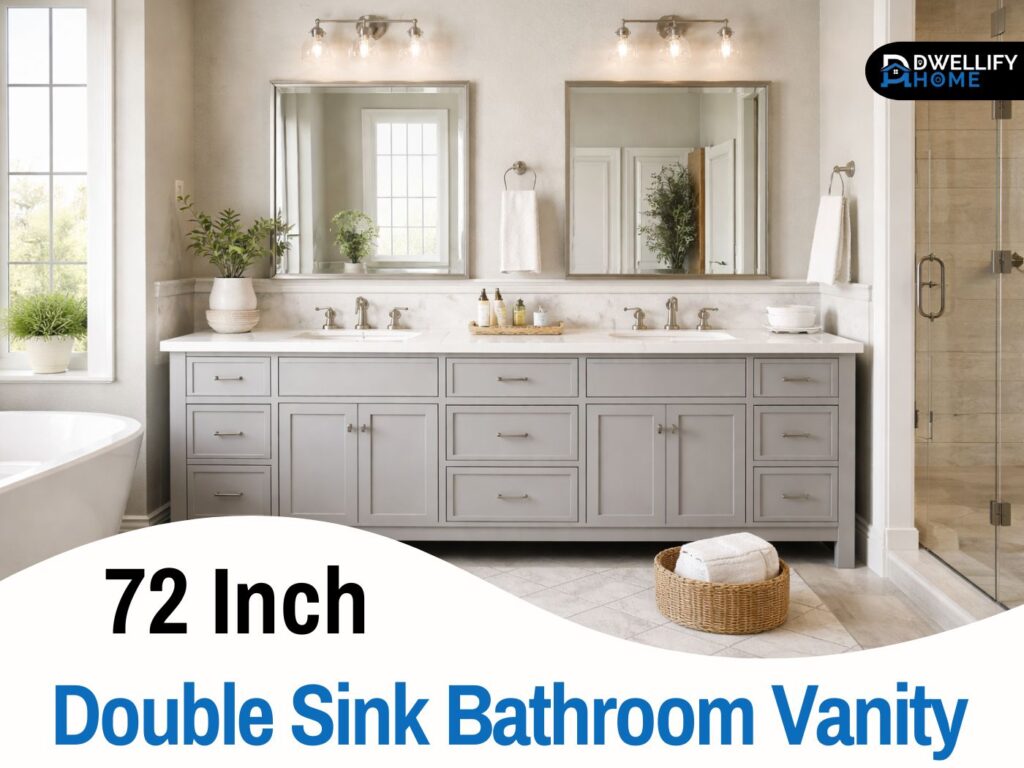
A 72-inch double vanity is one of those upgrades that sounds simple until you start planning it. On paper, it’s just a wider cabinet with two sinks. In real life, it changes your morning routine, your plumbing layout, and how your bathroom feels day to day.
Here’s the thing: I’ve installed plenty of large vanities in real homes, and the difference between a smooth project and a stressful one usually comes down to two things, fit and layout. In this guide, I’ll walk you through how to choose a setup that works for your space, your storage needs, and your budget, including options like a 72 inch bathroom vanity with top, drawer-heavy builds, quartz tops, Costco-style packages, and clearance deals that are actually worth it.
Snippet-Ready Definition:
A 72 inch double sink bathroom vanity is a wide bathroom cabinet with two sinks, designed for shared bathrooms. It offers more counter space, storage, and smoother daily routines for couples or families.
Mission Statement:
At Dwellify Home, our mission is to help homeowners make confident, practical decisions about their living spaces through clear guidance, real-world experience, and easy-to-understand home improvement advice.
Quick Guide Table: Is a 72-Inch Double Vanity Right for You?
| Feature | What It Means in Real Use |
| Width | 72 inches across, ideal for two people using the space |
| Sink Setup | Two separate sinks with individual drain connections |
| Storage | More drawers and cabinet space than smaller vanities |
| Bathroom Size | Works best in medium to large bathrooms |
| Counter Options | Quartz, engineered stone, or solid surface tops |
| Installation | Needs careful plumbing alignment and floor leveling |
| Best For | Shared master bathrooms and busy households |
Quick Buying Checklist (Simple & Practical)
Before you buy, double-check these:
- Measure wall width, depth, and door clearance
- Decide double sink vs 72 inch single sink layout
- Choose drawer-heavy storage if daily use is high
- Confirm what’s included in a vanity with top package
- Check delivery, return policy, and damage coverage
- Plan plumbing for two sinks before installation
Is a 72 inch double sink bathroom vanity the right size for your bathroom?
A 72-inch double vanity is best when two people share the space and both need a spot to get ready without bumping elbows. In most master bathrooms, it’s a sweet spot: wide enough to feel luxurious, but not so wide that it takes over the room.
The best part is how it spreads out your daily clutter. Two sink zones usually means two sets of toothbrushes, soap, skincare, hair tools, and all the little things that pile up. When the counter is wide enough, those items don’t end up stacked around one faucet.
Best bathroom sizes and layouts for a 72-inch double vanity
In a practical layout, you want space to stand comfortably in front of the vanity and still pass behind someone without doing a sideways shuffle. If your bathroom is tight, a 72-inch cabinet can still work, but only when the surrounding clearances are right.
I’ve seen this vanity work beautifully in:
- Master baths with a separate shower and toilet area
- Long, rectangular bathrooms where the vanity wall is uninterrupted
- Remodels where the old setup was a 60-inch vanity and there’s extra wall space to gain
When a 60-inch or 84-inch vanity makes more sense
Guess what, sometimes 72 inches isn’t the “best” choice. A 60-inch double vanity can be smarter if the room has a tight walkway or a door that swings near the cabinet. And an 84-inch vanity can be great in large primary suites, but it often needs more careful plumbing alignment and wall space.
If you’re trying to choose between sizes, think about what you value more:
- More elbow room and storage (72 or 84)
- Easier fit and less renovation work (60)
Measurements to check before you buy (so it fits the first time)
If you remember one thing from my installs, make it this: measure like you’re trying to prove yourself wrong. It’s easy to measure wall-to-wall and feel confident, then realize the drawers smack the door trim or the vanity blocks a heat vent.
Start with the basics: wall width, floor-to-ceiling obstacles, and the vanity’s depth. Depth matters more than most people think. A deep vanity looks great, but in a narrow bathroom it can shrink the walking lane fast.
A few real-world checks I always do on-site:
- Mark the vanity footprint on the floor with painter’s tape
- Open the bathroom door fully and see where it lands
- Picture two people standing at the sinks at the same time
- Check if you’ll still be able to open drawers without hitting a toilet or tub
Comfort height is another detail people forget. Many modern vanities are taller than older ones, which feels great on your back, but it can affect mirror placement and backsplash height.
Double sink vs 72 inch single sink bathroom vanity
This is one of my favorite conversations with homeowners because there’s no one “right” answer. A double sink setup feels like the obvious win, but a 72 inch single sink bathroom vanity can be a quiet upgrade that people love after living with it.
When two sinks are worth it
Two sinks are worth it when both people truly use the bathroom at the same time. Think mornings with work schedules, kids, or anyone who needs a steady routine. Two basins reduce the daily bottleneck, and that alone can make the remodel feel worth it.
It’s also useful when one person uses the sink for grooming and the other just needs quick access for brushing teeth or washing up. You’re not constantly moving stuff around.
When a 72-inch single sink is smarter
On top of that, a long single-sink layout can be cleaner and more functional. You get more uninterrupted counter space, which is huge if you use skincare trays, a makeup mirror, or you want room for decor without it feeling cramped.
It’s also easier on plumbing. With one sink, you have fewer potential leak points, fewer drain connections, and often more usable storage because you’re not working around two trap areas.
Vanity with top vs cabinet-only (what you’re really paying for)
A lot of people prefer a 72 bathroom vanity double sink with top because it reduces decision fatigue. You get the cabinet, the counter, and usually the sinks in one package. That’s a solid route when you want a predictable install with fewer parts to chase down.
That said, cabinet-only can be the better value when you want a specific countertop material or a custom sink style. I’ve had clients fall in love with a cabinet, then choose a quartz slab top that matches their shower curb or niche shelves.
If you’re comparing packages, make sure you know what’s included. Many “vanity with top” sets still don’t include faucets, drains, mirrors, or the mounting hardware you might expect.
Choosing the best top material (quartz, stone, and budget picks)
Countertop choice is where vanity setups can look high-end or look a bit builder-grade. The top also affects maintenance more than the cabinet does, because it’s the surface that takes daily abuse from water, toothpaste, hair products, and cleaning sprays.
72 inch double sink bathroom vanity with quartz top (pros, upkeep, look)
A 72 inch double sink bathroom vanity with quartz top is popular for good reasons. Quartz holds up well in busy bathrooms because it’s consistent, easy to wipe down, and doesn’t feel delicate. It also gives you that clean, finished look that makes the whole vanity feel more expensive.
From install experience, here are quartz details that matter:
- A small backsplash helps protect the wall from daily splashes
- Look at the edge profile, a simple eased edge hides wear better over time
- On long runs, check how the top is packaged and protected to avoid shipping damage
Quartz still needs reasonable care. Don’t use harsh cleaners that can dull the finish over time. Warm water and mild soap covers most daily mess.
Other common tops (engineered stone, cultured marble, solid surface)
If quartz stretches the budget, engineered stone or solid surface can be a good middle ground. Cultured marble is common in value packages and can look nice, but it may show scratches and dull spots sooner in heavy-use bathrooms.
A simple way to decide is to match the top material to how the bathroom is used. A guest bath can handle a more budget-friendly top just fine. A busy master bath usually benefits from a tougher, easier-to-maintain surface.
Storage that matters (drawers, organizers, and daily-use layouts)
Storage is where you feel the difference every single day. A 72 inch double sink bathroom vanity with drawers is usually the most practical version of this size because drawers make it easier to organize, access, and keep things from turning into a messy pile.
In real installs, I’ve noticed that households who love their vanity long-term tend to have a drawer plan. They know where the hair tools go, where backup toothpaste lives, and where the towels fold.
Best drawer layouts
Look for:
- Deep drawers for towels and bulk items
- Top drawers for daily grooming items
- A mix of narrow and wide drawers so everything has a natural home
The best part is you’ll stop losing small items in the back of a cabinet. Drawers bring everything to you.
Plumbing-friendly storage
Now, plumbing takes up space under each sink, and that’s where some vanities disappoint. Many double-sink designs sacrifice the center storage to make room for drain lines. Good builds design around that problem with smarter layouts.
Practical tip from the field: if you want maximum storage, pay attention to the center section. Some vanities give you usable center drawers or a tilt-out tray, while others leave it mostly empty.
Sink and faucet choices that change the whole experience
Sink style affects cleaning, water splash, and how easy it is to replace something years down the road. I always tell homeowners to think beyond the first photo.
Undermount sinks are easy to wipe around and look clean, but replacement can be more involved. Integrated sinks can be very easy to clean, but if you damage one, you may be replacing more than just a sink.
Faucet fit matters too. A faucet that’s too short can cause splashing. A faucet that’s too tall can feel awkward and spray water outside the basin if the sink is shallow.
A quick, practical way to avoid headaches:
- Choose a sink with enough depth for daily splashes
- Make sure the faucet reach lands water near the drain, not near the front edge
- Confirm hole spacing so you don’t end up with a faucet that doesn’t match the top
Freestanding vs floating 72-inch vanities
Freestanding vanities are the most common choice because they’re straightforward to install and they hide plumbing nicely. They also feel grounded and furniture-like, which works with many styles.
Floating vanities look sharp and make the room feel bigger, especially in modern bathrooms. The trade-off is planning. A floating vanity needs solid wall support and correct blocking inside the wall. If that isn’t there, you’ll be doing extra carpentry work.
From experience, floating vanities are best when:
- You’re already opening walls for plumbing or electrical work
- You want easier floor cleaning
- You’re okay with a more involved install
Build quality checklist (how to avoid “pretty but flimsy”)
Photos can be misleading. I’ve seen beautiful vanities arrive with weak drawer slides or thin back panels that don’t hold up well in a humid bathroom. This is where being picky pays off.
Look at cabinet construction first. Solid wood is strong, but plywood can also be excellent when it’s built well. MDF isn’t automatically bad, but it needs good sealing and moisture protection, especially near the toe kick and sink areas.
Hardware matters more than people expect:
- Soft-close hinges that don’t wobble
- Drawer glides that feel smooth under weight
- A finish that doesn’t feel like it will peel if you wipe it often
A simple test: open a drawer and gently wiggle it side to side. If it feels loose out of the box, it won’t get better over time.
Style ideas that make a 72-inch vanity look custom (without custom cost)
A 72-inch vanity can look like a built-in feature if you style it right. The cabinet itself is only part of the visual impact. Mirror size, lighting, and hardware finish do a lot of heavy lifting.
If you want it to look intentional:
- Use a mirror that matches the scale, either one large mirror or two balanced ones
- Place lights so faces are evenly lit, not shadowed from above
- Match hardware finish with faucet finish for a clean look
Shaker styles fit almost any home. Modern slab fronts look great in minimalist bathrooms. Furniture-style legs can add warmth, but they reduce hidden storage and cleaning ease.
Cost, shopping options, and where people buy
Price varies a lot because you’re paying for materials, top quality, hardware, and how complete the set is. A 72 inch bathroom vanity with top often costs more upfront, but it can save time and reduce mismatched parts.
Some homeowners look at 72 inch bathroom vanity Costco options because packages can be strong value for the money. The key is to confirm the details: what top material it uses, what sinks are included, and how replacement parts are handled.
Here’s a practical way to think about value:
- If the set includes a quality top and good hardware, it’s often a solid deal
- If the set is cheap but has weak drawers or a delicate top, you may feel it daily
Also, don’t forget delivery. Large vanities can arrive with top damage if they’re not packed well.
Clearance shopping without regret (72 inch bathroom vanity clearance)
A 72 inch bathroom vanity clearance deal can be a real win, but only when you shop carefully. I’ve seen clearance buys save hundreds, and I’ve also seen them turn into frustration when a top arrives chipped or a key part is missing.
Before you buy clearance, check:
- Exact dimensions, including depth
- Whether the top and sinks are included and in good condition
- Return policy and restocking fees
- Whether the vanity comes assembled or needs assembly
If you can inspect in person, do it. Look at corners, edges, and drawer alignment. Small damage can become a big annoyance once it’s installed.
Installation planning (what to know before the vanity arrives)
Installation is where large vanities either feel easy or feel overwhelming. For a double-sink setup, plumbing planning matters. Even if you’re not moving the drains, you’ll be tying into two sink connections and making sure everything lines up.
If the remodel includes new flooring, that changes leveling. If you’re putting the vanity on tile, you may need shims. If the wall isn’t perfectly straight, you may need a small scribe or trim detail to keep gaps from showing.
When to hire a plumber:
- You’re moving drain locations or supply lines
- You’re not comfortable with leak testing
- You’re working with a tight cabinet space and want it clean and code-safe
If you DIY, do a slow leak test before closing anything up. Let the water run, then check every connection with a dry paper towel. It sounds simple, but it catches tiny drips early.
Maintenance and care (keep it looking new)
A vanity lasts longer when you prevent water from sitting where it shouldn’t. Most damage I see comes from slow moisture exposure, not one big splash.
Simple habits help a lot:
- Wipe standing water near seams and around faucets
- Use gentle cleaners, especially on quartz or polished finishes
- Tighten handles and hardware once in a while before they loosen too far
If drawers start feeling sticky, don’t force them. Check for swelling near the bottom edge, and make sure the bathroom fan is actually pulling moisture out. Humidity is the quiet enemy of cabinets.
Quick “Before You Buy” Checklist
Before you commit, run through this list. It saves so many headaches.
- Confirm width, depth, and height, plus clearance in front
- Decide double sinks or a 72 inch single sink bathroom vanity
- Choose a top that matches your maintenance comfort level
- Pick a storage layout that fits your routine, especially drawers
- Verify what’s included, especially in a 72 bathroom vanity double sink with top package
- Check delivery and return policies, especially for large tops
- Have an installation plan for plumbing and leveling
FAQs
What is the standard size for a double sink vanity?
Most double sink vanities range from 60 to 72 inches wide. A 72-inch vanity provides more elbow room, counter space, and storage compared to smaller options.
Is a 72 inch vanity too big?
It can be if the bathroom is narrow. The key is maintaining comfortable clearance in front of the vanity and making sure doors and drawers open without obstruction.
Is it cheaper to buy or build a vanity?
Buying is usually cheaper and faster. Building a custom vanity costs more due to materials and labor, but it allows for exact sizing and design control.
How far apart are sinks on a 72 inch vanity?
Most setups space sinks about 18 to 24 inches apart from center to center, depending on drawer layout and countertop design.
Does a 72-inch vanity need special plumbing?
It needs two drain connections and properly spaced water lines. If existing plumbing doesn’t line up, minor adjustments are usually required.
Conclusion
A 72 inch double sink bathroom vanity can be a fantastic upgrade when it fits the room and matches how you actually live. The most satisfying installs I’ve done weren’t about fancy finishes. They were about smart planning, a top that fits the household, drawers that keep life organized, and plumbing that’s laid out cleanly.
Here’s the thing to remember: choose fit first, then storage layout, then countertop material, and only after that focus on the deal. Whether you go with a 72 inch bathroom vanity with top, a drawer-heavy setup, a quartz option, a Costco-style package, or a careful clearance find, the goal is the same. You want a vanity that feels easy every morning, not one that looks good but fights you daily.
If you measure carefully, plan the plumbing honestly, and pick storage that matches your routine, you’ll end up with a bathroom setup you’ll enjoy for years.
Disclaimer
This article is for general informational purposes only. Measurements, installation requirements, and plumbing needs may vary by home. Always confirm specifications and consult a qualified professional before purchasing or installing a bathroom vanity.