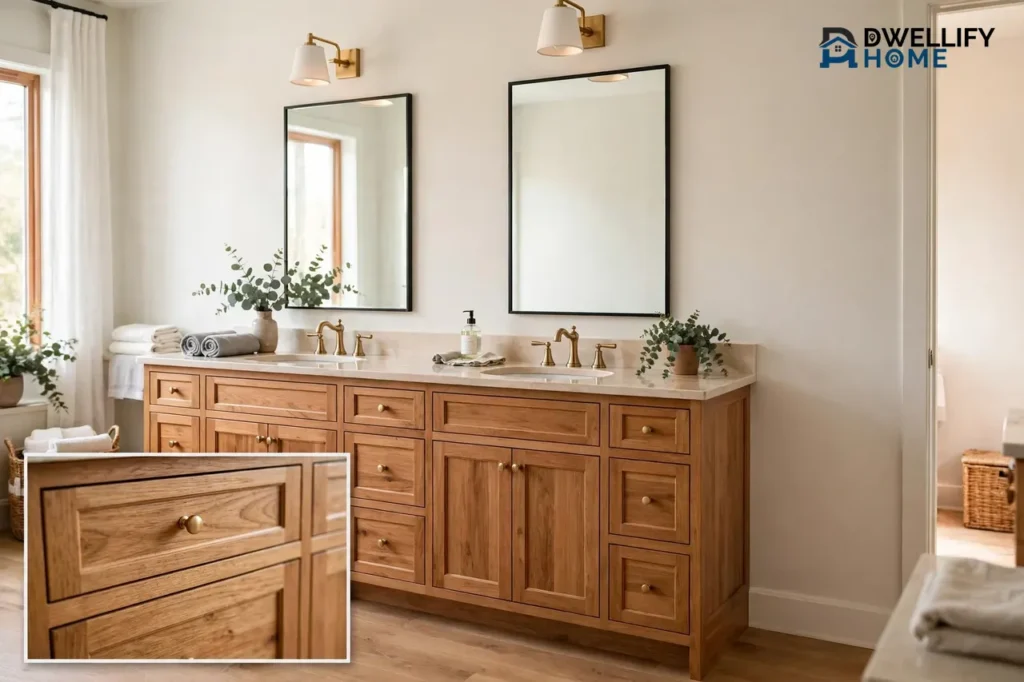
An 84 inch bathroom vanity is one of those upgrades that can completely change how a bathroom feels and functions. When it’s planned well, it gives you breathing room, better storage, and a more balanced layout, especially in a primary bathroom where mornings can get hectic.
Here’s the thing, big vanities are forgiving in some ways, but they also make mistakes more obvious. I’ve helped homeowners install oversized vanities that looked perfect online, then turned into headaches because of depth, plumbing alignment, or door clearance. This guide walks you through the choices that actually matter, in plain English, with the kind of tips you only learn after working with real bathrooms.
Snippet-ready definition:
An 84 inch bathroom vanity is a wide vanity cabinet, often used in large or primary bathrooms, that offers big countertop space and storage. It can be single or double sink, with or without a pre-matched top.
Mission Statement:
At Dwellify Home, our mission is to help homeowners make confident, practical design decisions with clear, experience-based guides that focus on real-life function, smart planning, and long-term comfort.
Is an 84 Inch Bathroom Vanity the Right Size for Your Bathroom?
An 84 inch vanity is ideal when you have a wide wall and you want a true built-in look without paying fully custom prices. In real homes, I see it work best in primary bathrooms, shared bathrooms for couples, and large remodels where you’re replacing an older double vanity with something more modern.
On the flip side, it’s not always the right move. If your bathroom has a tight doorway swing, a toilet that sits close to the vanity, or a narrow walkway, 84 inches can feel bulky. The best part is you can usually tell if it will work in 10 minutes with the right checks.
Quick fit checklist (before you buy)
Use this quick checklist before you commit:
- Measure the full wall width, not just “vanity space” in your head
- Check door swing and drawer clearance near the vanity ends
- Confirm walkway clearance, especially between vanity and shower or tub
- Locate plumbing lines, drain height, and shutoff valves
- Look at outlet placement, light switches, and heat vents
- Tape the vanity footprint on the floor with painter’s tape to feel the scale
A simple trick I use: place a box or two where the vanity will sit and walk through your normal routine. If you’re constantly sidestepping, the layout will feel annoying every day.
Quick Guide Table (Fast Decisions)
| Decision | Best for | Watch-outs |
| 84 inch bathroom vanity single sink | Maximum counter space, easier cleaning, more drawers | Make sure sink placement still feels centered in the room |
| 84 inch double sink vanity | Two people using the space at once | Plumbing alignment and storage loss under sinks |
| 84 inch bathroom vanity with top | Faster, simpler planning and installation | Faucet hole spacing and sink cutouts are pre-set |
| 84 inch bathroom vanity without top | Custom look and premium countertop choice | You must match sink type, faucet holes, and exact measurements |
| 84 inch bathroom vanity with drawers | Best everyday organization | Confirm drawers don’t clash with plumbing on some designs |
| 84 inch bathroom vanity with linen tower | Extra towel and bulk storage | Door clearance and visual “heaviness” in the room |
| 84 inch bathroom vanity with makeup area | Dedicated getting-ready zone | Needs good lighting and an outlet plan |
| Floating 84 inch vanity | Modern look, easier floor cleaning | Wall must support weight, usually needs solid blocking |
| Freestanding 84 inch vanity | Classic look, easier to hide plumbing | Can feel bulky if the bathroom is narrow |
Step-by-step planning mini guide (simple and practical)
- Measure the wall width and walking space (not just the vanity area).
- Check door swings and drawer clearance on both ends.
- Decide sink setup: single sink for space, double sink for shared routines.
- Pick with top vs without top based on how custom you want to go.
- Choose storage layout (drawers, tower, makeup area) around your daily routine.
- Confirm compatibility: faucet holes, sink type, backsplash needs, plumbing location.
- Plan installation: DIY only if plumbing lines match; otherwise budget for a plumber.
Standard Dimensions, Depth and Comfort Height (What 84 Inch Really Means)
The “84 inch” part refers to width, but the comfort and usability come from depth and height. Most vanities in this size range come in standard depths around the low to mid 20 inches, while some go deeper. Deeper sounds great until you realize it can tighten the walkway and make the room feel pinched.
Height matters too. Comfort-height vanities are popular because they reduce bending, especially for taller adults. In homes with kids, a slightly lower height can be more practical, or you can balance it with a step stool and keep the adults comfortable.
One more detail many people miss: an 84 inch vanity can look wide but still feel cramped if the sink placement is awkward. Width does not automatically equal usable counter space. You want a layout that fits how you actually move and where you naturally place things like toothbrushes, skincare, and towels.
Single Sink vs Double Sink at 84 Inches (Choose Based on Real Life)
This is where most homeowners get stuck, and honestly, there’s no universal winner. I’ve designed bathrooms where two sinks were a lifesaver, and others where a single sink made the space feel calmer and easier to live with.
A quick way to decide is to think about your morning routine. If both people are brushing teeth and getting ready at the same time, two sinks can reduce friction. If one person mostly uses the bathroom first, or you want more counter space and storage, a single sink can feel more luxurious.
84 inch bathroom vanity single sink (best for space and storage)
An 84 inch bathroom vanity single sink often gives you the nicest day-to-day experience. You usually get:
- More open counter space for daily items
- More drawer and cabinet space, especially in the middle section
- Easier plumbing and fewer parts that can leak over time
I’ve seen families love this setup because one sink is easier to clean, and the extra counter space becomes a practical landing zone. It also pairs really well with a makeup area, since you can keep a section dedicated to getting ready without fighting for space.
Double sink 84 inch vanity (best for shared routines)
Double sinks can be great, but they need planning. You want enough space between sinks so each person has a real zone, not a cramped corner. You also want to confirm the plumbing layout, because two sink drains and supply lines can complicate installation in older homes.
If you’re set on double sinks, check whether the design gives you functional storage. Some double setups sacrifice drawers for plumbing clearance, which can be frustrating. In those cases, a center bank of drawers or side drawers make a big difference.
Layout Options That Matter at 84 Inches
At 84 inches, layout becomes more important than style. You’ll see vanities that place sinks side-by-side, vanities with a centered storage tower, and designs that offset a sink to one side.
Side-by-side sink layouts look symmetrical and classic. They work well in wide bathrooms where both users want equal space. Center storage layouts can be a smart alternative because they preserve drawers in the middle and keep plumbing toward the sides.
Floating versus freestanding is another big choice. Floating vanities can make a large piece feel lighter and more modern, plus cleaning the floor is easier. Freestanding vanities tend to feel more traditional and can be easier for certain plumbing situations because they hide more.
Storage Planning (How to Make 84 Inches Actually Work for You)
Storage is where oversized vanities shine, but only if the storage matches your habits. I tell clients to think in zones: daily-use items should be in the easiest drawers, and bulk items should be in deeper cabinets.
On top of that, big vanities can become clutter magnets. If you don’t plan the inside, the extra space just fills up with random stuff. Simple organizers and drawer dividers make a huge difference here.
84 inch bathroom vanity with drawers (why drawers win for daily items)
If you can, prioritize an 84 inch bathroom vanity with drawers. Drawers make it easier to keep things visible and reachable. You’re not digging into a dark cabinet trying to find hair ties or a razor.
A practical drawer setup I like:
- Top shallow drawers for skincare, toothbrushes, and small daily items
- Mid drawers for hair tools, backup toiletries, and grooming kits
- Deep drawers for towels, extra toilet paper, or larger products
Soft-close drawers are not just a luxury. They reduce wear and they keep the vanity quieter, which matters more than you’d think in early mornings.
84 inch bathroom vanity with linen tower (when vertical storage is worth it)
An 84 inch bathroom vanity with linen tower can be a lifesaver in bathrooms that don’t have a closet. The tower gives you vertical storage for towels and bulk items, and it helps keep the countertop cleaner.
Just plan the placement carefully. A linen tower near the shower can be convenient, but it needs clearance so the door opens fully. I also like to keep frequently used towels in the lower shelves so you’re not reaching overhead every day.
84 inch bathroom vanity with makeup area (a practical getting-ready zone)
A makeup area sounds fancy, but the real value is function. It creates a consistent spot for getting ready and keeps cosmetics from taking over the whole countertop.
If you want this feature, plan for:
- Proper lighting, ideally from the side or front, not just overhead
- Outlet access for hair tools, without cords draping across the sink
- Comfortable knee space if it includes seating
One small design trick: choose a vanity section with drawers near the makeup area, so makeup and tools are stored right where you use them.
Vanity With Top vs Without Top (The Biggest Decision After Size)
This is a major fork in the road. An 84 inch bathroom vanity with top typically includes a countertop that’s made to fit, sometimes with pre-drilled holes and sink cutouts. It’s faster and simpler, and it reduces compatibility headaches.
An 84 inch bathroom vanity without top gives you freedom. You can pick your preferred countertop material and customize the sink type, but you need to measure carefully. It’s a better fit for homeowners who want a specific look or a more premium finish.
84 inch bathroom vanity with top (fast, simpler, fewer compatibility issues)
With-top options are great when you want a clean, predictable install. The measurements are usually matched, the sink placement is planned, and you’re less likely to run into surprises.
A good with-top choice works well in remodels where you’re trying to keep the project moving. It also helps if you’re not in the mood to coordinate countertop templating, fabrication, and extra install steps.
84 inch bathroom vanity without top (custom look, more choices to manage)
Going without a top is the right move when the countertop is part of your design vision. Maybe you want quartz with a subtle veining, or you want a specific sink style.
Just keep this in mind: you’ll need exact measurements, and you’ll want to confirm faucet hole placement. I’ve seen people buy a beautiful countertop, then realize the faucet doesn’t fit the spacing, or the sink cutout doesn’t match the basin they purchased.
Materials and Durability (Cabinet, Countertop, Sink)
Bathrooms are tough environments. Heat, humidity, splashes, cleaning products, and constant use can wear down low-quality finishes fast. A vanity can look great on day one and still fail if the materials aren’t right.
For cabinets, the big topic is construction quality. Solid wood and plywood tend to handle moisture better than lower-grade materials, but a well-made engineered cabinet can still perform well if the finish is sealed properly and the bathroom is ventilated.
Countertops vary in both look and maintenance. Quartz is popular because it’s durable and low-maintenance. Natural stone like marble is beautiful but can require more care. Granite is strong, but the pattern can be busy in some bathrooms. Solid surface options can be a good middle ground.
Sink materials matter too. Ceramic and porcelain are classic and easy to clean. Resin and composite sinks can be stylish, but it’s worth checking scratch resistance and how they hold up to daily cleaning.
The Compatibility Section (Avoid These Costly Mistakes)
This is where many oversized vanity projects go sideways. The vanity may fit the wall, but the sink and faucet details can cause delays and extra costs.
Sink type is one big factor. Undermount sinks require the right countertop material and correct cutout support. Drop-in sinks are often easier, but the lip can collect grime. Vessel sinks can look dramatic, but they change faucet height requirements and can splash more if the bowl is shallow.
Faucet holes are another detail that matters. Some tops are drilled for a widespread faucet, while others are drilled for a single-hole faucet. Switching later is not always simple.
Then there’s backsplash and side splash. In real homes, these are not just decorative. They protect walls from water damage, especially in busy bathrooms where water splashes happen daily.
Must-Have Features That Actually Matter
Here’s the thing, a lot of “features” are marketing fluff. But a few truly improve daily life.
Soft-close hardware is one. It protects hinges and drawer slides and keeps things quieter. Adjustable shelves are another, especially if you store tall bottles or cleaning supplies.
Built-in outlets can be helpful, but only if they’re placed thoughtfully and built to code. I like them in a makeup area or near a drawer where hair tools live. It keeps cords controlled and countertops cleaner.
If accessibility matters, comfort height and clear knee space can make a vanity easier to use. Even if you don’t need ADA features now, a layout that feels comfortable and safe is always a good investment.
Installation and Plumbing (DIY vs Pro)
I’ve seen homeowners successfully install large vanities, and I’ve also seen projects stall because the plumbing wasn’t aligned or the wall was not square. The key is knowing what’s manageable.
If you’re handy, have basic tools, and the plumbing lines are already in the right place, a DIY install can be realistic. But if you’re changing sink locations, adding a double sink setup, or upgrading shutoff valves, hiring a plumber can save time and stress.
Installation overview (simple step flow)
A clean install usually follows this flow:
- Remove the old vanity and inspect the wall and floor
- Confirm plumbing locations and check shutoff valves
- Dry fit the vanity, level it, and mark stud positions
- Secure the vanity properly so it doesn’t shift
- Install the countertop and sinks according to the manufacturer guidance
- Connect plumbing, check for leaks, and seal edges where water can get in
Leveling is not optional. Even a small tilt can cause drawers to slide and doors to misalign. I always keep shims on hand, because very few floors are perfectly flat.
Double sink plumbing notes (if applicable)
With two sinks, drains and traps need proper spacing and alignment. Older plumbing sometimes sits slightly off-center, and that can clash with vanity drawer layouts.
A common issue is slow draining because of improper venting or poorly angled drain lines. If you’re not comfortable troubleshooting plumbing, this is one area where a professional is worth it.
Budget, Pricing and Value (What Drives Cost at 84 Inches)
At 84 inches, pricing can range widely depending on materials, sink configuration, and whether you’re buying a vanity with top. Stock vanities tend to be more budget-friendly and quicker to get. Semi-custom gives you more finish and storage options. Fully custom is the most flexible, but it’s also the most expensive.
Costs climb when you add premium countertop materials, double sinks, specialty finishes, or upgraded drawer systems. The best value usually comes from paying for what you touch every day: strong drawer hardware, a durable top, and a finish that can handle moisture.
If you’re balancing budget, a great strategy is to choose a solid cabinet and then decide where to spend on the countertop. That’s often where the vanity looks most “high-end” without overspending.
Where to Buy (And How to Compare Listings Fast)
Big vanities are sold through many retailers, but the comparison process is the same. Focus on what’s included, the exact dimensions, and whether the top and sinks come with it.
If you’re checking 84 inch bathroom vanity Lowe’s listings, a quick way to narrow down choices is to filter by depth, sink count, and whether the vanity includes a top. Then verify what’s included, like backsplash pieces, hardware, and sink basins.
A simple checklist to compare listings:
- Width, depth, and height
- Single sink vs double sink
- With top or without top
- Countertop material and sink type
- Storage layout, especially drawers
- Shipping method and assembly requirements
Style Match Guide (Make 84 Inches Look Built-In, Not Bulky)
A large vanity should feel intentional, not like a big box pushed against the wall. Style helps, but proportions matter even more.
Modern bathrooms often pair large vanities with clean lines, simple hardware, and lighter visual elements like floating designs. Farmhouse looks great with warmer wood tones and panel detailing, but it can feel heavy if the room is small. Transitional styles tend to work in most homes because they’re balanced.
Color choices also change the feel. White and light gray can keep a big vanity from overpowering the room. Navy and darker finishes look bold and custom, but they need good lighting. Natural wood tones add warmth, especially if your bathroom has a lot of tile and stone.
Hardware is a quiet upgrade that makes a huge difference. Simple pulls in a matching finish to your faucet can make the whole vanity look more cohesive.
Quick Decision Checklist (For Buyers Who Want the Answer Fast)
If you want a simple way to decide, use this:
- Choose a single sink layout if you want maximum counter space and storage
- Choose double sinks if two people truly need separate daily stations
- Choose drawers if you want easy organization and less countertop clutter
- Choose a linen tower if your bathroom lacks a closet or towel storage
- Choose with top if you want a simpler, faster install with fewer compatibility issues
- Choose without top if your countertop and sink style are part of your design vision
Conclusion
An 84 inch bathroom vanity can be a fantastic upgrade when it’s planned like a real part of the room, not just a large piece of furniture. The smartest path is simple: confirm it fits, choose the sink setup that matches your routine, pick the right top option, and make sure the storage layout works for how you live.
My honest advice is to slow down at the measuring stage. Tape out the footprint, check door swings, and look closely at plumbing alignment before you buy. Those small checks prevent most of the expensive surprises.
When everything lines up, the payoff is huge. You get more space, better storage, and a bathroom that feels calmer every single day, which is exactly what a well-planned vanity should do.
Disclaimer:
This guide is for general information and planning only. Always confirm exact product measurements, wall conditions, and plumbing locations in your home. For plumbing, electrical, or structural changes, consult a licensed professional and follow local building codes.