
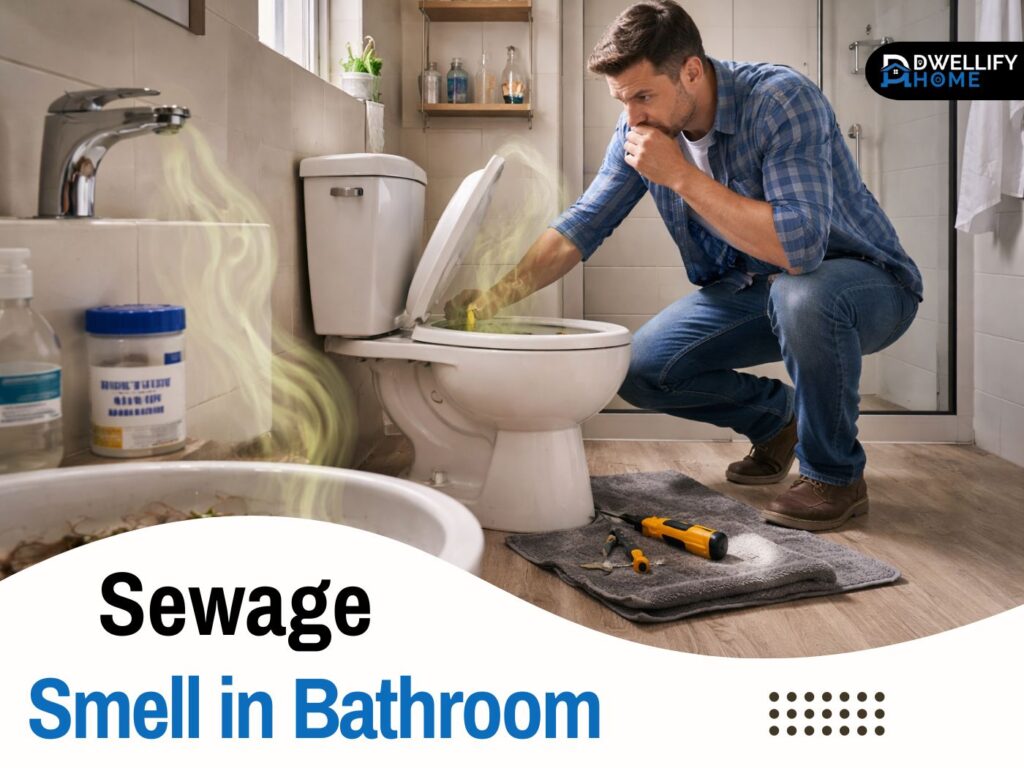
If your bathroom suddenly smells like sewage, I know how unsettling that is. It can feel like something major is wrong, even if everything looks fine.
In my experience as a plumber and home sanitation specialist, this smell usually comes from a small plumbing issue that’s easy to miss. The best part is, you can often narrow it down in minutes if you check the right spots in the right order.
This guide will walk you through what usually causes that odor, how to pinpoint the source, what you can safely fix yourself, and when it’s time to bring in a professional.
Snippet-ready definition:
A sewage odor in a bathroom usually means sewer gas is escaping through a dry drain trap, a failing toilet seal, venting problems, or heavy drain buildup. Most fixes are simple, but recurring smells deserve a closer look.
Mission Statement:
Dwellify Home helps homeowners solve everyday home problems with clear, practical guidance you can trust, so you can fix issues safely, protect your space, and feel confident about when to call a professional.
Is a sewage smell in bathroom dangerous?
Here’s the thing: the smell itself is a warning sign. Most of the time it’s coming from sewer gas escaping where it shouldn’t. Sewer gas can contain unpleasant and potentially harmful compounds, and you don’t want it hanging around your home.
That said, don’t panic. In many homes, the cause is something simple like a dry trap under a sink or shower. Fixing it often restores the seal and the smell disappears quickly.
When sewer gas is a real concern
If anyone feels headaches, nausea, dizziness, or throat irritation, treat that seriously. Open windows, turn on the exhaust fan, and step out for fresh air if needed. I’ve seen families ignore symptoms because “it’s just a smell,” and that’s a mistake.
Also take it more seriously if the odor is strong and persistent, or if it’s spreading beyond the bathroom into hallways or bedrooms. That can point to a bigger venting or drain issue.
When it’s safe to troubleshoot
If the smell is mild and you’re not noticing symptoms, it’s usually safe to do a few basic checks. You’ll be focusing on things like refilling traps, cleaning buildup, and checking the toilet seal area.
If you ever feel unsure, it’s okay to stop and call a plumber. Safety and peace of mind matter.
Quick Guide Table (fast diagnosis + first action)
| What you notice | Most likely cause | What to do first | When to call a pro |
| Smell is strongest near a sink or shower drain | Dry P-trap or drain biofilm | Run water 30 seconds, then clean drain opening | Smell returns within 24–48 hours |
| Smell is strongest at toilet base, worse after flushing | Loose toilet or bad wax ring | Check wobble, sniff around base, look for staining | Any wobble, staining, or soft flooring |
| Gurgling sounds, bubbles, slow drains in more than one fixture | Venting issue or partial main clog | Stop guessing, note patterns, avoid harsh chemicals | Persistent gurgling or multiple slow drains |
| Smell comes and goes, often at night | Trap siphoning or vent pressure problems | Refill traps, then monitor when it returns | Repeats after refilling traps |
| No visible leak, but odor lingers | Hidden dry floor drain or tiny fitting leak | Pour water in floor drain, check under vanity | Odor spreads beyond bathroom |
Step-by-step mini checklist (clean and practical)
- Ventilate first: Open a window, run the exhaust fan.
- Refill traps: Run water in sink and shower, flush toilet, pour water into any floor drain.
- Clean the drain opening: Remove hair and slime, scrub the first few inches, rinse with hot water.
- Check the toilet base: Any movement, odor at the base, or staining suggests a seal issue.
- Listen for gurgling: If it keeps happening, venting or a deeper clog is likely.
Quick 2-minute checklist to pinpoint the source (before you try fixes)
Before you pour anything down a drain, do this quick check. It saves time and prevents random guessing.
Start by standing still for a moment and gently sniff around different areas. I know that sounds odd, but it’s one of the fastest ways to locate the source.
- Toilet base area and behind the bowl
- Sink cabinet area and overflow hole
- Shower or tub drain
- Any floor drain, especially in larger bathrooms
- Walls and corners where plumbing runs behind
On top of that, listen for clues. Gurgling sounds, slow drains, or bubbles in the toilet bowl can point to venting or drain flow issues.
If the smell is stronger at night, or it comes and goes, take note of that. Those patterns often point to traps drying out, partial clogs, or vent problems.
How bathroom plumbing blocks sewer gas (simple explanation)
Every bathroom has a built-in system meant to keep sewer gas out. The main “gatekeeper” is something called a P-trap. It’s the curved section of pipe under sinks and below shower drains.
That curve holds a small amount of water. That water acts like a plug. No water means no plug, and odor can rise right up through the drain.
The other big piece is venting. Plumbing vent pipes release gases safely above the roof and keep pressure balanced in the drain system. If a vent is blocked or not working right, traps can get pulled dry or odors can push back into the bathroom.
Most common causes of sewage smell in bathroom (and the fastest fixes)
I’ve seen this issue many times in bathrooms, and these are the usual culprits. Start with the simplest fix first. Most people jump straight to harsh chemicals, but that’s rarely the best first move.
Dry P-trap (most common in unused sinks, showers, floor drains)
If a sink or shower isn’t used often, the water in the trap can evaporate. Then sewer gas has a clear path into the room. Guest bathrooms and upstairs bathrooms are especially prone to this.
Fix is easy. Run water for 20 to 30 seconds in the sink and shower. Flush the toilet. If you have a floor drain, pour a cup or two of water down it.
A simple tip I give homeowners: after you run water, wait 10 minutes and re-check the smell. If it improves, you likely found the problem.
Drain gunk and biofilm (shower and sink drains can mimic sewage)
Sometimes the smell isn’t pure sewer gas. It’s organic buildup inside the drain line, often called biofilm. It’s a slimy layer made of soap scum, hair, skin oils, and bacteria.
In real homes, this shows up a lot in shower drains. You’ll notice it more when warm water runs, because heat releases odor faster.
A safe approach is to remove the drain cover, pull out hair, and scrub around the opening with a small brush. Follow with hot water. Baking soda and vinegar can help with mild odor, but physical cleaning is what makes the biggest difference.
Toilet wax ring or loose toilet base (odor near the base)
If the smell is strongest at the toilet base, pay attention. The wax ring under the toilet creates a seal between the toilet and the drain pipe. If it cracks, shifts, or compresses unevenly, sewer gas can leak out.
One common sign is a toilet that wobbles even slightly. Another sign is odor after flushing. I’ve walked into bathrooms where everything looked clean, but a failing wax ring was the whole issue.
Don’t keep rocking the toilet back and forth. That can make it worse. If you suspect the wax ring, you can do a quick check by smelling around the base and looking for staining or dampness.
Blocked or faulty vent pipe (often linked to gurgling and recurring odor)
If drains gurgle, or the smell returns even after you refill traps and clean drains, venting rises on the list. A blocked vent can be caused by debris, nests, or even ice in some climates.
Here’s what usually happens: poor venting creates pressure changes that push odor back, or it siphons water out of traps. That’s why the odor can come and go.
Vents are typically accessed on the roof, so this is where many homeowners should stop and call a pro. Roof work is risky, and vent diagnosis is easier with the right tools.
Clogged drain or sewer line (odor plus slow drains across fixtures)
If more than one fixture is slow, or you notice smells plus backups, the issue can be deeper in the system. Partial clogs can hold standing waste water in the line, and that creates odor.
If you also notice the toilet water level changing, bubbling, or multiple drains acting up at once, that’s a strong clue the main line is involved.
At that point, snaking or hydro jetting might be needed. Store drain cleaners aren’t a reliable fix for bigger line issues, and they can damage pipes if used repeatedly.
Sewage smell in bathroom but no leak: hidden causes people miss
This is a common scenario. Everything looks dry, yet the odor is there. In my experience as a plumber, that usually means the issue is happening inside the drain path, not on the outside.
One missed source is a dried floor drain trap. Many people forget floor drains exist, especially in larger bathrooms or basements. Pouring water into it often solves the problem instantly.
Another hidden cause is trap siphoning. If venting is poor, running water in one fixture can pull water out of another trap. So the bathroom smells later even though nobody used that drain recently.
And yes, tiny leaks can still happen without obvious puddles. A loose fitting inside the vanity cabinet can release odor and moisture that dries quickly. Feel for dampness, look for stains, and check if the smell is strongest inside the cabinet.
Sewer smell in bathroom comes and goes (and why it may be worse at night)
Intermittent odors are frustrating, but they’re also a clue. They usually point to something that changes with water use, temperature, or airflow.
Why smells show up at night
At night, bathrooms are often used less, so traps can dry out faster in low-humidity homes. Also, pressure patterns in plumbing can shift when other appliances run, like washing machines or dishwashers in the evening.
I’ve also seen the odor appear at night because the bathroom exhaust fan isn’t running, and the room stays closed up. That doesn’t cause the smell, but it can make it more noticeable.
What intermittent smells usually point to
Most of the time, this pattern points to one of these:
- A trap that’s drying out or getting siphoned
- A venting issue that pushes odor back occasionally
- A partial clog that releases odor when water moves past it
- A toilet wax ring starting to fail, especially after flushing
If the sewage smell in bathroom at night keeps repeating, it’s worth taking notes for a couple of days. When does it happen, after which fixture runs, and how long it lasts. That information helps you or a plumber pinpoint it faster.
How to get rid of sewage smell in bathroom: step-by-step DIY plan
Guess what, most homeowners can solve this without any fancy tools if they follow a sensible order. Don’t skip around. Start simple, confirm results, then move to the next step.
Step 1: Refill every trap (sink, shower, tub, floor drain)
Run water in every sink and shower in that bathroom. Flush the toilet. If there’s a floor drain, add water there too.
If the bathroom is rarely used, this alone can solve it. I’ve had clients call me, then cancel after doing this step.
If you want an extra preventive trick for rarely used drains, add a teaspoon of mineral oil after refilling the trap. It floats on top and slows evaporation. Don’t do this in sinks that you use daily, but it can help in guest bathrooms.
Step 2: Clean the drain properly without harsh damage
Start with physical cleaning. Pull out hair, scrub the drain opening, and rinse with hot water.
If you want a gentle deodorizing option:
- Pour half a cup of baking soda into the drain
- Add one cup of vinegar
- Let it fizz for 10 to 15 minutes
- Rinse with hot water
This can help with mild odor and buildup. But if there’s thick slime, scrubbing matters more than fizzing.
Step 3: Check toilet base and seal
Gently test if the toilet moves. Even slight wobble can break the seal over time.
Smell around the base, especially after flushing. If odor is strongest there, the wax ring may be failing. Some people keep cleaning the toilet thinking it’s a hygiene issue, but the smell keeps returning because it’s under the toilet, not in the bowl.
If you see staining around the base or soft flooring, don’t ignore it. That can turn into bigger repairs.
Step 4: Watch for gurgling and slow drain patterns
If gurgling continues, or the smell keeps returning after steps 1 and 2, stop blaming the drain cover. This is when venting or a deeper clog becomes more likely.
A quick check: flush the toilet and listen. Then run the sink and see if the toilet bubbles. If multiple fixtures react, that’s a stronger sign of venting or main drain issues.
How to get rid of sewer smell from toilet (focused fixes)
If the toilet is the center of the odor, focus on the seal and the base area first. A toilet can look perfectly normal and still leak gas from the bottom.
Here are common signs it’s a wax ring issue:
- Odor is strongest at the base
- Smell gets worse after flushing
- Toilet rocks slightly
- You see staining near the base or soft flooring
Replacing a wax ring is a straightforward job for someone comfortable with DIY, but it’s also easy to do wrong. The toilet must sit evenly, the bolts must be tightened properly, and the flange condition matters.
In my experience, the biggest homeowner mistake is reusing an old wax ring or overtightening bolts until the toilet cracks. If you’re unsure, this is a good time to call a plumber and get it sealed correctly.
Upstairs bathroom smells like sewage: special case
When an upstairs bathroom smells like sewage, it’s often because it’s used less. Traps dry out faster than people expect. Guest bathrooms are the classic example.
Start with the simple fix: run water in every drain upstairs, including the tub and sink. If the odor disappears, you’ve confirmed it’s a trap seal issue.
If it keeps coming back, upstairs odors can also hint at vent stack problems. Upper floors are closer to vent routing, and changes in airflow can make odors show up more noticeably there.
A small routine helps a lot. Once a week, run water for 20 seconds in the upstairs sink and shower. It’s boring, but it works.
When to call a professional plumber
I’m all for safe DIY, but there are times when calling a professional is the smarter move.
Call a plumber if:
- You tried the steps above and the odor returns within a day or two
- You hear persistent gurgling in drains
- Multiple fixtures are slow or bubbling
- You suspect a sewer line clog or backup
- Anyone experiences headaches or nausea around the smell
If the sewage smell in bathroom dangerous symptoms show up, don’t push through it. Ventilate and get help if needed.
What a plumber may do (so you know what to expect)
When I’m called for recurring sewer odor, I don’t guess. I test and confirm.
Depending on the symptoms, a plumber may:
- Snake a drain for a stubborn clog
- Use hydro jetting for heavy buildup in larger lines
- Inspect and clear the vent pipe safely
- Run a smoke test or pressure test to find hidden leaks
- Use a camera inspection to check the main sewer line for breaks or roots
The best part is, once the real cause is identified, the fix is usually straightforward. The hard part is avoiding random trial-and-error that wastes time and money.
Prevent sewage odors from coming back (simple habits that work)
Most repeat odor problems are preventable with a few habits.
- Run water weekly in rarely used sinks, showers, and floor drains
- Use drain strainers to catch hair before it becomes sludge
- Clean shower drains regularly, especially if you have long hair in the home
- Don’t rely on harsh chemical drain cleaners as a routine fix
- Fix a wobbling toilet early before the seal fails
If you ever see that the sewer smell in bathroom comes and goes, treat it as an early warning. Catching it early is always easier than dealing with flooring damage or a main line backup later.
FAQs
1) How to tell where sewer smell is coming from in a bathroom?
Do a quick “smell map.” Check the toilet base first, then the sink and shower drains, then any floor drain. The strongest spot usually points to the source. Gurgling and slow draining hint at venting or a deeper clog.
2) What’s the average cost to fix a sewer smell?
It depends on the cause and your area, but common ranges (often in U.S. markets) look like this:
- Service call/diagnosis: about $50–$150
- Wax ring replacement: about $50–$200
- Snaking a typical bathroom drain: about $100–$300
- Clearing a vent blockage (minor): about $100–$300
Prices can be higher if there’s a main line problem, difficult access, or extra testing needed.
3) How to tell if your sewer line is clogged?
Look for patterns across the home, not just one fixture:
- Two or more drains are slow at the same time
- Toilet bubbles when you run the sink or shower
- Water backs up in the tub or shower when you flush
- Odor gets stronger after running lots of water
If you see these together, it’s time for professional evaluation.
4) Why does the bathroom smell like a sewer but no leak?
Most often it’s a dry P-trap, a dry floor drain, trap siphoning from vent issues, or biofilm buildup in the drain line. These can create odor without leaving water on the floor.
5) What are signs of a broken sewer line?
A broken or damaged sewer line often shows up as:
- Frequent backups that return after clearing
- Multiple drains affected, especially on the lowest level
- Sewage odor beyond one bathroom
- Wet patches outside, unusually green areas, or sinkholes near the line
A camera inspection is usually the fastest way to confirm.
Conclusion: Fixing a sewage smell is usually simple when you follow the right order
A sewage odor in the bathroom feels like a big problem, but in my experience as a plumber, it usually comes down to a few common causes: a dry trap, drain biofilm, a failing toilet seal, venting trouble, or a deeper clog.
Start with the easiest wins. Refill traps, clean the drains properly, then check the toilet base. If the odor keeps returning, pay attention to gurgling and multi-fixture symptoms. That’s when professional diagnosis saves you time and protects your home.
If you take one practical lesson from this guide, let it be this: don’t jump straight to harsh chemicals or random fixes. Follow a calm, logical order, and you’ll solve the smell faster and keep it from coming back.
Disclaimer:
This article is for general home education and does not replace on-site diagnosis by a licensed professional. If odors are strong, recurring, or anyone feels unwell, ventilate the area and contact a qualified plumber promptly.

I’m Bilal, the founder of Dwellify Home. With 6 years of practical experience in home remodeling, interior design, and décor consulting, I help people transform their spaces with simple, effective, and affordable ideas. I specialize in offering real-world tips, step-by-step guides, and product recommendations that make home improvement easier and more enjoyable. My mission is to empower homeowners and renters to create functional, beautiful spaces—one thoughtful update at a time.