
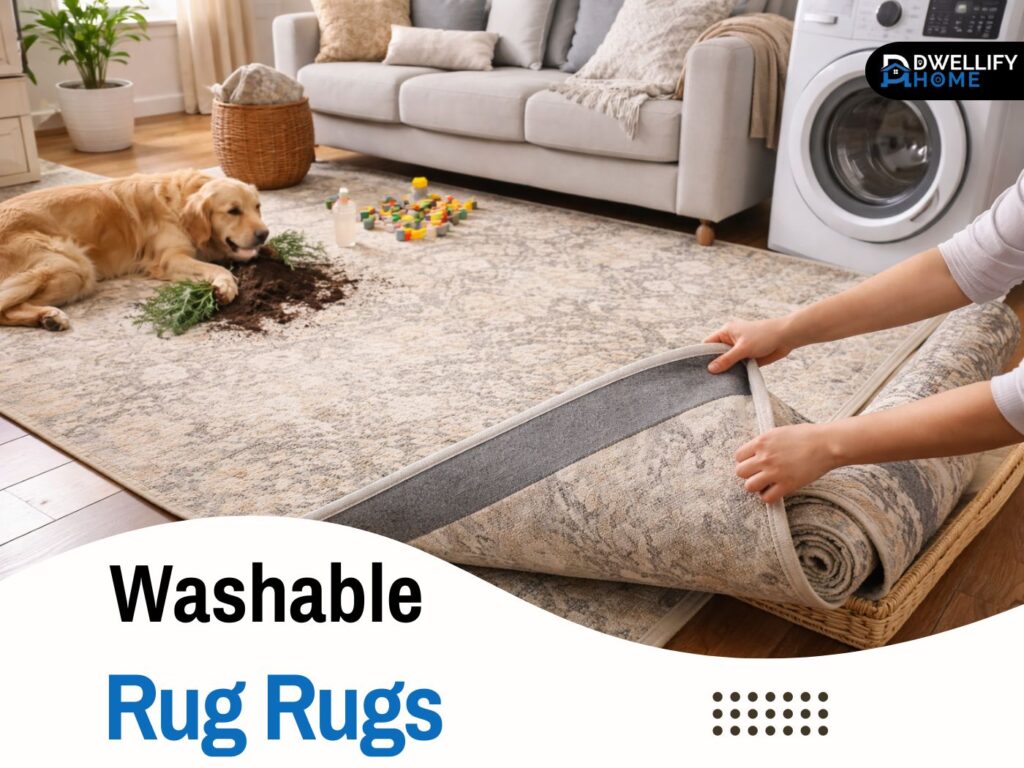
If you’ve ever tried to keep a rug looking decent in a real home, you already know the struggle. One spilled coffee, one muddy paw print, or one toddler snack accident, and suddenly that “pretty rug” feels like a bad decision.
That’s where washable rug rugs can feel like a lifesaver. But here’s the thing. Not every rug labeled washable behaves the same way, and not every home needs the same type of rug.
I’ve used washable area rugs in busy family spaces, styled them in living rooms that see guests every weekend, and helped people troubleshoot curling corners and slippery backing. In this guide, I’ll walk you through what actually works, what doesn’t, and how to get a rug that stays good-looking after real life happens.
Snippet-ready definition:
Washable rug rugs are area rugs designed to be cleaned at home, usually in a washing machine on a gentle cycle. They’re great for kids, pets, and busy rooms when you choose the right size, backing, and care routine.
Mission Statement:
At Dwellify Home, our mission is to help you create a home that looks pulled-together and still feels livable, with practical, experience-based guidance for everyday care, comfort, and style.
What “Washable Rug” Really Means (So You Don’t Buy the Wrong One)
The word “washable” gets used in a few different ways, and that’s where confusion starts. Some rugs are truly machine washable, meaning they’re designed to handle a gentle cycle without falling apart or ruining the backing.
Others are washable in the sense that you can spot clean them or hand-wash them, but putting them in a washing machine can cause warping, shedding, or backing damage. And then there are rugs that are technically washable, but only if you have a large-capacity washer or a laundromat machine.
A quick tip I give clients is simple. Read the care label like it’s the recipe. If it says cold water, gentle cycle, air dry flat, stick to it. Rugs don’t forgive guesswork the way towels do.
Quick Guide Comparison Table
| Feature | One-piece machine washable rug | Two-piece washable system (top cover + pad) |
| Best for | Small to medium rugs, runners, kitchen, bath mats | Larger area rugs, living rooms, bedrooms |
| Washing | Whole rug goes in the washer | Wash the top layer only |
| Drying | Can take longer if thick | Top layer dries faster |
| Grip | Varies, may need a rug pad | Usually steadier because of the pad |
| Common issue | Too heavy for home washer | Alignment ripples if not laid flat |
Step-by-step: How to Wash a Washable Rug (Safe Routine)
- Vacuum both sides first to remove grit and hair.
- Spot-treat stains gently and patch test in a hidden corner.
- Use cold water + Delicate or Gentle cycle (avoid heavy-duty, hot water, bleach, and fabric softener unless the label allows).
- Balance the load (add a couple of towels if needed).
- Dry smart: air-dry flat when possible, or use no-heat/low only if the care tag says it’s allowed.
Mini tip from real homes: if a rug comes out stiff, it’s often detergent residue. Next time, use less detergent and add an extra rinse.
Why People Choose Washable Rug Rugs (Pros and Realistic Cons)
The best part is how stress-free your home feels when you’re not panicking over every spill. A machine-washable rug lets you handle messes quickly, especially in entryways, kitchens, and kids’ spaces.
Washable rugs can also help with dust, dander, and everyday grime. If someone in the home has allergies, being able to wash the rug more often can make the room feel fresher. Not perfect, but noticeably better when you keep up with it.
Now for the honest part. Many washable rugs are thinner than traditional woven rugs. Some don’t feel as plush underfoot, and some can shift around without a rug pad or non-slip backing. And yes, a few may fade slightly over time, especially if you over-wash or use harsh detergent.
Types of Washable Rug Rugs: One-Piece vs Two-Piece Systems
One-piece machine washable rugs (simple, lighter, easier)
One-piece washable rugs are exactly what they sound like. The whole rug goes in the wash. These are great for smaller sizes like bath mats, kitchen rugs, doormats, and washable runner rugs.
In real homes, these work best when you pick the right size for your washer. If it’s too heavy when wet, it won’t rinse properly, and you’ll end up with detergent residue or a funky smell that’s hard to remove.
If you’re choosing one-piece styles, low pile washable rugs tend to behave better. They wash more evenly, dry faster, and are less likely to trap hair and crumbs.
Two-piece or layered washable rugs (wash top layer, keep pad down)
Two-piece systems usually have a removable top layer and a separate rug pad that stays on the floor. You wash the top layer, not the whole thing. That design is super practical for larger rugs, especially in living rooms and bedrooms.
Here’s the thing. Two-piece systems can be easier to maintain, but they need proper alignment. If the top layer isn’t placed smoothly, you might notice rippling or slight lifting at the edges.
In high-traffic homes, this style can be a strong option because the pad helps with grip and comfort. It often feels more stable than a lightweight one-piece rug.
Best Materials for Washable Rugs (And Materials to Avoid)
Material matters more than most people think. It affects stain resistance, softness, drying time, and how the rug holds up after multiple washes.
Polyester is one of the most common choices for machine washable area rugs. It tends to resist staining well, and it’s durable for busy rooms. Recycled PET rugs can be surprisingly tough too, and they often handle frequent vacuuming without breaking down fast.
Cotton washable rugs feel soft and casual, which is lovely in bedrooms and nurseries. But cotton can shrink or wrinkle if you use warm water or high heat. If you’ve ever pulled a cotton item out of the dryer and thought, wow, that’s smaller now, you get the idea.
Some brands offer “washable wool” options, but those are usually very specific constructions and very specific care instructions. Wool in general is not a safe bet for machine washing unless the label clearly says it is.
Materials that are usually not washer-safe include jute, sisal, silk, and viscose. They can distort, shed, or lose texture quickly with water. If you love the natural look of jute, it’s better to keep it in low-mess spaces and clean it with careful vacuuming and spot treatment.
Pile Height and Texture: What Feels Good vs What Washes Well
Pile height is where comfort and practicality meet. A high pile washable rug can feel cozy, but it can also trap pet hair, hold onto crumbs, and take much longer to dry.
Low pile styles are the everyday workhorses. They’re easier to vacuum, easier to wash, and usually a better fit for kitchens, entryways, and dining spaces. If you have pets, low pile is often the calmer choice, less fur gets stuck.
Texture matters too. Deep grooves and shaggy fibers can hide dirt, but they can also hold onto it. If you want that cozy look without the headache, look for a low pile rug with a subtle pattern or woven texture.
Practical tip: if your vacuum has a strong beater bar, test it on one corner first. Some washable rugs do better with a gentler setting.
Backing, Grip, and Floor Safety (Where Most People Mess Up)
This is the part I wish every homeowner understood. Many rug problems come from backing, not the fabric on top.
Non-slip washable rugs can be great, but rubber or TPR backing can break down if you wash it too hot or dry it with high heat. Over time, that can lead to cracking, peeling, or a sticky feel. And on some floors, especially hardwood and certain vinyl finishes, degraded backing can leave marks.
If you’re using a rug with a separate pad, choose a rug pad designed for your floor type. A rug pad for washable rug setups can help with:
- Keeping corners flat
- Reducing slipping
- Adding comfort underfoot
- Protecting the finish of the floor
One more honest note. Even “non-slip” rugs can slide on smooth tile if the floor is dusty or slightly damp. A quick wipe under the rug pad can make a big difference.
Sizing Guide: What Will Fit in Your Washing Machine?
A lot of people buy the perfect rug, then realize it doesn’t fit in their washer. And once a rug is wet, it gets heavy fast.
As a general rule, smaller rugs like 2×3, 2×5 runners, and many 3×5 rugs can fit in standard home washers. Larger sizes like 5×7 or 6×9 often need a large-capacity washer, and that may mean a laundromat.
If you’re unsure, try this simple check before buying. Imagine the rug wet and folded. If it feels like it would overload your washer drum, it probably will.
Smart alternatives if you love the look of big rugs:
- Use two runners side-by-side in a large space
- Choose a two-piece system where only the top layer is washed
- Pick a smaller rug and layer it over a larger natural fiber base that stays mostly dry
Room-by-Room: Best Washable Rug Rugs for Every Space
Entryway and hallway
Entryways deal with grit, mud, and moisture. Low pile washable runner rugs are ideal here because they’re easier to clean often. Choose a darker pattern if you want it to look good between washes.
If the area gets wet shoes regularly, make sure drying is fast. A rug that stays damp can smell musty quickly.
Kitchen
Washable kitchen rugs need to be practical. Grease splatters, food stains, and constant foot traffic mean low pile wins again. Look for stain-resistant rug materials and a steady grip so it doesn’t slide while you’re cooking.
Also, avoid super thick rugs near doors or dishwasher fronts. They can catch and curl over time.
Living room
In the living room, comfort matters more, but you still want easy care. A medium pile washable area rug can work well if your washer can handle it or if it’s a two-piece setup.
If you entertain often, patterns are your friend. They hide the little “life marks” that happen between washes.
Bedroom and nursery
Softness matters here. Cotton or softer polyester can feel nice under bare feet. In nurseries, I like rugs that clean easily and don’t hold odors. A non-slip base is also important because kids move fast and rugs can become a hazard.
Bathroom
Washable bathroom rugs should dry quickly. Thick rugs that stay damp can encourage mildew smells. Look for bath mats with clear wash instructions and a backing that doesn’t degrade with frequent washing.
How to Wash Washable Rug Rugs (Step-by-Step Without Damage)
Here’s the routine I use, especially in homes with pets and kids.
Start by shaking the rug outside or giving it a good vacuum. You want crumbs and hair out before water hits it, otherwise that debris turns into a stuck-on mess.
Then check the label, always. Most machine washable rugs do best with cold water and a gentle cycle. Use mild detergent, and don’t overdo it. Too much detergent can leave residue that makes a rug feel stiff and attracts more dirt later.
If you’re treating stains, pretreat gently. A small amount of detergent or stain remover on the spot, then a light dab, not aggressive scrubbing. Scrubbing can rough up fibers and create a fuzzy patch.
Avoid these common mistakes:
- Hot water unless the label says it’s fine
- Bleach unless clearly allowed
- Fabric softener, which can leave a film
- Overloading the washer, which prevents proper rinsing
How to Dry a Washable Rug Without Curling, Rippling, or Shrinking
Drying is where many rugs get ruined. High heat can shrink cotton, warp backing, and make edges curl.
If the care label says air dry flat, do that. Lay it flat on a drying rack or a clean surface, and reshape it while it’s damp. This is a small step that makes a big difference in how it lays later.
If tumble dry low is allowed, keep it low and check it halfway. I usually recommend pulling it out while it’s slightly damp and letting it finish air drying. That helps prevent stiffness and reduces edge curl.
For thicker rugs, flip them during drying so moisture doesn’t get trapped underneath. That trapped moisture is where odors start.
Stain and Odor Guide (Pets, Spills, Everyday Mess)
Let’s keep this practical.
For food and drink spills, blot first, then rinse with cool water. Blot again. If you rub, you push the stain deeper into the fibers.
For mud, let it dry, then vacuum it up. Wet mud is messy and spreads. Dry mud is easy to remove.
For pet accidents, timing matters. Blot, rinse, and use an enzyme-style cleaner if the rug label allows it. Enzymes help break down odor-causing proteins, which is why they work better than just soap for pet messes.
If odor lingers after washing, it’s often because the rug didn’t rinse well or didn’t dry fast enough. In that case:
- Run an extra rinse cycle next time
- Use less detergent
- Dry faster with airflow and flipping
And if the rug has heavy backing that holds moisture, sometimes professional cleaning is the smarter move.
Maintenance Between Washes (So You Don’t Over-Wash It)
Over-washing can shorten a rug’s life, even a washable one. The goal is to wash when needed, not on a strict schedule.
A simple weekly routine helps:
- Vacuum regularly, especially in hallways and living rooms
- Spot-clean fresh spills right away
- Rotate the rug every month or two to spread out wear
If you have a pet-friendly washable rug, vacuuming often is the secret. Hair builds up fast, and once it tangles into fibers, washing becomes less effective.
Also, check your vacuum settings. Some rugs do better when the vacuum height is raised slightly or the beater bar is turned off.
Common Problems and Quick Fixes
Even good washable rugs can have quirks. Here’s how to handle the most common ones.
If the rug slips, add a rug pad or grippy underlay, even if the rug claims to be non-slip. Floors vary, and a pad solves most movement issues.
If the rug ripples after washing, it’s usually from improper drying or being folded while damp. Rewash gently, then dry flat and reshape. Sometimes placing heavy books on corners overnight helps.
If edges curl, avoid high heat, and try drying flat with corners weighted. If it’s a two-piece rug, make sure it’s aligned smoothly on the pad.
If the rug fades, it’s often from hot water, strong detergent, or harsh sunlight. Cold water and mild detergent are safer long-term.
If backing deteriorates, stop machine drying and switch to air drying. Backing breakdown is usually heat-related.
Buying Checklist (Quick, Practical, Save-This List)
Before you buy, use this quick checklist. It saves a lot of regret.
- Confirm it’s truly machine washable on the care label
- Choose a size your washer can realistically handle
- Pick backing that won’t damage your floor type
- Choose low pile for kitchens, entryways, and pet-heavy homes
- Consider a rug pad for stability and comfort
- Look for clear care instructions and reasonable returns
If you’re torn between two sizes, I usually recommend choosing the one you can clean easily. A rug you can actually maintain will look better long-term than a larger rug you avoid washing.
FAQs About Washable Rug Rugs
1) Can washable rugs go in the dryer?
Some can, many shouldn’t. Always follow the care tag. If allowed, stick to low heat or no heat to avoid curling edges and backing damage.
2) Do washable rugs shrink?
Cotton rugs can shrink if washed warm or dried hot. Cold water and gentle drying reduce the risk.
3) How often should I wash a washable area rug?
Wash when it looks dull, smells off, or after big messes. Entry rugs often need more frequent washing than bedroom rugs. Between washes, vacuum and spot-clean to stretch the time.
4) Can I wash a rug with rubber or TPR backing?
Sometimes yes, but heat is the enemy. Use cold water, gentle cycle, and air dry to protect the backing.
5) Do I need a rug pad under a washable rug?
Often, yes. A pad helps with slip resistance, comfort, and keeping corners flat, especially for lightweight rugs.
Eco, Allergy, and Indoor Air Quality Notes (Optional but Valuable)
If allergies are a concern, washable rugs can help because you can remove dust and dander more often. The key is consistent vacuuming and letting the rug dry fully after washing.
For eco-friendly options, rugs made from recycled PET can be durable and practical. Just focus on longevity. A rug that lasts longer is often the more responsible choice than one you replace every year.
Also, keep detergent residue in mind. Using less detergent and rinsing well can reduce odors and that “stiff rug” feel. It’s a small change that makes the room feel cleaner.
Conclusion
A washable rug can make daily life easier, but only if you choose the right type for your space and your cleaning routine. Here’s the thing. The best rug isn’t the fanciest one. It’s the one you can maintain without stress.
If you want the simplest path, go for low pile in busy areas, choose a size that fits your washer, and air dry whenever possible. Add a good rug pad where slipping is a risk, and follow the care label like it’s non-negotiable.
When you do that, washable rug rugs stop feeling like a trendy idea and start feeling like a practical upgrade. And honestly, that’s the goal, a home that looks good and still feels livable.
Disclaimer:
This guide is for general home care education. Always follow your rug’s care label and flooring manufacturer guidance. If your rug is valuable, delicate, or has unstable backing, consider professional cleaning to avoid damage.

I’m Bilal, the founder of Dwellify Home. With 6 years of practical experience in home remodeling, interior design, and décor consulting, I help people transform their spaces with simple, effective, and affordable ideas. I specialize in offering real-world tips, step-by-step guides, and product recommendations that make home improvement easier and more enjoyable. My mission is to empower homeowners and renters to create functional, beautiful spaces—one thoughtful update at a time.