
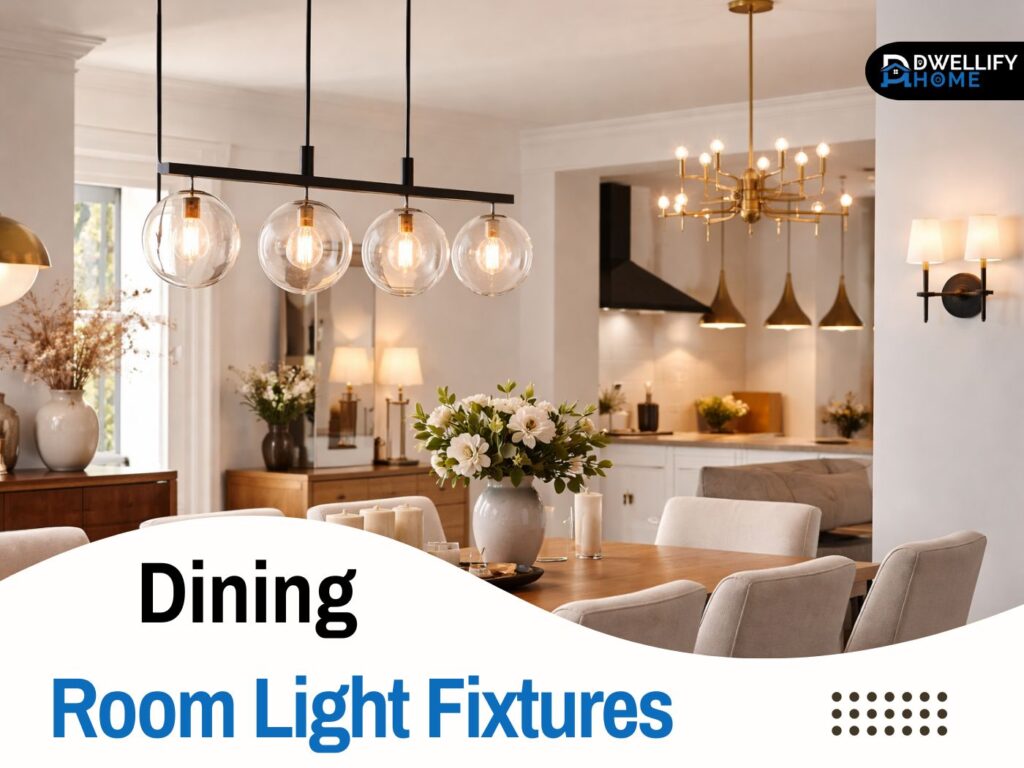
If you’ve been shopping for dining room light fixtures, you’ve probably noticed something frustrating: everything looks great online, but it’s hard to tell what will actually work in your room. And once you start hearing advice like “go bigger” or “hang it lower,” it can get confusing fast.
Here’s the thing—dining lighting isn’t just about looks. It affects how comfortable people feel at the table, how food looks, and even whether conversations feel relaxed or “under a spotlight.” I’ve helped homeowners fix lighting mistakes they didn’t notice until their first dinner party, so I’m going to guide you like we’re standing next to your dining table, figuring it out together.
By the end of this guide, you’ll know how to pick the right fixture type, choose a size that looks balanced, hang it at the right height, and select bulbs that make the space feel warm and inviting—without overcomplicating it.
Snippet-ready definition:
Dining room light fixtures are the main lights (chandeliers, pendants, linear, or flush mounts) designed to light the table comfortably, set the mood, and suit your room’s size, ceiling height, and style.
Mission Statement:
Our mission at Dwellify Home is to help homeowners make confident, practical design choices—so your space looks beautiful, works better every day, and feels comfortable for real life.
Start Here: What Your Dining Room Lighting Needs to Do
Before we talk styles and finishes, let’s talk purpose. A dining room light has three jobs: ambient lighting (overall light), task lighting (enough light for serving and eating), and accent lighting (the glow that makes the room feel finished).
Most dining rooms feel “off” because they only have one of those. If your overhead fixture is doing everything, it often ends up too bright, too dim, or just… flat. On top of that, people’s eyes naturally go to the table area, so lighting here has more emotional impact than a hallway or bedroom.
A quick real-life example: I once worked with a family who had a beautiful chandelier, but everyone complained their dinners felt tense. The fixture had clear exposed bulbs in cool white, so it created harsh shadows and glare. We didn’t replace the fixture—we simply swapped to warmer bulbs and added a dimmer. Same chandelier, totally different vibe.
Quick Guide Table: Choose the Right Fixture Fast
| Your situation | Best choice | Why it works | Pro tip |
| Rectangular table | Linear fixture or 2–3 pendants | Spreads light evenly across the table | Keep the fixture about 1/2–2/3 the table width |
| Round table | Single chandelier or one statement pendant | Centers perfectly and feels balanced | Avoid very wide fixtures that overwhelm a round top |
| Low ceiling | Semi-flush or flush mount | Keeps head clearance while still looking styled | Pick an “open” design so the room feels bigger |
| Small dining room | Semi-flush / compact chandelier / glass pendant | Lighter visual weight prevents crowding | Add a dimmer for cozy dinners + bright cleaning mode |
| Want modern look | Hanging modern dining room light fixtures (clean lines, globe, minimal) | Feels sleek and intentional | Use warm bulbs so modern doesn’t feel harsh |
| Want contrast | Dining room light fixtures black | Adds definition, works with many styles | Pair with warm light and lighter shades around it |
| Want warmth | Dining room light fixtures wood | Softens the room, feels natural | Wipe gently—avoid spraying cleaner directly on wood |
| Need airflow too | Dining room light fixtures with fan | Comfort + lighting in one | Check noise level + make sure light output isn’t weak |
Types of Dining Room Light Fixtures (Pick Your Best Match)
There isn’t one “best” fixture type. The best part is, once you match the fixture to your table shape, ceiling height, and room size, the decision becomes much easier.
Chandeliers (classic statement piece)
Chandeliers work best when you want a centerpiece. They’re great for formal dining rooms, traditional spaces, and even transitional rooms where you want a little elegance without feeling fancy.
One honest downside: chandeliers can feel visually heavy in a small space. If your dining room is tight, look for open frames or lighter silhouettes so it doesn’t feel like it’s “sitting” on the table.
Pendants and hanging modern dining room light fixtures
Pendants are my go-to for a cleaner look. If you like modern dining room light fixtures, a pendant (or a small cluster) often gives you that sleek, intentional style.
They’re also flexible. You can use one statement pendant over a round table, or multiple pendants over a long rectangular table. Just remember: multiple pendants look best when they’re carefully spaced—random spacing is where things start to feel messy.
Linear fixtures (best for rectangular tables)
If your table is long, a linear chandelier or linear pendant can look “made for the room.” It spreads light more evenly and matches the table shape, which feels balanced and designer-like.
One thing people don’t realize: linear fixtures also help reduce harsh shadows because the light source is spread out instead of concentrated in one spot.
Flush mount and semi-flush (low ceilings + small dining rooms)
If your ceiling is low, don’t force a chandelier. A flush mount or semi-flush mount can still look stylish, especially for small dining room light fixtures where head clearance matters.
Semi-flush is a sweet spot because it adds depth and style without dropping too low. It’s often the best answer for apartments and older homes with lower ceilings.
Wall sconces + buffet lamps (for layering and atmosphere)
Here’s the thing: the rooms that feel the most welcoming usually have light coming from more than one place. Sconces and buffet lamps add that soft side glow that makes dinner feel relaxed.
You don’t need a ton of extra lighting, either. Even one pair of sconces or a single lamp on a sideboard can make the room feel finished.
How to Choose the Right Size Fixture (So It Looks Balanced)
Sizing is where people either nail it or regret it. And the regret usually comes from going too small. A fixture that’s undersized can make the whole dining room feel unfinished.
Quick sizing rules (room size + table size)
A simple way to think about it: your fixture should visually relate to your table. In most homes, you want the fixture to be about one-half to two-thirds the width of the table. That gives you presence without overwhelming the space.
Another easy check I use in real homes: stand back at the doorway and look at the fixture in relation to the table. If the table dominates and the light disappears, it’s too small. If the light dominates and the table looks cramped, it’s too big.
One big fixture vs multiple pendants
Multiple pendants can look amazing, especially for over dining table lighting ideas on long tables. But they need structure.
A practical rule: if you use 2–3 pendants, keep the shapes consistent and aim for even spacing so they read as a set. If spacing feels tricky, a single linear fixture is often easier and cleaner.
How High to Hang Dining Room Lights Over the Table
This is one of the most searched questions for a reason. Hang it wrong and everything feels off—either you’re staring into bulbs, or the fixture feels like it’s floating too high to matter.
Standard hanging height (common ceiling heights)
In most homes with standard ceilings, a safe starting point is hanging the bottom of the fixture about 30–36 inches above the tabletop. That gives good light coverage and keeps sight lines comfortable.
Adjustments for higher ceilings
If your ceilings are taller, you can usually hang slightly higher, but don’t overdo it. People tend to hang fixtures too high because they’re afraid it will feel “in the way.” Guess what—it usually looks worse high than slightly lower.
If you’re unsure, temporarily hang it a little lower and test it for a few evenings. You can always raise it later, but lowering it after the fact is harder if the chain and wiring were cut short.
The “don’t block the view” comfort check
Here’s my real-life test: sit down at the table. Can you see the person across from you without the fixture cutting through their face? If the fixture blocks eye contact, it’s too low or too bulky for the space.
Also check glare. If bulbs are visible at seated eye level, it will feel harsh even with warm bulbs.
Over Dining Table Lighting Ideas (Based on Table Shape)
If you match light shape to table shape, the room instantly looks more intentional.
- Round table: One chandelier or single pendant usually looks best. A small cluster can also work if the room is modern.
- Rectangular table: A linear fixture is the cleanest solution. Two or three pendants can work, but spacing matters.
- Square table: A compact chandelier or a tight pendant cluster feels balanced.
One simple trick: center the fixture on the table, not the room. In real homes, dining tables are often slightly off-center because of doors, walkways, or furniture. The light should follow the table, because that’s what your eyes read as the “main zone.”
Brightness + Bulb Choice (Make It Cozy, Not Harsh)
This is where I see homeowners accidentally ruin a beautiful fixture. The fixture is fine—the bulb choice is wrong.
Warm vs cool light (best range for dining rooms)
For dining rooms, warm light feels best. Look for bulbs around 2700K to 3000K. That’s warm enough to feel inviting, but not so yellow that it feels dim or vintage unless you want that look.
Cool white bulbs can make food look less appealing and skin tones look flat. You might not notice it alone, but you’ll feel it when people sit down.
Lumens explained (simple, real-life guidance)
Instead of obsessing over wattage, think in lumens. As a general guideline, dining spaces often feel comfortable when the table area has enough light to eat and serve, but not so much that it’s “stage lighting.”
If your fixture has multiple bulbs, you don’t need ultra-bright bulbs in each socket. I’ve fixed many dining rooms by simply using lower-lumen bulbs paired with a dimmer.
Dimmers, smart bulbs, and lighting scenes
If I could recommend one upgrade that makes the biggest difference, it’s a dimmer. The best part is, it lets you use the same fixture for different moments:
- Dinner mode: soft, warm, relaxed
- Family mode: moderate light for everyday meals
- Cleaning mode: brighter so you can see crumbs and spills
Smart bulbs can do the same with scenes, but even a standard dimmer is enough for most people.
Style Guide: Pick a Look That Fits Your Home
Style should support your room, not fight it. I like to tell homeowners: your fixture is the “jewelry” of the dining space, but jewelry still needs to match the outfit.
Modern dining room light fixtures (clean lines, glass, minimal metal)
Modern fixtures tend to look best when the rest of the room is calm—clean furniture lines, simple wall colors, and not too many competing focal points.
If you want hanging modern dining room light fixtures, look for shapes like globes, simple domes, or minimal linear designs. They photograph well, but they also feel airy in real life.
Dining room light fixtures black (contrast + modern farmhouse/industrial)
Black fixtures are popular for a reason: they add contrast and make the fixture feel intentional. They work great with light walls, wood tables, and neutral rooms.
One caution: matte black can disappear in a dark room. If your dining room has dark walls, consider black with glass or a lighter element so it still reads clearly.
Dining room light fixtures wood (warmth + organic/Scandi style) + wood care note
Wood fixtures add warmth and softness, especially if your dining room feels a little cold or modern. They pair beautifully with neutral textiles and natural finishes.
Just keep real life in mind: wood needs gentle cleaning. Avoid harsh sprays directly on wood, and wipe with a slightly damp cloth instead.
Mixed finishes that work (black + wood, brass + glass)
Mixed finishes can look very high-end if you keep it simple. I usually recommend choosing one main finish and one supporting finish.
For example:
- black + wood (warm modern)
- brass + glass (classic modern)
- black + brass (bold but polished)
Small Dining Room Light Fixtures: What Works Best in Tight Spaces
Small dining rooms need “visual lightness.” That doesn’t mean boring—it means avoiding bulky shapes that crowd the space.
Fixtures that often work well:
- open-frame mini chandeliers
- semi-flush mounts with clean shapes
- clear or frosted glass globes
- compact multi-arm designs
On top of that, think about where light lands. A small dining room feels bigger when walls get some glow too. Even a lamp on a sideboard can make the space feel wider and more comfortable.
Dining Room Light Fixtures With Fan (When It’s Worth It)
Yes, a fan-light combo can look good now. “Fandeliers” have improved a lot, and they’re especially practical in warm climates or rooms that don’t get great airflow.
A few honest tips before you buy:
- Check blade span and clearance so it doesn’t feel cramped above the table
- Look for quiet motor ratings if possible (a noisy fan kills the mood)
- Make sure the light output is enough—some fan fixtures look great but don’t light the table well
If airflow is important and you want style, pick a design that doesn’t look bulky from the side view. That profile matters more than people think.
Lighting for Open-Plan Homes (Dining + Kitchen + Living Together)
Open-plan spaces are tricky because lighting can start competing. You might have kitchen pendants, living room lamps, and then the dining fixture all visible at once.
Here’s what usually works:
- Let the dining fixture be the statement for that zone
- Keep bulb temperature consistent across the whole area (mixing warm and cool feels “off”)
- Avoid matching everything perfectly—coordinate instead
If the kitchen has small pendants, the dining area can handle a larger fixture. That contrast helps the dining zone feel defined.
Common Mistakes to Avoid (Biggest “Regret” Triggers)
I’ve seen the same issues again and again. The good news is they’re easy to avoid once you know what to look for.
Common mistakes:
- Choosing a fixture that’s too small (the room feels unfinished)
- Hanging it too high (it stops feeling like a dining feature)
- Visible glare from bulbs (uncomfortable at eye level)
- Only one light source (flat and harsh, no atmosphere)
- Using cool white bulbs (dining feels clinical)
If you do one thing: install a dimmer and choose warm bulbs. It fixes a shocking number of “I don’t like my dining room” complaints.
Installation, Safety, and Maintenance (Quick, Trustworthy, Helpful)
A few practical points, because safety matters more than style.
If your fixture is heavy, make sure your ceiling box is rated to support it. Some decorative fixtures weigh much more than people expect, especially chandeliers and larger linear pieces. If you’re unsure, it’s worth having an electrician check the support.
For maintenance:
- Glass: microfiber cloth, gentle cleaner (spray the cloth, not the fixture)
- Metal: dry cloth first, then lightly damp if needed
- Wood: avoid soaking, wipe gently, keep it dry afterward
And if you’re using dimmable LEDs, make sure your dimmer is compatible. Flicker or buzzing often comes from mismatched dimmers, not “bad bulbs.”
Quick Checklist Before You Buy (Fast Decision Guide)
Before you hit “add to cart,” run through this. It saves you from the most common regrets.
- Does the fixture visually match the table width (not too small)?
- Will it hang around 30–36 inches above the tabletop (or adjusted for your ceiling)?
- Will seated sight lines feel comfortable (no blocked faces, no glare)?
- Are you choosing warm white bulbs (around 2700K–3000K)?
- Is it dimmable (or can you add a dimmer)?
- Does the style fit your room—modern, black, wood, or mixed finishes?
- If using multiple pendants, is spacing consistent and clean?
FAQs
1) What kind of light goes over a dining room table?
Most homes use a chandelier, pendant, or linear fixture centered over the table. Choose based on table shape: round tables suit a single fixture; rectangular tables often look best with linear or 2–3 pendants.
2) How to pick a light fixture for a dining room?
Start with table size and ceiling height, then pick the fixture type (chandelier/pendant/linear/flush). After that, choose warm dimmable bulbs and a finish that fits your style (modern, black, wood).
3) What is the rule for dining room lights?
A simple rule: the fixture should be roughly 1/2–2/3 the table width, and the bottom should hang about 30–36 inches above the tabletop (adjust for comfort and sight lines).
4) What are the common mistakes in dining lighting?
The big ones: fixture too small, hung too high or too low, cool/harsh bulbs, no dimmer, and relying on one overhead light only (no layering from sconces or lamps).
5) How many pendants should hang over a dining table?
Usually 2–3 pendants for a long table. Keep spacing consistent and don’t use pendants so wide that they visually crowd the table. If you want the cleanest look, a linear fixture is often easier.
Conclusion
Choosing dining lighting doesn’t have to feel overwhelming. If you focus on the basics—fixture type, proper sizing, comfortable hanging height, and warm dimmable light—you’ll end up with a space that feels good every day, not just in photos.
When homeowners ask me what makes a dining room feel “right,” it’s rarely one fancy design trick. It’s usually the simple stuff done well: the light sits at the correct height, it’s bright enough to eat but soft enough to relax, and the style fits the room instead of fighting it.
So take your time, use the checklist, and trust your comfort test. When the lighting is right, dinner feels easier, conversations flow better, and the whole room becomes a place people actually want to sit and stay.
Disclaimer:
This article is for general informational purposes. Electrical work and ceiling support requirements vary by home and local code—if you’re unsure about wiring, weight support, or dimmer compatibility, consult a licensed electrician.

I’m Bilal, the founder of Dwellify Home. With 6 years of practical experience in home remodeling, interior design, and décor consulting, I help people transform their spaces with simple, effective, and affordable ideas. I specialize in offering real-world tips, step-by-step guides, and product recommendations that make home improvement easier and more enjoyable. My mission is to empower homeowners and renters to create functional, beautiful spaces—one thoughtful update at a time.