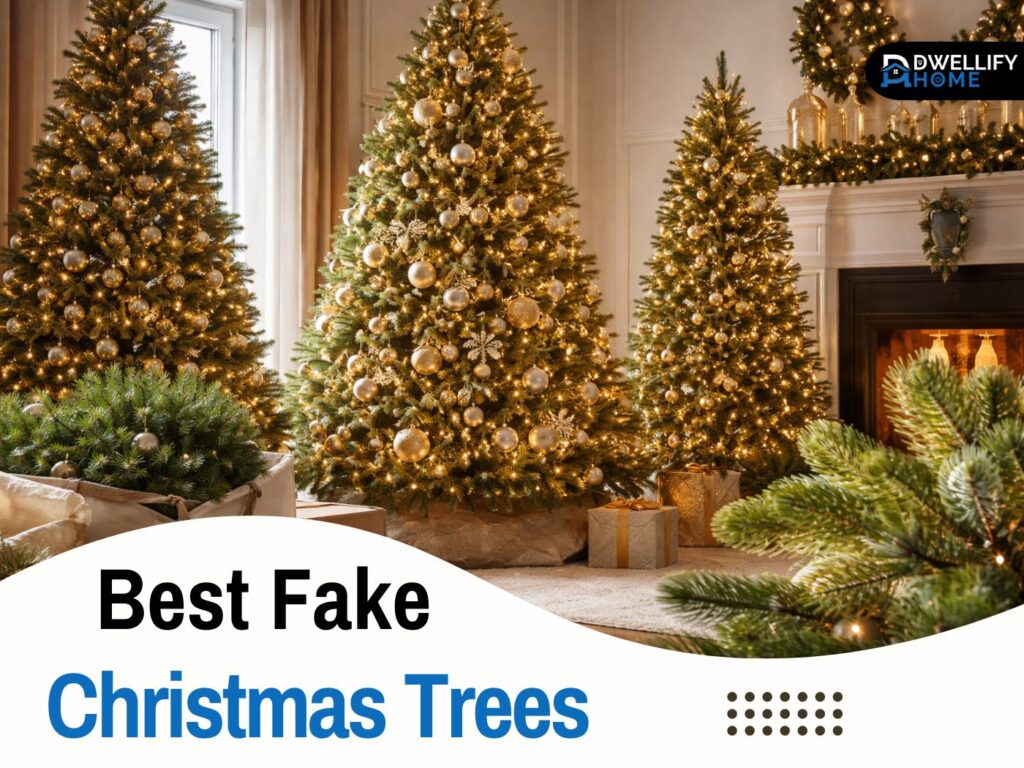
A great artificial tree isn’t “perfect” out of the box. The best ones look believable because of a few boring-sounding details like needle material, branch density, and how the lights are wired. When those pieces are right, the tree feels cozy and expensive even before you decorate it.
I’ve spent over a decade setting up trees for family homes, small apartments, and holiday displays. I’ve lived with trees that looked amazing on day one but sagged by year three, and I’ve also seen budget trees look surprisingly high-end with the right fluffing and styling. In this guide, I’ll help you choose the best fake christmas trees for your space, budget, and decorating style without regret later.
Snippet-ready definition:
Best fake Christmas trees are artificial trees that balance realistic molded PE needles, dense branches, and reliable lights, so they look natural, set up quickly, and hold ornaments well for many seasons.
Mission Statement:
At Dwellify Home, our mission is to help you build a warmer, better-looking home with simple, expert-backed guidance you can actually use. We focus on practical choices that make everyday living feel more comfortable and more you.
Quick Recommendations (2-Minute Shortlist)
If you want the fastest path to a great choice, start here. These are the five “most common best fits” I see in real homes.
Best Overall
A mid-to-upper range tree with a mix of molded PE tips on the outer branches and PVC closer to the trunk. That combo usually gives you realism where it counts, plus fullness and strength for ornaments.
Most Realistic
Look for heavy PE coverage, sometimes called molded PE, Real Feel, or True Needle-style tips. These tend to be the most realistic artificial Christmas trees, especially from a few premium brands.
Best Pre-Lit (Best Fake Christmas Trees With Lights)
Pick a pre-lit model with warm white or color-changing LEDs, a sturdy stand, and a wiring system that doesn’t rely on dozens of loose plug connections. It saves time every season.
Best Budget
A mostly PVC tree can still look great if the branch density is decent and the shape is full. Plan to spend a little time fluffing and add a few picks or ribbon to build depth.
Best Slim / Small Spaces
A slim or pencil profile tree works when you need walkway space. Done right, it still looks full from the front, and it’s easier to decorate evenly.
Quick Guide Comparison Table
| What you care about | What to look for | Best fit for |
| Most realistic look | Molded PE tips on outer branches, mixed greens, depth near trunk | Living rooms, “real tree” vibe, photos |
| Best with lights | Warm white LEDs, memory function, fewer plug connections, spare bulbs or fuses | Busy households, fast setup |
| Best budget value | Mostly PVC with solid branch density, sturdy stand | First apartment, casual holiday setup |
| Small space friendly | Slim or pencil profile, good front-facing fullness | Apartments, narrow corners, walkways |
| Heavy ornament friendly | Strong branches, thick center pole, stable stand | Heirloom ornaments, big ribbon, garland |
Step-by-step: How to Choose in 5 Simple Steps
- Measure first: ceiling height minus 6 to 12 inches for topper space.
- Pick your shape: full for open corners, slim for tight rooms, pencil for very narrow spots.
- Decide on lights: pre-lit for speed, unlit for full control and easier replacements.
- Choose needle realism: molded PE tips if you want the most realistic artificial Christmas trees, mixed PE plus PVC for the best balance.
- Check the boring stuff: stand stability, section connections, warranty basics, and storage size.
How We Chose These Trees
I don’t pick trees based on pretty product photos. I’ve learned the hard way that a tree can look fantastic online and then arrive with thin branches, a wobbly stand, or lights that feel harsh and overly blue.
So my “real-home” checklist is simple. I focus on needle realism, branch density, stand stability, and whether the tree will still look good after repeated setup and storage. I also pay attention to how the sections connect, because the easiest trees to assemble are the ones you’ll actually enjoy using year after year.
A quick note on trusted testing sources. Many shoppers look for lists like consumer reports best artificial christmas tree and similar roundups because they value independent testing. That’s a smart instinct. I’m not pulling from paywalled results, but I do lean on the same kind of thinking: clear criteria, repeatable checks, and honest trade-offs.
What Makes a Fake Christmas Tree Look Real?
The biggest difference between “nice” and “wow, is that real?” usually comes down to three things: needle type, fullness, and branch design.
PE vs PVC Needles (Why Molded PE Looks Lifelike)
PVC needles are flat strips. They’re common, affordable, and they add bulk. PE needles are molded, so they mimic the shape of real fir or spruce needles. When a tree uses PE on the outer branch tips, it reads as realistic from across the room.
My practical rule is this: if you care about realism, prioritize PE where your eyes land first. You don’t need 100 percent PE to get a natural look, but you do want enough molded tips on the outside to avoid that “tinsel brush” vibe.
Fullness and Tip Count (Avoiding the See-Through Look)
Fullness isn’t just a number on the box. Tip count helps, but branch thickness and spacing matter just as much. A tree with fewer tips can still look full if the branches are layered and angle upward slightly.
Here’s a quick real-home test I use after assembly. Stand about six feet away and look for “window gaps” where you see straight through to the trunk. If you spot several big gaps, you’ll need either more fluffing time or a tree with better branch density.
Branch Design and Color Depth
Real trees have depth. They’re darker near the trunk and lighter toward the tips. The better artificial trees copy this with mixed greens, subtle brown stems, and inner branches that add shadow.
If you want that natural feel, avoid trees that are one flat shade of neon green. The most realistic artificial Christmas trees usually have variation, even if it’s subtle.
Choosing Lights the Smart Way (Pre-Lit vs Unlit)
Lights are where the experience can swing from magical to annoying fast. I’ve seen gorgeous trees ruined by harsh LEDs, and I’ve also seen a simple tree feel special because the lights were warm, soft, and evenly spaced.
Pre-Lit vs Unlit: Who Should Choose Which
Pre-lit trees are for anyone who wants speed and consistency. If you host holiday dinners, juggle kids and schedules, or just want a painless setup, pre-lit is worth it.
Unlit trees are for people who love customizing. You can choose your exact light tone, mix warm white with twinkle strands, or replace one strand instead of troubleshooting built-in sections. If you enjoy decorating as a ritual, unlit can be more satisfying.
Light Features That Actually Matter
When shoppers ask me about best artificial christmas trees with lights 2025, I tell them to focus on comfort and control.
Look for:
- Warm white for a cozy glow that flatters ornaments and makes the room feel softer
- A memory function so the tree returns to your last setting
- Optional color-changing modes if your family likes variety
- Even spacing, because “hot spots” look cheap
Also, check whether the tree uses LED lights and whether replacements are easy. Some trees include spare bulbs or a small repair kit, which is a nice sign of quality.
Setup Systems That Reduce Headaches
The easiest trees have hinged branches and a clean connection system between sections. You’ll hear terms like easy-connect or power-pole style lighting. The goal is the same: fewer plugs, fewer tangles, and less time crawling around the base.
If you’ve ever spent 30 minutes hunting for a loose connection, you already know why this matters.
Best Fake Christmas Trees by Category
This is where we match the tree to your home, not the other way around. I’m keeping the categories tight so it stays clear.
Best Overall (Balanced Realism and Durability)
A mixed-needle tree with molded PE tips and supportive inner PVC usually wins for most households. It looks realistic from the couch, holds ornaments well, and doesn’t feel fragile.
This is also the sweet spot for cost-per-year value. You’re not paying top dollar for full-PE luxury, but you get the “real tree look” where it counts.
Most Realistic (High-PE, True Needle-Style Look)
If realism is your top priority, go heavy on PE. These trees tend to have the most lifelike branch tips and the best silhouette. They’re often the ones guests walk up to and touch.
The trade-off is price and sometimes weight. A highly realistic tree can be heavier to move and store, but it’s often worth it if you keep the same tree for many seasons.
Best With Lights (Pre-Lit Reliability)
For the best fake christmas trees with lights, reliability is the real luxury. You want consistent brightness, no flicker, and sections that stay lit without constant troubleshooting.
I also recommend warm white LEDs for most homes. They make the whole tree feel calmer, and they play nicely with gold, red, and natural ornaments.
Best Budget (What You Give Up and How to Fix It)
Budget trees often use mostly PVC, and the biggest issues are thin-looking branches and a “flat” profile. The good news is you can fix a lot with smart styling.
A simple budget upgrade plan:
- Spend extra time fluffing the inner branches, not just the tips
- Add a few picks or stems to create depth near gaps
- Use ribbon or garland to guide the eye around sparse spots
I’ve watched a budget tree go from “meh” to “photo-ready” in 20 minutes with those steps.
Best Slim or Pencil Tree (Apartments and Narrow Rooms)
Slim trees are lifesavers in tight layouts. They keep walkways clear and still give you a full holiday look. The key is branch density, because a skinny tree with thin branches can look like a broom.
If you’re decorating a slim tree, try using ornaments in slightly larger sizes. It helps the tree feel intentional rather than small.
Best Flocked (Snowy Look)
Flocked trees look dreamy in the right space. They pair beautifully with neutral décor, warm lights, and natural textures. The honest note is that flocking can shed a bit, especially in the first season.
If you have pets or toddlers, consider how you’ll keep the area tidy. A tree skirt that’s easy to shake out can save your sanity.
Best Brands to Know (What Each Brand Is Best For)
Brands matter less than materials and build quality, but they can give you a shortcut.
Premium realism brands often lead with molded PE and “true needle” style detailing. They’re great if you want a tree that looks like a fresh-cut fir without the mess.
Value-focused brands do well with full shapes, sturdy stands, and reliable basics. These are the trees that survive family life, heavy ornaments, and yearly setup without drama.
Also, warehouse-style value can be excellent. Some shoppers love the Costco-style approach: a solid pre-lit tree with good features and a strong price-to-quality ratio. Just pay attention to size and storage space, because those boxes can be huge.
Best Place to Buy a Fake Christmas Tree (Based on Your Priorities)
Where you buy affects returns, warranty support, and whether you can easily replace parts.
Amazon: Convenience and What to Check Before Buying
If you’re comparing best fake christmas trees amazon options, the biggest advantage is variety and fast shipping. The risk is inconsistent listings and photos that don’t match reality.
Here’s what I check:
- Recent reviews that mention branch density, stand stability, and light color
- Customer photos in normal living rooms
- Clear material notes like PE, PVC, or mixed needles
- A return policy that doesn’t feel tricky
Big-Box Stores vs Direct-from-Brand
Big-box stores can be great for easy returns and quick swaps. Direct-from-brand can be better for warranties, replacement parts, and higher-end models.
If you’re investing in a nicer tree, buying direct can feel safer long-term. If you’re trying a budget tree, a store with easy returns can be the smarter move.
What People Say on Reddit (Useful If You Filter It Right)
The phrase best fake christmas trees reddit pops up a lot because real homeowners are brutally honest. That’s helpful, but you have to read it like a pro.
The most common complaints I see:
- Light sections going out after a season or two
- Flimsy stands that wobble on carpet
- Sparse branches that need extra styling
Here’s my filter. If multiple threads mention the same issue across different years, that’s a true pattern. If one person had a bad experience and everyone piles on, it might be noise. Always cross-check with warranty terms and recent reviews.
Size and Shape Guide (Pick the Right Tree the First Time)
This step saves the most money and frustration.
For height, measure your ceiling and subtract at least 6 to 12 inches for the topper and breathing room. In rooms with ceiling fans, give yourself extra clearance.
For width, think about the “walking circle” around your tree. A full 7.5 foot tree can take up more space than you expect, especially if you decorate wide.
Common shapes:
- Full: classic, lush look, best for open corners
- Slim or pencil: best for apartments and narrow rooms
- Sparse: works well for minimalist décor and big ornaments
- Corner-friendly: rare, but great when floor space is tight
Setup, Fluffing and Storage (The Looks-Real Part Most People Ignore)
I’ll be honest, fluffing is the secret sauce. I’ve seen the same tree look average or amazing depending on how it was shaped.
Quick Fluffing Routine (10 to 15 Minutes That Changes Everything)
Start from the inside. Pull inner branches out first to build depth. Then shape the outer tips last.
A simple method:
- Work in sections from bottom to top
- Bend branches slightly upward to mimic real growth
- Separate tips so they don’t look like flat fans
Put on music, pour a hot drink, and treat fluffing like part of decorating. The payoff is huge.
Storage Tips That Prevent Crushed Branches and Light Issues
If you want your tree to last, storage matters. Don’t force branches into a too-tight box. That’s how tips bend permanently and lights get stressed.
I prefer a roomy storage bag or a plastic bin if you have the space. Keep it dry, avoid extreme heat, and store the stand with the tree so you’re not hunting later.
Expert Styling Tips to Make Any Fake Tree Look Expensive
The best part is, styling can elevate even a midrange tree.
A few pro tricks I use:
- Add depth first with picks and stems tucked near the trunk
- Use ribbon to create movement, not just loops at the front
- Spread your special ornaments evenly so the tree looks balanced
- Place heavier ornaments closer to the trunk where branches are strongest
If your tree has a few thin spots, don’t fight them. Guide the eye with ribbon or a garland path, then fill gaps with a couple of well-placed picks. It looks intentional, not patched.
Safety, Durability and Long-Term Value (Year 3 Matters)
A tree is only “a great deal” if it holds up.
Start with stability. A sturdy stand matters more than most people think, especially with kids, pets, or thick carpet. If the base feels light or flimsy, consider upgrading to a stronger stand.
Then look at the lights and connections. Pre-lit trees are wonderful when they’re built well, but they should also come with clear troubleshooting steps and reasonable warranty coverage. A longer warranty doesn’t guarantee perfection, but it often signals that the brand expects the tree to last.
Finally, do the cost-per-year math. A tree that costs more upfront can be cheaper than replacing a bargain tree every two seasons.
FAQs
What’s the most realistic material mix?
Molded PE tips on the outside for realism, plus PVC inside for fullness and strength. That combo often looks natural and holds ornaments well.
Are pre-lit trees worth it?
If you value speed and consistency, yes. If you love customizing lights or want easy repairs strand-by-strand, unlit may suit you better.
Can you fix lights if a section goes out?
Sometimes it’s a loose connection or a bad bulb. Better trees make troubleshooting easier and include spare bulbs or fuses. It’s worth checking that before buying.
When is the best time to buy?
Inventory is best earlier in the season, while discounts tend to improve later. If you want a specific style or height, buying earlier avoids settling for whatever is left.
Conclusion: Choosing the Best Fake Christmas Trees for Your Home
Choosing the best fake christmas trees isn’t about chasing a brand name or the most expensive option. It’s about matching materials, fullness, and lighting to your space and your habits. A realistic needle style won’t matter if the tree doesn’t fit your room, and a gorgeous pre-lit tree won’t feel joyful if it’s a hassle to set up.
So here’s your practical checklist to finish with: measure your space, decide pre-lit or unlit, prioritize PE tips if realism matters, and pick a shape that fits your layout. Then fluff it like you mean it, store it gently, and style it with depth. Do that, and you’ll have a tree that looks warm and real year after year, without the yearly stress.
Disclaimer:
This guide is for informational purposes and reflects general buying and decorating experience. Product features, pricing, and availability can change, so always confirm details with the retailer and follow the manufacturer’s setup and safety instructions, especially for lights and electrical components.

I’m Bilal, the founder of Dwellify Home. With 6 years of practical experience in home remodeling, interior design, and décor consulting, I help people transform their spaces with simple, effective, and affordable ideas. I specialize in offering real-world tips, step-by-step guides, and product recommendations that make home improvement easier and more enjoyable. My mission is to empower homeowners and renters to create functional, beautiful spaces—one thoughtful update at a time.