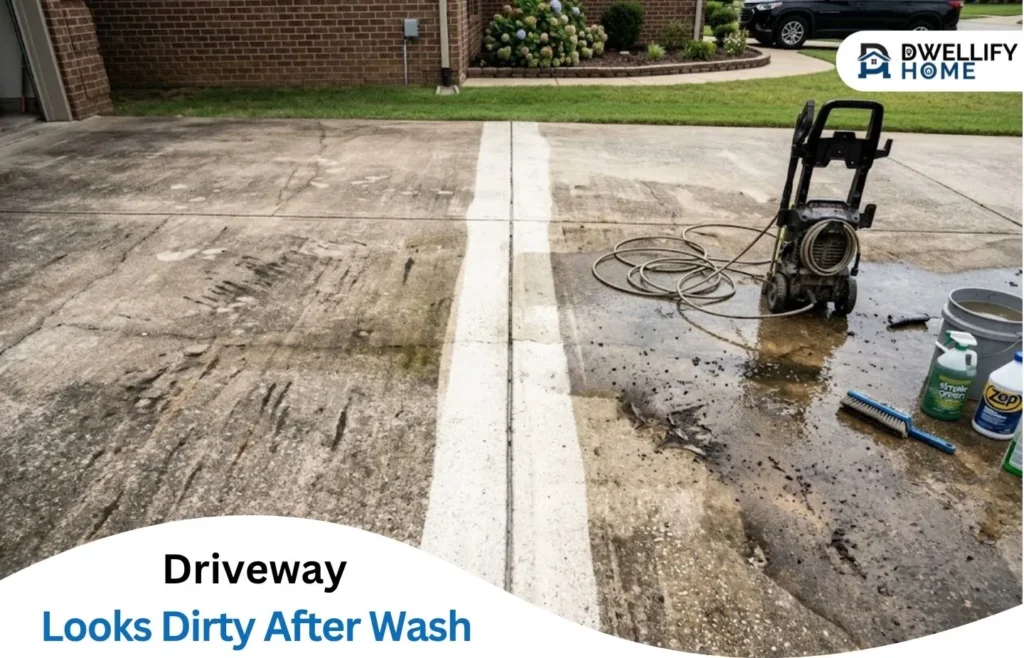
You spent two hours on your hands and knees with a borrowed pressure washer, and your driveway still looks like the before photo. Half the slab is lighter, the other half is dry, and there’s a weird clean stripe down the middle that makes the rest of it look worse than when you started. I’ve watched neighbors do this exact thing three summers in a row. The problem rarely comes down to effort.
It comes down to three things: what’s actually on the concrete, how much pressure you used, and whether the water had anywhere to carry the dirt. Get those wrong, and you’ll burn a Saturday for nothing. Get them right and the same driveway goes from gray-brown patchwork to one even color without near as much scrubbing as you’d expect. If you’d rather skip the trial and error, companies that handle Exterior cleaning Weatherford Texas deal with this on driveways all day long, and their results aren’t magic, just technique. Weatherford’s climate is a big part of the story. Hot summers, occasional freezes, and a lot of live oak pollen combine to build up a layer on concrete that plain water just slides over.
Here’s what’s really going on with that dirty-looking slab, and what to do about it.
Your driveway isn’t dirty. It’s stained, and those are different jobs.
Concrete is porous. Think of it as a very hard sponge with millions of tiny channels running through it. Dirt sitting on top of those channels wipes off easily. Dirt that’s settled into them does not, no matter how hard you blast the surface. That’s why you can scrub a spot until your arm gives out and still see a shadow of the original stain.
The stains on a typical driveway come from a handful of sources:
- Algae and mildew, which grow in the shaded spots and leave gray-black streaks
- Rust from fertilizer granules, metal furniture, or a car that parked in the same spot for years
- Oil and grease drips from the engine bay
- Tannin from oak leaves and acorns that sat through a wet week
- General road grime tracked in from the street
Each one needs a different approach. A degreaser that works great on motor oil does nothing for the iron in fertilizer. A bleach mix that kills algae won’t touch rust. If you’re using one jug of general-purpose cleaner on all five, you’re going to get a patchy result every time.
My honest take: if you’ve got more than two stain types on your slab, stop and diagnose before you pull the wand out. Walk the driveway, look at each spot, and ask what caused it.
Pressure is the most common mistake
Everyone assumes more pressure equals more cleaning. It doesn’t work that way. Concrete has a thin surface layer of cement paste that gives it that uniform color. Crank a pressure washer up past the point it needs, and you strip that layer off in the spots where you linger. What’s underneath is rougher, more porous, and darker. You’ve now created a permanent stripe that no amount of washing will fix, because the surface itself has changed.
This is why so many DIY driveways end up with visible wand marks. A slow pass with a narrow tip digs a trench. A fast pass leaves a lighter line. Both look terrible once the water dries. The fix is counterintuitive. Lower pressure, a wider tip, and a surface cleaner attachment that distributes the spray evenly instead of concentrating it in one spot. You’re not trying to blast the stain off. You’re trying to loosen it and let the chemistry and the water flow do the work. That’s slower per square foot but wildly faster overall, because you don’t have to go back and fix the mess you made.
What a real clean actually looks like
Set aside a Saturday afternoon and work the driveway in sections, not all at once. Here’s the sequence I’d use:
- Pre-treat the whole slab. Wet it down, then apply your cleaner across the entire surface so the edges don’t dry out before you get there.
- Let it dwell. Give the product time to break down the grime. Rushing this step is why the stain reappears a week later.
- Work the surface, not the spot. Use a surface cleaner or a wide fan tip, moving in steady overlapping passes. Never park the wand in one place.
- Rinse downhill. Push the dirty water off the edge of the slab instead of letting it pool in the middle.
- Handle each leftover stain with the right product. Rust needs a specific acid-based remover. Oil needs a hot water degreaser. Algae needs a sodium hypochlorite mix.
- Let it dry fully before you judge it. Wet concrete looks darker and more uniform than dry concrete. Give it a full day.
One thing I’d add: don’t skip the rinse water. If your runoff is carrying soap and grime, it’s heading somewhere. The EPA has guidance on protecting local waterways from runoff, and it’s worth a quick read before you aim your hose toward a storm drain. Most of the time you can divert water onto the lawn or a gravel strip with no trouble.
When it’s not worth doing yourself
Some driveways just aren’t a good DIY project. If your slab is older with existing cracks, or if the previous owner left wand marks behind, you’re working on a surface that’s already compromised. Adding more pressure makes it worse. Same story if you’ve got a long driveway, a steep slope, or a two-story home where the same grime is also on the siding and roof.
The other thing to consider is timing. Pushing a pressure washer around a driveway for half a day in August heat is a genuinely miserable experience, and heat exhaustion is a real risk. The National Weather Service tracks heat advisories for good reason. If the forecast is calling for triple digits, that’s a strong argument for hiring it out.
A few signals it’s time to call someone:
- You’ve tried twice, and the stains come back within a month
- There are rust spots that won’t lift with any household product
- The slab is large enough that a rented machine won’t cover it in a day
- You’re also dealing with roof streaks, fence graying, or algae on the siding
Those last two often go together. Once algae takes hold on a driveway, it’s usually already working its way up the north-facing siding and into the roof shingles. Handling all of it in one visit is cheaper and more consistent than doing the driveway this month and the roof next spring.
Licensing, permits, and one more thing nobody mentions
If you do hire out, that’s not just a convenience question. Most states require contractors to be licensed or registered, and it’s a good idea to verify who you’re letting onto your property before money changes hands. The official government services portal has a state-by-state starting point for checking licenses and registrations. Takes five minutes and saves a lot of grief.
Then there’s the thing people forget until it’s too late: make a before-and-after record. Take photos from the same two or three angles before any work starts, and again after everything dries. If a stain comes back in three weeks, you’ve got a clear comparison instead of a memory. Any contractor worth their salt will do this on their own anyway, but having your own set means you’re not relying on theirs.
The result you actually want
Even color across the whole slab. No visible wand stripes. No rust shadows. And a surface that stays that way for a year or more instead of reverting after the next rain. That outcome doesn’t come from buying a bigger pressure washer. It comes from matching the method to the stain, keeping the pressure low, and giving the cleaner time to work. Most driveway disasters are technique problems, and technique is fixable. So before you rent anything this weekend, walk your slab and figure out what you’re actually fighting. The answer changes the whole plan. What’s on your concrete right now?
Some links featured in this content may generate revenue through affiliate or sponsored partnerships. Any qualifying commissions received by Dwellifyhome.com help support our website’s operations and continued growth.