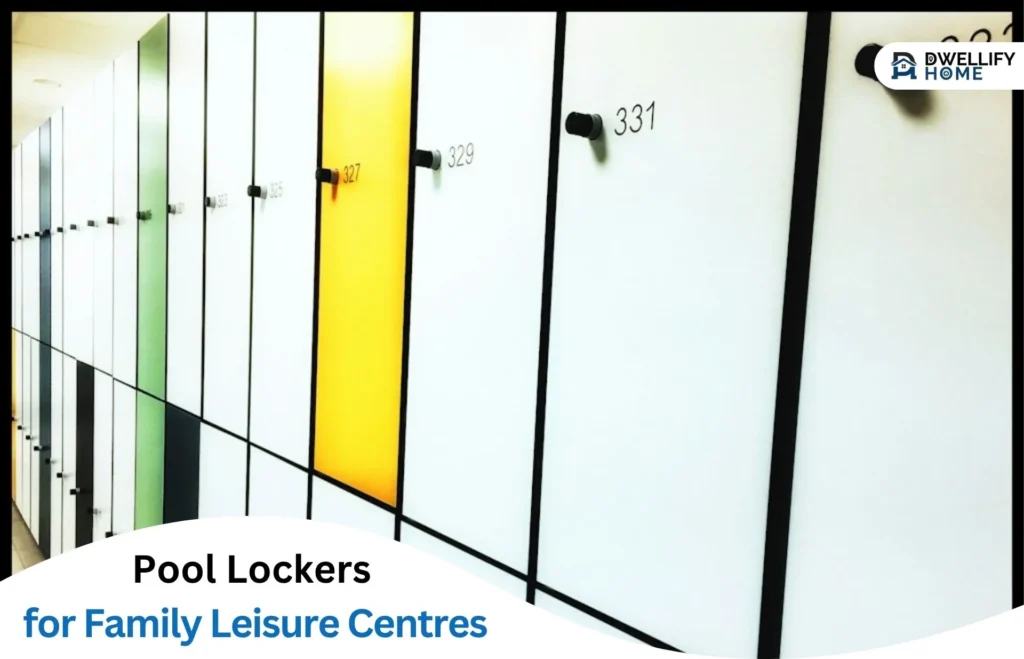
Storage in a family leisure centre works when every user can lock belongings away in seconds, the lockers survive constant moisture, and the layout leaves room for a parent and several children to change at the same time. Pool lockers from Alsanit.co.uk are made for exactly these wet conditions: the body is metal or HPL, the front is HPL or glass, the whole unit is 100% waterproof, and the pool models are equipped with ventilation.
Three variables drive the design brief: moisture, density and hygiene. Moisture decides the material, density decides how many compartments fit in a column and how the units are arranged, and hygiene decides how the lockers stand on the floor and how easily they are cleaned. The sections below take these in turn, using the parameters Alsanit.co.uk publishes for its swimming pool lockers.
What makes pool lockers different from standard changing room lockers?
A pool changing room has high humidity, and many elements are in constant contact with water, so locker units must meet specific standards and resist the adverse effects of moisture. Alsanit.co.uk designs them with the prevailing conditions and legal restrictions in mind. The ventilation in the pool models prevents unpleasant odours and moisture build-up inside the lockers.
Hygiene is the second difference. Pools and baths can be contaminated through improper maintenance or by users themselves, so the lockers, WC cabins and flooring must stay in sterile cleanliness, which means every component has to be moisture-resistant and easy to clean. The Chief Sanitary Inspector (GIS) recommends that all sanitary infrastructure in pools and baths be made from materials that do not absorb water, with surfaces that are easy to maintain daily. The World Health Organization has issued its own recommendations for pools and baths.
Which materials suit a wet changing area?
HPL is the core material for pool equipment, and the choice comes down to a few options:
- HPL lockers: waterproof and durable for many years, resistant to high and low temperatures, chemicals and detergents, easy to clean, and available in various colours,
- metal body with an HPL or glass front: the combination used in the modular metal pool cabinets with glass,
- in-house hinges: designed and produced exclusively by Alsanit.co.uk, so the lockers keep working reliably in wet conditions,
- fittings in aluminium, stainless steel or plastic: selectable as a parameter in the product filter.
In the current range, the HPL pool cabinet comes in a 1200/1800 mm version, and the modular metal cabinet with glass in 300/1800 and 600/1800 mm versions. HPL is also used for other equipment in the same changing area, so colours and finishes can be kept consistent across lockers, benches and cabins.
How should the layout work for parents, children and groups?
The product data gives a clear set of variables. Compartment width is 300 or 400 mm, the body is 1800 mm high, and a column can hold from 1 to 5 compartments. Most clients choose L-shaped or rectangular lockers with dividers. L-type lockers are described as making maximum use of usable space, and the whole range comes in modules of different shapes and configurations, for small and large investments alike.
These parameters translate into a simple planning logic. A column with several compartments gives each family member a separate, lockable space and raises capacity per square metre, which matters when many groups arrive at once. A wider 400 mm compartment gives more room per user than a 300 mm one, and fewer, taller compartments suit users who store bulkier items. Benches complete the zone, and the guiding goal is functional systems that preserve privacy and comfort in the changing room.
The parameters to fix in the brief are:
- the number of compartments per column (1–5),
- compartment width (300 or 400 mm),
- body height (1800 mm),
- locker shape (L-shaped or rectangular with dividers),
- fitting material (aluminium, stainless steel or plastic),
- lock type,
- availability (from 1–2 weeks, 2–3 weeks or 3–4 weeks, or made to order).
What installation details protect hygiene?
Alsanit.co.uk measures the space first and then designs it in line with GIS recommendations. Lockers, changing rooms and HPL cabins should stand on legs, so that they do not touch the floor with the whole body, and the distance between the floor and the furniture should be 15 cm. This clearance makes floor cleaning easier. For surface care, the accessories range includes cleaners: preparation A1 for daily care and removing fingerprints, and A2 for graffiti and heavy dirt.
Which locks suit a leisure centre?
The locks range from traditional mechanical ones to modern electronic access control systems integrated with the lockers, and any type of lock can be fitted. The transition lockers for swimming pools are ergonomic and use a specially developed locking system. For operators who want electronic control of the lockers, Alsanit.co.uk also offers a Smart Locker system.
What belongs in the whole changing area?
A complete pool changing room includes lockers, benches, WC cabins, shower cabins and changing rooms. Alsanit.co.uk manufactures all of these elements, in most cases from HPL boards, and helps select lockers for specific spaces with special attention to configuration. The HPL sanitary cabins and other equipment elements carry a CE certificate. The systems used for pool lockers are Taurus and Combo.
How to specify and order
The price of a pool locker depends on its equipment, dimensions and the type of lock. Alsanit.co.uk’s sales team advises on door and equipment options and prepares precise pricing, and the shop also offers a “quote within 48 hours” availability option. The company handles measurement, door-to-door delivery and installation, and a downloadable product book presents the full range. The simplest way to start is to give an advisor the number of users per session, the room dimensions and the preferred lock type, so the proposed layout matches how your centre is actually used.
For transparency, some links in this article may be affiliate or sponsored links. Dwellifyhome.com may receive compensation from qualifying purchases made through these links, helping us continue maintaining our website and sharing useful resources.