You wake up to a gravel truck idling in your driveway at 6:40 a.m., and for the next ten hours your house is a construction site you have to live inside. Nobody warns you about that part. The quote covers shingles and labor. It doesn’t cover your dog barking at every footstep on the roof or the fine grit settling on your car windshield.
Knowing the sequence ahead of time turns a stressful day into a manageable one. You can move the grill, park on the street, and plan to be out of the house for the loudest stretch. If you’re scheduling a Northeast Ohio roof replacement, the install day itself usually runs in a predictable order regardless of which contractor you hire, and understanding that order is the difference between an anxious morning and a calm one.
What follows is the real arc of a typical full replacement, plus what you should do before, during, and after to keep your home, your landscaping, and your sanity intact.
What Happens Before the Crew Arrives
The day actually starts days earlier. A dumpster or trailer shows up in your driveway, sometimes 24 hours ahead, and material bundles get dropped near the front of the house. Ask where the truck plans to sit, because a loaded dumpster can crack a driveway if it lands on a soft spot, and you’ll want to know whether your car needs to move.
You’ll also get a call confirming the forecast. Roofers don’t work in rain or high wind, and a crew leader will cancel or delay if conditions look bad. According to the National Weather Service, fast-moving summer storms can roll through the region with little notice, so a flexible slot in your week is worth building in. I’d rather push an install two days than let a crew rush shingles onto a wet deck.
Your prep checklist
- Move cars to the street or a neighbor’s driveway
- Clear the garage wall and any shelves holding items a vibration might knock loose
- Cover furniture and take framed pictures off walls near the roofline
- Trim back tree branches touching the roof and mark sprinkler heads
- Put pets somewhere quiet and away from the windows
Teardown: The Loudest Two Hours
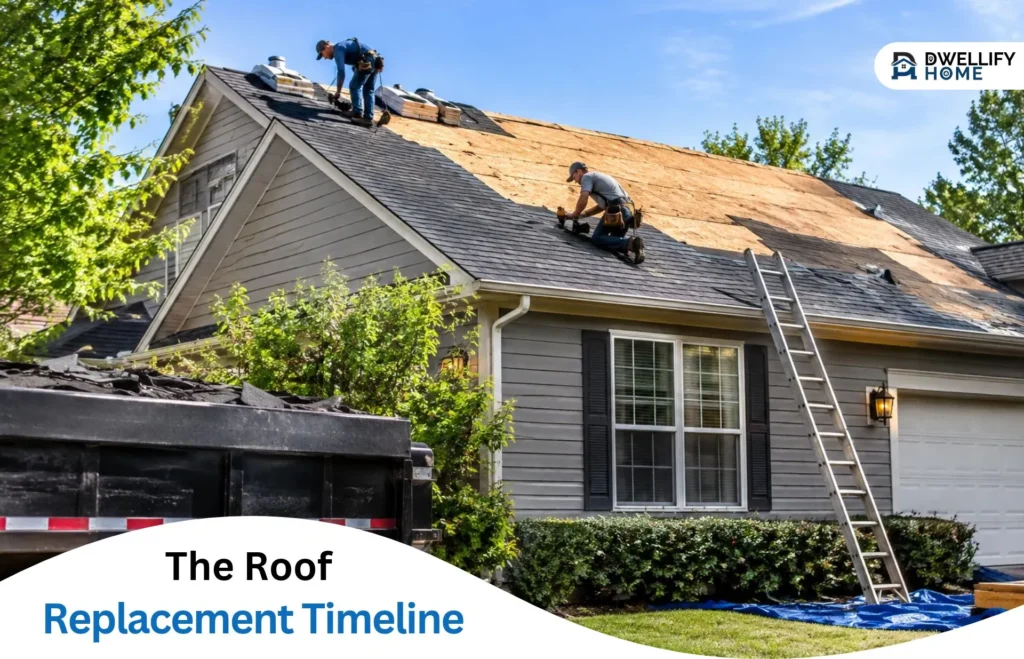
This is the part that catches homeowners off guard. A crew of five or six will pull the old shingles off in a coordinated wave, and the noise sounds like a dump truck falling down a staircase for a couple of hours. Vibration rattles through the whole house. If you work from home, schedule that morning off-site or in a basement room away from the roof line.
The decking underneath is the real question mark. Asphalt shingles hide soft spots, rotted sheathing, or old damage that only surfaces once the top layer is gone. A good crew walks the deck with you or sends photos of anything that needs replacing before they cover it back up. Budget for a few sheets of plywood even if your quote didn’t include them, because surprise deck repairs are common on houses over 20 years old.
How Long Does the Install Itself Take?
Most straightforward single-family houses go from teardown to finished roof in a single long day, sometimes two if the weather turns or the pitch is steep. Larger roofs, complex hips and valleys, or a change in material can stretch it out. The pace depends on square footage more than anything else, and a crew that tells you exactly how many days to expect is a crew that has done this many times.
Here’s where the ordering matters. Underlayment goes down first, then drip edge along the eaves and rakes, then shingles from the bottom up. Ridges, valleys, and pipe boots get flashed as the crew works across the field. Roof vents, ridge vents, and skylights get integrated along the way. If you want to watch, stand across the street rather than at the base of the ladder, both for safety and to stay clear of falling debris.
Safety practices matter to the crew and to you. The Occupational Safety and Health Administration sets fall protection standards that apply to every crew working above a certain height, so a contractor who shrugs off harnesses and roof anchors is telling you something about their overall discipline. Ask how they handle fall protection before the day begins.
Cleanup and the Final Walkthrough
The job isn’t done when the last shingle lands. Nail cleanup is its own phase. Crews use rolling magnets across the yard, driveway, and garden beds, and they usually go over it twice. Do your own walk afterward in socks or bare feet, especially in the grass, because a single stray nail ruins tires and bare soles alike.
Then comes the walkthrough with the project manager. You’ll look at the finished roof from the ground, check gutters for denting, look at the siding for any scuffs, confirm flashing around chimneys and vents, and sign off. This is also your moment to ask for the warranty paperwork, the material receipts, and the manufacturer’s certificate showing you as the registered owner of the product warranty. Losing that document means losing decades of coverage you already paid for.
What Nobody Tells You About the Day After
Your house will look better than you expect and your lawn might look worse. Small bits of torn shingle and dark granules linger in the grass for weeks. A quick raking and a couple of garden hose passes usually clears it. A few loose shingles or fallen nails can drop long after the crew leaves, so do a second lap a week later.
If your neighborhood has a homeowner’s association with architectural review rules, check them before you pick a shingle color. According to baseline data from the Bureau of Labor Statistics, home improvement spending remains one of the steadiest household categories in the economy, which means your neighbors are probably making the same color and material choices you are. A quick conversation with the neighbor down the block can save you an awkward review later.
If you’re coordinating trades, like gutters or attic insulation, schedule them a few days after the roof so the crew isn’t working around painters and gutter installers at the same time. Clean, quiet sequencing beats overlapping chaos every time.
A replacement is a one or two day event on your calendar, but it protects your home for decades. Plan the day, not just the purchase.
What You Should Ask Before the Truck Shows Up
Write these down and get answers in writing before install day. The questions take two minutes and prevent three uncomfortable surprises.
- Where will the dumpster sit, and what happens if it damages the driveway?
- Who handles decking replacement, and what’s the per-sheet cost?
- What time does the crew start, and when will they finish?
- Do you provide the manufacturer’s warranty certificate?
- Will you do a second magnet sweep a week after the install?
The day itself ends with a new roof, a quieter house, and a driveway full of debris that disappears by evening. What you get out of it depends on how much you understood before the first shingle came off. Treat the install as a project you manage, not an event that happens to you, and you’ll be the neighbor telling everyone else how smooth it went. That’s a much better story than the one about the crew that showed up unannounced and crushed the flower beds.
This article may contain affiliate or sponsored links that help support our website. Dwellifyhome.com may earn compensation through qualifying transactions or paid collaborations associated with these links.