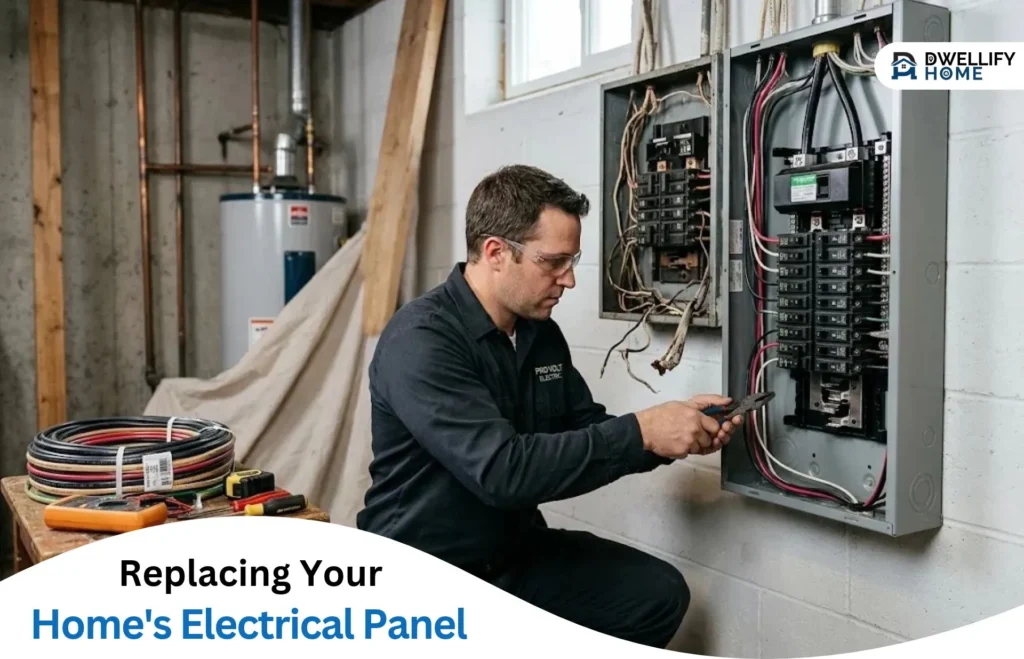
An electrical panel replacement isn’t the kind of home improvement project most homeowners look forward to. Unlike a kitchen renovation or bathroom remodel, the finished result usually remains hidden in a utility room, basement, or garage.
Nevertheless, replacing outdated electrical equipment can be an important investment in your home’s safety, reliability, and long-term maintenance.
For homeowners who have never experienced an electrical panel replacement, the process can seem complicated. Questions about power interruptions, electrical inspections, costs, and potential wiring changes are common.
Understanding what happens before, during, and after installation can make the project considerably easier to manage.
When Does an Electrical Panel Need Replacing?
Electrical panels can remain in service for decades, but their condition and suitability matter more than their age alone.
Common reasons for replacing a residential electrical panel include:
- Obsolete circuit breakers that are difficult to replace
- Damaged or deteriorating electrical connections
- Corrosion or moisture intrusion
- Evidence of overheating
- Insufficient breaker spaces for planned electrical work
- Insurance requirements concerning older equipment
- Changes to the home’s electrical installation
Frequent breaker trips or flickering lights can also indicate electrical problems, although these symptoms don’t necessarily mean the panel itself needs replacing.
An electrician should investigate the cause before recommending a complete replacement.
Step 1: The Initial Electrical Assessment
The process begins with an assessment of the existing electrical installation.
The electrician examines the panel, its rating, condition, configuration, and connections. The assessment may also include the meter equipment, service entrance conductors, grounding and bonding arrangements, and available electrical capacity.
One particularly important question is whether the homeowner needs a new electrical panel or an increase in electrical service capacity.
These are different projects.
For example, a home with an outdated 100-amp breaker panel may be able to receive a modern 100-amp replacement without upgrading the entire service to 200 amps.
If the existing service capacity is sufficient and its equipment remains suitable, retaining it can reduce the scope and cost of installation.
However, if the homeowner plans to add substantial electrical loads, an electrical load calculation may be necessary to determine whether additional capacity is required.
Step 2: Reviewing the Quote
A written estimate should clearly identify the proposed work.
For a typical electrical panel replacement, this may include a new panel enclosure, compatible circuit breakers, circuit reconnection, labelling, necessary grounding and bonding modifications, and applicable permits.
The quote should also identify any service equipment changes required.
Homeowners should ask whether the quoted work includes electrical inspections and any necessary utility coordination.
It is also important to understand how unexpected wiring deficiencies will be handled.
An electrician may discover damaged connections, deteriorated conductors, or other problems after the existing equipment has been opened or removed.
A clear estimate helps establish what is included and how additional work will be approved if necessary.
Step 3: Preparing for a Temporary Power Interruption
An electrical panel replacement requires the electrical supply to be safely disconnected.
For homeowners, this is often the most disruptive part of the installation.
Before the scheduled appointment, consider how the interruption may affect essential household equipment.
Refrigerators and freezers should remain closed as much as possible to preserve their internal temperature.
Computers, networking equipment, and other sensitive electronics should be properly shut down beforehand.
People who work from home may need alternative internet access during the interruption.
Garage door openers, security systems, sump pumps, and electronically controlled heating equipment may also be affected.
If anyone in the home depends on electrically powered medical equipment, appropriate backup arrangements should be made well before the work begins.
The electrician should explain the expected interruption and identify any scheduling factors that could affect power restoration.
Step 4: Making the Electrical Panel Accessible
A clear working area helps electricians complete the installation safely and efficiently.
Homeowners should remove stored items, shelving contents, or other obstructions that limit access to the electrical panel.
The electrician may also need access to the electrical meter, service entrance equipment, and other relevant areas.
Pets and children should be kept away from the work area.
In some installations, the electrician may require access to additional parts of the home to inspect or test circuits.
Before the appointment, confirm which areas need to be accessible.
Step 5: Removing the Existing Electrical Panel
Once the electrical supply has been safely isolated and verified, the electrician can begin removing the existing equipment.
This involves disconnecting the branch circuits, removing the old panel, and examining the existing conductors and connections.
The electrician must determine whether the wiring is suitable for reconnection to the replacement equipment.
Older wiring may require additional attention, particularly where insulation has deteriorated or previous modifications were not completed correctly.
Electrical conductors should never be assumed safe simply because the main breaker is switched off. Certain service conductors may remain energized unless the appropriate upstream disconnection has been completed.
For this reason, electrical panel replacement is work for qualified electrical professionals, not a homeowner DIY project.
Step 6: Installing the Replacement Panel
The new electrical panel is mounted and the existing circuits are reconnected using suitable breakers and installation methods.
The electrician addresses applicable grounding and bonding requirements and identifies the circuits within the panel.
A modern replacement may offer improved circuit organization and better availability of compatible replacement breakers.
It may also provide additional spaces for future circuits.
However, homeowners should understand that more breaker spaces do not automatically mean more electrical capacity.
A new panel installed on an existing 100-amp service remains subject to that service’s electrical capacity limitations.
If future installations include EV charging, electric heating, or other substantial electrical loads, those additions must be evaluated separately.
Step 7: Testing, Inspection, and Power Restoration
After installation, the electrician checks the completed work and performs the necessary testing.
Depending on local requirements, an electrical inspection may be necessary before or after power is restored.
Where the utility disconnected the service, the electrician coordinates reconnection according to the applicable procedures.
Once power is restored, circuits and connected equipment should be checked for proper operation.
The homeowner should receive an explanation of the new panel layout, including the location of the main breaker and the circuit directory.
The electrician should also explain any identified issues that were not part of the replacement work.
How Long Does Electrical Panel Replacement Take?
Many straightforward residential panel replacements can be completed within one working day.
However, this is not a guaranteed timeframe.
The installation can take longer when existing wiring requires modifications, service equipment must be upgraded, or utility and inspection scheduling affects the project.
A same-capacity panel replacement will often involve less work than a complete electrical service upgrade.
For example, increasing a home’s service from 100 amps to 200 amps may require new service conductors, meter equipment, and additional utility coordination.
The electrician should establish the expected scope and schedule before starting the project.
Do You Need to Upgrade to 200 Amps?
Not every homeowner replacing an older electrical panel needs a 200-amp service.
The appropriate service size depends on calculated electrical demand rather than the age of the property alone.
Homes with gas heating and moderate electricity requirements may continue to operate satisfactorily with 100-amp electrical service.
Others may need additional capacity because of substantial electric heating, EV charging, hot tubs, or major renovations.
In some situations, approved electrical load management equipment can accommodate additional loads without increasing the service capacity.
The decision should follow an appropriate electrical assessment.
For homeowners considering this work, Calgary-based electrical contractor Panel Upgrade Experts provides information about residential electrical panel replacements, including when an existing 100-amp service can be retained.
The objective is to select an installation that safely meets the home’s requirements without introducing unnecessary work.
What Should Homeowners Check After Installation?
Once the electrical panel replacement is complete, homeowners should review the installation documentation.
Check that the circuit directory is clearly labelled and that you understand which breakers supply important household equipment.
Keep copies of the invoice, permit information, inspection records, and applicable warranty documentation.
If electrical equipment behaves unexpectedly after the installation, contact the electrician rather than attempting to modify the panel yourself.
Finally, keep the area around the panel accessible for future inspections and servicing.
A Well-Planned Replacement Makes the Process Easier
Replacing an electrical panel is an important home maintenance project, but it doesn’t need to be unnecessarily complicated.
A professional assessment, clear quotation, appropriate preparation, and properly coordinated installation can help minimize disruption.
Most importantly, homeowners should understand the distinction between replacing outdated electrical equipment and upgrading electrical service capacity.
A modern 100-amp panel may be entirely suitable for a home whose existing service meets its calculated electrical requirements.
By addressing the actual condition and needs of the electrical installation, homeowners can make a practical investment in their property’s safety, reliability, and future maintenance.
Please note that this article may feature affiliate or sponsored links. Dwellifyhome.com may receive compensation through qualifying purchases or promotional partnerships, which helps support our website and ongoing content development.