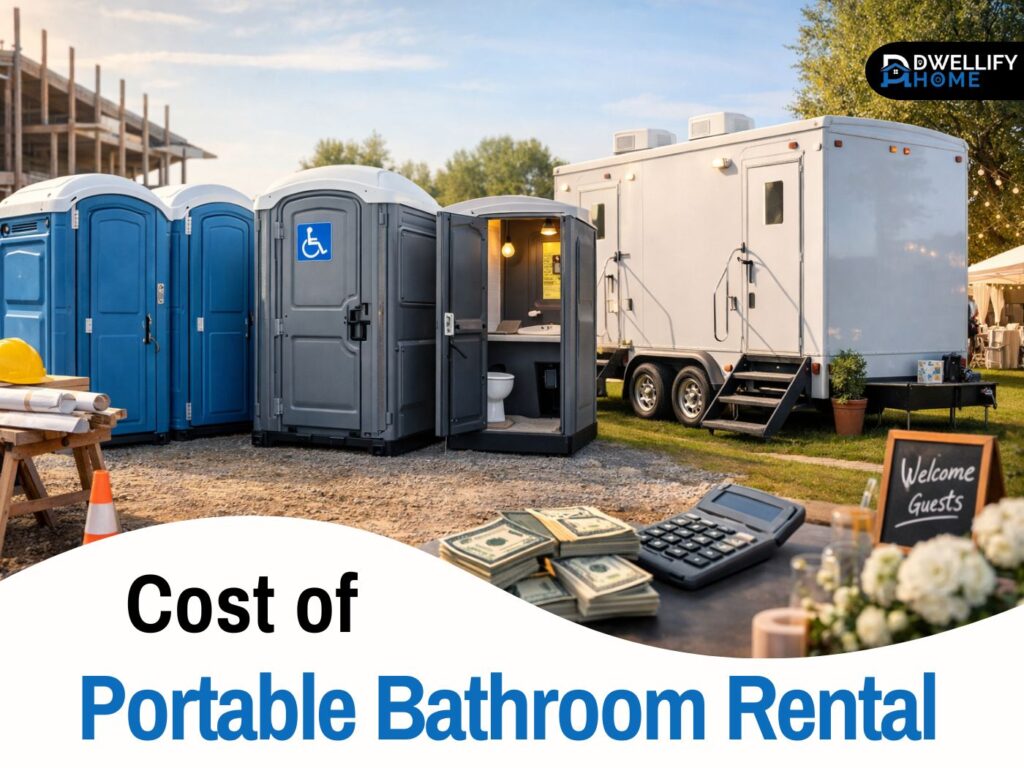
Portable restrooms look simple, but pricing them is rarely simple. I’ve quoted jobs where a single unit was all someone needed for a week, and I’ve also managed events where the restrooms were practically a mini building with lights, sinks, and air conditioning.
Here’s the thing, the total cost isn’t just the toilet. It’s the rental length, the unit type, how often it needs to be serviced, delivery logistics, and what your site looks like on the ground. In this guide, I’ll break it down the way I do when a client asks for a clear, honest budget.
Snippet-ready definition:
Portable bathroom rental cost depends on unit type, rental length, delivery distance, and servicing frequency. Basic porta potties are usually cheaper, while ADA units and restroom trailers cost more due to size, setup, and added features.
Mission Statement:
At Dwellify Home, our mission is to make home and event decisions simpler with clear, experience-based guides that explain real costs, practical options, and what to check before you spend.
Introduction (What portable bathroom rentals cost and why quotes vary)
The cost of portable bathroom rental usually lands in a wide range because you can rent anything from a basic porta potty to a multi-stall restroom trailer with running water. A weekend wedding and a 3-month construction job might use “portable bathrooms,” but the pricing model is totally different.
On top of that, suppliers price based on risk and workload. If a unit needs extra pump-outs, tight delivery access, or peak-season scheduling, the quote goes up. If the job is easy to service and you’re renting longer, it often gets cheaper per day.
Quick Guide Comparison Table (simple and practical)
Note: These are typical price ranges seen in many U.S. markets and can shift by city, season, access, and service level. Always compare quotes using the same service assumptions.
| What you’re renting | Best for | Common rental style | Typical price range (approx.) |
| Standard porta potty | Job sites, casual events | Day or week | About $60–$100/day or $100–$250/week (varies by market) |
| ADA porta potty | Accessibility needs | Week or month | Often higher than standard due to size and logistics |
| Deluxe or flushable unit | Weddings, higher comfort | Day or weekend | Often $300–$400/day for upgraded units in many areas |
| Restroom trailer (2-stall) | Weddings, VIP areas | Day or weekend | Roughly $1,799–$2,499/day is common for many providers |
| Restroom trailer (monthly / 28-day) | Longer projects | 28-day cycle | Often $2,999–$6,999/month depending on size and finish |
| Buying a porta potty | Repeated long-term needs | Purchase | Starts around $700 for standard units (more for ADA/deluxe) |
Step-by-step: How to get a quote that won’t surprise you
- Pick the unit type first (standard, ADA, flushing, trailer).
- Choose the duration (day, week, or 28-day month).
- Estimate traffic (guest count or crew size, plus event hours).
- Decide service frequency (weekly is common for job sites; events may need none or on-call).
- Confirm delivery details (tight access, long carry, soft ground, stairs).
- Ask what’s included (delivery, pickup, supplies, cleaning, damage waiver).
- Compare quotes apples-to-apples (same unit type, same service schedule).
Quick Price Snapshot (Most common cost ranges people actually see)
In most markets, a basic single-unit rental for a week often sits around the low hundreds, assuming standard servicing and normal delivery access. ADA units usually cost more because they’re larger and heavier, and they take more truck space.
Deluxe or flushing units jump again, mostly because of added components and higher customer expectations. And restroom trailers are a different world, they can start in the mid hundreds for shorter rentals and climb quickly into the thousands depending on size, finish level, and utilities.
Typical weekly ranges (basic vs ADA vs deluxe or flush vs trailers)
If you’re trying to ballpark, think in tiers. Basic units are the lowest tier. ADA units cost more. Deluxe flushable units cost more than that. Trailers are top tier because they’re heavier, require more setup, and often need power and sometimes water.
The best part is, once you know your tier, your quote becomes much easier to predict. Most surprise costs come from the “extras” around delivery and service, not the base unit.
Why monthly rentals usually reduce the daily rate (28-day billing explained)
Many companies treat “monthly” as a 28-day cycle, not a calendar month. That matters because a 28-day rental can look cheaper per day than a weekly rental, but you’re still paying for scheduled service during that period.
If you’re doing a longer job, this is where you’ll usually see the best value. Cost of portable bathroom rental per month is often more efficient because the supplier can plan routes, schedule service, and keep the unit on site without repeated pickups.
Cost by Rental Duration (Day, Week, Month)
Rental length is one of the biggest drivers of your final number. Short rentals have higher daily rates because delivery and pickup are the same effort whether it’s one day or one month.
Longer rentals spread those fixed logistics costs out, which is why monthly is usually the better deal for steady use.
Porta potty rental cost per day (best for short events and last-minute needs)
A porta potty rental cost per day is usually highest when you book for a single day or weekend. The unit still has to be delivered, placed, then picked up, and that’s where most of the labor sits.
If you’re doing a small event, sometimes it’s still worth it because it’s simple. Just be realistic, you’re paying for logistics as much as the restroom itself.
Weekly rentals (the most common option)
Weekly rentals are the sweet spot for a lot of people. They work well for short projects, home renovations, or events that need a few days of setup and breakdown.
If you’re comparing quotes, make sure you’re comparing the same service plan. One quote may include a scheduled cleaning, another may assume no service because it’s “event-only.” That difference can change the total quickly.
Cost of portable bathroom rental per month (best value for job sites)
If you’re asking how much to rent a porta potty per month, the honest answer is, it depends on how many people use it and how often you want it serviced. But in general, monthly rentals are where suppliers can offer better daily value.
For construction sites, most pricing assumes weekly service. If your crew is large or the site runs long shifts, you may need service more often, and that’s where the monthly total climbs.
Cost by Unit Type (Pick the right restroom first)
Choosing the right unit type is the fastest way to control cost without cutting comfort. I’ve seen people overspend on a trailer when a couple of deluxe units would’ve worked fine. I’ve also seen people under-rent and end up paying for emergency service.
Match the unit to the use case, and you’ll usually get the best result for your budget.
Standard porta potty (basic unit pricing and best use cases)
Standard units are the workhorse. They’re used for job sites, casual outdoor events, parks, and any place where you just need a clean, functional restroom.
They’re also the easiest to deliver and service. That usually means fewer add-on fees, and less chance of a last-minute surprise.
ADA-compliant portable restroom (why it costs more and when it’s required)
ADA units cost more because they’re larger, heavier, and take up more space on the truck. They also require more careful placement, you need level ground and a clear access path.
Even if you’re not legally required, having an ADA option at larger events is often the right move. It reduces lines, improves accessibility, and keeps you from scrambling later.
Deluxe or flushing units (what upgrades really change the price)
Deluxe units often include a flushing toilet, a sink or hand sanitizer station, a mirror, better ventilation, and sometimes interior lighting. People notice these upgrades, especially at weddings and corporate events.
Here’s the thing, flushing and sinks add comfort, but they can also add service needs. More water use, more waste volume, and higher expectations for cleanliness can mean more frequent servicing.
Restroom trailers (comfort level, multi-stall options, event-ready features)
Restroom trailers feel like “real bathrooms.” They often have multiple stalls, running sinks, mirrors, lighting, and climate control. For guests in formalwear, or for VIP areas, trailers can be a game changer.
But trailers require more planning. They often need power, sometimes water hookups, and a good spot for delivery and leveling. Those requirements are a big part of what you’re paying for.
Restroom Trailer Pricing Focus (Including 2-station costs)
A lot of people ask specifically about a 2 station restroom trailer rental cost because it’s the smallest trailer that still feels premium. It’s also common for weddings, smaller festivals, and private events where you want comfort without going huge.
Just remember, trailer pricing is not only about stalls. It’s also about transport weight, setup time, and utility needs.
2 station restroom trailer rental cost (what’s included vs extra)
Two-stall trailers usually include the trailer itself, basic interior features, and standard setup. What’s often not included is power supply, long-distance delivery, and extra servicing during high-traffic events.
If you want an accurate number, ask what’s included in the base rate and what triggers extra fees. That one question can save you a lot of back-and-forth.
What makes trailers expensive (power, water, HVAC, sinks, finishes)
Power is a big one. If the trailer needs electricity for lights and HVAC, you either need a dedicated outlet or a generator plan. Water is another. Some trailers are self-contained, others work best with water hookups.
Finish level also matters. A basic trailer is different from a luxury restroom trailer rental cost quote with premium flooring, upgraded fixtures, and a high-end interior. Those details move the price.
What’s Included in the Rental vs What’s Extra (Avoid surprise charges)
Most rentals include the unit and a base service assumption, but many quotes separate delivery, pickup, and servicing. That’s not a trick, it’s just how the industry prices labor and route scheduling.
Still, you should always ask for a clear breakdown. A cheap base price can become expensive once you add real delivery distance and the service schedule you actually need.
Common add-ons that change the total:
- Delivery and pickup fees based on distance and access
- Scheduled cleaning and pump-out frequency
- Restocking supplies like toilet paper and sanitizer
- Permits in some public areas
- After-hours delivery or short-notice fees
- Damage waivers or deposits for trailers
The Biggest Factors That Change Portable Bathroom Rental Cost
If you want the quick reality check, these are the things that move your quote the most:
- Location and local availability
- Unit type and features, like ADA, flush, sinks, or trailers
- Rental duration, day vs week vs month
- Number of units, bigger orders sometimes earn better pricing
- Service schedule, more use means more cleaning
- Seasonality and demand, peak weekends cost more
- Site access, tight entries and rough ground can add delivery effort
Guess what, the “site access” piece is the one people forget most. If the truck can’t get close, the delivery becomes harder, and harder usually means pricier.
How Many Units Do You Need? (Sizing guidance that prevents overspending)
Sizing is where experience really helps. Renting too many units wastes money, but renting too few often costs more later through emergency service calls and unhappy guests or workers.
Think of it like this, you’re not just paying for bathrooms, you’re paying for a smooth day.
Quick guide for events (guest count plus hours)
For events, guest count and alcohol matter a lot. People use restrooms more often when drinks are involved, and lines build fast.
A practical approach is to plan one unit per a reasonable number of guests, then add margin for long events. If you’re unsure, I’d rather you add service support than add too many units.
Quick guide for construction sites (workers plus shifts)
For job sites, workforce size and shift length are the big drivers. A small crew may do fine with one unit and weekly service. A larger crew often needs more units or more frequent service.
If the site runs long shifts or has heavy heat, usage increases. That’s where a “monthly rental” looks stable on paper but needs a stronger service schedule in real life.
Real-World Cost Examples (Simple scenarios with practical takeaways)
Numbers make more sense when you picture the job. Here are a few situations I’ve handled or priced in the field, described in plain language.
Small party or backyard gathering (1 to 2 standard units)
If you’re hosting outdoors and your indoor bathroom can’t handle traffic, a standard unit can keep your house clean and your guests comfortable. For a short event, you’ll mainly pay for delivery and pickup.
My tip, place it on flat ground with a clear path and good lighting. Even a basic unit feels better when it’s easy to find and doesn’t wobble.
Wedding (where deluxe or trailer is worth it)
For weddings, comfort matters. People are dressed up, makeup is involved, and nobody wants a basic unit as the only option. A deluxe flushable unit or a small trailer often makes sense.
The best part is, guests remember the experience. Clean restrooms reduce stress, reduce lines, and keep the event flowing.
Construction site (monthly rental plus weekly service model)
This is the classic long-term setup. You rent monthly and schedule weekly service, or more often if the crew is large. This is where cost of portable bathroom rental per month becomes a predictable line item.
If budget is tight, keep the unit type basic, but don’t cut service too far. A neglected restroom becomes a productivity problem fast.
High-traffic event or festival (service frequency drives the total cost)
For festivals, the unit count is only half the story. Servicing is the real driver. High traffic fills tanks quickly and consumes supplies fast.
If you’re planning a big event, ask about standby service or on-call pumping. It costs more, but it prevents the kind of restroom failure that ruins the day.
Renting vs Buying (When ownership makes sense)
Some people ask about a porta potty cost to buy, thinking it’ll be cheaper long term. Buying can make sense, but only when you understand the full picture.
You’re not just buying a box. You’re taking on storage, cleaning, transport, disposal rules, and regular maintenance.
Porta potty cost to buy (typical range plus what that price doesn’t include)
A basic unit can be purchased for a few hundred to a couple thousand dollars depending on condition and brand. Used units cost less, new units cost more.
What’s often missing from the purchase price is servicing. You still need pump-outs, waste disposal, supplies, and a way to move the unit safely.
Break-even thinking (buying vs monthly rental when you add servicing and storage)
Buying can work if you have repeated needs and a plan for service. For example, a contractor with multiple long-term sites might find ownership helpful.
But for most homeowners and one-off events, renting is simpler and usually cheaper once you include servicing and disposal.
How to Get an Accurate Quote (Expert checklist)
When I’m building a quote, these are the questions I ask first. If you bring this info upfront, you’ll get a cleaner number and fewer surprises.
- Exact address and best delivery route
- Rental duration, day, week, or 28-day month
- Estimated headcount and hours of use
- Unit types needed, standard, ADA, deluxe, or trailer
- Preferred service frequency and restocking expectations
- Site conditions, level ground, tight access, stairs, mud
- For trailers, power availability and water situation
Here’s the thing, two quotes can look different simply because one assumes weekly service and the other assumes none. Always confirm the service assumptions.
Ways to Save Money Without Cutting Comfort
You don’t have to go cheap to stay on budget. You just need to spend where it matters and avoid paying for things that don’t help.
Rent longer and bundle smartly (where discounts usually appear)
Weekly and monthly rentals often offer better daily value. If your project is close to two weeks, sometimes it’s cheaper to price it as a longer rental rather than a pair of short ones.
Also, bundling service with rental from one provider is usually smoother than mixing vendors. Fewer moving parts means fewer extra fees.
Choose upgrades strategically (what’s worth paying for)
If your crowd cares about comfort, upgrades that matter most are handwashing and cleanliness. A handwashing station rental cost is often worth it for food events and family gatherings.
For weddings, a trailer or deluxe flushable unit can be worth it. For job sites, reliability and service frequency beat fancy finishes every time.
Common Mistakes That Increase Costs (and how to avoid them)
I’ve seen these mistakes drive costs up more than any “high price” vendor ever did.
- Renting too few units and paying for emergency pump-outs
- Booking late during peak season and losing lower-cost options
- Ignoring access issues, causing delivery surcharges
- Forgetting handwashing needs and adding last-minute equipment
- Underestimating service frequency for high-traffic events
A simple fix is to plan service like you plan trash pickup. If usage is heavy, service has to match it.
FAQ
What is the porta potty rental cost per day?
Daily pricing is usually higher because delivery and pickup are the same effort no matter how short the rental is. If it’s a one-day event, expect logistics to be a big part of the total.
How much to rent a porta potty per month for a jobsite?
Monthly pricing is often based on a 28-day cycle and commonly assumes a service schedule, often weekly. The final number depends on crew size, usage, and how often it’s cleaned.
What is the cost of portable bathroom rental per month with servicing?
Servicing frequency is the key. Weekly service is common, but high-traffic sites may need more. More service means a higher monthly total, but it keeps the unit usable.
What’s the 2 station restroom trailer rental cost?
Two-stall trailers vary widely based on delivery distance, rental length, and utility needs. Power access, generator plans, and service expectations can change the quote quickly.
Do prices include delivery, pickup, and weekly cleaning?
Sometimes yes, often no. Always ask for a line-by-line breakdown so you can compare quotes fairly.
Why do ADA units cost more?
They’re larger, heavier, and require more space to transport and place. They also need level ground and proper access, which can increase delivery effort.
How far in advance should I book for weddings or festivals?
Earlier is better, especially in peak seasons. Booking early gives you more unit options and usually better pricing.
Conclusion (Budgeting recap plus best next step)
If you remember one thing, remember this, portable restroom pricing is mostly about logistics and service. Pick the right unit type, match the rental duration to your real timeline, and set a service plan that fits your headcount.
When you request quotes, use the checklist, compare service assumptions, and don’t be shy about asking what’s included. That’s how you avoid surprise fees and get a setup that stays clean and stress-free.
And if you want the simplest budgeting shortcut, start with the tier you need, then adjust for duration and servicing. That’s the honest way to estimate the cost of portable bathroom rental without guessing.
Disclaimer:
Prices in this guide are general estimates and can vary by location, season, availability, site access, and service requirements. For exact pricing, request quotes from local providers and confirm what’s included (delivery, pickup, and servicing).

I’m Bilal, the founder of Dwellify Home. With 6 years of practical experience in home remodeling, interior design, and décor consulting, I help people transform their spaces with simple, effective, and affordable ideas. I specialize in offering real-world tips, step-by-step guides, and product recommendations that make home improvement easier and more enjoyable. My mission is to empower homeowners and renters to create functional, beautiful spaces—one thoughtful update at a time.