
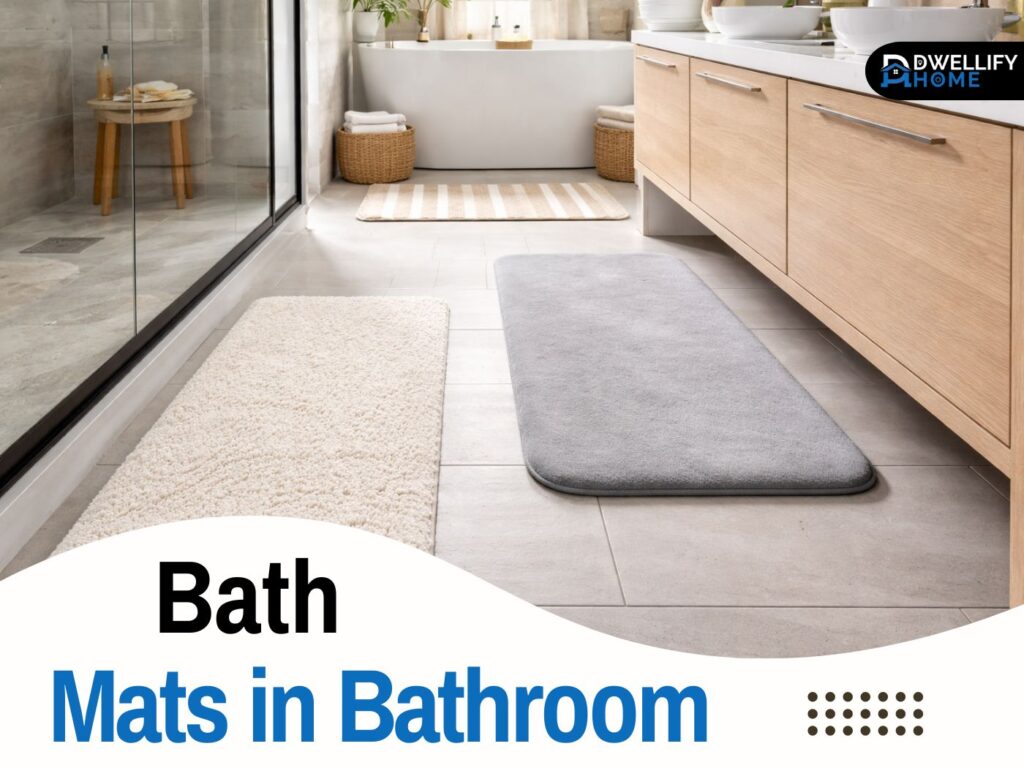
A bathroom can look spotless and still feel unsafe if the floor stays damp. Over the last 12 years designing moisture-resistant, slip-safe bathrooms, I’ve seen the same pattern: the smallest details often prevent the biggest problems. A well-chosen mat doesn’t just make the room feel warmer, it can reduce slips, protect flooring, and keep everyday routines more comfortable.
In this guide, I’ll walk you through how to choose the right mats, where to place them, how many you actually need, and how to keep them clean without creating a musty smell. I’ll also share the mistakes I see most often, plus simple fixes that work in real homes.
Snippet-ready definition:
Bath mats in bathroom spaces are absorbent, non-slip mats placed near wet zones like showers and sinks. They help prevent slips, keep floors drier, add comfort underfoot, and tie the room’s décor together.
Mission Statement:
At Dwellify Home, our mission is to help you create spaces that feel calm, safe, and beautiful through practical design advice you can trust, made for real homes and real routines.
What Bath Mats Do in a Bathroom (Not Just Decor)
The first job of a bath mat is traction. Wet feet on tile or polished stone can turn a normal step into a slip, especially near the shower or tub. A mat with proper grip gives your feet a stable landing zone right where water usually hits the floor.
The second job is moisture control. Mats absorb drips and splashes before they spread into wider puddles. That helps floors dry faster and reduces water sitting in grout lines, around the vanity toe-kick, or under the edge of a cabinet.
The third job is comfort. Bathrooms tend to have harder surfaces, and a soft mat can make mornings feel easier, especially for kids, older adults, or anyone with joint sensitivity. When you choose wisely, you’re getting safety, hygiene, and comfort in one piece.
Quick Guide Table (Comparison)
| Type | Best For | Pros | Watch-outs |
| Cotton bath mat | Most bathrooms | Washable, breathable, classic look | Can stay damp if very thick |
| Microfiber/chenille | Cozy feel, family baths | Soft, very absorbent | Needs airflow to avoid musty smell |
| Memory foam | Vanity comfort | Cushiony for standing routines | Slower to dry, needs frequent airing |
| Bamboo | Spa look, easy wipe-down | Water passes through, tidy look | Less soft, needs dry floor underneath |
| Stone/diatomaceous | Humid bathrooms | Very quick-dry, clean modern style | Not plush, can feel cool/hard |
Quick placement checklist (simple)
- Place one mat outside the shower or tub first (main slip zone)
- Add a mat in front of the vanity/sink if you want comfort
- Use a runner for long bathrooms or double sinks
- Skip extra mats in small bathrooms if they block doors or trap moisture
Bath Mat vs Bath Rug vs Runner (Quick Differences)
A bath mat is usually built for function first. It’s meant to sit right outside the shower or tub, absorb water quickly, and stay put. Many are smaller, denser, and designed to dry faster.
A bath rug leans more decorative. It may feel plush, look stylish, and cover more visual space, but it can also hold moisture longer if it’s too thick. That doesn’t make it bad, it just means it needs the right placement and the right cleaning routine.
A bathroom rug runner is the layout helper. In longer bathrooms or spaces with double sinks, a runner can create one continuous, comfortable path. It also looks intentional when you have a wide vanity or a long walkway that otherwise feels empty.
How to Choose the Right Bath Mats in Bathroom Areas (Simple Checklist)
A good mat should match your bathroom’s daily reality, not just the look. Start with what your floor is like, how often the bathroom stays humid, and who uses the space. Then work through material, safety, and drying speed.
I like to remind homeowners of a simple rule: the best mat is the one that stays grippy, dries well, and still feels pleasant underfoot after weeks of use.
Material guide (best use cases)
Cotton is the classic choice and it’s still one of my favorites. It’s breathable, comfortable, and easy to wash. If you want something practical that doesn’t feel fussy, cotton or reversible cotton bath rugs are a solid pick. Higher weight cotton tends to feel more luxurious and absorbs better.
Microfiber or chenille mats feel very soft and can be highly absorbent. They work well in family bathrooms where comfort matters, but they can hold water longer if they’re thick. If your bathroom doesn’t have great airflow, choose a quick-dry style rather than an extra plush pile.
Memory foam is comfort-first. It’s great for anyone who stands at the vanity for longer routines. The trade-off is drying time, so it’s better in front of a sink than right outside a frequently used shower unless you’re committed to regular drying and washing.
Bamboo is less common, but it’s useful in a very specific way. A bamboo mat doesn’t absorb water like fabric, it lets water drip through and evaporate. It’s helpful in bathrooms where you want a clean, spa-like look and a surface that’s easy to wipe down.
Stone or diatomaceous earth mats are the speed champions. They dry fast because they pull moisture away from the surface and evaporate it quickly. In humid bathrooms, these can be a smart choice, especially if fabric mats always end up smelling damp.
Safety and grip (non-negotiables)
Non-slip backing matters more than most people think. Some backings stay flexible and grippy, while cheaper ones crack, peel, or get slick over time. If you’ve ever had a mat creep forward every time you step on it, that’s usually a backing issue.
If your mat doesn’t have reliable grip, add a quality rug pad designed for bathrooms. Just make sure it’s meant for moisture-prone spaces so it doesn’t trap water underneath.
A quick safety tip from my on-site work: if a mat slides when you push it with your foot, it’s not safe enough for a shower exit. Keep that one by the vanity or laundry area instead.
Best Bath Mat Sizes and Placement (So It Fits and Works)
Sizing is where many bathrooms go wrong. A mat that’s too small looks awkward and doesn’t catch water where it needs to. A mat that’s too large can block doors, bunch up, or stay damp because air can’t circulate around it.
When I’m planning a bathroom, I map where water lands first, then I size mats to cover those landing zones without crowding the floor.
Placement by bathroom zone
Outside the shower or tub is the priority zone. This is where feet are wetest, and where slips happen most often. A medium-size mat that gives you a full step or two of coverage is usually best.
In front of the sink or vanity, a mat is about comfort and catching small splashes. This is a great spot for a softer bath rug or memory foam if you like that cushiony feel.
Around the toilet, I’m selective. Contour mats can help in some layouts, but they can also look dated and collect dust quickly. In most modern bathrooms, a better approach is one well-sized mat near the vanity and one outside the shower.
Standard sizes like 20 by 30 inches work well in many bathrooms. Larger mats or a bathroom rug runner can make sense in wide spaces or long layouts. The key is to measure with your door swing in mind.
For very small bathroom rugs, go thinner and more precise. I often recommend a slimmer mat that sits fully clear of the door path, with a grippy backing so it stays flat. In tight bathrooms, flat and functional is usually more comfortable than thick and bulky.
Bathroom Mats Set vs Single Mat (What Looks Better)
A bathroom mats set can look neat when it matches the layout. For example, a large primary bath with a shower zone and a double vanity often benefits from coordinated pieces. It helps the room feel finished without looking scattered.
In smaller bathrooms, one strong, well-placed mat often looks cleaner than multiple small ones. Too many pieces can visually chop up the floor and make the space feel cramped.
If you like sets, keep them cohesive in texture and tone. Matching doesn’t mean identical, but they should feel like they belong together. A simple way to do that is to keep the color family consistent and vary only the size.
Luxury Bath Mats in Bathroom Spaces (What Luxury Really Means)
Luxury isn’t just about softness. The best luxury bath mats in bathroom settings balance plush feel with practical performance. In my experience, true luxury means the mat still looks good and stays fresh after repeat washes.
For fabric styles, look for dense, well-finished cotton with strong edges and quality stitching. Higher weight cotton often feels like a hotel mat, thick enough to be comfortable but breathable enough to dry.
Luxury bath rugs can also mean better design. A clean pattern, a tailored border, or a subtle texture can elevate the space without becoming hard to maintain. If you prefer a spa look, a stone mat can feel premium in a modern way, especially paired with warm wood accents.
What I avoid, even in high-end projects, is a mat that stays damp. If it feels great for 10 minutes but turns musty in two days, it’s not luxury in real life.
Best Types for Real Life (Match the Mat to Your Routine)
For family bathrooms, washable bath mats in bathroom spaces are the practical choice. Kids bring extra water and extra mess, so you want something machine washable with reliable grip. Microfiber can be cozy, but cotton is often easier to keep fresh.
For humid bathrooms, quick-dry matters more than softness. Stone mats, thinner cotton, or bamboo styles can reduce that constant damp feeling. Pair that with good ventilation and you’ll notice the space stays fresher.
For guest bathrooms, I lean slightly more decorative. A nice cotton mat or a tasteful patterned rug can make the room feel welcoming, and it won’t see daily soaking.
For safety-first households, prioritize grip and stability. A non-slip bath mat with a steady base is a better choice than thick plush rugs that slide. If someone is unsteady on their feet, a mat that doesn’t move is worth more than any design detail.
Washable Bath Mats in Bathroom Areas (Cleaning Without Ruining Them)
Clean mats are a hygiene issue, not just a style issue. In bathrooms, moisture and skin oils build up quickly, and that’s what creates odor over time. A good washing routine keeps the space feeling fresh and extends the mat’s lifespan.
If the mat is used daily after showers, washing weekly or every two weeks is a good rhythm. Guest bathrooms can go longer, but don’t wait until you smell it. Odor usually means moisture has lingered for a while.
How often to wash
A simple rule I give homeowners is this: if your mat feels damp for long stretches, wash it more often and rethink the material. In busy households, it’s normal to rotate two mats so one can dry fully while the other is in use.
How to wash by type
Cotton and standard fabric mats are usually straightforward. Shake them out, wash with mild detergent, and avoid heavy fabric softeners that can reduce absorbency.
Rubber-backed mats need more care. Too much heat can crack the backing, so use cooler water and low heat drying, or air-dry if the label recommends it. If the backing starts flaking, it’s time to replace it because the grip is no longer dependable.
Memory foam mats often prefer gentle cycles and careful drying. If they hold water, don’t leave them folded or bunched. Flatten them and let air circulate around them until they’re fully dry.
Drying is where most mildew issues begin. Hang the mat over a tub edge or a rail after showers so it can breathe. If it stays on the floor wet, moisture gets trapped underneath, and that’s when smells show up.
When should you replace a mat? If the backing is slick, if odor doesn’t improve after washing, or if the pile is flattened and no longer absorbs well, it’s better to swap it out.
Common Mistakes People Make With Bath Mats (And Easy Fixes)
One of the most common mistakes is using a rug without grip near the shower. It might look fine, but if it slides, it’s a safety risk. Fix it with a proper non-slip backing mat or a bathroom-safe rug pad.
Another mistake is going too plush in a bathroom that doesn’t dry well. Thick rugs can trap moisture and start smelling quickly. A thinner cotton mat, a quick-dry microfiber, or a stone mat can solve that without sacrificing comfort.
I also see overcrowding in small bathrooms. Multiple little mats can bunch up, catch under doors, and make the space harder to clean. In tight layouts, pick one mat that fits perfectly and keep the rest of the floor clear.
And finally, ignoring moisture buildup underneath the mat is a big one. Lift and air out the mat regularly. It’s a small habit, but it prevents long-term floor damage and keeps the bathroom fresher.
Where to Buy (Smart Shopping Without Regret)
If you like simple, practical options, bath mats in bathroom IKEA collections often cover useful sizes and shapes, especially for compact bathrooms. They’re typically designed with real layouts in mind, which helps when space is tight.
For bath mats in bathroom Amazon listings, filter carefully. Look for clear care instructions, honest photos in reviews, and details about non-slip backing. If the listing avoids showing the underside or has many complaints about sliding or shedding, that’s usually a sign to skip.
For luxury options, focus on construction and care labels rather than branding. A well-made cotton mat with strong stitching and washable instructions will outperform a delicate rug that can’t handle moisture.
Quick Buying Guide (Fast Decisions)
If you want one choice that works in most homes, go with a washable cotton mat with strong grip and medium thickness. It’s comfortable, practical, and easy to maintain.
For small bathrooms, choose a thinner mat that clears door swings and dries quickly. Very small bathroom rugs should fit the space precisely, not just “kind of” fit.
For a spa feel, consider higher weight cotton or a simple luxury bath rug with a clean border. Pair it with neutral towels and warm accents and the room will feel calmer without extra clutter.
For speed drying, stone or diatomaceous earth mats are hard to beat. They’re not as soft, but they solve the damp problem that many bathrooms struggle with.
FAQs
1) Where to place bath mats in a bathroom?
Place one right outside the shower or tub first. If you have space, add another in front of the sink for comfort and splash control. Keep mats clear of door swings.
2) Is it sanitary to have a rug in the bathroom?
Yes, as long as it’s washable and dries properly. The key is regular washing, good ventilation, and avoiding thick rugs that stay damp for long periods.
3) Do people still put rugs in bathrooms?
Yes. Many people use bath mats or bathroom rugs for slip resistance, warmth, and style. Modern bathrooms often use fewer pieces, sized correctly, with better non-slip backing.
4) Should you put a rug in front of the toilet?
Only if it helps your layout and you can keep it clean. In many bathrooms, it’s better to prioritize the shower exit and vanity, then add a toilet-area mat only if needed.
5) How often should you wash bathroom mats?
For a regularly used bathroom, washing every 1–2 weeks works well. If the mat stays damp, wash weekly and hang it to dry between uses to prevent odor.
Conclusion
Choosing bath mats in bathroom spaces is really about balancing safety, drying performance, and how the room feels day to day. Start with the shower or tub exit, because that’s where traction matters most. Then add comfort at the vanity if you want it, keeping sizes practical and the floor easy to clean.
If you remember one thing, make it this: a mat should stay put, dry well, and be easy to wash. When you get those basics right, the bathroom feels better every single day, and you’ll spend less time dealing with damp floors, odors, or awkward layouts.
Disclaimer:
This article is for general home design and safety guidance only. Always follow the care label on your bath mats and consider professional advice for accessibility or fall-risk concerns in your home.