
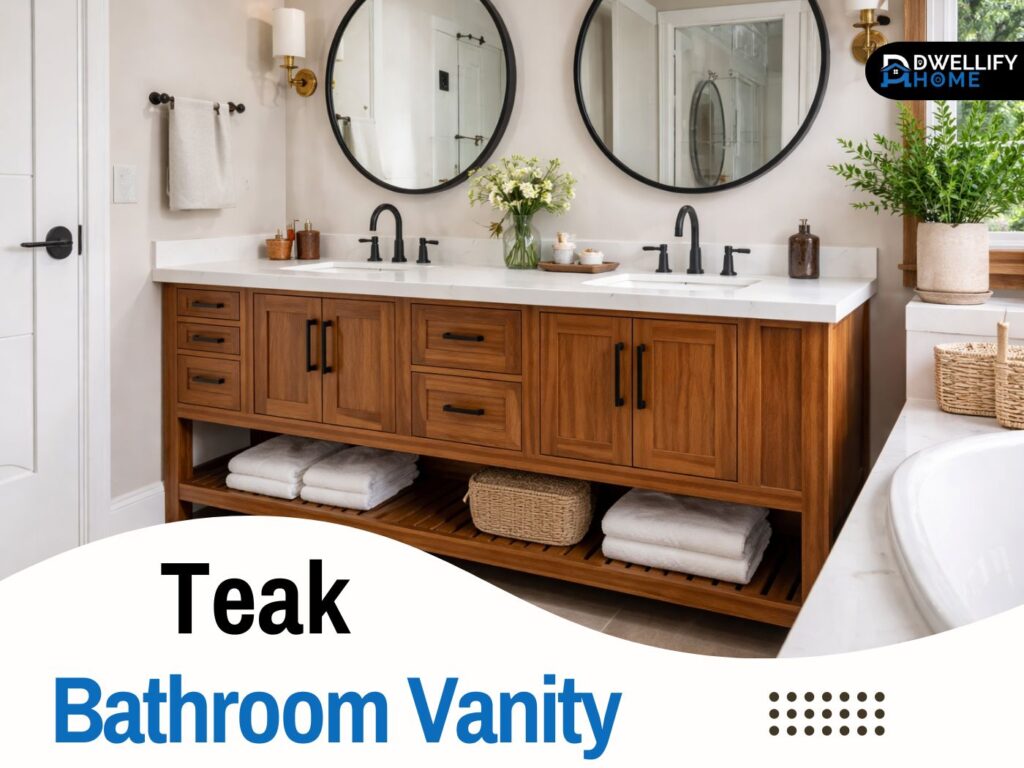
A wood vanity can make a bathroom feel warm, calm, and lived-in in the best way. And teak is one of those woods that looks stylish while also handling real bathroom life better than most people expect.
Here’s the thing, though. Teak isn’t magic. It’s more forgiving in moisture than many woods, but it still needs smart choices around size, finish, and daily habits. I’ve designed bathrooms with teak vanities in family homes, guest baths, and compact powder rooms, and the difference between a vanity that stays beautiful and one that looks tired usually comes down to planning.
This guide walks you through the practical decisions, from picking the right size to choosing a finish you can live with. I’ll keep it honest, simple, and based on what actually works in real bathrooms.
Snippet-ready definition:
A teak bathroom vanity is a bathroom cabinet made with teak wood, valued for its durability and moisture resistance. It adds warmth, storage, and a premium look, especially when paired with a practical top and good ventilation.
Mission Statement:
At Dwellify Home, our mission is to give homeowners practical, experience-based guidance that makes home upgrades simpler, smarter, and more comfortable to live with every day.
Why Choose a Teak Bathroom Vanity for a Bathroom?
Teak is naturally oily, dense, and stable. That’s why it’s been used for boat decks and outdoor furniture for decades. In a bathroom, those natural oils help teak resist absorbing water as quickly as many other woods. On top of that, it’s less likely to warp when humidity changes from hot showers to cool air.
In real homes, this matters most in busy bathrooms. I’ve seen a solid teak bathroom vanity hold up well in a kids’ bath where water drips happen daily, as long as the countertop edge is sealed properly and people wipe puddles instead of letting them sit.
The best part is the look. Teak has a warmth that makes tile-heavy bathrooms feel less cold. It pairs beautifully with white walls, stone tops, and matte black fixtures, and it still looks good years later when it develops a soft, natural patina.
Quick Guide Table: Choose the Right Teak Vanity Fast
| Bathroom situation | Best vanity width | Best layout | Quick tip |
| Tiny powder room | 24 inch | Single | Great space saver, add a wall shelf for extra items |
| Small full bath | 30 inch | Single | A safe everyday choice with better counter space |
| Comfortable small to mid bath | 36 inch | Single | More landing space for toiletries, less clutter |
| Mid-size bath | 48 inch | Single or compact double | Works well when you want more drawers and a wider top |
| Shared primary bath | 60 inch | Double | Good balance of personal space and storage |
| Large primary bath | 72 inch | Double | Best for maximum drawers and roomy sink spacing |
Mini checklist before you buy
- Measure door swing, toilet clearance, and the walking path
- Confirm plumbing location and access inside the cabinet
- Decide finish type: sealed vs oiled, based on how much upkeep you want
- If possible, pick a solid teak bathroom vanity for long-term refinishing options
Solid Teak vs Teak Veneer vs Teak Finish (How to Know What You’re Buying)
Let’s clear up the biggest confusion early. Solid teak means the visible wood parts are teak all the way through, not just a thin layer on top. With a solid teak vanity, light sanding and refinishing is usually possible if it ever gets scratched or worn.
Teak veneer is a thin sheet of teak bonded over another material, often plywood or MDF. Veneer can still be a smart choice when it’s done well, especially if you want the teak look at a lower price. But it’s less forgiving. If water sneaks into a seam or the veneer chips, repairs are more limited.
Then there’s teak finish, which often means another wood or engineered material with a teak-colored stain. It can look nice in photos, but it won’t behave like teak. In bathrooms, behavior matters as much as appearance.
A few quick checks I use when helping homeowners shop:
- Look inside the cabinet. Do you see real wood grain, or a printed pattern?
- Check the back and the underside of drawers. Quality builds are consistent.
- Ask what the box is made of. Plywood is usually a better sign than MDF in humid rooms.
- Check joinery. Solid drawer boxes and sturdy corners tend to last longer.
If you’re unsure, ask the seller one simple question: Which parts are solid teak, and which parts are veneer or engineered wood?
Teak Bathroom Vanity Sizes: Choose the Right Fit (Without Regret)
Size is where most regrets come from. Not because the vanity is bad, but because the bathroom can’t breathe around it. A vanity should feel like it belongs, not like it was squeezed in.
Before you choose, measure more than the wall. You’ll want to consider door swing, toilet clearance, shower glass, and the walking path. I usually mark the footprint on the floor with painter’s tape. It takes ten minutes and saves a lot of stress.
Small bathroom sizes
A teak bathroom vanity 24 inch is a go-to for powder rooms, tiny guest baths, and older homes where space is tight. You get a proper sink, a little storage, and a cleaner look than a pedestal. The trade-off is counter space, so I often pair it with a wall-mounted soap dispenser or a slim shelf.
A teak bathroom vanity 30 works in many small full baths. It’s wide enough for daily routines without dominating the room. If you share the bathroom, that extra width helps keep toiletries from stacking around the sink.
A teak bathroom vanity 36 is where the bathroom starts feeling comfortable. You can set down a hair tool, a skincare bag, or a small tray without clutter. If your bathroom is used every day, 36 inches is often the sweet spot.
Medium to large bathroom sizes
A teak bathroom vanity 48 can be a roomy single-sink setup, or sometimes a compact double, depending on the bowl layout. In design terms, 48 inches is great when you want the vanity to feel substantial but not oversized.
A teak bathroom vanity 60 is the classic double-sink size for shared bathrooms. It gives two people space without elbows bumping, and storage becomes much easier to organize.
A teak bathroom vanity 72 is for larger primary baths where you want generous drawers and breathing room between sinks. In real projects, I like 72 inches when the bathroom has enough wall length and the rest of the layout still feels open.
A quick practical checklist for sizing:
- Leave comfortable clearance in front of the vanity, especially if drawers will be open
- Make sure doors and drawers won’t hit the toilet or shower trim
- Confirm your plumbing location and whether the vanity has easy access panels
Single vs Double Sink: Which Layout Matches Your Routine?
A single teak bathroom vanity is often the best choice, even in shared bathrooms. Guess what, a lot of couples don’t actually need two sinks. They need more counter space and better storage. A wide single sink with generous drawers can feel more usable than a cramped double.
That said, a double sink setup can be worth it when two people truly get ready at the same time every day. If one person is brushing teeth while the other is doing hair and makeup, a double can reduce friction. The key is choosing a width that gives each sink enough landing space.
Here’s my honest rule: if you’re under 60 inches, think carefully before going double. Many small doubles sacrifice counter space so much that the daily experience feels worse, not better.
Freestanding vs Floating Teak Vanity (Style plus Cleaning plus Practicality)
Freestanding vanities feel furniture-like and grounded. They’re usually simpler to install, and they hide wall imperfections better. In family bathrooms, I often recommend freestanding because it’s sturdy and forgiving if the wall isn’t perfectly flat.
Floating vanities, also called wall-mounted, make the room feel lighter. They’re easier to clean under, and they can visually open up a small bathroom. The downside is that they require proper wall support, usually blocking and strong anchoring into studs.
Moisture plays a role here too. Floating styles often allow more air circulation around the vanity and floor, which can help in steamy bathrooms. But only if the room has decent ventilation.
If you love the floating look, just make sure your installer treats it like a structural install, not a quick hang.
Storage That Actually Works (Not Just More Drawers)
Storage isn’t about quantity. It’s about the right type. I’ve seen huge vanities that still feel messy because everything piles into one deep cabinet.
For daily life, drawers are usually the winners. They keep items visible and accessible. Cabinets are useful for taller bottles, extra toilet paper, and cleaning supplies, but they’re easier to turn into a clutter cave.
Practical features that make a real difference:
- Soft-close drawers and soft-close doors so the vanity stays aligned over time
- Shallow top drawers for skincare, shaving items, and small tools
- One deep drawer for hair tools with a heat-safe liner if needed
- A pull-out shelf or organizer under the sink if plumbing space allows
Also, don’t ignore vanity depth. In narrow bathrooms, a slightly shallower vanity can make the whole room feel easier to use.
Countertop and Sink Choices That Pair Best With Teak
Teak looks great with many countertop materials, but your lifestyle should choose the top, not just your mood board.
Quartz is a favorite because it’s low maintenance. It resists staining well and doesn’t need sealing. In busy homes, quartz plus teak is a very practical combo.
Natural stone can be beautiful, especially marble, but it needs more care. Water spots and etching can happen. If you love stone, just go into it with open eyes and a simple routine.
Sink style matters too. Undermount sinks tend to keep water from sitting on the wood edge, especially if the countertop overhang is done properly. Vessel sinks can look stunning with teak, but splashing is more common, so you’ll want a faucet and bowl combo that keeps water controlled.
One small planning tip that saves headaches: confirm what’s included. Some teak vanity sets come with the countertop and sink, others don’t. Also confirm faucet hole spacing so you don’t end up returning fixtures.
Hardware and Finish Pairing (How to Make Teak Look Expensive)
Teak has a naturally rich tone, so hardware should support it, not fight it. Matte black gives a modern, clean look. Brushed nickel feels timeless and easy to match with other fixtures. Warm metals like brushed brass can look high-end, especially in softer, spa-style bathrooms.
Style-wise, teak plays well with:
- Modern minimal bathrooms with clean lines
- Japandi spaces with calm neutrals and texture
- Scandinavian looks with light walls and simple shapes
- Mid-century vibes with warm tones and simple pulls
If you want the vanity to feel intentional, choose hardware that matches the faucet finish, or at least stays in the same family. Mixing can work, but it should look planned.
Installation and Plumbing Planning (Before You Buy Online)
This is where a lot of homeowners get surprised. Not because the vanity is wrong, but because the bathroom reality shows up late.
First, check plumbing location. If your drain and supply lines are off-center, you’ll need a vanity that can accommodate that or you’ll be paying for plumbing changes. In older homes, this is very common.
Second, check delivery and access. I always ask clients to measure the tightest point, stair turns, doorways, and hall width. A teak bathroom vanity 72 is wonderful, but it’s not wonderful if it can’t make the corner.
Third, if you’re going floating, plan wall support early. That usually means opening the wall or adding blocking before tile is finished. It’s not hard, but it needs to be planned.
Finishes, Sealants, and Water Protection for Teak in Bathrooms
Teak’s natural oils give it a head start, but finish choice still matters. Some vanities come sealed with a protective topcoat. Others are oiled. Some arrive unfinished and expect you to treat them.
A sealed finish tends to be easier for most homes. It creates a barrier that helps prevent water spots and staining. The trade-off is that if the surface gets damaged, you may need a more involved repair to blend it.
Oiled teak has a more natural feel and can be easier to refresh. You can re-oil it when it starts looking dry. The catch is you need to stay consistent, and you still shouldn’t let water sit for long.
Basic water protection habits that actually help:
- Wipe puddles after heavy use, especially around the faucet base
- Keep a small tray for soaps and bottles so drips don’t sit on wood
- Make sure your exhaust fan is strong enough for the room
Teak Bathroom Vanity Care Guide (Simple Routine)
Most teak issues I see aren’t dramatic. They’re slow. A little water spot here, a little grime around the faucet there, then suddenly the vanity looks dull.
A simple weekly routine keeps it looking fresh:
- Wipe the surface with a soft, damp cloth
- Use a mild soap if needed, then dry it right after
- Avoid harsh chemicals and abrasive pads, they can strip or scratch the finish
If you ever see mildew or dark spots, don’t ignore it. Clean it early with a gentle approach recommended by the manufacturer, and improve airflow in the bathroom. In real homes, the fix is often as much about ventilation as it is about cleaning.
One personal tip I give clients: keep a small microfiber cloth in a drawer. When it’s easy to grab, people actually use it.
Sustainability and Sourcing (A Trust-Building Section)
Teak has a complicated story in the global market, so it’s worth paying attention to sourcing. Responsibly sourced teak comes from managed plantations or suppliers that can explain where the wood comes from. While not every product will have clear certification, transparent sourcing claims are still a good sign.
I also like to focus on longevity as a practical sustainability metric. A well-built vanity that lasts 10 to 20 years is usually a better choice than something cheaper that swells or fails in a few years. Repairability matters too. Solid wood components, replaceable hardware, and sturdy joinery often mean the piece can be maintained instead of tossed.
If the seller can’t answer basic questions about materials or construction, that’s a yellow flag.
Common Mistakes When Buying a Teak Bathroom Vanity (Quick Avoid List)
I’ve seen these mistakes more times than I can count, and they’re all avoidable.
- Choosing size based on looks, not measurements
- Ignoring door swing, toilet clearance, and walking space
- Assuming the sink, countertop, and faucet are included
- Going double-sink in a narrow width and losing all counter space
- Not planning ventilation, then blaming the wood for moisture issues
- Using harsh cleaners and slowly damaging the finish
If you avoid just these, you’ll already be ahead of most homeowners.
FAQs
1) Is teak a good wood for a bathroom vanity?
Yes, teak is one of the better woods for bathrooms because it’s dense and naturally oily, so it handles humidity and splashes well. Still, don’t let water sit on it, and keep ventilation decent.
2) What are the disadvantages of teak?
Teak can be pricey, it may change color over time, and it still needs basic care. If a bathroom stays damp with poor airflow, you can still get water spots or mildew on the surface.
3) What’s the best wood for a bathroom vanity?
Teak is a strong option, but the “best” depends on your bathroom conditions and maintenance comfort. In general, dense hardwoods with good finishes and strong construction tend to hold up better in humid spaces.
4) Is teak good for bathrooms?
Yes, especially for busy bathrooms, as long as the vanity is well-finished and the room has proper ventilation. Teak performs best when it can dry out between uses.
5) Do I need to seal a teak vanity in a bathroom?
If it arrives factory-sealed, you usually just maintain it. If it’s unfinished or lightly oiled, sealing or regular oiling can help, particularly in steamy bathrooms or high-splash areas.
Conclusion
A teak vanity can be one of the most satisfying upgrades in a bathroom because it adds warmth, texture, and a calm, spa-like feel. The key is choosing the right build and the right size for the room, then supporting it with simple habits that fit real life.
If you remember just a few things, make them these: measure the space carefully, pick a finish you can maintain, keep water from sitting on the wood, and don’t ignore ventilation. Do that, and your vanity won’t just look good on day one, it’ll keep looking good when the bathroom has been lived in for years.
And honestly, that’s what great bathroom design is all about.
Disclaimer
This article is for general educational use based on real-world design experience. Always follow your vanity manufacturer’s care instructions, and consult a qualified installer or plumber for measurements, wall support, and plumbing changes.

I’m Bilal, the founder of Dwellify Home. With 6 years of practical experience in home remodeling, interior design, and décor consulting, I help people transform their spaces with simple, effective, and affordable ideas. I specialize in offering real-world tips, step-by-step guides, and product recommendations that make home improvement easier and more enjoyable. My mission is to empower homeowners and renters to create functional, beautiful spaces—one thoughtful update at a time.