Walking into a teen’s room can feel like stepping into three worlds at once. It’s a bedroom, a study zone, and a hangout spot, sometimes all inside a small space. Here’s the thing: when the furniture doesn’t support that reality, the room gets messy fast, homework becomes harder than it needs to be, and everyone ends up frustrated.
I’ve helped families plan teen rooms for years, and the same truth shows up every time. The best setup isn’t the most expensive or the most trendy. It’s the one that matches how your teenager actually lives, and still makes sense a year or two from now.
This guide will help you choose furniture that works for school nights, weekends, and everything in between, including small room solutions, modern styles, IKEA-friendly planning, and practical set ideas for teen boys and teen girls.
Snippet-Ready Definition:
Bedroom furniture for teenagers includes beds, desks, storage, and seating designed to support sleep, study, and personal space while adapting to growth, changing tastes, and limited room sizes.
Our Mission
At Dwellify Home, our mission is to help families create teen bedrooms that are practical, safe, and comfortable—spaces that support real life, real routines, and growing independence.
Teen Bedroom Furniture Quick Guide
| Teen Need | Best Furniture Choice | Why It Works |
| Small room | Loft bed or storage bed | Saves floor space and adds function |
| Study focus | Desk with storage + task light | Supports daily school routines |
| Growing teen | Full-size bed | Comfortable now and later |
| Limited closet | Tall dresser or wardrobe | Adds vertical storage |
| Shared room | Bunk bed or trundle | Maximizes sleeping space |
| Easy cleanup | Closed storage drawers | Reduces visible clutter |
Simple Step-by-Step Buying Guide (Optional Section)
How to Choose Bedroom Furniture for Teenagers
- Measure the room first (walls, doors, closet space)
- Choose the bed size based on space, not just age
- Plan a study zone that feels comfortable, not cramped
- Add storage that matches real habits, not ideal ones
- Keep the base furniture simple and style with accessories
Short, practical, and easy to follow.
What Teenagers Need From Bedroom Furniture (Before You Buy Anything)
A teen room works best when it supports independence. That means your teenager can manage their own space without needing constant help to keep it usable. So instead of starting with a “cute” bed or a matching set, start with what your teen needs most day to day.
Most teens need four things from their room. A comfortable place to sleep, a decent place to study, storage that’s easy to maintain, and a corner that feels like theirs. When those boxes are checked, the room naturally feels calmer and more grown up.
One thing I often tell parents is this: try not to design for a perfect version of your teen. Design for the real one. If they toss clothes on a chair, include a hamper and hooks. If they sprawl while studying, give them desk space that doesn’t feel cramped.
The Simple 4-Zone Plan (Makes Any Room Work Better)
This is the quickest way to create a room that feels organized without forcing it.
- Sleep zone: bed, nightstand or bedside shelf, good lighting
- Study zone: desk, chair, task light, small storage for school items
- Storage zone: dresser, wardrobe if needed, laundry plan, shelves
- Chill zone: a comfy chair, bean bag, small sofa, or even a soft rug area
The best part is you don’t need a big room for this. You just need clear purpose. When a teen knows where things belong, it’s easier to keep the space under control.
Measure and Plan the Layout First (Avoid the Most Common Mistakes)
I know measuring doesn’t feel exciting, but it prevents expensive regrets. I’ve seen families buy a gorgeous dresser, only to realize the drawers can’t open because the bed is too close. Or they get a desk that blocks the closet door and suddenly the whole room feels tight.
Start with the basics. Measure wall lengths, window positions, closet doors, and the swing of the bedroom door. Then think about how a teen actually moves through the room. They need space to walk, sit, roll a desk chair back, and open drawers without bumping into furniture.
A simple rule that helps is leaving enough space for drawers and daily movement. If a dresser drawer needs room to open, that area should stay clear. Same for the desk chair. If your teen has to squeeze past the bed to reach the closet, the layout will feel annoying every single day.
Here’s a practical trick I use in consultations. Use painter’s tape on the floor to outline the footprint of a bed and dresser. It shows you the real space, not the imagined space. And it helps teens understand why certain pieces feel too bulky.
Choosing the Right Bed for a Teen Room (Type + Size)
The bed is the anchor of the room, so choose it with the future in mind. Teens grow fast, and their needs change too. A bed that feels fine at 13 can feel small or childish by 16.
When you’re planning long-term value, think about two things. The bed type that fits the room, and the size that fits your teen’s growth. On top of that, consider how the bed supports storage, sleepovers, and study routines.
Best Bed Types for Teen Rooms
Different bed styles solve different problems. There’s no single best choice, but there is a best match for your room and your teen.
- Platform bed: clean, modern, and usually sturdy. Great for a mature look.
- Storage bed or captain’s bed: built-in drawers that replace a separate dresser in small rooms.
- Daybed: works as a sofa by day and a bed by night, helpful for hangout-friendly rooms.
- Trundle bed: perfect if friends stay over, without taking up extra space every day.
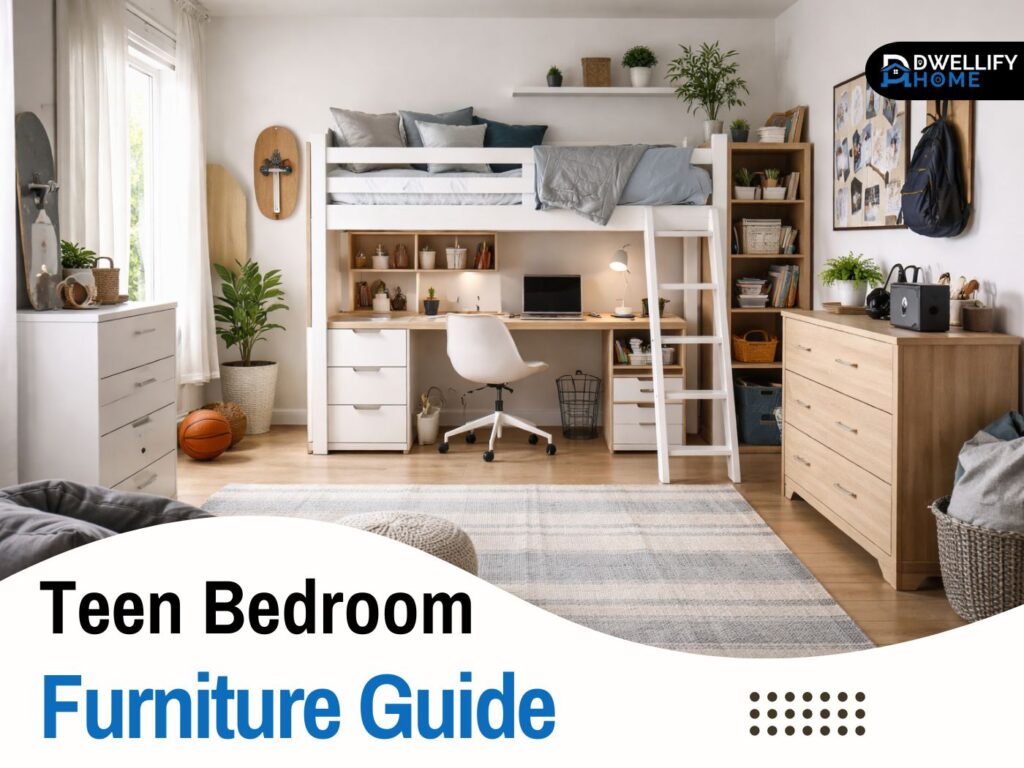
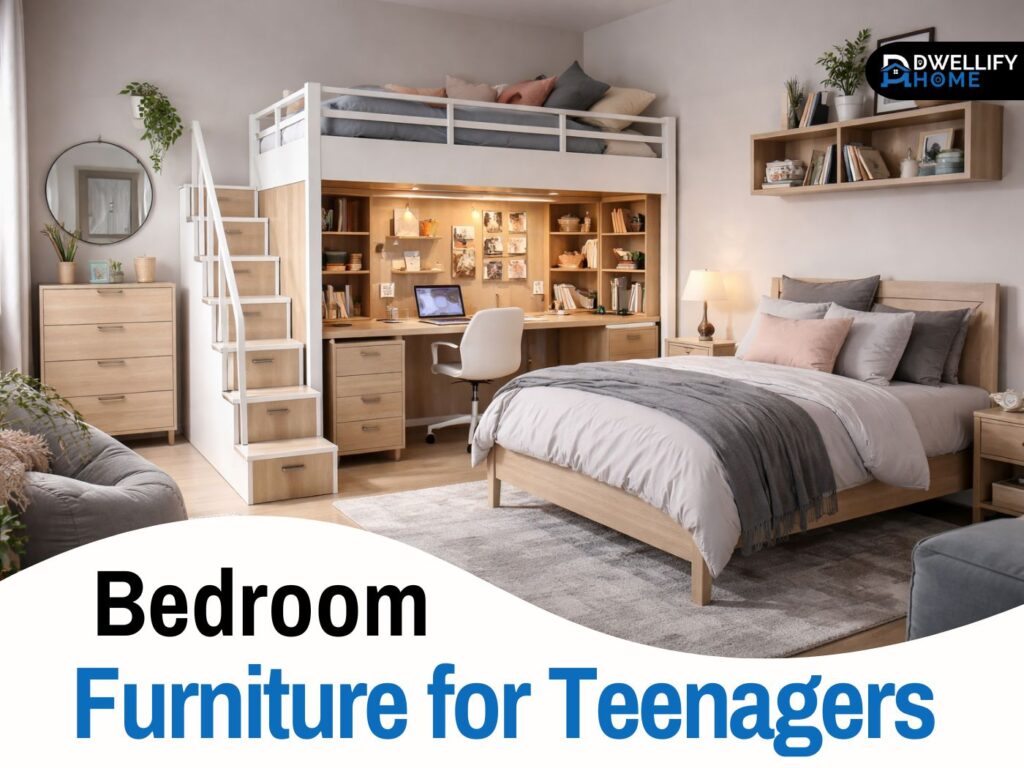
- Loft bed or high-sleeper bed: a smart move for tight spaces, because it creates room for a desk or seating below.
- Bunk bed: best for shared bedrooms, especially when siblings have different schedules.
If your teen room is small, loft and trundle options can be game changers. I’ve seen a teen bedroom go from cluttered to functional simply by lifting the bed and building a study area underneath.
Twin vs Full vs Queen (What Works Best for Teens)
Most families start with a twin, and that can be totally fine. But when you want a bed that feels more grown up, a full bed often hits the sweet spot. It’s comfortable for a teen, it works for reading or laptop use, and it still fits in many average-sized rooms.
A lot of parents ask me about full size bedroom sets for teenage girl or full size bedroom sets for teenage boy. My honest answer is this: full makes sense when the room can still breathe. If the bed forces you to skip storage or blocks the desk, it’s not worth it.
Queen beds can work in larger rooms, especially if you want a long-term setup. But in many teen rooms, queen size steals the space you need for studying and storage. And those two areas usually matter more than extra inches of mattress.
Storage Furniture That Keeps Teen Rooms From Turning Messy
Teens don’t need complicated storage. They need simple systems that make it easy to put things away. If storage feels like work, it won’t get used.
The best teen storage combines closed storage for visual calm and open storage for grab-and-go habits. I like to plan for three categories: everyday clothes, school items, and “random stuff” like sports gear, cords, and hobby supplies.
Here’s the thing: when storage is too small, clutter spreads. When it’s too fussy, clutter hides. The goal is a setup your teen can manage without you reminding them every day.
Dresser vs Chest vs Wardrobe (What to Choose and Why)
A dresser is wide and practical. It’s great when you have wall space and want easy access to folded clothes. A chest is taller and slimmer, so it’s often better for narrow rooms.
A wardrobe or armoire becomes useful when the closet is tiny or poorly designed. I’ve worked with older homes where closets are basically a joke. In those cases, adding a wardrobe can instantly fix the daily routine.
One tip from experience: test drawer glide and depth. Shallow drawers look nice but don’t hold much. Deep drawers hold more but can become messy unless you use dividers.
Easy “No-Stress” Storage Upgrades
A few smart additions can save a room.
- Under-bed drawers or bins for hoodies, shoes, or sports gear
- Wall shelves for books, decor, and quick access items
- Hooks behind the door for bags and jackets
- A laundry hamper that’s actually easy to reach
The best part is these upgrades don’t require a full remodel. They just support real habits, which is what keeps a room functional.
Study-Friendly Furniture That Supports Focus (Not Just Looks)
If you want one area to get right, make it the study zone. A strong setup can reduce stress, improve concentration, and make homework feel less like a battle. I’ve watched teens go from working on the bed to finishing assignments faster just because the desk area was comfortable and organized.
A desk doesn’t need to be fancy. It needs to fit the teen’s school reality. That includes a place for a laptop, books, chargers, and a task light. And it should feel like a space they can use daily without constant resetting.
Teen Bedroom Sets With Desk (What Matters Most)
If you’re considering teen bedroom sets with desk, pay attention to desk depth. Many desks look fine but feel tight once a laptop and notebook are both open.
Look for:
- Enough surface area for real work
- At least one drawer or a small cabinet
- A simple cable plan, even if it’s just clips or a back opening
- A task light, because overhead lighting alone is rarely enough
If the room is tight, a loft bed with a built-in desk can be a great solution. That’s why teen bedroom sets with desk are popular for small spaces. They combine two needs without crowding the room.
Desk Chair Comfort Basics (A Quick Parent-Friendly Guide)
This is where many families accidentally cut corners. A bad chair makes studying miserable. A teen ends up slouching, moving to the bed, and losing focus.
A comfortable chair should let your teen sit with feet supported and shoulders relaxed. Adjustable height helps a lot. If the chair is too low, they hunch. If it’s too high, they perch and get restless.
A real-world example I see often: a teen using a dining chair at a desk that’s too tall. They hate the setup, and schoolwork becomes a struggle. When we switch to a basic adjustable chair, it’s a noticeable change in how long they can focus.
Teen Bedroom Furniture for a Small Room (Space-Saving Winners)
Small rooms can work beautifully, but only if the furniture earns its space. The mistake I see most is choosing bulky pieces that look nice in a showroom but feel heavy in a real bedroom.
If you need teen bedroom furniture for small room planning, pick pieces that combine functions. You’re basically buying back floor space.
Good small-room moves include loft beds, trundles, storage beds, and tall dressers. Wall shelves also help because they keep items off the floor and off the desk.
A layout tip that works surprisingly well is keeping the floor as open as possible. When the floor stays clear, the room feels bigger, even if it isn’t. That means fewer extra tables and more built-in storage.
And guess what, a floating bedside shelf can replace a chunky nightstand and still hold the essentials. Little swaps like that can make the entire room feel calmer.
Modern Bedroom Furniture for Teenagers (Style That Won’t Feel Childish Next Year)
Teen style changes fast. That’s why I usually recommend building the room with a neutral foundation, then letting your teenager personalize with smaller items. This is the easiest way to avoid redoing the room every year.
Modern bedroom furniture for teenagers usually means clean lines, simple finishes, and pieces that look slightly more mature. Think of it as a room that can grow from early teens into late teens without feeling outdated.
Here’s the thing: you don’t need to make the room boring. You just want the big pieces to be flexible. A simple bed frame, a timeless dresser, and a practical desk can be styled a hundred different ways with bedding, wall art, lighting, and rugs.
One approach I like is letting the teen pick one statement choice. Maybe it’s a bold headboard, a cool chair, or a unique lamp. When they get that choice, they’re usually happier to keep the rest balanced.
Furniture Sets Made Simple (What to Buy Together)
Sets can be a great option when you want everything to coordinate and you don’t want to spend weeks mixing pieces. But sets aren’t always the best value, especially if they force you into furniture that doesn’t fit the room.
When I’m helping families decide, I look at what needs to match and what doesn’t. Bed and dresser can match, but the desk doesn’t always need to. In fact, mixing can look more modern and intentional if it’s done with a consistent color tone.
A basic teen setup usually includes a bed, a dresser, and a desk. After that, the extras depend on space and habits. Some teens need a nightstand. Others do fine with a shelf. Some need a wardrobe. Others don’t.
Teen Boy Bedroom Sets (Simple, Durable Setup)
Teen boy bedroom sets often work best when they’re practical and low-maintenance. You want sturdy materials, easy-clean surfaces, and storage that can handle gear, cords, and everyday clutter.
A solid bundle includes:
- Bed frame with durable slats
- Dresser with deep drawers
- Desk with enough surface space
- Closed storage, like a cabinet or cube organizer
Full Size Bedroom Sets for Teenage Girl (Balanced + Functional Setup)
When families choose full size bedroom sets for teenage girl, they often want a slightly more grown-up look with comfort and style.
A practical setup includes:
- Full bed frame or storage bed
- Dresser and a simple nightstand
- Mirror, if it supports daily routines
- Optional vanity only if there’s space and it’ll be used
Full Size Bedroom Sets for Teenage Boy (Practical + Storage-Heavy Setup)
Full size bedroom sets for teenage boy can work well when the room supports a full bed without losing the study zone. Storage matters a lot here, especially if your teen has sports equipment or hobby items.
A smart combination is:
- Full bed with under-bed storage
- Tall dresser or wardrobe if closet space is limited
- Desk that fits real school needs
Safety, Durability, and Materials (Trust-Building Section)
This section matters more than people expect. Teens may be older, but safety still applies. Tall furniture can tip, loft beds can shift, and cheap drawers can break at the worst time.
Always anchor tall dressers and bookcases to the wall. It’s quick, and it prevents serious accidents. I recommend it even if your teen isn’t climbing furniture, because kids and guests can do unpredictable things.
For loft or bunk setups, check stability and guardrails. Also pay attention to mattress thickness. If the mattress sits too high, the guardrail becomes less effective.
When it comes to materials, look at structure first. Solid wood tends to be durable but can cost more. Engineered wood can be strong when it’s well-made and properly supported. Metal frames can be great for loft beds if they’re stable and not lightweight.
A simple durability test I use is gently shaking a display piece. If it wobbles easily, it’ll wobble more at home. Another detail is drawer joints. Better furniture uses stronger joinery, not flimsy staples.
Budget and Buying Tips (How to Shop Without Regret)
You don’t need to spend a fortune, but you should spend strategically. If you’re deciding where to invest, focus on the bed frame and the study chair. Those pieces get heavy daily use.
Places you can often save are nightstands, shelves, and decor. You can also save by choosing a simpler bed frame and putting money into a better storage plan.
Before you buy, check return policies and warranties. Also consider delivery and assembly. Some items look affordable until you add shipping and setup.
Teenage Bedroom Furniture IKEA (When It’s a Smart Choice)
Teenage bedroom furniture IKEA can be a smart choice when you want modular storage and flexible pieces. IKEA-style planning works well for teen rooms because many products are designed for small spaces and everyday function.
The key is choosing sturdy lines and following assembly carefully. I’ve seen IKEA rooms last for years when the right pieces are selected and properly built. And I’ve seen them fail fast when families choose the lightest option for a high-use teen room.
A good approach is mixing. Use IKEA for storage systems and practical desks, then choose a sturdier bed frame if your teen is hard on furniture.
Bedroom Furniture for Teenagers Nearby (Local Shopping Checklist)
Buying bedroom furniture for teenagers nearby can be great because you can test drawers, check finishes, and confirm sturdiness in person.
When you’re in a store, do a few quick checks:
- Open and close drawers, they should glide smoothly
- Check corners and edges, smooth finishing matters
- Ask about delivery times and assembly services
- Measure stairs and doorways before ordering
Local shopping also helps if you want something quickly. That’s helpful when a teen suddenly needs a better study setup mid-year.
Quick Checklists (Helpful, Low-Stress)
Here are a few quick checklists I give families when they want a clear plan without overthinking.
Before you buy
- Measure the room and doorways
- Confirm drawers and doors can fully open
- Decide bed size based on space, not just preference
- Plan a study zone you won’t have to “create later”
Teen-approved setup
- Comfortable bed and lighting
- Desk that fits real homework
- Storage that’s easy to use
- One personal touch they get to choose
Small room priorities
- Loft or storage bed if needed
- Tall dresser over wide pieces
- Wall shelves over bulky furniture
- Keep floor space open for breathing room
Conclusion
Choosing bedroom furniture for teenagers is really about building a room that supports their daily life. Sleep, study, storage, and a little personal space, those are the pillars. When you plan around those, the room feels easier to live in, and it stays useful even as your teen changes.
If you take one practical lesson from my years of designing teen rooms, let it be this. Start with function, then add style. Measure before you buy. Invest in the pieces that get heavy use. And let your teenager have a real voice in the choices, because they’re the one living there every day.
Do that, and you won’t just end up with a nicer room. You’ll end up with a space that works, feels calm, and still makes sense a few years down the road.
Disclaimer
This guide is for informational purposes only. Furniture needs, safety requirements, and room layouts may vary. Always measure your space carefully and follow manufacturer safety guidelines before purchasing or installing furniture.

I’m Bilal, the founder of Dwellify Home. With 6 years of practical experience in home remodeling, interior design, and décor consulting, I help people transform their spaces with simple, effective, and affordable ideas. I specialize in offering real-world tips, step-by-step guides, and product recommendations that make home improvement easier and more enjoyable. My mission is to empower homeowners and renters to create functional, beautiful spaces—one thoughtful update at a time.