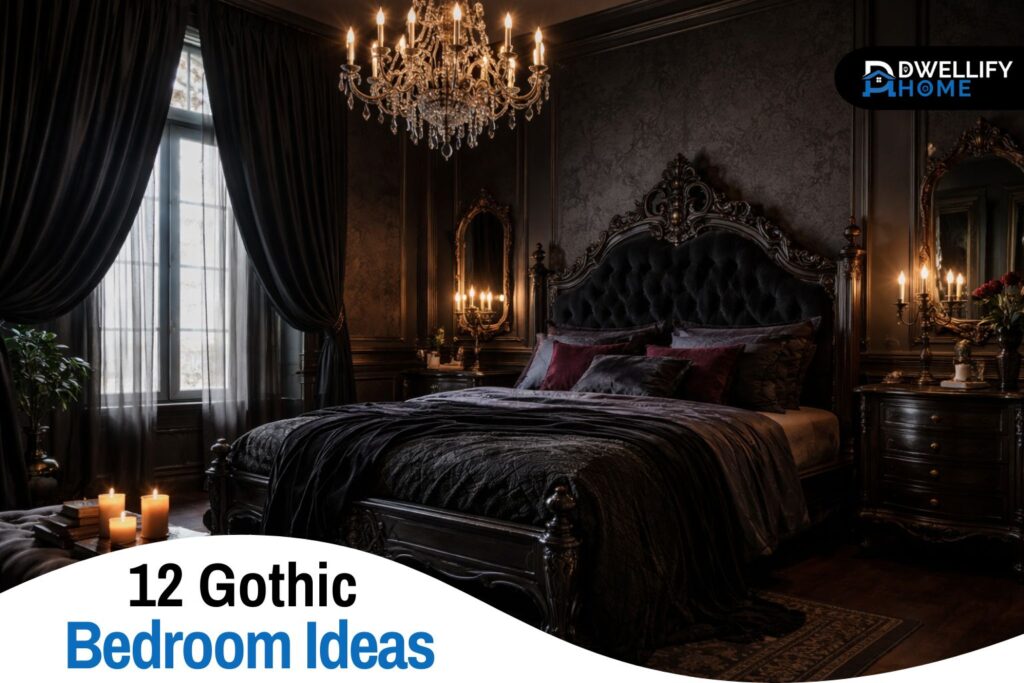
A well-done bedroom in this style never feels random. The rooms that work best have a clear sense of mood from the start: darker colors, richer textures, older-looking furniture, and details that feel chosen rather than piled on. That’s usually where people get it wrong. They add black bedding, a few candles, maybe a dramatic mirror, and expect the room to come together on its own. In practice, this look needs balance more than excess.
The good news is that you don’t need a huge budget or a full renovation to get there. A strong bed, the right wall treatment, warmer lighting, and a few thoughtful layers can change the entire feel of the room. The ideas below focus on choices that make a space feel moody, elegant, and livable at the same time.
Snippet-Ready Definition:
A gothic bedroom is a dark, dramatic interior style that uses deep colors, vintage furniture, rich textures, and moody lighting to create a romantic and atmospheric sleeping space.
Mission Statement:
Dwellify Home helps homeowners make practical, stylish, and informed décor decisions through clear guidance, thoughtful design ideas, and real-world home inspiration.
Key Elements of a Gothic Bedroom
- Deep color palettes like black, burgundy, charcoal, or dark green
- Ornate or vintage-inspired furniture
- Rich textures such as velvet, lace, and heavy drapes
- Dramatic lighting like chandeliers or candle-style lamps
- Decorative accents including mirrors, artwork, and antique details
1. Start With a Deep, Moody Color Palette
Color does most of the heavy lifting here. Black is the obvious choice, but it’s rarely the only one worth using. Charcoal, deep plum, oxblood, forest green, and dark navy often create a richer result because they give the room some depth instead of flattening everything into one dark block. In real homes, that matters. A bedroom still needs to feel restful, not harsh.
One practical approach is to choose one dominant dark shade and one supporting tone. For example, charcoal walls with burgundy accents feel softer than pure black and white. Deep green paired with dark wood can feel older and more grounded. This is usually a better route than mixing too many dramatic colors at once, which can make the room feel busy instead of atmospheric.
2. Make the Bed the Dramatic Focal Point
The bed should carry the room visually. In most cases, it’s the first thing your eye lands on, so this is where the strongest statement belongs. A carved wood frame, a wrought iron bed, or a tall upholstered headboard in velvet can do more for the room than several smaller decor pieces combined.
This is also where a lot of people overspend in the wrong place. They buy a full gothic bedroom set that looks heavy but doesn’t actually have much character. A better option is often one standout bed frame paired with simpler supporting pieces. That keeps the room from feeling too staged and gives you more flexibility with lamps, mirrors, and storage.
3. Use Gothic Wallpaper or a Statement Wall
Walls set the tone faster than accessories ever will. That’s why gothic bedroom wallpaper can make such a difference, especially if the pattern has some age and depth to it. Damask, dark florals, vintage-inspired stripes, and mural-style prints all work well because they bring in detail without forcing the room to rely on clutter.
Not every bedroom needs wallpaper on all four walls. In smaller rooms, one statement wall behind the bed usually works better. It gives you that layered, dramatic look without closing the room in too much. If wallpaper isn’t practical, panel molding, painted trim, or a deep matte wall color can create a similar effect with a cleaner finish.
4. Choose Furniture With Character
Furniture is one of the clearest differences between a room that feels thoughtfully designed and one that just looks dark. Gothic bedroom furniture usually has some sense of weight to it. That might mean carved wood, curved lines, antique brass hardware, or pieces that look collected over time rather than bought all at once.
The key is not to overfill the space. A dresser with detail, a pair of solid nightstands, or a vintage vanity will usually do more than trying to match every single piece. Bedrooms need breathing room. Too much ornate furniture in one space can quickly tip the room from elegant into crowded. It’s better to have three strong pieces than six average ones.
5. Layer Luxurious Textures for a Rich Look
Dark rooms can fall flat if everything has the same finish. Texture is what stops that from happening. Velvet, lace, satin, brocade, washed linen, faux fur, and heavier drapery all help the room feel layered and lived in. Even a simple black room feels more complete when the surfaces don’t all read the same way.
This is where bedding matters more than most people think. A room with plain dark sheets and no variation often feels unfinished. Add a velvet quilt, a few softer pillows, or long curtains with some weight, and the space starts to feel intentional. Texture also softens the mood, which is useful when you’re working with deeper colors and older-looking furniture.
6. Create Dramatic Lighting With Lamps and Chandeliers
Lighting can either support the mood or completely ruin it. Overhead cool-toned bulbs are one of the fastest ways to strip all atmosphere from a dark bedroom. Warmer, lower lighting works much better. A gothic bedroom lamp with a fabric shade, aged metal base, or candle-style silhouette can make the room feel calmer and more believable.
Layering is important here. One central chandelier or pendant can give the room presence, but bedside lighting is what makes it usable. Wall sconces, table lamps, or soft accent lighting near a mirror help build that evening mood without making the room too dim to live in. The goal isn’t darkness for its own sake. It’s controlled, comfortable shadow.
7. Add Ornate Mirrors to Expand the Space
Mirrors do more than reflect light. In this style, they also bring in shape, detail, and a little contrast. A gothic bedroom mirror often works best when it feels slightly aged or decorative, such as a black carved frame, antique gold finish, or baroque shape with softer edges.
Placement matters more than size. One well-placed mirror above a dresser or leaning near a corner can add depth without making the room feel overly formal. This is especially useful in smaller bedrooms, where darker walls can sometimes make the layout feel tighter than it is. A mirror helps break that up while still fitting the mood.
8. Decorate the Walls With Art and Gothic Decor
Wall decor should support the atmosphere, not compete with it. Framed portraits, dark floral prints, old botanical illustrations, tapestries, and sculptural pieces all fit naturally within gothic bedroom decor, but restraint is what makes them work. Too many pieces too close together can make the room feel themed instead of personal.
A good rule is to repeat shapes or finishes rather than repeating objects. For example, a mirror with a curved black frame, a lamp with aged brass, and art in darker wood frames will feel connected without looking too matched. That’s usually more convincing than filling every wall with obviously gothic symbols just because they fit the label.
9. Add a Statement Accent Piece
Every room benefits from one object that gives it identity. That might be a gothic bedroom chair in velvet, a carved bench at the end of the bed, or a small vanity corner with an old mirror and lamp. These pieces help the room feel finished because they create a second focal point beyond the bed.
This kind of detail is especially helpful in bedrooms that don’t have architectural features. In a plain box-shaped room, one accent piece can bring character where the room itself doesn’t offer much. It also keeps you from relying too heavily on small accessories, which often create clutter without adding much real impact.
10. Mix Gothic Style With Modern Comfort
A room can feel dark and dramatic without feeling stuck in another century. In fact, the most usable spaces usually mix older influences with modern comfort. A sleek mattress, simple blackout curtains, cleaner bedding, or one contemporary side table can keep the room grounded while the rest of the design carries the mood.
This is also where modern gothic and dark academia often overlap. You might use Victorian-inspired shapes and darker colors, but keep the layout simple and the room functional. That balance matters in everyday life. Bedrooms should still be easy to clean, easy to move around in, and comfortable to spend time in.
11. Adapt the Look for Small Bedrooms
Smaller rooms need a lighter touch. Dark walls can still work, but they tend to look better when the furniture is edited down and the vertical space is used well. Long curtains, a tall headboard, one mirror, and a focused color palette usually create more impact than trying to fit every idea into one room.
This is also the point where scale becomes important. Heavy furniture that looks beautiful in a large room can feel oversized in a smaller one. In those cases, it’s smarter to let one feature carry the mood, such as wallpaper behind the bed or a dramatic light fixture, and keep the rest of the room quieter.
12. Personalize the Room With Romantic Details
The finishing layer is what makes the room feel like yours. Candles, stacked books, dried flowers, vintage boxes, dark ceramics, and old frames can all help, but only when they’re used with some restraint. The strongest rooms usually have a personal rhythm to them. They don’t feel decorated from a checklist.
Look for details that add softness or story. A worn wood tray on the nightstand, deep-colored curtains, an old silver frame, or a single vase with dark blooms can say more than a shelf full of themed objects. That’s often the difference between a room that feels expressive and one that feels overworked.
Practical Tips for Creating a Balanced Gothic Bedroom
Before buying anything, decide what the room should feel like at night. That one question helps guide almost every choice after it. Some people want a romantic, velvet-heavy look. Others want something cleaner and moodier with less ornament. Once that mood is clear, it becomes much easier to choose furniture, color, and decor without going off track.
It also helps to build the room in layers. Start with the biggest decisions first: wall color, bed, lighting, curtains. Then add texture, mirrors, and smaller details. That order prevents one of the most common mistakes, which is buying decorative pieces too early and ending up with a room full of objects that don’t connect. Good rooms are usually built slowly, not all at once.
FAQs
What defines a gothic bedroom style?
A gothic bedroom style is defined by dark colors, vintage or ornate furniture, layered textures, and soft dramatic lighting. The goal is to create a romantic, moody atmosphere rather than a bright or minimalist space.
How do I make my bedroom more gothic?
Start with a darker color palette, add textured fabrics like velvet or lace, and choose furniture with vintage character. Small changes like moody lighting, decorative mirrors, and framed artwork can quickly shift the overall atmosphere.
What does Victorian Gothic look like?
Victorian Gothic interiors combine dark colors with elaborate furniture, carved wood details, and ornate decor. You’ll often see canopy beds, antique mirrors, patterned wallpaper, and heavy fabrics that create a dramatic but elegant look.
What exactly is gothic style?
Gothic style in interior design draws inspiration from historic European architecture and Victorian decor. It typically includes dramatic colors, detailed furniture, rich materials, and a romantic, atmospheric mood.
Can a gothic bedroom still feel comfortable and modern?
Yes. Many modern gothic bedrooms mix classic elements like dark colors and vintage decor with simple layouts and modern bedding. This keeps the space dramatic while still feeling comfortable and practical.
Conclusion
A gothic bedroom works best when the drama is controlled. Dark color, rich texture, older-looking furniture, and softer lighting all have a place, but the room still needs clarity and comfort underneath it. The most successful spaces don’t try to prove the style at every angle. They let a few strong choices carry the mood.
That’s what makes this look last. It isn’t about filling the room with dark things. It’s about shaping a space that feels calm, layered, and memorable every time you walk into it.
Disclaimer
The information provided on Dwellify Home is for general home décor guidance and inspiration. Design preferences and results may vary depending on individual spaces and personal style.

I’m Bilal, the founder of Dwellify Home. With 6 years of practical experience in home remodeling, interior design, and décor consulting, I help people transform their spaces with simple, effective, and affordable ideas. I specialize in offering real-world tips, step-by-step guides, and product recommendations that make home improvement easier and more enjoyable. My mission is to empower homeowners and renters to create functional, beautiful spaces—one thoughtful update at a time.