A small bedroom can feel restful and well-planned, or it can feel like every piece of furniture is working against you. The difference usually comes down to a few smart decisions made early. In rooms with limited square footage, layout matters more, storage needs to work harder, and even simple choices like curtain height or lamp size can change how the whole space feels.
Over the years, one pattern shows up again and again: people often try to fix a small bedroom by adding more organizers, more baskets, or more furniture. That usually makes the room feel tighter. A better approach is to shape the room around movement, light, and daily use first, then layer in storage and style with more control. That’s where the best small bedroom interior design ideas tend to work.
Snippet-Ready Definition:
Small bedroom interior design ideas are layout, storage, and decorating strategies that help compact bedrooms feel functional, comfortable, and visually open while making better use of limited space.
Mission Statement:
Dwellify Home helps homeowners create practical, comfortable, and thoughtfully designed living spaces through clear guidance and realistic home design ideas.
1. Start with a bedroom layout that keeps the room easy to move through
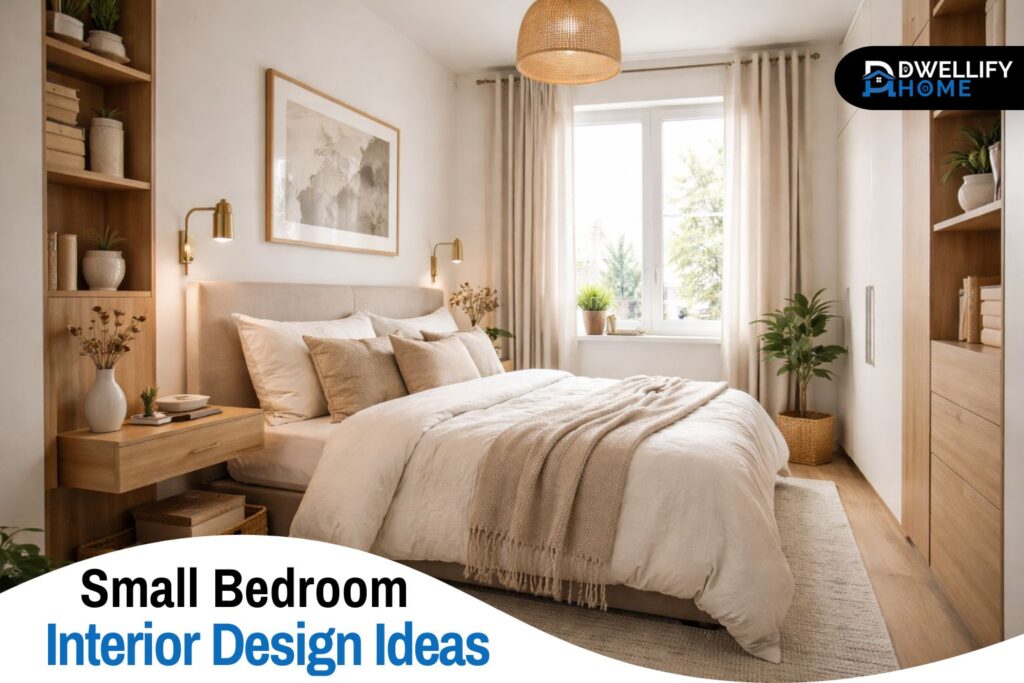
The bed should go in the spot that creates the clearest walking path, not always the wall that seems most obvious at first glance. In many small rooms, placing the bed in the center of the longest wall works well. In others, especially narrow rooms, shifting it slightly off-center or tucking one side closer to the wall gives you better movement and more usable floor space.
This is also where awkward areas can become useful instead of annoying. A shallow corner might be better for a slim dresser than a chair you’ll never use. An off-center window might mean one nightstand needs to be smaller than the other. Rooms rarely need perfect symmetry to feel balanced. In fact, forcing symmetry in a tight bedroom is one of the easiest ways to waste space.
2. Choose furniture that saves space and does more than one job
Large furniture with only one purpose is hard to justify in a small room. A storage bed, a narrow nightstand with drawers, or a compact dresser that can also hold a mirror often makes more sense than adding extra storage pieces later. In smaller homes, every item should earn its place.
This matters even more in adult bedrooms where the room often has to do more than just hold a bed. A bench with hidden storage, a slim desk that can double as a vanity, or a stool that works as both seating and a side table can solve everyday problems without crowding the room. This is especially useful in bedroom layout ideas for small rooms where there’s no space for separate zones.
3. Use vertical space to add storage without making the room feel crowded
Floor space disappears quickly, but wall space often goes underused. Tall wardrobes, wall-mounted shelves, and floor-to-ceiling storage can hold far more than wide, low furniture. They also keep the center of the room more open, which helps the bedroom feel less boxed in.
The key is to keep vertical storage visually clean. A tall open shelf stuffed with random items can feel heavier than a closed wardrobe. In small bedroom ideas for adults, I usually find that a mix works best: closed storage for practical items, and one or two open shelves for pieces that add warmth without making the room look busy.
4. Replace bulky bedside pieces with wall-mounted solutions
Traditional bedside setups can take up more room than people realize. A chunky nightstand paired with a wide lamp often eats into the walkway and makes the bed area feel cramped. Wall-mounted sconces or hanging pendant lights free up surface space right away and make the room feel more considered.
Floating shelves can work well in place of full-size nightstands, especially in very small bedroom ideas where every inch matters. They’re enough for a book, glasses, and a phone charger without adding visual weight. This is one of those details that seems small on paper but makes a noticeable difference in daily use.
5. Make natural light and window styling work harder
Window treatments can either help a small bedroom breathe or make it feel boxed in. Curtains hung higher and wider than the actual window frame usually make the wall look taller and the window feel larger. It’s a simple adjustment, but it changes the proportions of the room more than most people expect.
Light fabrics also help. Heavy curtains, dark linings, or busy patterns can make a compact room feel closed off, even during the day. That doesn’t mean everything has to be pale or plain, but the window area should feel light enough to let the room open up. In modern bedroom designs for small rooms, this is often what gives the space that cleaner, calmer look.
6. Use mirrors and reflective finishes to make a small bedroom feel bigger
Mirrors work best when they reflect light or extend the sense of space, not when they’re added just because someone says every small room needs one. A mirror opposite or near a window can brighten a room well. A mirrored wardrobe can also help in a tight bedroom where a full-length mirror would otherwise take up more room.
That said, too many reflective surfaces can make a bedroom feel restless rather than calm. Bedrooms need softness. One well-placed mirror usually does more than several scattered reflective pieces. This is especially important in cozy or modern bedroom designs for small rooms where the goal is openness without losing comfort.
7. Keep the color palette simple, soft, and visually balanced
A small bedroom doesn’t have to be all white, but it does benefit from a controlled palette. Light neutrals, warm beiges, soft grays, muted greens, and even deeper cocooning shades can all work well. What matters more is consistency. Sharp contrast and too many competing tones can break up the room visually and make it feel smaller.
Texture helps keep a simple palette from looking flat. Bedding, curtains, a rug, and upholstered elements can add depth without clutter. This works particularly well for small bedroom decorating ideas on a budget, because paint, textiles, and lighting often make a bigger difference than expensive furniture swaps.
8. Build storage into overlooked parts of the room
Small bedrooms usually have hidden storage opportunities that get ignored. Under-bed bins, the space above the headboard, alcoves, recessed niches, and even the top section of a wardrobe can hold more than people think. The goal is not to cram every surface with storage, but to use the less obvious areas more intelligently.
This becomes especially helpful in small room design for 1 person or small bedroom ideas IKEA-inspired setups, where compact solutions tend to work best when they blend into the room. A built-in shelf around the bed, a storage bench under the window, or hooks behind the door can solve practical problems without needing another full piece of furniture.
9. Decorate with fewer, better pieces to reduce visual clutter
One of the quickest ways to ruin a small bedroom is to decorate every empty spot. A room does not need to be filled to feel finished. It needs a few good pieces that suit the scale of the space. A well-sized rug, good bedding, one framed artwork, and a thoughtful light fixture usually do more than lots of small accessories spread around the room.
Negative space matters in compact rooms. Empty wall area, visible floor space, and clear surfaces give the eye a place to rest. This is one of the reasons small bedroom ideas for 2 adults can go wrong so easily. Two people often means twice the belongings, but the room still needs room to breathe.
10. Design the room around who uses it every day
A small room design for 1 person has different priorities than a room shared by two adults. One person may need a workspace, extra clothing storage, or a reading corner. Two adults may need equal access on both sides of the bed, more balanced storage, and a layout that doesn’t force one person to climb over the other every morning.
This is where real-life use should guide the design more than aesthetics. A beautiful room that doesn’t support daily habits will always feel frustrating. In small bedroom ideas for 2 adults, even a few inches of clear walkway on both sides of the bed can make the room feel much easier to live with.
11. Use a modern design direction that still feels warm and livable
Modern rooms often work well in small spaces because cleaner lines and simpler shapes reduce visual noise. A minimal bed frame, streamlined storage, and a restrained palette can make the room feel more open. But there’s a difference between clean and cold. A modern small bedroom still needs softness through bedding, texture, and lighting.
Japandi, soft contemporary, and warm minimalist styles tend to translate well in compact bedrooms because they focus on function, calm, and visual restraint. These styles also suit small bedroom interior design ideas because they naturally support better editing. You become more selective about what stays in the room, which usually improves the design.
12. Decorate a small bedroom on a budget without losing style
A smaller budget does not mean the room has to feel temporary or unfinished. Paint, lighting, curtains, bedding, and hardware can shift the feel of a bedroom without a full makeover. Even changing a bulky bedside lamp to a wall-mounted option or replacing mismatched storage with cleaner bins can make the room feel more intentional.
Budget-friendly updates work best when they solve visible problems. Start with what makes the room feel off right now. It may be poor lighting, too much clutter, or furniture that is too large. Fixing the biggest visual and functional issues first usually gives better results than buying lots of low-cost decor.
Key Benefits of Smart Small Bedroom Design
- Makes a small room feel more open and easier to move around
- Improves storage without overcrowding the space
- Helps furniture fit better within limited square footage
- Creates a calmer, more organized sleeping environment
- Allows style and comfort even in compact bedrooms
Expert tips for making a small bedroom look more open and intentional
Bed size is one of the biggest decisions in a small bedroom, and it’s where people often get stuck. A larger bed may sound more comfortable, but if it leaves almost no walkway, the whole room feels harder to use. In many cases, slightly reducing bed size improves the bedroom more than adding more storage ever will.
It also helps to pay attention to visual weight. Furniture with slimmer legs, open space underneath, and lighter profiles tends to feel less heavy. Built-ins can be useful, but only when they truly solve a layout problem. Freestanding pieces are often the better choice when flexibility matters or when the room may need to change later.
Small bedroom mistakes that waste space
Oversized furniture is the most common issue, followed closely by poor lighting and too much decor. A room with a large bed, deep dresser, thick curtains, and bulky lamps can feel crowded before anything personal is even added. In small spaces, proportions matter more than individual style choices.
Another common mistake is trying to organize clutter without reducing it first. More baskets, more drawers, and more containers can easily become part of the problem. A small bedroom works best when the room holds what you actually use and gives those things a clear place to go.
Small bedroom interior design ideas work best when they solve real problems, not just visual ones. A room should be easy to move through, easy to maintain, and comfortable at the end of the day. Once the layout, light, storage, and furniture are working together, the room usually starts to feel larger without needing dramatic changes. That’s what makes a small bedroom feel well designed rather than simply well decorated.
FAQs
What is the 3-5-7 rule in interior design?
The 3-5-7 rule refers to arranging decor items in odd-number groupings. Designers often use three, five, or seven objects together because odd numbers tend to look more balanced and visually interesting than even groupings.
What is the best way to layout a small bedroom?
Start by placing the bed where it allows the clearest walking path. Then position storage along walls rather than the center of the room. Keep pathways open and choose compact furniture that fits the room’s proportions.
What colors make a small bedroom look bigger?
Light neutrals, soft grays, warm whites, muted greens, and pale blues often help a room feel larger. These colors reflect light better and reduce visual contrast, which makes the space feel calmer and more open.
How to interior design a small room?
Focus on layout first, then add multifunctional furniture and vertical storage. Keep the color palette simple, allow natural light to spread through the room, and decorate with a few carefully chosen pieces rather than many small items.
Disclaimer
The information on Dwellify Home is intended for general home inspiration and guidance. Design choices may vary based on room size, layout, budget, and individual preferences.

I’m Bilal, the founder of Dwellify Home. With 6 years of practical experience in home remodeling, interior design, and décor consulting, I help people transform their spaces with simple, effective, and affordable ideas. I specialize in offering real-world tips, step-by-step guides, and product recommendations that make home improvement easier and more enjoyable. My mission is to empower homeowners and renters to create functional, beautiful spaces—one thoughtful update at a time.