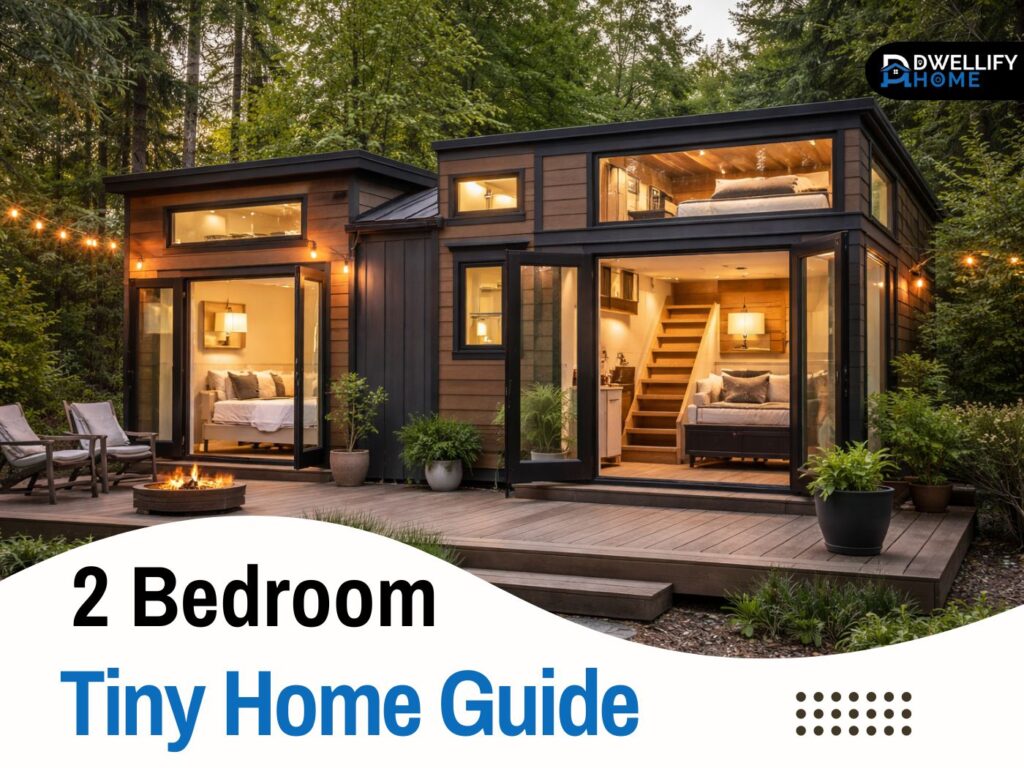
A two-bedroom tiny setup sounds simple on paper. In real life, it’s a balancing act between privacy, storage, and everyday comfort.
Here’s the thing. A tiny home can absolutely hold two bedrooms, but only if the layout is planned like a puzzle, not like a smaller version of a regular house. I’ve worked on many compact plans where the second bedroom saved a family’s sanity, and others where it became a cramped storage room with a bed.
In this guide, I’ll walk you through what works, what doesn’t, and how to choose a layout that won’t feel tight after the first few months.
Snippet-ready definition:
A 2 bedroom tiny home is a compact house that fits two separate sleeping spaces, usually by using a loft, a flexible room, or a split layout, while relying on smart storage and efficient circulation to stay comfortable.
Mission Statement:
At Dwellify Home, our mission is to help you choose and plan a tiny home that feels practical in real life, not just attractive in photos, with layout-first guidance you can trust.
What “2 Bedroom Tiny Home” Really Means
When clients say they want two bedrooms in a tiny home, they usually mean one of three things:
- Two private sleeping spaces for adults and kids
- A main bedroom plus a guest room that can double as an office
- A rental-friendly setup where sleeping areas feel separate and intentional
The biggest misunderstanding is assuming “two bedrooms” automatically means two full rooms with closets and space to walk around. In compact design, the second bedroom often becomes a flexible room, a loft, or a “sleeping zone” that has to earn its space.
From real-world planning, a comfortable two-bedroom tiny layout often starts feeling workable around 550 to 900 square feet, depending on ceiling height, storage, and whether one bedroom is a loft. You can do it smaller, but you’ll need sharper trade-offs and a stronger daily routine.
Quick Guide Table: Choose the Right 2-Bed Tiny Setup
| Option | Best for | Typical trade-off | Quick tip |
| On wheels (THOW) | Flexibility, changing locations | Tighter layouts, loft access | Prioritize safe stairs and real loft headroom |
| On foundation | Long-term comfort, quieter living | Less mobility | Plan a true closet wall so bedrooms stay usable |
| Modular or park model | Roomier feel without going “big” | Delivery and site setup details | Confirm driveway access and utility hook-ups early |
| 2 bedroom tiny house kits | DIY-minded owners with time | Often excludes interior and site work | Ask for a line-by-line “what’s included” list |
| 2 bedroom 2 bath tiny house | Guests, rentals, privacy needs | Bathrooms can steal storage | Look for back-to-back plumbing layouts |
Quick Buying Checklist (short and practical)
Use this when comparing 2 bedroom tiny homes for sale:
- Bedroom usability: Can you actually change clothes and store items, or is it just a mattress spot?
- Storage plan: Where do coats, shoes, pantry items, and laundry live?
- Moisture control: Bathroom fan vented outside, kitchen ventilation, no window condensation signs
- Stairs and loft access: Safe, comfortable, not ladder-only if you plan to live full-time
- Paperwork: Specs, material list, upgrades, and any service history (especially for used units)
2 Bedroom Tiny Home Floor Plans That Work in Real Life
I’ll be honest. The floor plan matters more than finishes, furniture, or even square footage. A great layout in 650 square feet can feel calmer than a messy layout in 900.
Most common layouts that live well
In my experience, these are the most livable patterns:
1) Main-floor bedroom plus loft bedroom
This is the classic approach. One bedroom stays on the ground floor for easy access, while the second bedroom is a loft. It works well for couples with a child, or for anyone who wants guests to have their own space.
The key is headroom and access. If the loft feels like a crawlspace, people stop using it. A “stand-up landing” or a loft with better clearance is a comfort upgrade you’ll appreciate every day.
2) Dual loft layout
This layout gives two loft bedrooms, with the main living and kitchen below. It’s popular in many 2 bedroom tiny home floor plans, especially for homes on trailers.
It can work, but only when the stairs are safe and storage isn’t sacrificed. I’ve seen dual loft plans that look great, then fall apart because there’s nowhere to put clothes, bags, or pantry items.
3) Split-bedroom layout on a slightly larger footprint
This is more common in foundation-based tiny homes or small modular builds. Bedrooms sit on opposite sides with a living zone between them. Privacy is much better, and sound separation improves.
If you’re planning long-term living, this is often the most “normal-feeling” option.
Layout mistakes that make tiny homes feel cramped
Guess what causes the most regret? Not the size, but the flow.
These mistakes come up again and again:
- A bedroom door that opens right into the kitchen or living room
- A bathroom placed so it blocks circulation
- Tight hallways that steal space without giving privacy
- No real storage wall, which turns the second bedroom into a closet
A two-bedroom tiny plan needs at least one “storage backbone” wall or storage zone. Without it, clutter spreads fast, and small spaces punish clutter.
Small upgrades that change everything
On top of that, a few layout tweaks can make a compact home feel bigger without adding much cost.
- A bump-out in the living area: Even a small bump-out can create breathing room for seating and circulation.
- Wider stairs with drawers: A storage staircase beats a ladder every time for long-term living.
- Pocket doors: They save swing space and reduce awkward furniture placement.
If you’re comparing modern 2 bedroom tiny house plans, look for these details. They’re often the difference between “cute” and “livable.”
2 Bedroom Tiny House on Wheels vs. Foundation vs. Modular
This choice affects everything: cost, comfort, placement options, and even how your home feels day to day.
On wheels: mobility and real constraints
A 2 bedroom tiny house on wheels is essentially a home designed around transport limits. That means weight, width, and structural bracing matter.
The benefit is flexibility. You can relocate if your job changes or if you’re placing it temporarily on family land. But the trade-off is tighter space planning and more compromises in stair design, loft headroom, and storage.
One more thing people don’t think about: daily movement. In many on-wheels layouts, the second bedroom is a loft. If someone has knee issues, or if you’re up at night with a child, that can become frustrating.
On foundation: comfort and long-term stability
If you want a small home that feels steady, quiet, and easy to maintain, a foundation build makes life simpler.
You can use better insulation options, larger windows, and slightly more generous room proportions. And you’re not designing around a trailer, which opens up more low cost 2 bedroom tiny house plans that still feel comfortable.
It’s usually less “move-ready,” but more “live-ready.”
Modular, park model, or ADU-style builds
Modular and park model tiny homes often land in the sweet spot for two bedrooms. They can offer more ceiling height, a better bathroom layout, and more standard room proportions.
If you’re working within a property setup, an ADU-style approach can be ideal. Just make sure you understand local rules and utility connections before you commit to a plan.
Space Planning That Makes Two Bedrooms Feel Bigger
The best part is this: you don’t need extra square footage to feel comfortable. You need smarter space planning.
Here are the upgrades that consistently improve daily living:
- A real closet strategy: It can be shallow, but it should be planned.
- Storage stairs instead of ladders: Safer, easier, and always useful.
- Bedroom zones that can close off: Even a sliding door can create privacy and better sleep.
- A “drop zone” near the entrance: Hooks, a bench, and a small cabinet prevent chaos.
If you want a second bedroom that stays a bedroom, don’t design it as your only storage solution. Give storage its own place, so the room can stay functional.
Modern 2 Bedroom Tiny House Plans: What to Look For Beyond Photos
Modern styling is attractive, but design should be more than a look.
Good modern 2 bedroom tiny house plans usually share a few practical traits:
- Simple, clean layouts with fewer dead corners
- Larger windows placed for light and privacy
- Built-in storage that replaces bulky furniture
- A kitchen that feels usable, not decorative
Here’s a real example from my planning work: a couple wanted a sleek modern plan with a wall of glass. It looked amazing, but it faced the street. We adjusted window height and added strategic clerestory windows. They kept the modern feel and gained privacy.
Modern should make living easier, not more exposed or less functional.
Low Cost 2 Bedroom Tiny House Plans: How to Keep the Budget Down
If budget matters, you’ll want to focus on structure first, finishes second.
Here’s the cost-saving design checklist I use in consultations:
- Simple footprint: rectangles are cheaper than complicated shapes
- Simple roofline: fewer valleys and transitions reduces labor and leak risk
- Shared plumbing wall: keep kitchen, bath, and laundry close
- Standard window sizes: custom windows add up fast
- Fewer exterior doors: each door costs more than you think
Now, where can cutting costs backfire? Ventilation, insulation, and bathroom quality.
A tiny home is a moisture and temperature management project. If the bathroom fan is weak or the insulation is thin, you’ll feel it. And you’ll pay for it later.
2 Bedroom Tiny Home Price: Real Ranges and What Changes the Number
Let’s talk numbers in a realistic way.
The cost of a two-bedroom tiny setup depends heavily on how it’s built, where it’s placed, and what’s included. In many markets, tiny homes can cost more per square foot than larger homes because the work is more detailed, and built-ins often replace cheaper “empty space.”
A practical way to think about 2 bedroom tiny home price is in layers:
- The home itself (shell, framing, systems, interior finish)
- Placement costs (foundation or trailer setup)
- Utilities (water, power, sewer or septic, internet)
- Permits and site prep (varies widely)
Build vs buy vs kit
A custom build offers the best layout, but it can cost more. Buying an existing unit can save time, but you need to inspect carefully.
A kit can be a smart move for the right person. But you must understand what the kit includes. Many 2 bedroom tiny house kits cover the structure, while you handle interior finishing, utilities, and site prep.
Hidden costs people forget
Here are the common “surprise” costs:
- Delivery and setup, especially for larger units
- Utility trenching and hookups
- Grading and drainage work
- Steps, decks, and skirting
- Heating and cooling upgrades
Monthly and ongoing costs
Maintenance is usually manageable, but tiny homes still need care. Seals, roofing details, ventilation, and water management matter more because everything is tighter.
If you keep your systems accessible and don’t ignore moisture, ownership tends to be smooth.
2 Bedroom Tiny House Kits: Worth It or Risky?
Kits can be fantastic, or they can be a headache. It depends on your timeline, skills, and what “kit” really means in the offer.
What’s usually included vs what’s not
Many kits include framing, panels, or a pre-cut shell package. Some include windows and doors, but not all.
Often not included:
- Plumbing and electrical labor
- Interior finishes
- Appliances
- Site prep and foundation or trailer
- Permits and inspections
Questions to ask before you pay
Here are the questions I advise clients to ask:
- What exactly is included in the price, line by line?
- Are windows, doors, and roofing included?
- What is the delivery timeline and cost?
- Is there a warranty on materials or structural components?
- Do you provide assembly guidance or support?
Who kits are best for
Kits work best for people who:
- Have a reliable contractor or strong DIY skills
- Can manage scheduling and inspections
- Want a simpler structure and will customize finishes slowly
If you need move-in-ready living fast, a kit can feel stressful.
2 Bedroom Tiny Homes for Sale: How to Compare Listings Like a Pro
Buying a finished unit can be a smart move, especially if you want to avoid decision fatigue.
But you need to evaluate more than photos.
New vs used vs ready-to-ship
New builds are cleaner and often come with warranties. Used units can be a bargain, but you must inspect closely for moisture issues, wear on stairs, and any DIY wiring or plumbing shortcuts.
Ready-to-ship models are convenient, but upgrades can inflate the final number quickly. It helps to compare what’s included, not just the starting price.
Quick walk-through checklist
When you view a unit, use this checklist:
- Does the second bedroom feel usable, or does it feel like storage?
- Is there enough closet space, or will clothes end up in bins?
- Are there signs of condensation or soft spots near windows?
- Is the bathroom fan strong and properly vented outside?
- Do stairs feel safe and comfortable?
Documents to request
Ask for:
- Basic specs (square footage, trailer or foundation details)
- Materials list if available
- Upgrade list
- Any service or repair records
That’s how you avoid surprises.
2 Bedroom 2 Bath Tiny House for Sale: When It’s Worth It
A two-bedroom, two-bath layout sounds like the dream. And in some cases, it is.
It’s worth it when:
- You host guests often
- You have a teen or roommate who needs privacy
- You plan to rent it short-term and want smoother guest experience
But here’s the trade-off. A second bathroom steals space from storage and living area unless the plan is larger or very efficient.
The best two-bath layouts usually stack plumbing or place bathrooms back-to-back. That keeps cost and complexity under control while preserving usable space.
Where You Can Put a Two-Bedroom Tiny Home: Legal and Practical Reality Check
Placement rules are where many projects stall. It’s not exciting, but it’s essential.
Before you commit to a plan or purchase, confirm:
- Whether the home is allowed on the property type
- Whether it needs to be on a permanent foundation
- Utility connection requirements
- Minimum size rules if they apply locally
Then think about the practical side:
- Can a delivery truck access the site?
- Where will water and sewer connect?
- Do you need a septic system, and is the soil suitable?
- How will drainage work during heavy rain?
This step saves money and stress.
Comfort and Durability in a Tiny Footprint
Comfort in a small home comes from details, not luxury.
Ventilation matters because small spaces trap moisture fast. A strong bathroom fan vented outdoors is non-negotiable. Same for kitchen ventilation if you cook often.
Sound and privacy are also big. If one bedroom opens into the living room, sleep gets disrupted. Even simple upgrades like a solid door, soft-close hardware, and strategic insulation can make the home feel calmer.
Heating and cooling should match your climate. I’ve seen tiny homes with oversized heaters that swing temperatures wildly. A properly sized system gives steady comfort, and that makes the space feel more livable.
Real-Life Tips From People Living With Two Bedrooms in a Tiny Layout
In real homes, it’s the daily habits that make a tiny space feel smooth.
One family I worked with used their second bedroom as a kid’s room during the week and a guest room on weekends. The trick was built-in storage, a daybed, and a clear rule: nothing gets stored under the bed unless it’s seasonal.
Here are the habits that help long term:
- Keep a one-in, one-out rule for clothing
- Use vertical storage and labeled bins
- Create a weekly reset routine, even if it’s 20 minutes
- Designate one small “clutter catch” spot, not five
It sounds simple, but it works.
Resale and Long-Term Value: Don’t Skip This
Resale comes down to livability and trust.
Homes that resell better usually have:
- A layout that feels practical, not gimmicky
- Solid moisture control and ventilation
- Good storage planning
- Safe stairs and usable loft access
On wheels can have a broader buyer pool, but condition matters a lot. Foundation builds often appeal to buyers who want stability and less transport complexity.
If you want long-term value, focus on build quality and a layout that makes sense for daily life. Trendy finishes don’t matter as much as comfort.
FAQs
1) How much would a two-bedroom tiny home cost?
It depends on whether you’re buying new, buying used, building, or using kits. The biggest cost drivers are the build quality, trailer vs foundation setup, insulation and HVAC, delivery, and utility hookups (water, power, sewer or septic).
2) Do they make 2-bedroom tiny homes?
Yes. Two-bedroom layouts are common, especially as “main-floor bedroom + loft” or “dual loft” designs, and also in larger foundation or modular models where rooms can be more private.
3) Does Pennsylvania allow tiny homes?
Often yes, but it’s not one simple statewide yes or no. Rules vary by municipality and how the tiny home is classified (foundation home, ADU, RV, park model). Pennsylvania uses statewide building codes, but zoning and placement rules are usually local, so you must check the specific township or city.
4) Is it cheaper to buy or build a tiny house?
Buying can be cheaper and faster if you find a well-built unit with good documentation. Building can be better value if you need a specific layout, but custom work and built-ins add up. Kits can reduce some costs, but many kits do not include interior finish and site work, which can be a major part of the total.
5) What’s the most livable floor plan for two bedrooms?
For long-term comfort, a main-floor bedroom plus a loft bedroom is often the easiest balance of privacy and space. If you want more privacy, a split-bedroom layout works best, but it usually needs a larger footprint or a foundation-based plan.
Conclusion
A two-bedroom tiny setup can be a smart, comfortable choice when the plan is honest about real life. The goal isn’t to cram in rooms. It’s to create two sleeping spaces that feel usable, private enough, and supported by storage and good flow.
If you’re deciding between plans, focus on three things: layout circulation, storage strategy, and bedroom usability. Those are the details that determine whether you’ll love the home after the first season, not just the first weekend.
And one last practical tip from experience: confirm where you’ll place it before you fall in love with a floor plan. When placement, utilities, and layout align, a two-bedroom tiny home stops being a concept and starts being a truly livable home.
Disclaimer:
This content is for general educational purposes and reflects design and planning experience, not legal or financial advice. Building codes, zoning rules, and costs vary by location, so confirm details with your local building and planning departments before making decisions.

I’m Bilal, the founder of Dwellify Home. With 6 years of practical experience in home remodeling, interior design, and décor consulting, I help people transform their spaces with simple, effective, and affordable ideas. I specialize in offering real-world tips, step-by-step guides, and product recommendations that make home improvement easier and more enjoyable. My mission is to empower homeowners and renters to create functional, beautiful spaces—one thoughtful update at a time.