
If you’ve ever sat up in bed and felt your pillows slide into the gap, you already know how annoying that space behind the mattress can be. It’s not just about losing your phone or remote back there. Over time, it can mess with how supported your upper back feels, especially if you read or watch TV in bed.
A wedge pillow headboard is one of those simple bedding add-ons that can make a bed feel more finished and more comfortable. I’ve tested many of them over the years in real daily use, and when you pick the right style and size, it can fix the gap problem and give you a steadier place to lean.
Snippet-ready definition:
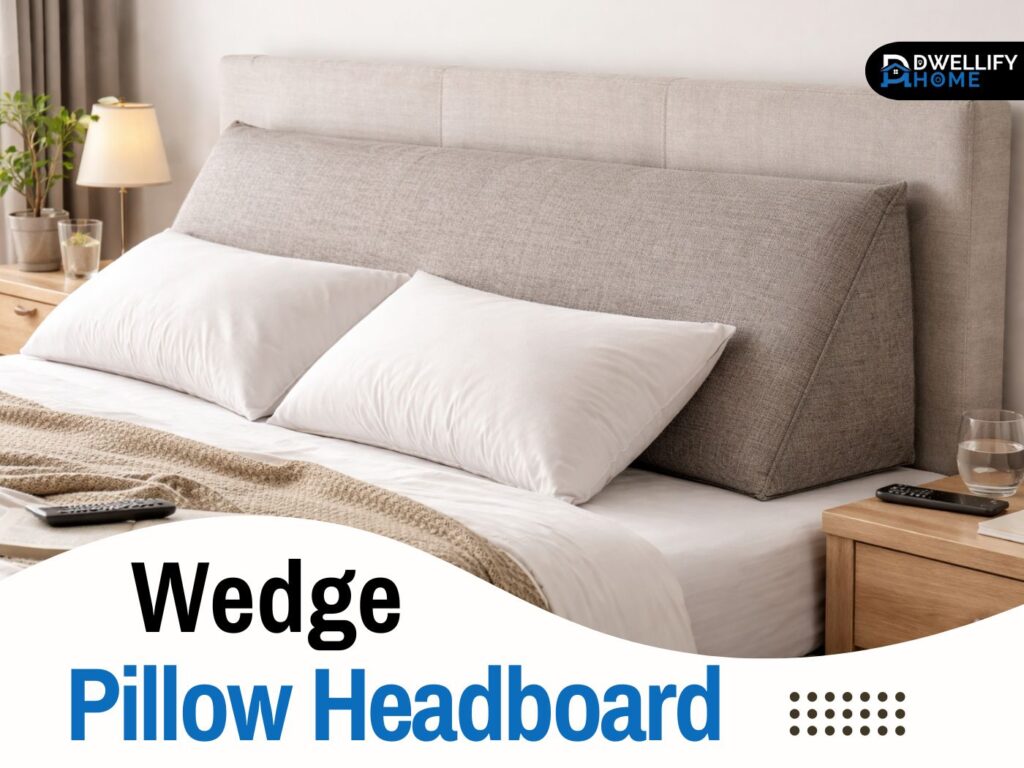
A wedge pillow headboard is a long, angled cushion that sits between your mattress and headboard or wall to block the gap, stop items from falling, and add a soft surface to lean on.
Mission Statement:
Dwellify Home helps you create a calmer, more comfortable home through practical guidance you can trust, with real-life tips that make everyday spaces feel better to live in.
What a wedge pillow headboard is (and how it’s different from other “bed wedges”)
Think of it as a long cushion designed to sit where a headboard meets the mattress. Most are shaped to fill the empty space behind the bed, while also acting like a soft back support. The biggest difference from a regular sleeping wedge is the shape and purpose. A sleeping wedge usually supports your torso at an incline. This one is meant to live at the top of the bed as a barrier and a soft “headboard feel.”
In real homes, people use it in two main ways. One type is a headboard gap pillow that blocks the drop zone so nothing slips behind the bed. The other type leans more toward a headboard pillow wedge, giving you a cushioned surface to sit against while you read, work on a laptop, or relax.
Quick Guide Table (comparison + buying help)
| What you need | Best pick | Why it works | Watch-outs |
| Stop pillows, phone, remote from falling | Wedge pillow headboard gap filler | Fills the space behind the mattress | Must match gap depth so it doesn’t push pillows forward |
| Lounge, read, watch TV in bed | Triangular wedge pillow headboard | Better back support and a “soft headboard” feel | Too-soft fill can flatten if you lean nightly |
| Small room, rental, dorm | Wedge pillow headboard dorm | No drilling, easy to remove and move | Can slide on slick sheets unless you anchor it |
| King bed coverage | Wedge pillow headboard king | Full-width coverage reduces side gaps | Shorter ones drift over time |
| Most common home setup | Queen wedge pillow headboard | Easier fit and many options | Always confirm exact width in inches |
| Full bed | Headboard pillow wedge full | Good coverage without overhang | Some “full” products run narrow |
| Shopping online | Wedge pillow headboard Amazon | More size and feature options | Verify dimensions, cover care, and returns |
Simple step-by-step: How to choose the right one (in 3 minutes)
- Measure bed width: Twin, Full, Queen, or King.
- Measure the gap depth: Check the widest point behind the mattress.
- Pick the style:
- For the gap problem: choose a headboard gap filler style.
- For leaning support: choose a triangular headboard wedge style.
- Check the cover: Removable and washable makes life easier.
- Plan stability: If your sheets are slippery, add a thin non-slip pad under it.
Who should buy one (and who shouldn’t)
This is a great option if you spend time sitting up in bed and you want the top of your bed to feel more stable. It’s also helpful if you rent, live in a dorm, or just don’t want to drill into the wall. A wedge pillow headboard dorm setup is common because it creates structure without changing the furniture.
On the other hand, it’s not the best fit for every bed. If your gap is unusually deep or your mattress slides a lot because of a slick frame, you may need extra anchoring tricks. And if you want a firm, upright headboard to support strong posture for long hours, a traditional headboard or a wall-mounted panel may serve you better.
What problems it solves (search intent coverage)
The most obvious benefit is gap control. A wedge pillow headboard gap filler keeps pillows, blankets, chargers, phones, and remotes from disappearing behind the bed. If you’ve ever had to pull the bed out from the wall just to rescue something, you’ll appreciate how much hassle it saves.
The second benefit is comfort during sitting. When the wedge has the right firmness, it spreads pressure across your upper back instead of letting you sink into a pile of sliding pillows. That can feel steadier during a 30 to 60 minute reading session, or while watching a show with your shoulders relaxed.
Measure first (the 60-second sizing method)
Before you pick a style, measure two things. First, the width of your bed. This is where sizes like twin wedge pillow headboard, headboard pillow wedge full, queen wedge pillow headboard, and wedge pillow headboard king matter. A wedge that is too short leaves a gap on the sides and those side gaps still swallow pillows.
Second, measure the depth of the space behind your mattress. Don’t guess. Use a tape measure and check the widest point, because some gaps vary depending on the bed frame and how the mattress sits. If you’re between sizes, it’s usually safer to choose a wedge designed for a slightly larger gap, as long as it doesn’t push your sleeping pillows too far forward.
Also think about height. A taller wedge can look more like a soft headboard, but it can also change how your regular pillows stack. If you like sleeping with one thin pillow, a very tall wedge might feel like it crowds your head space.
Choosing the right wedge pillow headboard (expert checklist)
When I test these, I look at a few practical details that decide whether you’ll love it or end up moving it to the guest room.
Size match matters most
If you have a queen bed, stick with a true queen wedge pillow headboard rather than trying to stretch a full size. For king beds, go with wedge pillow headboard king, because a shorter piece tends to drift and create side gaps over time.
Fill and firmness
Foam wedges usually hold shape better than very soft fiberfill. High-density foam is more stable and tends to keep the gap closed day after day. Softer fills feel cozy but may compress, especially if you lean on them nightly. If you sit up a lot, a firmer wedge is usually more supportive for the mid-back, and it helps keep your pillows from sinking behind it.
Cover and cleaning
Look for a removable, washable cover. In real use, these collect skin oils, hair products, and dust. A cover you can unzip and wash keeps it feeling fresh and makes it easier to live with long-term.
Grip and stability
A non-slip base can help, but it’s not magic. If your mattress shifts easily, you’ll still want to use a few setup tricks from the installation section below.
Useful extras
Pockets sound small, but they’re genuinely handy for glasses and remotes. Just don’t buy a wedge only for pockets if the foam quality is weak.
Style options (so it looks like a real headboard, not a random cushion)
This is where people often get picky, and I get it. Your bed is a big part of the room visually. If you want it to look more like a headboard, a triangular wedge pillow headboard style is usually the cleanest. The angled face gives the bed a finished look, and it’s comfortable to lean on.
Tufted or sectioned designs can mimic an upholstered headboard. They’re nice for bedrooms where you want a softer, layered look. The trade-off is that deeply tufted styles can trap dust in the seams, so removable covers matter even more.
Fabric matters too. A textured fabric hides everyday wear better than slick microfiber. If you have pets, a tighter weave is easier to brush clean. If you live somewhere warm, breathable covers feel less sticky during long lounging sessions.
Best setups by room type
In dorms and rentals, this pillow can do double duty. A wedge pillow headboard dorm setup gives you a soft backrest for studying and a barrier that keeps bedding from dropping behind the bed. It can also soften the look of a plain metal frame.
For loft beds, daybeds, and guest beds, the biggest win is flexibility. You can remove it quickly when changing sheets, and you can move it to another bed without tools. In small bedrooms, it can replace bulky headboard furniture that takes visual space, while still giving you that “finished bed” feel.
How to install it so it doesn’t slide (simple fixes that actually work)
A lot of complaints about headboard gap pillows come down to setup, not the product itself. Here are the real fixes I use.
Start by pushing the mattress into its final position and then placing the wedge firmly into the gap. If you place the wedge first and then move the mattress, it often ends up crooked and drifts.
If it still slides, try one of these:
- Put a thin strip of non-slip rug pad under the wedge. It grips the sheet without feeling bulky.
- Use a tightly fitted sheet and pull it snug so it adds friction across the top.
- If your bed frame allows it, reduce the gap by moving the headboard closer to the mattress.
One comfort tip that helps immediately is pillow stacking. If the wedge is tall, stack your sleeping pillows slightly higher, so your head isn’t pushed forward. That small adjustment makes a big difference for neck comfort.
Wedge vs “husband” backrest pillow vs DIY gap filler (honest comparison)
A wedge is best when you want a clean, stable barrier across the entire width of the bed. It keeps the gap closed, supports pillows, and looks tidy. If you spend time sitting up, a firmer wedge often keeps your upper back steadier than a loose stack of pillows.
A backrest pillow with arms can feel cozier for lounging, but it doesn’t solve the full-width gap problem. It can also shift more easily when you move. For someone who reads in bed occasionally, it can be enough. For daily use, I usually see better consistency with a proper headboard wedge.
DIY options can work if you’re on a budget. A body pillow can block the gap, and a foam cut-to-fit piece can do the job too. The downside is that DIY fills often look messier, and they usually slide more unless you secure them.
Where to buy (and how to shop smart)
You’ll see a lot of options labeled wedge pillow headboard Amazon, along with listings on Wayfair and Walmart. The biggest mistake is buying without checking the sizing chart and gap range. Don’t rely on product photos alone, they can be misleading.
Here’s what I check before buying:
- Exact width for your bed size, not just “fits queen”
- Gap depth range in inches
- Whether the cover is removable and washable
- Foam type and return policy
- Real customer photos that show it on a made bed
If a listing is vague about dimensions, that’s a red flag. A good product page should make sizing and care instructions easy to find.
Care, hygiene, and safety
Treat it like any pillow you use often. Wash the cover regularly, especially if you sit against it with bare arms or if you eat in bed. If the foam insert isn’t washable, let it air out every so often to keep it fresh.
Keep an eye on moisture if your bed is against an exterior wall. In humid rooms, any fabric wedge can trap warmth. Leaving a little airflow now and then helps.
For kids and pets, the main concern is slipping and chewing. If the wedge shifts, it can create an uneven surface near the top of the bed. A simple non-slip pad solves most of that. If a pet likes to chew corners, choose a tighter weave cover and keep it clean so it doesn’t become a target.
FAQ
1) What are the negatives of a wedge pillow?
The common downsides are slipping, pushing your sleeping pillows forward, and flattening over time if the fill is too soft. Some also trap heat if the cover fabric isn’t breathable.
2) Is it healthy to sleep with a wedge pillow?
It can be, depending on your body and how you use it. Many people do well with slight elevation, but if it changes your neck angle or makes you slide down, it can cause discomfort. Comfort and alignment matter more than the idea of “elevation.”
3) Is a wedge pillow good for your neck?
It can be supportive when it keeps your head and upper back in a neutral position, especially when sitting up. But if it forces your chin forward or makes your pillow stack too high, it may strain your neck.
4) Do you still use a pillow with a wedge pillow?
Usually, yes. Most people still use a regular sleeping pillow on top. If the wedge is tall, a thinner pillow often feels better so your head isn’t pushed forward.
5) How do I keep a headboard wedge pillow from sliding?
Use a tight fitted sheet, push the mattress into final position first, and add a thin non-slip pad strip under the wedge if needed. These three fixes solve most sliding issues.
Conclusion
A wedge pillow headboard is worth it when you want two things at once: a cleaner top-of-bed setup and a more stable place to lean. The best results come from measuring your bed width and gap depth first, then choosing the right firmness so it supports daily use without collapsing.
If you remember one thing, make it this: size and stability matter more than fancy features. Get the right size for your bed, use a simple anti-slip setup if needed, and you’ll end up with a bed that feels calmer to use every day.
Disclaimer:
This article is for general comfort and home-guidance purposes only. It isn’t medical advice. If you have ongoing pain, reflux, breathing issues, or a diagnosed condition, check with a qualified healthcare professional before changing your sleep setup.

I’m Bilal Hassan, the founder of Dwellify Home. With 6 years of practical experience in home remodeling, interior design, and décor consulting, I help people transform their spaces with simple, effective, and affordable ideas. I specialize in offering real-world tips, step-by-step guides, and product recommendations that make home improvement easier and more enjoyable. My mission is to empower homeowners and renters to create functional, beautiful spaces—one thoughtful update at a time.