If you’re standing in a 2000s Tuscan house right now, you can probably feel what the original builder was going for. Warmth. Drama. A little bit of villa life, even if you’re nowhere near Italy.
I’ve worked on a lot of these homes over the last 15 plus years, from small refreshes to full renovations. The biggest mistake I see is treating the style like it’s either all bad or all good. In reality, some parts were well-intended and still work beautifully, while other choices didn’t age as gracefully.
In this guide, I’ll walk you through what defines the style, what usually feels dated, and how to update it without turning your home into something it never wanted to be.
Snippet-ready definition:
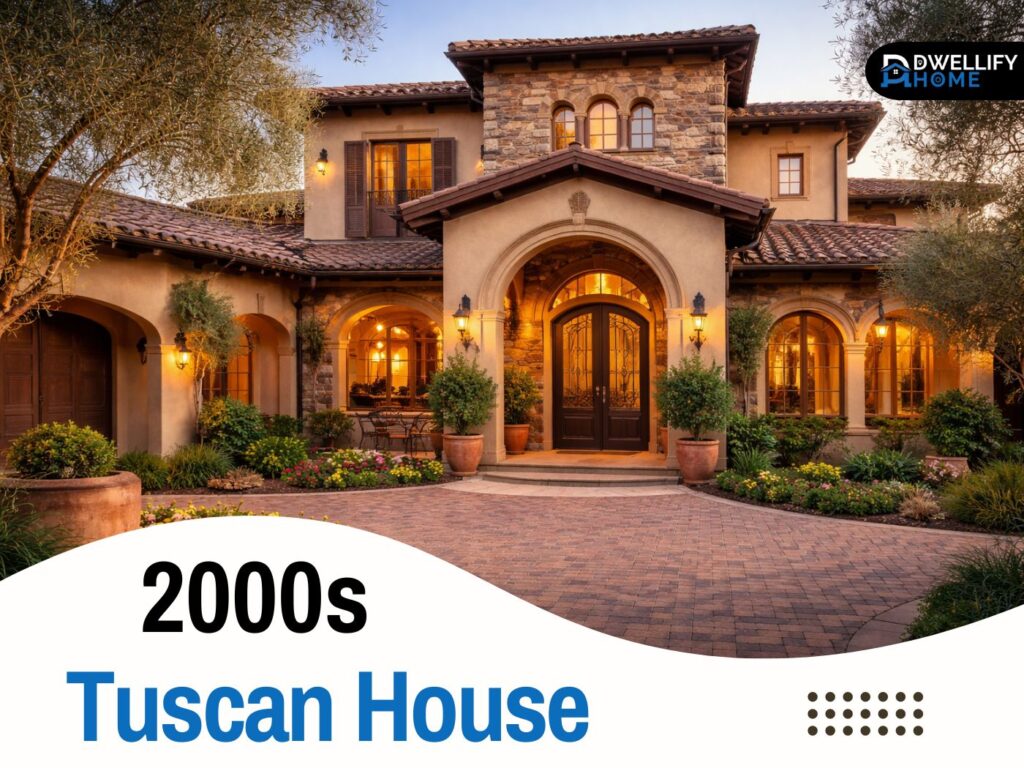
A 2000s Tuscan house is a Tuscan and Mediterranean-inspired home popular in the early 2000s, known for stucco and stone exteriors, arches, warm earthy interiors, and a grand, villa-like feel.
Mission Statement:
At Dwellify Home, our mission is to help homeowners understand the real design DNA of their houses, so they can renovate with confidence, keep what’s worth keeping, and update what truly improves daily living.
What Is a 2000s Tuscan House?
A 2000s Tuscan house is an American take on Tuscan and broader Mediterranean-inspired architecture. It grew popular during the Tuscan Revival era, when homeowners wanted old-world charm paired with modern comfort, bigger rooms, and a more grand “arrival” experience.
You’ll usually see a mix of romantic details like arches and textured walls, paired with very 2000s priorities like open family spaces and oversized kitchens. It’s not meant to be historically accurate Tuscan architecture. It’s more like a design story built around warmth, texture, and a sense of luxury.
Quick Spot It Checklist
If several of these show up, you’re likely in a 2000s Tuscan style home:
- Stucco exterior with stone accents
- Arched doors, windows, or openings inside
- Wrought iron railings or light fixtures
- Warm, earthy paint colors and dark wood
- Textured walls, sometimes faux plaster finishes
- A big, central kitchen meant for entertaining
- Heavy trim, columns, or decorative niches
Quick Guide Table: Spot it, keep it, update it
| Area | Classic 2000s Tuscan cues | Usually worth keeping | Best update that doesn’t erase character |
| Exterior | Stucco, stone accents, tile roof, arched openings | Arches, real texture, quality rooflines | Lighter warm paint, simpler exterior lighting |
| Entry + ceilings | Tall foyers, dramatic openings | Ceiling height, arch rhythm | Softer paint, better layered lighting |
| Kitchen | Dark cabinets, heavy iron, busy finishes | Solid cabinet boxes, good layout | New hardware, cleaner backsplash, warmer neutrals |
| Floors | Travertine or tile, heavy grout lines | Real stone if in good shape | Refinish, regrout, add larger rugs for softness |
| Decor | Themed “villa” accents | One or two authentic pieces | Reduce clutter, use texture not theme |
Quick bullet list: 7 practical update steps (in order)
- Fix lighting first (bulbs, layers, dark corners).
- Choose one warm neutral paint for main areas.
- Edit the clutter (niches and decor are where “dated” piles up).
- Update hardware (kitchen and baths).
- Simplify one busy surface (backsplash or countertop edge detail).
- Keep the arches and soften what surrounds them.
- Refresh outdoor living to make the “villa” vibe feel intentional.
Why the 2000s Tuscan Style Became So Popular and Why It’s Back
Back in the early 2000s, people wanted homes that felt established and upscale right away. Tuscan styling delivered that. You could build new, but make it feel like it had history, depth, and craftsmanship.
It also fit the way families lived then. Large gatherings, open kitchens, big dining spaces, and a lot of “visual richness” all worked together. Builders leaned into the look because it photographed well and felt expensive.
Now the style is coming back in a softer way. Not the heavy themed version, but the parts that people still crave: warmth, texture, natural materials, and rooms that feel inviting instead of sterile. When you edit the excess, the core idea holds up.
2000s Tuscan House Exterior Features: Curb Appeal Cues
The exterior is where a Tuscan house usually makes its strongest first impression. Even homes that feel dated inside often still have great bones outside, because the shapes and materials can be timeless when they’re maintained properly.
Most exteriors lean on stucco as the main skin, with stone veneer or stone trim to add contrast. Rooflines are often complex, sometimes with small towers or high entry volumes. That whole front elevation was designed to feel substantial.
Materials That Define the Look
Here are the exterior materials I see most often, and what matters about each:
- Stucco: Looks great when it’s clean and properly detailed, but it needs good water management.
- Stone veneer or full stone accents: Adds texture, but the installation quality matters a lot.
- Clay or clay-look tile roofs: They last a long time, but the underlayment and flashing are what usually fail first.
- Wrought iron: Railings and light fixtures can be beautiful, but oversized pieces can feel dated.
Architectural Details That Make It Read Tuscan
A few exterior cues almost always show up:
- Arched front doors or windows
- Deep recessed entries and dramatic porch volumes
- Courtyard style layouts or side patios in some plans
- Small Juliet balconies or decorative ironwork
- Warm exterior colors like beige, sand, or clay
If you’re updating the exterior, don’t rush to paint it bright white just because that’s trendy. A warmer, lighter neutral often keeps the character while still looking fresh.
2000s Tuscan House Interior Features: The Classic Warm and Cozy Formula
Inside, the style was built around comfort and richness. It was meant to feel layered and grounded, like you were walking into a home that had stories.
The best versions use honest materials and restraint. The ones that feel heavy usually have too many competing textures and too much darkness in the wrong places.
The Most Recognizable Interior Elements
In the field, these are the cues I notice first:
- Arched openings between rooms, especially near kitchens and halls
- Textured wall finishes, sometimes faux Venetian plaster
- Dark stained cabinets and chunky wood beams or corbels
- Iron chandeliers, scrollwork, and heavy hardware
- Stone or stone-look floors, often travertine or tile
- Built-in niches that were meant for pottery or decor
A practical note from real projects: the arches and ceiling heights are often the home’s best assets. If you keep those, you can modernize a lot without losing the soul.
The 2000s Tuscan Kitchen Look: Loved, Mocked, Now Revisited
The Tuscan kitchen was the heart of the home. Big islands, ornate cabinets, warm stone surfaces, and a lot of visual detail. It was designed for entertaining and for that “wow” moment when someone walked in.
What hasn’t aged well is when the kitchen tried too hard to look old. Heavy distressing, overly busy backsplashes, and dark finishes stacked on top of each other can make the room feel dim and crowded.
Keep vs Replace: Fast Decision Guide
Here’s how I help homeowners decide, quickly and calmly:
Keep if it’s high quality and still works:
- Solid wood cabinetry with good layout
- A well-sized island that fits your traffic flow
- Real stone details that feel authentic
- A few iron accents, used sparingly
Replace or soften when it dominates the room:
- Very dark paint on walls and ceilings
- Overly ornate scrollwork and themed decor
- Busy faux finishes that look patchy in daylight
- Heavy lighting that throws harsh shadows
One of the best upgrades I’ve seen is simple: keep the cabinets, update the hardware, improve lighting, and adjust the wall color. That can take the kitchen from “stuck in 2006” to “warm and current” without tearing everything out.
2000s Tuscan House Plans: Layout DNA Plus What People Want Today
A lot of 2000s Tuscan house plans were drawn to impress. You’ll often see tall entry foyers, formal dining rooms, and big kitchen to family room connections. The idea was to have both everyday flow and a sense of occasion.
Many of these homes also prioritized indoor outdoor living, even if it was subtle. Covered patios, courtyard-like side spaces, and sightlines to the backyard were common.
Common Plan Features Buyers Still Like
From what I’ve seen during walk-throughs and remodel planning, these features still win:
- Open kitchen to living space for daily life
- Large pantry and storage zones
- Big primary suite separation from secondary bedrooms
- Covered outdoor areas that extend the living space
- Wide hallways and generous stair landings
Easy Modernization Layout Fixes
Most homeowners don’t need a full gut remodel. A few smarter moves often do the trick:
- Replace bulky columns with cleaner supports where possible
- Open a partial wall to improve sightlines, instead of removing everything
- Improve circulation around the kitchen island by resizing or shifting it
- Turn a formal dining room into a flexible space without fighting the architecture
In many cases, the best layout update is improving function, not changing the entire plan.
How to Update a 2000s Tuscan House Without Erasing Its Character
If you only remember one thing, make it this: you don’t have to delete the Tuscan identity to make the home feel current. You just need to edit what got overdone.
I usually recommend a keep, simplify, refine approach. Keep the architecture. Simplify the palette. Refine the finishes so they look intentional.
Modern Tuscan Update Strategy: Simple Rules
These rules hold up in real remodels:
- Choose one or two hero materials, like wood and stone, then calm everything else down.
- Let texture do the work instead of decoration. Think plaster, linen, aged metals, and handmade ceramics.
- Reduce visual clutter. A few strong elements look better than ten small ones.
Paint, Walls, and Color: Biggest Impact, Lowest Chaos
Color is where you get the fastest return. A warm white, soft cream, or gentle greige can lift the home without making it feel cold. If you like earthy tones, use them as accents, not as the main background everywhere.
Textured walls can still look great, but the finish needs to be believable. If the faux plaster is streaky or shiny, it reads dated. A more natural plaster look or a soft limewash-style finish often feels calmer and more real.
Lighting and Hardware Upgrades That Instantly De-date It
Lighting is a big reason these homes feel heavy. Many have dark corners and strong shadows.
Start with:
- Warmer bulbs with consistent color temperature
- Layered lighting, including under-cabinet and task lighting
- Simpler fixtures that still match the home’s warmth
- Hardware that feels sturdy but not overly ornate
This is a place where you can keep some wrought iron, but scale and simplicity matter.
Decorating Ideas That Still Feel Tuscan But 2026-Friendly
A modern take on Tuscan style is less about themed decor and more about materials, comfort, and restraint.
A Clean, Modern Tuscan Room Formula
Here’s a simple formula I’ve used with homeowners that works:
- Warm neutral walls
- One grounding element like wood beams or a stone fireplace
- A few curved shapes to echo arches
- Natural textiles, like linen or wool
- One accent tone, like clay, olive, or muted terracotta
That keeps the warmth while avoiding the heavy, overstyled look.
Floors, Rugs, and Textiles That Fit the Style
If you have travertine or natural stone floors, you can make them feel softer with the right rug. Look for natural fibers and patterns that feel traditional, but not busy.
Window treatments matter too. Heavy drapes can make rooms feel dark. Lighter fabrics with clean lines usually suit these homes better.
Outdoor Areas That Sell the Tuscan Story
This is where the style shines. A simple patio refresh can make the whole home feel intentional:
- Terracotta planters or warm-toned pottery
- Soft outdoor lighting instead of bright spotlights
- A small seating group that invites daily use
- Greenery with texture, like herbs, olive-style trees, or climbing vines if your climate allows
Buying One Today: For Sale, Zillow, Price, and Smart Checks
If you’re looking at a 2000s Tuscan house for sale, you’ll notice the price can vary a lot, even within the same neighborhood. The big driver is usually the condition of the exterior envelope and how updated the main living areas are.
A home that still has original finishes can be a good buy if the bones are solid. Just go in with clear eyes about what you’ll want to change.
Quick Buyer Checklist: Practical, Non-Alarming
These are the things I always look at during an evaluation:
- Stucco condition around windows and where rooflines meet walls
- Tile roof, especially flashing and underlayment age
- Signs of water issues near arches, balconies, and recessed entries
- Kitchen and bath layout quality, not just the finishes
- HVAC age and duct performance in high ceiling areas
Budget Reality: What Usually Costs the Most to Update
If you’re planning costs, these categories tend to be the biggest:
- Kitchen remodels, especially if the layout changes
- Flooring replacement across large square footage
- Exterior repairs, including stucco and roof work
- Lighting upgrades if you need new wiring or added circuits
Many buyers use Zillow to get a starting sense of the 2000s Tuscan house price range, but I always tell clients to compare condition, not just square footage. Two homes with the same size can have very different renovation needs.
2000s Tuscan House in Pop Culture: Sims 4 Angle
This style translates surprisingly well into 2000s Tuscan house Sims 4 builds because the shapes are so recognizable. Arches, textured walls, and courtyard layouts are easy to recreate, and they instantly read as Tuscan-inspired.
If you want that vibe in a build, focus on a few staples:
- Stucco or stone textures
- Warm neutrals and clay tones
- Arched openings
- Iron railings and lantern-style lighting
- A patio or courtyard space that feels like an outdoor room
It’s a fun way to explore the look without committing to a full remodel.
Common Mistakes That Make a Tuscan House Feel Too Dated
Most issues come from overdoing it. The style can handle richness, but it needs editing.
Here are the top mistakes I see:
- Making everything dark, including ceilings and trim
- Mixing too many rustic finishes at once
- Using themed decor that turns the home into a set
- Replacing quality architectural details with flat, generic ones
- Ignoring lighting and then blaming the style for the heaviness
If you keep the architecture and refine the choices, the home usually feels better fast.
FAQs
Why were Tuscan homes popular in the 2000s?
They matched the early-2000s “old-world luxury” trend: warm colors, texture, dramatic entries, and kitchens designed for entertaining. The look made new builds feel established and upscale.
Do Tuscan style houses still exist?
Yes. Many homes built in the 1990s and 2000s still have Tuscan features, and updated versions keep the same bones while using lighter palettes and simpler finishes.
Is a house built in 2000 considered old?
Not usually “old” in the historic sense, but it is old enough that big-ticket items like roofs, HVAC, and windows may be due for inspection or replacement depending on maintenance and climate.
What is a Tuscan style house?
A Tuscan-style house is inspired by Italian Tuscan architecture, often featuring terracotta-style roofs, stucco or stone exteriors, arches, wood beams, and wrought-iron details, with warm, earthy interior tones.
What’s the smartest way to modernize a 2000s Tuscan interior without painting everything white?
Keep one or two authentic materials (wood or stone), lighten the walls with a warm neutral, simplify busy finishes, and upgrade lighting and hardware. The goal is “edited Tuscan,” not “erased Tuscan.”
Conclusion
A 2000s Tuscan house can be a genuinely comfortable, good-looking place to live. The trick is knowing what to keep and what to quiet down.
Keep the parts that are hard to fake, like arches, ceiling volume, and real material texture. Then modernize with lighter finishes, better lighting, simpler hardware, and a calmer palette. If you do that, the home still feels warm and grounded, but it won’t feel stuck in the past.
If you want, share the size of your home and the main areas you’d like to change first. I can suggest a practical update plan that fits your budget and keeps the character intact.
Disclaimer:
This article shares general design and renovation guidance based on real-world remodeling experience. It isn’t a substitute for inspections or advice from licensed professionals. Always consult qualified contractors, engineers, or local code officials for your specific home and area.

I’m Bilal Hassan, the founder of Dwellify Home. With 6 years of practical experience in home remodeling, interior design, and décor consulting, I help people transform their spaces with simple, effective, and affordable ideas. I specialize in offering real-world tips, step-by-step guides, and product recommendations that make home improvement easier and more enjoyable. My mission is to empower homeowners and renters to create functional, beautiful spaces—one thoughtful update at a time.