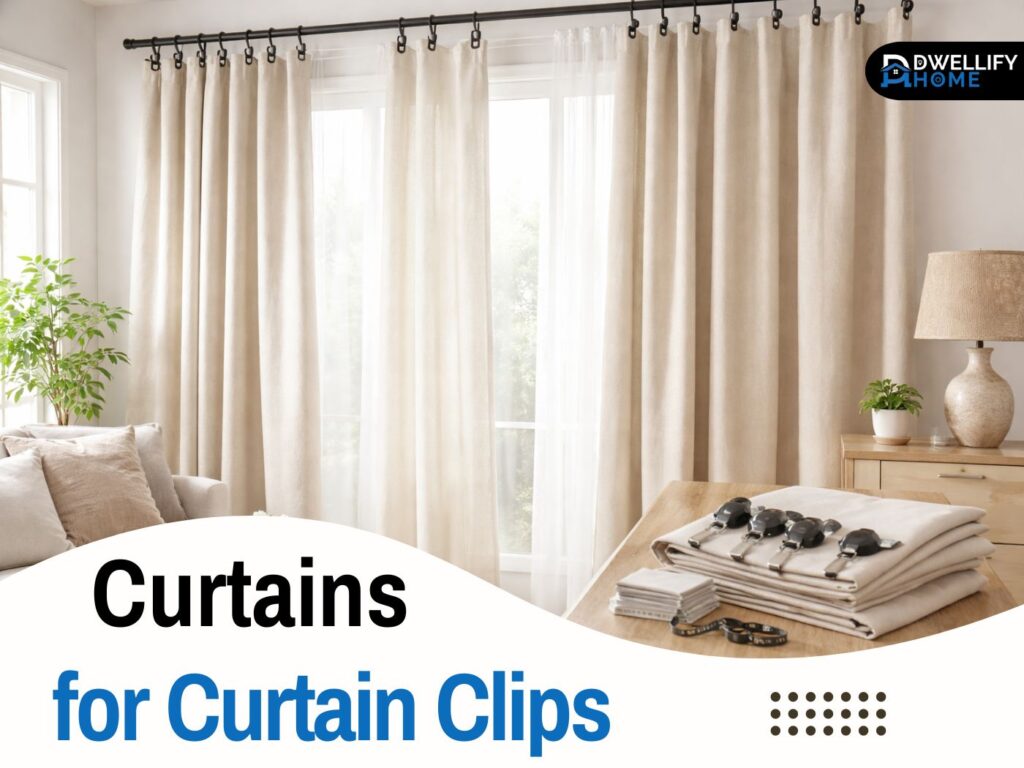
If you’ve ever bought curtain panels you liked, then realized they don’t quite work with your hardware, clip rings can feel like a quick fix. And honestly, they can be. With the right fabric, the right number of clips, and a little attention to spacing, clip rings can look clean and intentional, not temporary.
I’ve installed clip-ring setups in apartments, family homes, and full custom remodels. The biggest difference between “it’ll do” and “that looks professionally done” usually comes down to two things: fabric weight and how you form the folds. Let’s walk through it in a simple, reliable way.
Snippet-ready definition:
Curtains for curtain clips are curtain panels that hang from clip rings instead of sewn-in headers. People use them because they’re easy to install, adjustable in height, and a simple way to get a clean, stylish drape without sewing.
Mission Statement:
At Dwellify Home, our mission is to make home styling feel simple and doable, with practical, design-backed guidance that helps you choose, hang, and style window treatments with confidence.
Quick answer: what curtains work best with curtain clips?
In most homes, medium-weight panels give the best results. Linen blends, cotton-linen, cotton twill, and lined cotton look great because they’re heavy enough to fall straight, but not so heavy that the clips struggle.
If you want something airy, sheer curtains for curtain clips work beautifully, especially in living rooms and bedrooms where you want soft daylight. Lightweight sheers can look elegant on clips, but they do need gentle handling so you don’t create puckers along the top.
For darkness and insulation, blackout or thermal curtains can work too. The key is using strong clips and more rings than you think you need. Heavy panels pull down at the top, so spacing and clip strength matter a lot more.
A quick fabric check from real installs
- If the panel feels like a light shirt fabric, it’ll look relaxed and breezy, but show clip marks more easily.
- If it feels like a sturdy tablecloth, it usually clips well and holds folds nicely.
- If it feels like a heavy blanket or very thick velvet, you’ll likely need heavy-duty clips or a switch to pins.
Quick Guide Table: What to buy and why
| Goal | Best Curtain Type | Best Clip Type | Pro Tip |
| Light + airy look | Sheer panels (voile, light linen blends) | Plastic or light metal clips | Use more clips to avoid puckering |
| Everyday polished look | Linen blends, cotton, cotton twill | Metal clips | Clip 1 inch below top for cleaner waves |
| Room darkening | Blackout or thermal panels | Heavy-duty metal clips | Add extra rings to prevent sagging |
| Luxe texture | Light to medium velvet | Strong metal clips | Test slipping before hanging fully |
Quick bullet checklist (shopping + setup)
- Pick fabric weight first: sheer, medium, or blackout
- Choose clip strength to match the fabric
- Use enough clips: most panels look best with 7–9 clips
- Keep clip height consistent across all panels
- Train folds by hand after hanging for a smoother drape
Clip rings vs curtain hooks or pins: which looks better and why?
Clip rings are popular because they’re fast. You can hang panels in minutes, adjust height without sewing, and swap curtains seasonally without tools. They’re also renter-friendly because you can get a finished look without altering the panels.
Pins and hooks, on the other hand, create a more tailored drape. They hide the attachment point and help the top of the curtain form structured pleats. In high-end living rooms or formal dining areas, I often use pins for that clean, custom line.
Here’s the practical way I decide on a job:
- If you want relaxed and easy: clips are great.
- If you want crisp and tailored: pins win.
- If your curtains are heavy and the clips keep slipping: pins are often the fix.
Curtain top styles that pair well with clips (and which to avoid)
Flat-top panels are the easiest match for clips. You can clip them evenly and create soft waves without fighting the fabric. Back-tab panels can also work, especially if you clip behind the front layer so the top looks smoother.
Rod pocket curtains are a common situation. People buy them, then later decide they want rings. You can still use clips, but expect a slightly puffier top because the pocket adds bulk. If you want it flatter, you can clip just below the pocket seam rather than at the very top edge.
Styles I usually avoid with clips:
- Grommet or eyelet tops. They’re already designed to slide onto a rod, so clips often look awkward and add extra height.
- Very delicate lace or open-weave fabrics. Clips can snag, and the fabric may bunch at the top.
If you’re aiming for window curtains for curtain clips that look neat, choose panels with a simple header and a fabric that can hold a gentle fold.
Getting the right size (the number one reason clip curtains look off)
Length issues show up constantly. Clip rings add height, but where you attach the clip changes the final drop. If you clip at the very top edge, the panel hangs longer. If you clip lower, it shortens the look and can make curtains feel slightly “high-water.”
I like to decide the finished look first, then clip accordingly:
- For a modern look: aim for the hem to kiss the floor or hover about half an inch above it.
- For a softer look: a slight break on the floor is fine, but keep it consistent across panels.
Width matters just as much. Many windows look skimpy because the panels are too narrow. A good everyday target is enough fabric so the curtains still look full when closed. If you want a richer look, go fuller. It’s one of those small choices that changes the whole room.
A simple way to think about it:
- One panel per side can work for small windows.
- Two panels per side often looks better on wider windows or if you want deeper folds.
Choosing the right curtain clips (plastic, decorative, and heavy-duty)
Curtain clips plastic options are handy for sheers and lightweight panels. They’re budget-friendly and often less likely to snag delicate fabric. The downside is strength. If the fabric has weight or lining, plastic clips may slide over time.
Metal clips usually grip better and last longer. They also glide more smoothly on the rod because the rings tend to be sturdier. For everyday rooms, that smoother slide is a bigger deal than people expect.
Decorative curtain clips can be a design feature. If your rod finish is a statement, like matte black or warm brass, matching rings and clips can look intentional. If your style is minimal, choose clips that visually disappear.
For curtain clips for heavy curtains, look for:
- Strong spring tension
- A wider jaw or grippy inner pad
- Rings that feel solid and don’t bend easily
In my experience, heavy curtains usually fail on clips for two reasons: too few rings or weak clip springs. Fix those first before blaming the curtain.
Rod and ring compatibility (so panels slide smoothly)
This is one of those quiet details that makes everything feel better. The ring needs to fit the rod properly. If the inner ring diameter is too close to the rod diameter, the curtain will catch, scrape, and feel jerky.
As a general rule, you want enough clearance that the ring slides without friction. Also check the rod itself. If it bows in the middle, heavy curtains will drag toward the center support and get stuck.
For wider windows, I almost always use a sturdy rod and strong brackets. If you’re layering curtains, like sheers plus a heavier panel, go stronger than you think you need. It prevents sagging and keeps everything gliding smoothly.
How to hang curtains with curtain clips so they look expensive
This is where clip curtains go from “hung up” to “finished.” The goal is even spacing and consistent folds.
Step 1: Start with the right number of clips
For a standard 50 to 54-inch wide panel, I often use 7 to 9 clips. For heavier fabric, add one or two more. More clips means less strain on each clip and smoother folds.
Step 2: Clip at a consistent height
Pick one spot, usually about 1 inch below the top edge for flat-top panels. If the top looks too pinched, go slightly lower. Keep it the same on every clip.
Step 3: Space clips evenly
Lay the panel flat on a bed or clean floor. Clip the two ends first, then the middle, then fill in the rest. This keeps spacing balanced.
Step 4: Form the folds before you hang
Here’s my go-to method: pinch the fabric into soft pleats between clips while the panel is still flat. You’re basically training it to fall in gentle waves. Once it’s up, step back and adjust the folds by hand.
Step 5: Let the curtains settle
Fabric relaxes. I often tell homeowners to leave the curtains hanging for a day, then do a final tweak. It’s a small step, but it makes the drape look more natural.
If your goal is the best curtains for curtain clips look, focus on even spacing and the fold training. Those two things do more than any fancy accessory.
Styling ideas that work especially well with clip curtains
For a modern, tailored look, choose simple panels, clip them evenly, and keep the rings consistent in finish. Linen blends are great here because they form soft, clean waves without looking stiff.
For a relaxed, casual style, you can lean into the texture. Slightly looser folds, a bit more puddle at the hem, and a natural fabric like washed cotton or linen can feel warm and lived-in.
Layering is also very clip-friendly. Sheers on the back rod, heavier panels on the front rod is a classic setup. It’s practical too. You can keep privacy with sheers during the day and close the heavier panels at night.
Tiebacks can help if you want more light or want the layers to stay neat. Just keep them simple. A clean holdback or soft fabric tie usually looks better than anything too bulky.
Shopping shortcuts (IKEA, Amazon, and what to look for)
Curtains for curtain clips IKEA searches usually lead to clip ring systems and affordable panels that can be adapted. IKEA rings often work well, but always check rod and ring sizing so the glide stays smooth.
Curtains for curtain clips Amazon listings can be overwhelming because product titles are packed. I focus on the basics:
- Panel size, especially length
- Fabric type and whether it’s lined
- Photos showing the top header style
- Reviews mentioning clip rings or ring clips specifically
If you’re buying online and you’re unsure about weight, look for clues like “lined,” “blackout,” “thermal,” or “heavyweight.” For sheers, words like “voile” and “light-filtering” help.
Common problems and quick fixes (troubleshooting)
If the curtains look uneven, it’s almost always inconsistent clip height. Take one panel down and measure where each clip sits from the top edge. Fixing that usually fixes the whole look.
If clips leave marks, use wider clips or add a simple header tape along the back of the top edge. It gives the clip something to grip without biting into the fabric.
If heavy curtains droop, add more rings and upgrade the clips. If you already have plenty of rings and it still happens, that’s when pins and hooks become the better option.
If panels don’t glide, check ring size, rod level, and center supports. A slightly bowed rod can make the curtains feel like they’re dragging through sand.
Safety, care, and longevity (small details that build trust)
Clips can damage delicate fabrics if they’re too tight or if you open and close them roughly. For sheers, I always suggest a gentler clip and a slower hand when adjusting.
For cleaning, follow the curtain label first. Linen and cotton often do fine with gentle washing, but they may shrink a bit, which matters if you’re aiming for a floor kiss. Polyester sheers are usually easy-care, but can snag if you clip too close to an open weave.
If clips start slipping, rusting, or losing spring tension, replace them. Hardware is cheaper than ruined fabric, and fresh clips instantly improve how everything hangs.
FAQ
1) What kind of curtains go on clips?
Flat-top panels, linen or cotton blends, and many sheers work well. Avoid grommet tops and very delicate lace that can snag or bunch.
2) Do you need special curtains for a curtain track?
Usually, yes. Tracks typically use gliders with hooks or tape. Clip rings are designed for rods, not tracks, unless the track system specifically supports rings.
3) What are curtains that hang on hooks called?
They’re often called pinch-pleat curtains, pleated drapes, or drapes with drapery hooks/pins, depending on the header style.
4) What curtains can you put on a curtain track?
Curtains with pencil pleat tape, wave tape, or hook tape work best because they attach to track gliders smoothly.
5) How many curtain clips should I use per panel?
A good starting point is 7–9 clips for a standard-width panel. For heavier curtains, add 1–2 more to reduce sagging.
Conclusion
A clip-ring setup can look clean, modern, and thoughtfully done when you match the curtain fabric to the clip strength and take a little time with spacing. If you remember just three things, make them these: choose a fabric that drapes well, use enough rings to support the weight, and keep your clip height consistent.
Once you’ve done that, the rest is styling. Add sheers if you want softness, use heavier panels for privacy, and keep your hardware finishes consistent so it all feels intentional. With a bit of care, your curtains will hang smoothly, fold nicely, and look right at home.
Disclaimer:
This article shares general design and installation guidance based on real-world window treatment experience. Always check your curtain and hardware weight limits, follow manufacturer instructions, and use proper wall anchors for safety.

I’m Bilal, the founder of Dwellify Home. With 6 years of practical experience in home remodeling, interior design, and décor consulting, I help people transform their spaces with simple, effective, and affordable ideas. I specialize in offering real-world tips, step-by-step guides, and product recommendations that make home improvement easier and more enjoyable. My mission is to empower homeowners and renters to create functional, beautiful spaces—one thoughtful update at a time.