Homeowners usually start thinking about an elevator after stairs stop feeling simple. Sometimes it’s because a parent is moving in. Sometimes it’s a knee injury that turns a split-level house into a daily hassle. Other times, it’s part of a renovation plan to make the home easier to live in for the next twenty years, not just the next two.
That’s where good planning matters. A residential elevator can be a practical accessibility feature, a convenience upgrade, or both. But the right choice depends on your layout, your budget, and how much construction your house can realistically handle.
Snippet-Ready Definition
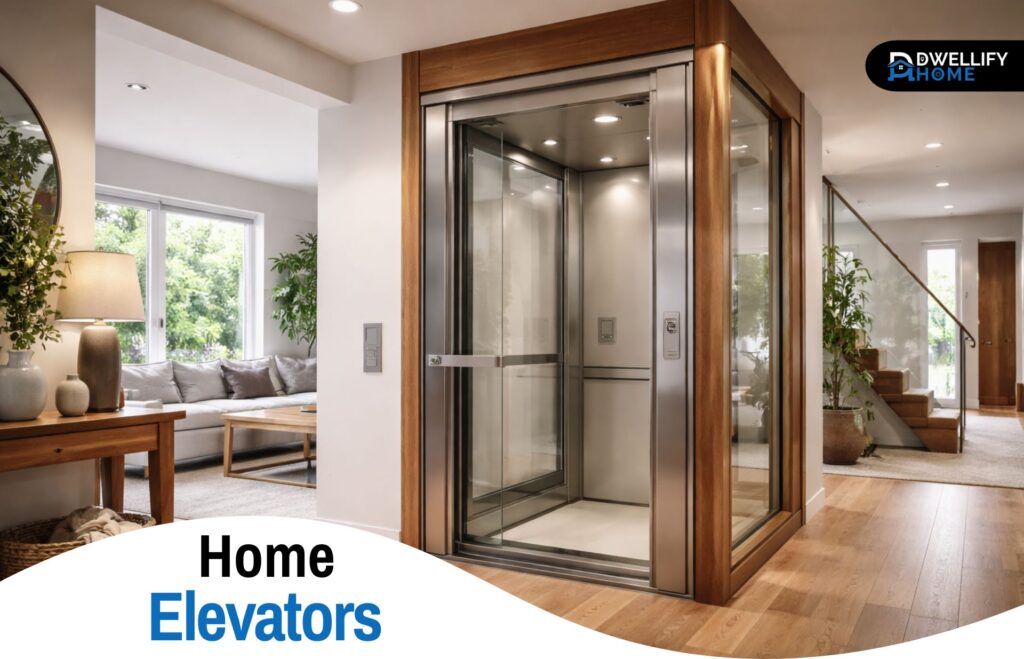
Home elevators are residential lifts that help people move safely between floors. Homeowners choose them for accessibility, convenience, aging in place, and easier access in multi-story homes.Mission Statement
Dwellify Home helps homeowners make practical, stylish, and informed decisions for comfortable everyday living.
What Is a Home Elevator?
A home elevator is a lift designed for private residential use. It’s smaller, slower, and built differently from a commercial elevator in an office or apartment building. It also follows a different set of expectations around size, finishes, and daily use.
You’ll also see the terms home lift and residential elevator used in similar ways. In everyday conversation, they often mean the same thing. What matters more is the actual system being installed, how it travels, and what kind of space it needs.
For most households, the biggest reason to install one is simple: it keeps the whole house usable.
Quick Comparison Table
| Option | Best For | Main Advantage | Main Limitation |
| Hydraulic home elevator | Larger homes, smooth ride | Stable, quiet feel | More space and construction work |
| Traction home elevator | Frequent daily use | Efficient and refined operation | Higher planning complexity in some homes |
| Vacuum home elevator | Tight spaces, modern look | Compact footprint | Limited cabin size on some models |
| Shaftless home elevator | Existing homes, simple retrofit | Less structural disruption | Usually suited to fewer floors |
| Through-floor lift | Accessibility-focused retrofit | Easier fit in some layouts | More limited design flexibility |
Key Benefits
- Makes multi-story living easier and safer
- Supports aging in place and long-term accessibility
- Helps move groceries, laundry, and heavy items between floors
- Can work in new builds or many existing homes
- Offers a cleaner alternative to some visible accessibility aids
Why Homeowners Install Them
The most common reason is aging in place. A lot of people love their homes but know the stairs may become a problem later. Installing an elevator can mean staying put instead of moving.
Convenience is another big one. Carrying laundry baskets, luggage, groceries, or storage boxes between floors gets old fast. In homes with three levels, that daily back-and-forth adds up.
There’s also the design side. Some homeowners want better accessibility without the look of a stair lift. A well-integrated elevator can feel like part of the house rather than an add-on.
Types of Home Elevators
There isn’t one standard model that works for every house.
Hydraulic systems are known for a smooth ride, but they usually need more space and more construction. Traction elevators are also common and often suit people who want a refined, reliable setup.
Machine-room-less models reduce some space requirements, which can make planning easier. Pneumatic or vacuum elevators stand out for their compact footprint and modern appearance. They’re often considered in homes where adding a full shaft is difficult.
Shaftless and through-floor elevators are popular in retrofit projects. They can work well in existing homes because they usually require less structural work than a traditional system. Glass elevators appeal to homeowners who want the elevator to feel open and visually integrated rather than hidden away.
How Home Elevator Systems Work
This is where a lot of buyers get confused. The elevator style and the drive system aren’t always the same thing.
Some systems use hydraulic power. Others rely on cables, winding drums, screws, chains, or air pressure. From a homeowner’s point of view, the practical questions are usually more important than the technical labels:
- How smooth is the ride?
- How much noise does it make?
- How much space does it need?
- What kind of maintenance will it need later?
That last point gets overlooked. A system that looks affordable at first can become less appealing if service is hard to get in your area or parts are specialized.
How to Choose the Right Home Elevator
The best starting point is your main goal. Accessibility needs should drive the decision if the elevator is being installed for mobility support. In that case, cab size, door width, controls, and ease of entry matter more than appearance.
Space comes next. Some homes can handle a conventional shaft. Others really can’t without major disruption. In older houses, that difference can save or cost a lot of money.
Then look at the basics:
- Number of floors served
- Weight capacity
- Wheelchair access
- Noise level
- Maintenance needs
- Finish and customization options
One mistake I’ve seen more than once is choosing the smallest possible unit to save money, then realizing later that it’s awkward for a walker, impossible for a wheelchair, or tight for two adults. Planning for future use is usually smarter than planning only for today.
Home Elevator vs. Other Accessibility Options
An elevator isn’t always the best answer.
A stair lift is usually less expensive and faster to install. It can be a good fit when one person needs help using the stairs and the home layout doesn’t justify major construction.
A platform lift can also work in some situations, especially where accessibility is the priority and design matters less.
Still, a full elevator tends to make more sense in multi-level homes where long-term ease, resale appeal, and full-floor access matter. It also feels more natural for carrying daily items, not just passengers.
Space and Structural Requirements
This is the part that changes the project from simple to complicated.
A traditional home elevator often needs a shaft, overhead clearance, and sometimes a pit below floor level. Some models may also need a machine room, though many newer systems reduce that requirement.
Electrical planning matters too. So does structural support. Floors, walls, and framing may need reinforcement depending on the system and where it’s going.
Pitless and shaftless options can reduce some of the construction burden, but they don’t eliminate planning. Even compact systems need clearances, power, and a location that works with the house.
Best Places to Install a Home Elevator
The right location can lower construction costs and make daily use much easier.
Stacked closets are a common solution because they already create a vertical path between floors. Near the staircase is another practical choice, especially when the goal is improving access in the part of the house people use most.
Corners of living areas can work well in newer homes with open layouts. Exterior wall locations are sometimes used when interior space is tight. Outdoor elevator setups are possible too, though weather protection and code requirements become more important.
The least disruptive location is usually the best one. A beautiful design doesn’t help much if it steals too much living space or forces expensive rerouting of wiring, plumbing, or HVAC.
New Construction vs. Retrofitting
Installing during new construction is usually easier, cleaner, and cheaper in the long run. The shaft, support framing, and power can all be planned before walls are closed up.
Retrofitting an existing house takes more problem-solving. Ceiling openings, framing changes, and floor alignment can all add complexity. Older homes can be especially tricky because layouts weren’t designed with vertical lift space in mind.
That doesn’t mean retrofit projects aren’t worth doing. Many are. It just means the quote needs to reflect real conditions, not best-case assumptions.
Cost and Ongoing Expenses
Home elevator cost varies widely because the equipment is only part of the total. Construction, permits, electrical work, finish carpentry, and customization often change the number more than people expect.
In general, a basic system in a favorable layout costs far less than a custom installation in an older home. Extra stops, luxury cab finishes, and structural changes all push the budget upward.
After installation, there are ongoing costs to think about:
- Routine maintenance
- Service visits
- Replacement parts
- Energy use
- Warranty coverage after the initial period ends
This is where buyers sometimes focus too much on the sale price and not enough on ownership cost. A clear quote should separate equipment cost from construction and installation cost so you can see what you’re really paying for.
The Installation Process
Most projects begin with a home assessment. The installer looks at layout, travel path, structure, electrical access, and the amount of building work required.
After that comes design, measurements, and planning. Then the site is prepared, whether that means building a shaft, reinforcing framing, or cutting floor openings.
Once the equipment arrives, installation begins. That’s followed by testing, inspection, and final handover. A good installer will also explain basic operation, emergency features, and maintenance expectations before the job is considered complete.
Permits, Safety, and Design Choices
Permits and code requirements vary by location, so this part should never be guessed. The installer should be able to explain what approvals are needed, who handles them, and what inspections will take place.
Safety features deserve close attention. Door interlocks, sensors, emergency stop controls, battery backup or emergency lowering, and overload protection are all worth asking about. Smooth start and stop also matter more than people think, especially for older users.
On the design side, there’s plenty of room to personalize the look. Cab finishes, lighting, door styles, glass panels, mirrors, and handrails can all change how the elevator feels inside the home. The best results usually come from keeping the design consistent with the house rather than making it look like a separate feature.
Questions to Ask Before You Buy
Before signing anything, ask a few direct questions.
Is my home structurally suited to this model? What building work is included in the price? Who handles permits and inspections? What does the warranty actually cover? How quickly can service be scheduled if there’s a problem?
Also ask for a fully itemized quote. That helps you compare proposals properly. One bid may look lower until you notice it excludes finish work, electrical upgrades, or permit handling.
A second common mistake is comparing numbers without comparing scope. Two quotes are only useful side by side if they cover the same work.
FAQs
How much do home elevators cost?
Costs vary by type, number of floors, and how much construction the home needs. Equipment, installation, permits, and finish work all affect the final price.
Can you put a home elevator in an existing house?
Yes. Many can be retrofitted, but older homes often need more structural planning, which can raise cost and extend the timeline.
What type of home elevator takes up the least space?
Vacuum, shaftless, and some through-floor models are often chosen for tighter layouts because they usually need less construction than a traditional shafted system.
Do home elevators need maintenance?
Yes. Regular service helps keep the elevator safe, reliable, and compliant with local requirements. Ongoing maintenance is part of the real ownership cost.
Is a home elevator better than a stair lift?
It depends on the layout and long-term needs. A stair lift is often less expensive, while a home elevator usually offers better full-floor access, convenience, and future usability.
Are They Worth It?
For many households, yes. The value isn’t only about resale. It’s about comfort, safety, and keeping the house functional through different stages of life.
Still, the right answer depends on the home and the reason for installing one. In some cases, a stair lift or simpler accessibility upgrade will do the job. In others, a full residential elevator is the more practical long-term investment.
Home elevators work best when they’re planned with clear priorities, realistic budgeting, and a layout that supports the system properly. Get the location right, ask better questions than the average buyer, and pay just as much attention to installation and service as you do to the elevator itself. That’s usually the difference between a project that feels well judged and one that becomes more complicated than it needed to be.
Disclaimer
This content is for general informational purposes and should not replace advice from a licensed installer, contractor, or local code authority.

I’m Bilal, the founder of Dwellify Home. With 6 years of practical experience in home remodeling, interior design, and décor consulting, I help people transform their spaces with simple, effective, and affordable ideas. I specialize in offering real-world tips, step-by-step guides, and product recommendations that make home improvement easier and more enjoyable. My mission is to empower homeowners and renters to create functional, beautiful spaces—one thoughtful update at a time.