Watching a dog push their bowl away is one of the hardest parts of being a pet owner. I’ve seen it hundreds of times over the years, and the worry on an owner’s face is always the same. The good news is that most of the time, a little patience and a few gentle tricks at home can get things moving again. The trickier part is knowing which situations you can handle yourself and which ones need a vet the same day.
Let’s walk through it the way I’d explain it to a friend sitting across the kitchen table.
Snippet-Ready Definition
Home remedies for a sick dog not eating are simple, vet-aligned steps like offering bland food, warming meals, and encouraging hydration to help a mildly unwell dog regain their appetite safely at home.
Mission Statement
Dwellify Home is dedicated to helping homeowners and families make practical, informed decisions for every part of home life — from décor and comfort to the well-being of the pets who share it.
Why Your Sick Dog Isn’t Eating
Appetite loss in dogs almost always has a reason, even if it’s not obvious. Mild stomach upset is the most common culprit, often from eating something they shouldn’t have or a sudden food change. Recent vaccinations, new medication, or a stressful event like a move or a houseguest can also do it.
Dental pain is another one I see constantly, especially in dogs over six. They want to eat, they approach the bowl, then back off. That’s usually a tooth, not the food. Underlying illnesses like infections, parasites, or kidney issues can also show up first as a skipped meal.
And then there’s the picky eater. The dog who refuses kibble but happily takes a treat from your hand isn’t usually sick. That’s behavior, and it calls for a different approach than a genuinely unwell dog.
Key Things That Often Help a Sick Dog Eat Again
- Warming food slightly to release the aroma
- Offering boiled chicken with plain white rice
- Adding a spoon of plain pumpkin or low-sodium bone broth
- Hand-feeding small portions in a calm space
- Keeping fresh water or ice chips within reach
How to Tell If It’s Serious or Just an Off Day
Before trying anything at home, do a quick check. A healthy adult dog skipping one meal isn’t an emergency. A dog who hasn’t eaten for 24 hours, seems weak, has pale gums, or is vomiting repeatedly is a different story.
Press gently on their gums. They should feel wet and spring back to pink within a second or two. Dry, sticky, or pale gums mean dehydration or something more serious. Pinch the skin between the shoulder blades. If it doesn’t bounce back fast, your dog needs fluids.
If your dog is still alert, bright-eyed, and drinking water, you’ve got room to try a few gentle things first.
Gentle Home Remedies Worth Trying
Here’s where most owners can genuinely help. These are the approaches I’ve watched work over and over with mild cases.
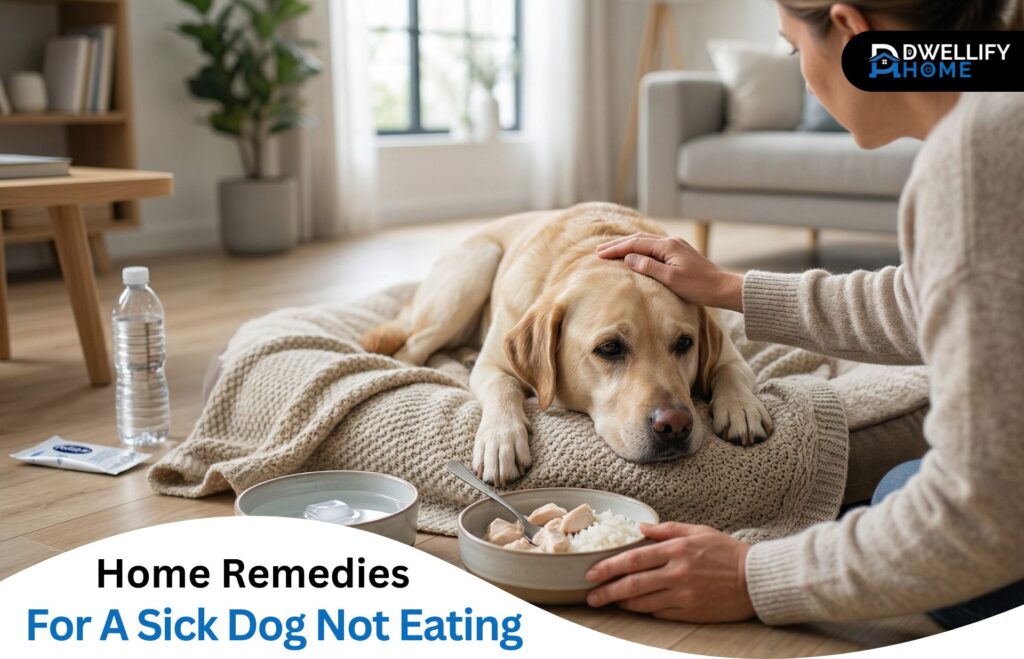
Warm the food slightly. A few seconds in the microwave releases the aroma, and dogs eat with their nose first. This alone brings many dogs back to the bowl.
Boiled chicken and plain white rice. The classic bland meal. Use skinless chicken breast, no seasoning, shredded small, mixed with soft-cooked rice. Offer a few tablespoons at a time.
Plain canned pumpkin. A teaspoon or two for small dogs, up to a tablespoon for larger ones. It soothes the gut and tempts most dogs with its smell. Make sure it’s pure pumpkin, not pie filling, which contains sugar and spices that can make things worse.
Bone broth. Low-sodium, onion-free, garlic-free. You can make it yourself by simmering plain chicken bones for a few hours, then cooling and skimming the fat. It hydrates and tempts at the same time.
Plain scrambled egg. No butter, no salt. Eggs are gentle, high in protein, and most dogs find them hard to resist.
A spoonful of plain yogurt or kefir. Only if your dog tolerates dairy. The live cultures can help settle a grumbly gut.
Meat-flavored baby food. Look for single-ingredient jars like pure chicken or beef. Check the label carefully — anything with onion or garlic powder is off-limits.
Hand-feeding small amounts. This one surprises people, but sitting on the floor and offering food from your palm often works when a bowl doesn’t. Sick dogs feel vulnerable, and the comfort of your presence matters more than we give it credit for.
Traditional options from Indian households. Plain khichdi made with rice and moong dal, cooked soft with no spices or salt, is a gentle choice I’ve seen families rely on for generations. A small portion of plain curd rice can also work for dogs who handle dairy well. Skip anything with turmeric, ginger, onion, or chili — those belong in human food, not a sick dog’s bowl.
What to Feed a Sick Dog With No Appetite
When nothing seems to work, go back to basics. Single-ingredient, soft, easy to digest. Think boiled chicken, plain white rice, plain sweet potato, scrambled egg, or a little cooked fish with no bones. Small portions, offered often, beat one big meal every time.
When Your Dog Is Vomiting and Not Eating
Vomiting changes the approach. For a healthy adult dog, let the stomach rest for about 6 to 12 hours with no food, but keep water available in small amounts. Ice chips work well if they won’t drink from a bowl.
Once the vomiting stops, start with a tablespoon or two of bland food. Wait an hour. If it stays down, offer a bit more. If vomiting continues past 12 hours, contains blood, or your dog seems weak, skip the home care and call the vet.
When Your Dog Won’t Eat But Is Still Drinking Water
This pattern usually means mild nausea or a temporary upset. It’s one of the less worrying combinations, as long as your dog is still alert. Stick with the gentle remedies above and give it 12 to 24 hours. Most dogs bounce back on their own.
When Your Dog Won’t Eat, Won’t Drink, and Just Lays There
This is the combination that worries me. A dog refusing both food and water while lying motionless is telling you something is wrong. Don’t wait it out. Don’t try more remedies. Call your vet the same day, or head to an emergency clinic if it’s after hours.
Hydration Matters More Than Food
A dog can skip a meal or two without harm. Skipping water is different. Keep fresh water within reach at all times. Some dogs will lick ice cubes when they won’t drink. You can also freeze low-sodium broth into small cubes as a treat that sneaks fluids in.
Creating a Calm Space for Recovery
Stress kills appetite. Give your dog a quiet corner away from kids, other pets, and household noise. Familiar bedding helps. So does your presence — just sitting nearby without fussing. Dogs pick up on our worry, so stay calm even when you’re not.
Dogs That Can’t Wait 24 Hours
Some dogs need faster action than a healthy adult. Puppies under six months, toy breeds, diabetic dogs, seniors, and pregnant or nursing dogs can crash quickly without food. For these, even half a day of not eating is a reason to call the vet. A 15-year-old who suddenly stops eating but keeps drinking deserves a same-day check, not a wait-and-see.
Foods and Remedies to Avoid
Never give onions, garlic, grapes, raisins, chocolate, macadamia nuts, or anything containing xylitol. Skip fatty table scraps, which can trigger pancreatitis. Avoid human painkillers completely — ibuprofen and acetaminophen can be fatal. And please don’t force food down your dog’s throat. It causes stress, risks choking, and can lead to aspiration pneumonia.
When to Call the Vet
Pick up the phone if you see any of these:
- No food for 24 hours in a healthy adult, sooner for vulnerable dogs
- Refusing water entirely
- Repeated vomiting or diarrhea
- Blood in stool or vomit
- Pale, white, or yellow gums
- Collapse, severe weakness, or extreme lethargy
- A bloated or painful belly
Trust your gut. You know your dog better than anyone.
What to Expect at the Vet Visit
A good vet will start with questions — when did eating stop, any vomiting, any new foods, any changes at home. They’ll do a physical exam, check hydration, and often recommend bloodwork to rule out infection or organ issues. Bring notes. Write down the last meal, any symptoms, and any medications. It saves time and gets your dog help faster.
Preventing This in the Future
Consistent feeding times, a quality diet, regular dental care, year-round parasite prevention, and annual checkups go a long way. Sudden food changes are one of the most common causes of appetite loss I see, so when you switch foods, do it gradually over a week.
Frequently Asked Questions
How do you treat a sick dog that won’t eat?
Start with gentle steps at home: warm their food, offer a bland meal of boiled chicken and rice, add a little low-sodium broth, and try hand-feeding small amounts. Keep the space quiet and make sure they’re drinking water. If nothing works within 24 hours, call your vet.
What foods stimulate a dog’s appetite?
Warm, strong-smelling foods tend to work best. Boiled chicken, scrambled egg, plain pumpkin, bone broth, and single-ingredient meat baby food are reliable choices. Avoid anything with onion, garlic, salt, or heavy seasoning.
How long will a sick dog go without eating?
A healthy adult dog can usually go 24 hours without food if they’re still drinking water. Puppies, seniors, toy breeds, and diabetic dogs shouldn’t wait that long — even half a day without eating is reason to contact a vet.
What are signs your dog is going to pass away?
Common signs include extreme lethargy, refusing both food and water, loss of interest in surroundings, difficulty breathing, incontinence, and cold extremities. These symptoms need immediate veterinary attention, as some serious but treatable conditions look similar.
Can I give my dog human food when they’re sick?
Only plain, single-ingredient options like boiled chicken, white rice, scrambled egg, or plain pumpkin. Skip anything with salt, butter, spices, onion, garlic, grapes, chocolate, or xylitol.
Final Thoughts
Most home remedies for a sick dog not eating come down to the same three things: gentle food, steady hydration, and a calm space to recover. Try the simple options first, watch your dog closely, and don’t be afraid to call your vet when something feels off. The dogs I’ve seen recover fastest belong to owners who stay calm, act early, and know when to ask for help. You’ve got this.
Disclaimer
This article is for general informational purposes only and is not a substitute for professional veterinary advice. Always consult a licensed veterinarian for any health concerns regarding your dog.

I’m Bilal Hassan, the founder of Dwellify Home. With 6 years of practical experience in home remodeling, interior design, and décor consulting, I help people transform their spaces with simple, effective, and affordable ideas. I specialize in offering real-world tips, step-by-step guides, and product recommendations that make home improvement easier and more enjoyable. My mission is to empower homeowners and renters to create functional, beautiful spaces—one thoughtful update at a time.