Most mobile homeowners don’t think about their water heater until something goes wrong — a cold shower, a puddle on the floor, or a unit that’s clearly been struggling for too long. By that point, the pressure to make a quick decision usually leads to a costly mistake.
After years of working with manufactured housing clients, the single biggest error I see is people buying a standard residential water heater and assuming it’ll work. It won’t — at least not safely, and in many cases not legally.
This guide walks you through everything you need to know before you spend a single dollar.
SNIPPET-READY DEFINITION
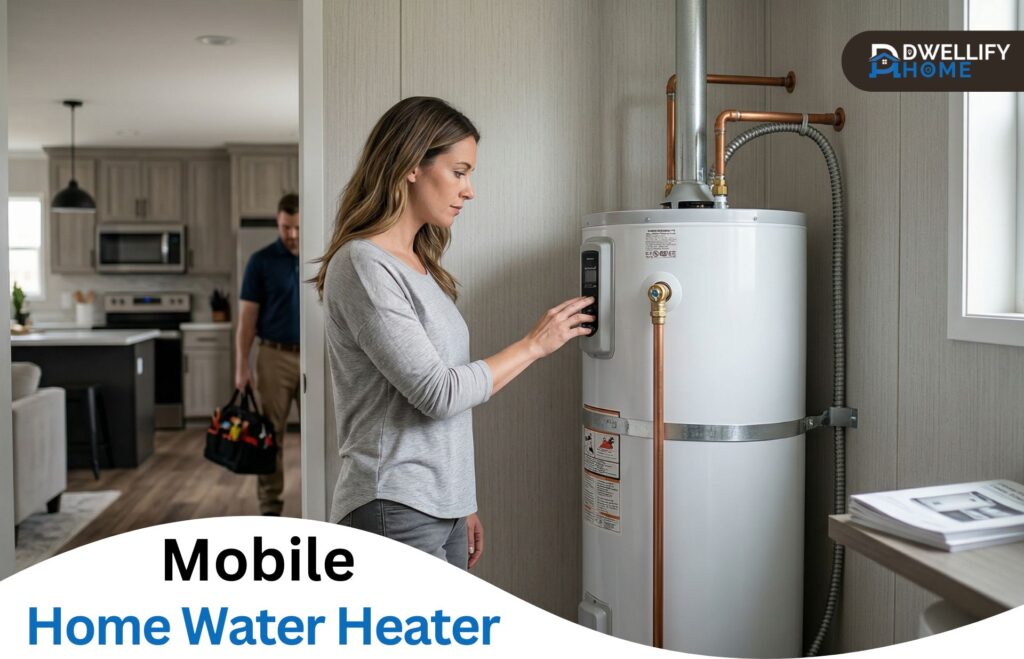
A mobile home water heater is a HUD-approved unit designed specifically for manufactured housing. It meets stricter venting and safety standards that standard residential water heaters don’t fulfill, making it essential for safe and compliant installation.
Dwellify Home Mission
At Dwellify Home, we help homeowners make practical, well-informed decisions about their living spaces — from everyday maintenance to long-term improvements. Our goal is straightforward, honest guidance you can actually use.
Why Mobile Homes Need a Different Water Heater
The HUD Compliance Requirement Explained
Manufactured homes are built under a federal standard set by the Department of Housing and Urban Development, commonly known as HUD. This code governs everything from structural design to appliance safety — and water heaters are specifically included.
Any water heater installed in a manufactured or mobile home must be HUD-approved for that use. This isn’t a technicality you can overlook. It affects venting design, combustion air supply, and how the unit is physically anchored. A standard residential unit isn’t designed to meet these requirements, even if it fits the space perfectly.
Mobile Home Water Heater vs. Regular Water Heater: What’s Actually Different
The differences aren’t cosmetic. A conventional water heater draws combustion air from the room it’s installed in. In a site-built home with plenty of air volume, that’s generally fine. In a mobile home, where interior air is more limited and the structure is more tightly sealed, it creates a carbon monoxide risk.
Mobile home-rated units also often have side-mounted inlet and outlet ports instead of top-mounted ones, making installation easier in confined spaces. The insulation ratings and pressure relief placements can differ too. It’s a purpose-built category, not a marketing label.
Quick Comparison Table — Mobile Home Water Heater Types
| Type | Best For | Avg. Cost (Unit) | Venting Required | HUD Compliant Options |
| Electric | Most mobile homes | $400–$700 | No | Yes |
| Direct-Vent Gas | Gas/propane setups | $500–$900 | Yes (sealed) | Yes |
| Propane (LP) | Rural, off-grid | $500–$850 | Yes (sealed) | Yes |
| Tankless | Low-demand households | $300–$1,000+ | Depends on type | Limited |
Key Considerations at a Glance
- Must be labeled HUD-approved for manufactured housing
- Gas units require direct-vent (sealed combustion) — not power-vent
- Electric models are the simplest installation in most mobile homes
- 30-gallon suits 1–2 people; 40-gallon suits 3–4 people
- Lowboy/compact models are available for tight utility spaces
- Professional installation is strongly recommended for gas units
Types of Water Heaters That Work in Mobile Homes
Electric Water Heaters — The Most Common Choice
Electric units dominate in mobile homes for a straightforward reason: they don’t require combustion venting. No flue pipe, no outside air intake, no sealed combustion system. You connect to your electrical panel, follow the standard safety steps, and you’re done.
The Reliance 6-30-EMHBS (30 gallon) and the Rheem Performance 40-gallon are two of the most commonly installed electric models, and for good reason — both are HUD-compliant, widely available, and hold up well over time. If your home is already set up for electric, this is almost always the path of least resistance.
Gas Water Heaters — Natural Gas and Propane Options
Gas units can work well in mobile homes, but they require a direct-vent configuration — meaning the unit draws air from outside the home through a sealed intake pipe rather than from inside. This is non-negotiable for safety in manufactured housing.
Both natural gas and propane (LP) models exist in this category. Some units, like the 29-gallon Rheem Performance gas model, can be converted between natural gas and LP with a conversion kit. That’s useful in rural areas where propane tanks are the only realistic fuel option. A.O. Smith’s ProLine 40-gallon direct-vent is another solid choice if you need more capacity.
Tankless Water Heaters — Practical or Overkill?
Tankless units heat water on demand, which sounds like an obvious upgrade. But in a mobile home context, they come with complications. Electric tankless units often demand more amperage than older mobile home panels can support. Gas tankless units still require proper venting.
For most mobile homeowners, a tankless unit is a reasonable option only if you’re doing a broader electrical or plumbing upgrade at the same time. The Camplux Pro 2.64 GPM is a smaller unit worth considering for lower-demand households, but it’s not a plug-and-play solution for everyone.
Venting Requirements You Can’t Ignore
Why Direct-Vent Gas Units Are the Standard in Mobile Homes
A sealed combustion system means the burner pulls outside air in through one pipe and exhausts gases out through another. The interior air in your home is never part of the combustion process. In a tightly built manufactured home, this design isn’t optional — it’s a safety requirement under HUD standards.
When you’re shopping for a gas unit, look specifically for the words “direct vent” or “sealed combustion” in the product specs. Power-vent units, which use a blower to push exhaust outside but still draw indoor air for combustion, are not typically approved for mobile home installation.
Why Electric Models Make Venting Simple
There’s no combustion happening in an electric water heater, so there’s nothing to vent. That’s a meaningful practical advantage in a mobile home where adding or modifying vent penetrations through the roof or exterior walls is both difficult and expensive.
For most homeowners replacing an aging electric unit, the installation footprint stays essentially the same. Same location, same connections, less hassle.
What Size Water Heater Does a Mobile Home Need?
30-Gallon vs. 40-Gallon — Matching Capacity to Your Household
A 30-gallon unit is generally enough for one or two people. A household of three to four people will be more comfortable with a 40-gallon model. The goal is to match the tank capacity to your peak demand — that’s the hot water you’d use during the busiest hour of the day, not just your daily total.
Both 30-gallon and 40-gallon models are widely available in HUD-approved configurations, so you’re not forced into an unusual size.
When a Compact or Lowboy Model Is the Better Fit
Some older mobile homes have very limited utility closet space or low overhead clearance. In those cases, a “lowboy” or short water heater is worth considering. These have a wider diameter and shorter height compared to standard tall models, offering similar capacity in a reduced vertical footprint.
If you’re measuring a replacement, always check the height, diameter, and port locations against your existing unit before purchasing.
How to Choose the Right Water Heater for Your Mobile Home
Fuel Type First — Electric, Gas, or Propane?
This decision usually makes itself based on what your home already has. Switching fuel types means additional work — running a new gas line, adding an LP tank, or upgrading your electrical panel. Unless there’s a clear cost or performance reason to switch, staying with your current fuel type keeps the job simpler and cheaper.
Space Constraints and Installation Clearances
Mobile home utility closets are not generous. Before buying anything, measure the available height, width, and depth — then check the manufacturer’s required clearances on all sides. Some units need several inches of breathing room that the spec sheet doesn’t advertise up front.
Energy Efficiency Ratings That Actually Matter
Look for the Energy Factor (EF) or Uniform Energy Factor (UEF) rating on any unit you’re considering. A higher number means lower operating costs over time. On a 40-gallon electric unit, a difference of 0.1 in UEF might seem small, but it adds up meaningfully over the 10 to 12 years you’ll likely own the unit.
Features Worth Paying For (and Ones That Aren’t)
A solid anode rod, a quality pressure relief valve, and good insulation around the tank are worth prioritizing. Extended warranties from established brands like Rheem, Reliance, or A.O. Smith are generally backed up in practice.
Glass-lined digital displays and app connectivity on budget units, on the other hand, tend to add cost without adding durability. Keep the focus on build quality and compliance, not extras.
Top-Rated Mobile Home Water Heaters Worth Considering
Best Electric Models
The Reliance 6-30-EMHBS (30 gallon) and Rheem Performance 40-gallon electric are consistently among the most recommended for mobile homes. Both are HUD-compliant, well-supported by manufacturer warranties, and straightforward to install.
Best Direct-Vent Gas and Propane Models
The Rheem Performance 29-gallon (32,000 BTU) handles smaller households well and supports LP conversion. For larger families, the A.O. Smith ProLine 40-gallon direct-vent offers more capacity with a reliable track record.
Best Tankless Option
For lower-demand applications, the Camplux Pro 2.64 GPM is worth a look. It’s compact, reasonably priced, and doesn’t require a major infrastructure overhaul in most setups — though you’ll want to verify your electrical or gas supply before committing.
Where to Buy a Mobile Home Water Heater
Home Depot and Lowe’s — Selection, Pricing, and What to Expect
Both carry a solid range of HUD-approved electric and gas units. Pricing is competitive, availability is generally good, and both offer installation services through local contractors. The main limitation is that staff knowledge about mobile home-specific requirements varies — do your homework before you walk in.
Mobile Home Outfitters and Specialty Suppliers — When They’re Worth It
If you need an unusual size, a specific venting configuration, or just want to speak with someone who actually knows manufactured housing, specialty suppliers earn their value. Mobile Home Outfitters is one of the more established names in this space. You may pay slightly more, but the guidance and product fit are typically better.
Mobile Home Water Heater Replacement Cost: What to Budget
Unit Cost by Type and Size
Electric units in the 30 to 40-gallon range typically run between $400 and $700. Direct-vent gas units in the same capacity range tend to fall between $500 and $900, depending on the brand and BTU output. Tankless units vary more widely — from around $300 for a basic electric model to over $1,000 for a higher-capacity gas unit.
Installation Costs and What Affects the Final Price
Professional installation generally adds $200 to $500 on top of the unit cost, depending on your location, fuel type, and whether any modifications are needed. Switching fuel types, rerouting connections, or bringing older plumbing up to code can push that number higher.
Repair vs. Replace — How to Make the Call
Most water heaters have a reliable lifespan of 8 to 12 years. If yours is over 10 years old and showing problems — inconsistent temperature, visible corrosion, or sediment buildup affecting performance — replacement is almost always the more cost-effective decision. Repairs on aging units tend to be temporary fixes on a unit already past its useful life.
Installation Basics: What Mobile Homeowners Should Know
DIY or Hire a Pro — What the Job Actually Involves
Swapping an electric unit for another electric unit of the same size is one of the more manageable DIY plumbing jobs. Shut off the supply, drain the tank, disconnect and reconnect the wiring and water lines, and follow the manufacturer’s installation guide carefully.
Gas unit replacement is a different matter. If you’re not experienced with gas line connections and combustion venting, hire a licensed plumber or HVAC technician. The stakes are too high to treat it as a learning opportunity.
Key Safety Checks Before and After Installation
After any installation, verify the pressure relief valve is properly connected and the discharge pipe is directed safely downward. For gas units, test every connection with leak-detection solution before restoring gas flow. Check that the temperature setting is at 120°F — high enough to prevent bacterial growth, low enough to reduce scalding risk.
Warning Signs Your Water Heater Needs to Be Replaced
A unit that’s running out of hot water faster than it used to is usually the first sign. Rust-colored water or a metallic smell from the tap often means internal corrosion. Popping or rumbling sounds during heating cycles suggest heavy sediment buildup on the bottom of the tank.
None of these issues tend to reverse themselves. Once you’re seeing two or more of these signs together, start budgeting for a replacement rather than gambling on repairs.
How to Make Your Mobile Home Water Heater Last Longer
Flushing the tank once a year removes sediment that builds up at the bottom and forces the unit to work harder. Replacing the anode rod every three to five years prevents tank corrosion from the inside — it’s a cheap part that dramatically extends the life of the tank.
Setting the thermostat to 120°F reduces both energy use and unnecessary wear on the heating elements. And keeping the area around the unit clear of clutter ensures it gets adequate airflow and stays easier to inspect.
FAQs
What makes a mobile home water heater different?
Mobile home water heaters are specifically designed and labeled for HUD compliance. They use sealed combustion venting on gas models, often feature side-mounted water connections, and meet stricter safety standards required for manufactured housing. A standard residential unit does not meet these requirements and should not be used as a substitute.
How long should a hot water heater last in a mobile home?
A well-maintained water heater in a mobile home typically lasts 8 to 12 years. Electric units tend to last toward the higher end of that range. Once a unit passes the 10-year mark and begins showing issues — inconsistent heating, rust-colored water, or unusual sounds — replacement is usually the more practical choice over repair.
Can a tankless water heater be used in a mobile home?
Yes, but with conditions. Electric tankless units often require more amperage than older mobile home panels can supply. Gas tankless units still need proper direct-vent installation. Tankless is a viable option, but it works best when paired with an electrical or plumbing upgrade rather than as a straightforward swap.
Do mobile homes need special water heaters?
Yes. Federal HUD standards require water heaters in manufactured homes to be specifically approved for that use. The differences involve combustion air supply, venting design, and physical installation requirements. Using a non-approved unit can create safety risks and may also affect your home insurance coverage.
Why do plumbers not recommend tankless water heaters for mobile homes?
The main concern is infrastructure compatibility. Many mobile homes — especially older ones — have electrical panels or gas line configurations that weren’t designed to support the demand of a tankless unit. The upfront cost is also higher, and the payback period on energy savings can be long. For most mobile homeowners, a properly sized tank unit is a more reliable and cost-effective choice.
Making the Right Call on Your Mobile Home Water Heater
Replacing or choosing a new mobile home water heater doesn’t need to be complicated, but it does require a bit more attention than buying a unit for a conventional house. The HUD compliance requirement, venting configuration, and size constraints narrow the field considerably — and that’s actually helpful, because it filters out a lot of bad choices before you even start comparing brands.
Stick to purpose-built, HUD-approved units. Match the fuel type and capacity to your existing setup and your household’s real needs. And if you’re ever unsure about the installation side of things, the cost of a licensed plumber is well worth the peace of mind.
The right unit, properly installed, should give you a decade or more of reliable hot water without a second thought.
Disclaimer
The information provided on Dwellify Home is for general guidance purposes only. Always consult a licensed plumber or HVAC technician for installation, and verify local codes and HUD compliance requirements before purchasing any appliance for a manufactured home.

I’m Bilal Hassan, the founder of Dwellify Home. With 6 years of practical experience in home remodeling, interior design, and décor consulting, I help people transform their spaces with simple, effective, and affordable ideas. I specialize in offering real-world tips, step-by-step guides, and product recommendations that make home improvement easier and more enjoyable. My mission is to empower homeowners and renters to create functional, beautiful spaces—one thoughtful update at a time.