
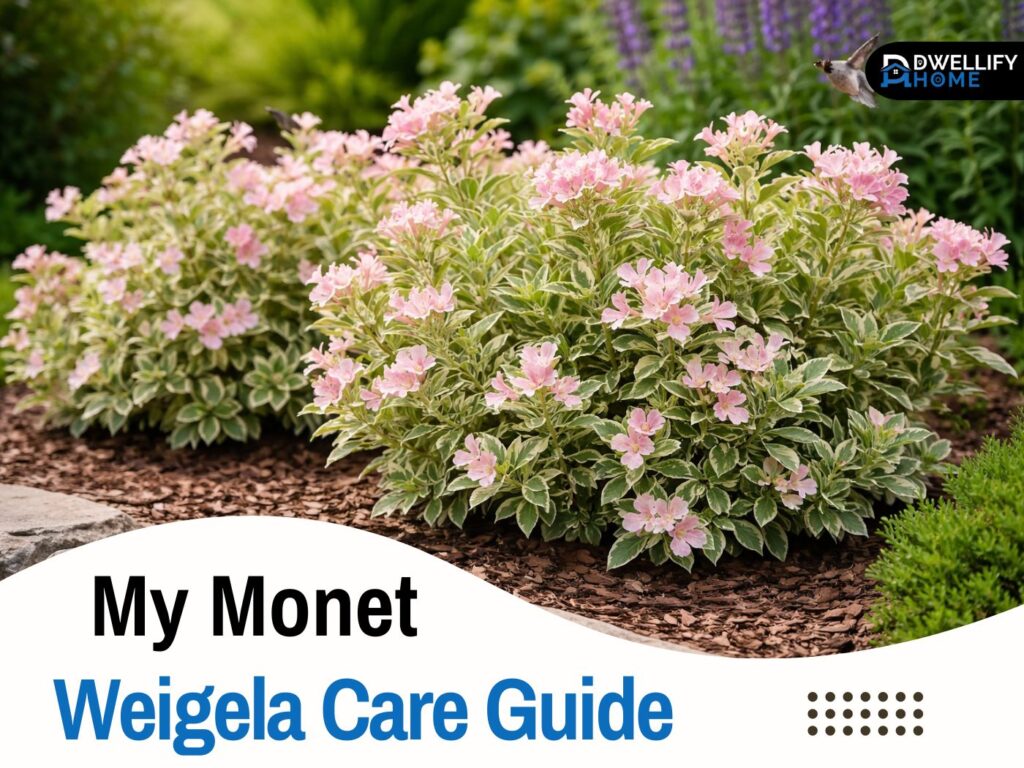
If you’ve ever wanted a small shrub that looks like it’s doing something interesting even when it’s not flowering, this one’s a solid pick. My Monet weigela is one of those plants I’ve used again and again in real gardens because it stays compact, brightens up borders, and doesn’t demand constant attention.
Here’s the thing, it’s not just about the pink flowers. The foliage is the real show, and once you understand how light, water, and pruning affect it, you can keep it looking tidy and colorful for years.
Snippet-Ready Definition:
My Monet weigela is a compact, variegated flowering shrub known for its creamy green leaves, pink spring blooms, and easy care, making it ideal for small gardens, borders, and containers.
Mission Statement:
At Dwellify Home, our mission is to provide practical, experience-based gardening guidance that helps homeowners confidently choose, grow, and care for plants that truly work in real landscapes.
My Monet Weigela Details (Quick Facts at a Glance)
Let’s get the basics straight first, because this shrub gets misunderstood a lot. It’s a dwarf, variegated weigela, often sold under the trade name My Monet. You may also see it listed by its cultivar name, Weigela florida ‘Verweig’.
In most home landscapes, it finishes around 12 to 18 inches tall, with a wider spread, usually 18 to 30 inches depending on conditions and pruning. It blooms mainly in spring into early summer, and in a good year you might see a lighter encore later.
Hardiness listings vary by source, but it’s commonly grown in cold-winter regions and does well in much of the temperate U.S. and similar climates. The big takeaway is simple: give it decent drainage, enough light, and prune at the right time.
Quick Guide Table: My Monet Weigela at a Glance
| Feature | Details |
| Plant Type | Dwarf flowering shrub |
| Mature Size | 12–18 inches tall, 18–30 inches wide |
| Bloom Time | Late spring to early summer |
| Sun Needs | Full sun to part shade |
| Soil | Well-drained, adaptable |
| Water | Moderate, consistent when young |
| Pruning | Right after flowering |
| Winter Behavior | Deciduous, goes dormant |
| Deer Resistance | Often deer-resistant |
| Best Uses | Borders, containers, edging |
Step-by-Step: Basic Care Setup (Beginner Friendly)
- Choose the right spot
Pick a location with morning sun and good airflow. - Prepare the soil
Make sure water drains easily. Avoid soggy areas. - Plant at proper depth
Keep the root ball level with the soil surface. - Water deeply at first
Especially during the first 6–8 weeks. - Prune only after flowering
This protects next year’s blooms.
Quick Pros & Cons (Helpful for Decision-Making)
Pros
- Compact size, great for small spaces
- Attractive foliage all season
- Low maintenance once established
- Pollinator friendly
Cons
- Flowers only once heavily per year
- Wrong pruning timing stops blooms
- Leaf scorch possible in extreme heat
- Not evergreen in winter
What Makes My Monet Weigela Special?
The best part is that it earns its spot even when it’s not in flower. The leaves are variegated, often minty green with creamy edges, and they can pick up pink tones when the weather is cool. That color shift is why people fall in love with it, and it’s why placement matters.
It’s also genuinely useful from a design standpoint. In tight foundation beds, along walkways, or at the front of mixed borders, it behaves more like a perennial-sized shrub. I’ve tucked it in near steps, around patio edges, and in small courtyard plantings where bigger shrubs would swallow the space.
One more thing I’ve noticed over the years: it looks best when you treat it like a “detail plant.” It’s not meant to be a tall screen or a big anchor. It’s meant to be a clean, bright accent that repeats nicely.
Key Features (Foliage, Flowers, Wildlife, Deer)
The foliage is the daily driver. In a well-placed spot, the leaves stay crisp and bright and help the whole bed look more intentional. In harsher conditions, the leaf edges can scorch or brown, which is usually a care or placement issue, not a fatal problem.
The flowers are small and trumpet-shaped, usually pink. They’re not huge, but they’re cheerful, and in my experience they’re most noticeable when the shrub is planted where you can see it up close, not buried behind taller plants.
On top of that, pollinators do visit it. I’ve seen hummingbirds work a bed that included weigela, especially when it’s part of a mix with other nectar plants. And yes, it’s often described as deer resistant. I always phrase that carefully, because deer will sample almost anything if they’re hungry enough, but it tends to be less appealing than many tender shrubs.
My Monet Weigela Size and Spacing (So It Stays Compact)
My Monet weigela size is one of its biggest selling points, but spacing still matters. Because it’s wider than it is tall, it can look crowded if it’s squeezed between bigger plants. When I install it, I plan for its mature spread, not just what it looks like in the pot.
A practical spacing range is about 24 to 30 inches from the center of the plant to the next plant, depending on what’s beside it. If you want a continuous edge, you can tighten that a bit, but expect to do light shaping after bloom.
A few real-world placement notes that work well:
- Front of borders where you want bright foliage all season
- Along a walkway where you’ll notice the leaf color daily
- In groups of 3 or 5 for a repeated, intentional look
- In containers where it can play the “spiller-mound” role
My Monet Weigela Sun or Shade?
Best light for strongest color + blooms
If you ask me one question before planting, it’s always about light. My Monet weigela sun or shade is a real decision because it affects both foliage color and flowering.
In full sun, you’ll usually get better bloom and often stronger pink tones on new growth, especially in cooler periods. In part shade, the white variegation can look a bit softer and brighter, but flowering can be lighter if shade is too heavy.
My rule in most gardens is simple: aim for at least 5 to 6 hours of sun, then adjust based on heat. If you’re in a cooler region, full sun is usually perfect.
Hot-summer tip (avoid stress)
In hotter climates or in beds that bake against a wall, full afternoon sun can push the leaves toward scorch. Guess what, people often blame watering first, but the real culprit is often reflected heat or a dry wind corridor.
If summers are intense where you live, morning sun with afternoon shade is a great compromise. You’ll still get good color, and the plant won’t look tired by mid-July.
Soil & Drainage (The “No Fuss” Setup)
This shrub is adaptable, but it really wants well-drained soil. That doesn’t mean sandy soil only. It just means the roots shouldn’t sit in water for long stretches.
If your soil holds water, improve the planting area rather than fighting the plant later. I’ve had good results mixing compost into the top 8 to 10 inches and making sure water can move away from the root zone. Avoid planting in low spots where runoff collects.
A quick check that saves headaches: after a heavy rain, if the spot stays soggy for a day or two, pick a different location or build a slight mound.
Planting My Monet Weigela (Ground vs Containers)
For in-ground planting, I keep it straightforward. Dig the hole wider than the root ball, loosen the surrounding soil, and set the shrub so the top of the root ball sits level with the surrounding soil, or just a touch high if drainage is borderline.
Then water it in deeply. That first watering isn’t optional. It settles soil around roots and prevents hidden air pockets.
In containers, it can be fantastic, but you have to respect that pots dry faster and freeze harder in winter. Use a pot with real drainage holes, a quality potting mix, and a container wide enough to let the shrub spread a bit without being squeezed.
A simple container setup that works:
- Medium-large pot, wider than it is deep
- Potting mix that drains well, not heavy garden soil
- A little compost, plus slow-release fertilizer in spring
- Mulch on top to reduce surface drying
My Monet Weigela Care (Water, Feeding, Mulch)
Watering routine (new plant vs established)
My Monet weigela care is easy once it’s established, but the first season is where most problems start. In the first 6 to 8 weeks after planting, I water deeply and consistently. Not daily sprinkles, but slow, thorough soakings.
A good rhythm is a deep watering once or twice a week depending on heat and soil type. Sandy soil needs more frequent watering, clay less frequent but slower. After the first season, the plant becomes much more forgiving, though it still looks best with regular moisture during hot spells.
Fertilizing (what actually helps)
Weigelas don’t need heavy feeding. Too much nitrogen can make a shrub look leafy and lush but reduce flowering. I’ve seen that happen in beds that get lawn fertilizer drift, so keep that in mind if it’s near turf.
I prefer a light spring feeding with a balanced slow-release fertilizer, or a compost top-dress. If you fertilize, do it early. Late-season feeding can encourage tender growth that doesn’t harden off well before cold weather.
Mulch is a quiet hero here. A 2 to 3 inch layer helps keep moisture steady and protects roots from temperature swings. Just don’t pile mulch against the stems.
My Monet Weigela Bloom Time (And How to Get More Flowers)
My Monet weigela bloom time is typically late spring into early summer. The flowers show best when the plant gets enough sun and hasn’t been pruned at the wrong moment.
If blooms are light, I usually check three things first:
- Light: too much shade reduces flowering
- Pruning: cutting at the wrong time removes flower buds
- Feeding: excess nitrogen pushes leaves over flowers
The best way to get better bloom is not fancy. Give it more sun if possible, avoid heavy nitrogen, and prune right after flowering, not in fall or early spring.
My Monet Weigela Pruning (Simple Rules That Prevent “No Blooms”)
When to prune (the golden timing)
My Monet weigela pruning is simple once you remember one key fact: it flowers on old wood, meaning flower buds are set on growth from the previous season.
So the golden timing is right after flowering finishes. That’s when you can shape it without sacrificing next year’s bloom.
I’ve walked into plenty of gardens where someone “tidied everything up” in late winter. The shrub survived, but the flower show was basically erased for that year.
How to prune (light shaping vs renewal)
Most years, I do light shaping only. Think of it like a haircut, not surgery. Trim just enough to keep the mound tidy and to remove any awkward shoots.
Every few years, if the plant gets twiggy or less vigorous, you can do a gentle renewal by removing a couple of the oldest stems near the base. Don’t take everything at once. A slow refresh keeps the plant compact and blooming.
My Monet Weigela in Winter (Dormancy, Browning Leaves, and What’s Normal)
My Monet weigela in winter can worry people because it often looks rougher than evergreen shrubs. Leaf browning and drop in fall is normal, and in colder climates the plant goes fully dormant.
Here’s the thing, dormant doesn’t mean dead. In spring, it can be slower to leaf out than some shrubs, especially after a hard winter. I always wait until I see new buds swelling before I decide what’s truly deadwood.
In containers, winter care matters more. Pots expose roots to colder temperatures than in-ground soil. If winters are harsh, move the pot to a sheltered spot, protect the container sides, and keep the soil slightly moist, not wet, not bone dry.
My Monet Weigela Problems (Fast Troubleshooting)
My Monet weigela problems are usually fixable, and most of them come down to water, light, or pruning timing.
If you want a quick diagnosis, start here:
- Not blooming: too much shade, pruning at the wrong time, or excess nitrogen
- Brown edges or scorch: hot afternoon sun, reflected heat, or inconsistent watering
- Winter dieback: normal in some climates, prune dead wood after buds wake up
- Reversion: occasional all-green shoots can appear on variegated plants
Reversion is an underrated one. If you see a branch that’s solid green, remove it promptly. Those shoots can grow faster and slowly take over the variegated look if you ignore them.
For pests and diseases, weigela is usually not dramatic. You may see aphids on tender new growth or occasional leaf spots. Most of the time, improving airflow, watering at the base, and keeping the plant unstressed solves the issue without aggressive treatments.
Uses in the Landscape (Where It Looks Best)
This shrub shines where you can appreciate the foliage detail. I love it as a front-edge plant in mixed borders, especially next to darker foliage plants that make the variegation pop.
A few combinations that look good in real gardens:
- Pair it with deep green evergreens behind it for contrast
- Use it beside blue-toned perennials to make the cream edge stand out
- Repeat it along a walkway so the bed looks intentional, not random
In containers, it’s one of my favorites for patios because it stays small and neat. Add a couple of trailing annuals and an upright accent, and you’ve got a pot that looks designed without being fussy.
Pro Tips (What I’d Do in a Real Garden)
After years of growing and maintaining this plant, these are the habits that make the biggest difference.
First, pick the right light. Morning sun with a bit of afternoon protection in hot areas keeps foliage cleaner and reduces stress.
Second, water deeply early on. The first season is where you’re building a root system. A plant that establishes well will look better for years and handle heat more gracefully.
Third, respect pruning timing. If you only remember one thing, prune right after bloom. That one move prevents the most common complaint: no flowers next year.
And one bonus tip: give it breathing room. Crowding it under bigger shrubs makes it look tired, and the variegation doesn’t read as clearly.
Choosing the Right Plant (Avoid Mistakes at the Nursery)
When you’re buying, don’t just grab the one with the most leaves. Look for a plant with multiple healthy stems, a balanced shape, and foliage that looks fresh, not crispy.
Check the pot, too. If the plant is severely root-bound, it can struggle to settle in, especially in warm weather. A mild root-bound situation is normal, but tight spiraling roots around the edges is a sign you’ll need to loosen them carefully at planting.
Also confirm the label. You want the correct cultivar, and reputable nurseries will clearly list it as My Monet, often alongside Weigela florida ‘Verweig’.
Propagation & Plant Patent Note (Quick, Clear, Safe)
A quick and important note. My Monet is a named cultivar that has been sold under plant patent protection in the nursery trade. Because of that, the most responsible approach is to purchase plants from reputable sources rather than trying to propagate it yourself.
It’s also the simplest path for home gardeners. You’ll get the correct plant, with the correct variegation, and it saves a lot of frustration.
Alternatives & Related Options (Helpful Comparison)
Sometimes a garden needs a slightly different look, and that’s where alternatives help.
My Monet Sunset is similar in size, but it tends to offer warmer tones in the foliage, which can be great if your garden palette leans gold or copper.
My Monet Purple Effect is another relative that people consider when they want deeper, moodier foliage tones with the same compact habit. If you love the My Monet look but want a stronger contrast plant, it can be worth comparing.
In practice, I choose the version that fits the color story of the bed. Cool-toned planting, go with classic My Monet. Warm-toned planting, Sunset can blend more naturally.
FAQ
How big does My Monet Weigela get?
It usually grows about 12 to 18 inches tall and spreads 18 to 30 inches wide, making it a true dwarf shrub ideal for small spaces.
What are the cons of weigela?
Weigelas bloom mostly once per year, need correct pruning timing, and can look bare in winter since they are deciduous shrubs.
Can My Monet Weigela take full sun?
Yes. Full sun encourages better flowering and stronger color, though light afternoon shade helps in very hot climates.
Where can I plant My Monet weigela?
It works best at the front of borders, along walkways, in containers, or as a low edging shrub where its foliage can be easily seen.
Why is my My Monet weigela not blooming?
The most common reasons are too much shade, pruning at the wrong time, or excess nitrogen fertilizer.
Conclusion
If you want a small shrub that brings steady color to a garden bed without taking over, my monet weigela is a smart, practical choice. The foliage carries the show for months, and the spring flowers are a nice bonus when the plant is placed in good light.
Keep it simple and you’ll do great. Give it well-drained soil, steady water during the first season, and prune right after it flowers. Protect containers a bit more in winter, and don’t panic when it looks dormant.
Do those few things, and you’ll end up with a compact, bright shrub that makes your borders and pots look more finished, season after season.
Disclaimer:
The information provided is based on horticultural experience and general growing conditions. Results may vary depending on climate, soil, and care practices. Always adapt advice to your local environment.

I’m Bilal, the founder of Dwellify Home. With 6 years of practical experience in home remodeling, interior design, and décor consulting, I help people transform their spaces with simple, effective, and affordable ideas. I specialize in offering real-world tips, step-by-step guides, and product recommendations that make home improvement easier and more enjoyable. My mission is to empower homeowners and renters to create functional, beautiful spaces—one thoughtful update at a time.