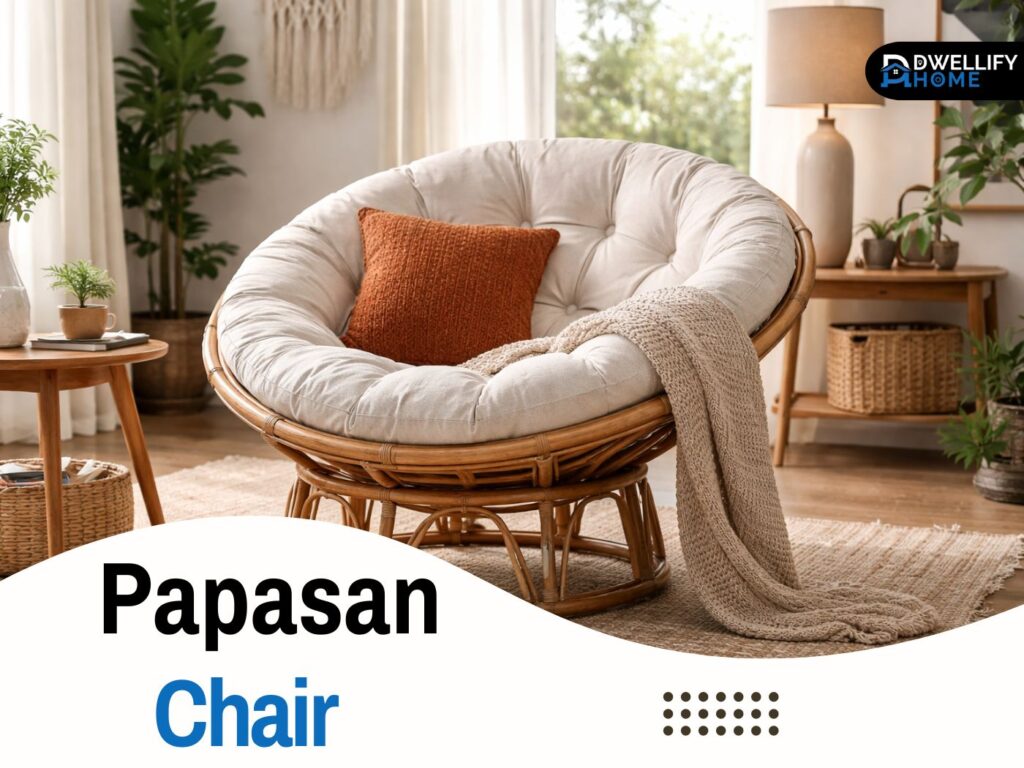
A papasan chair is one of those pieces people either fall in love with instantly or avoid because they’re not sure it will “fit” their space. I’ve used them in small apartments, teen rooms, reading corners, and even modern eclectic living rooms, and when you choose the right size and cushion, it becomes the seat everyone drifts toward.
This guide will help you pick one that feels comfortable, looks intentional, and holds up over time. I’ll keep it practical, because the wrong frame or a thin cushion can turn this cozy idea into a wobbly regret.
Snippet-ready definition:
A papasan chair is a bowl-shaped lounge chair with a thick cushion and separate base. People use it for cozy, relaxed seating in reading corners, dorms, and living rooms because it’s comfortable and easy to style.
Mission Statement:
At Dwellify Home, our mission is to make everyday decorating feel simple and doable, with practical guides that help you choose comfortable, stylish pieces that fit your space and real life.
What Is a Papasan Chair? Simple Meaning Plus Quick History
At its core, this chair is a wide bowl-shaped seat that sits on a separate base. The bowl supports a thick cushion, and the base keeps the bowl stable while letting you angle it. People also call it a bowl chair or moon chair because of that curved, cupped shape that kind of “holds” you.
Design-wise, it became popular because it does something normal accent chairs don’t. It invites relaxed sitting. You can curl up, lean back, sit cross-legged, or sprawl a little without feeling stiff. In homes where comfort matters as much as style, that’s a big deal.
Quick Guide Table (comparison)
| What you’re deciding | Best choice if you want… | Quick tip |
| Single vs Double | Single for one-person lounging, Double (mamasan) for stretching out or sharing | Double needs more floor space |
| Frame material | Rattan for warm texture, Metal for sturdier support, Wood for statement style | Check wobble and joint strength |
| Cushion thickness | Thicker for long sitting and better support | Thin cushions flatten fast |
| Indoor vs Outdoor | Outdoor-rated for patios and humidity | Indoor cushions can get musty outside |
| Set vs Separate | Set for easy fit, Separate for upgrades | Measure bowl diameter first |
Quick Buying Checklist (bullet list)
- Measure your space and walking clearance
- Match cushion diameter to the bowl
- Choose a stable papasan chair base (no wobble)
- Pick the right papasan chair frame material for your home
- Prefer removable or easy-clean covers
- Check weight capacity and return policy
- Decide where to buy: papasan chair Amazon, papasan chair World Market, or IKEA-style alternatives (papasan chair IKEA)
Types of Papasan Chairs So You Buy the Right Style
Single Papasan (1-person)
The single is the classic version. It’s roomy for one adult and works well as a reading chair, gaming chair, or casual lounge seat. In most rooms, it reads like an accent chair, but softer and more relaxed.
If you want it to feel intentional, treat it like a “destination” seat. Place it with a lamp, a small table, and a throw. When you style it like a proper corner, it looks like a design choice, not a random extra chair.
Double Papasan Chair / Mamasan (2-person lounging)
The double papasan chair is often called a mamasan chair. It’s wider and more oval, built for two people or one person who likes to stretch out. In tighter living rooms, it can replace a loveseat if you’re okay with a more laid-back seating vibe.
I usually recommend the double when you have a dedicated lounge spot, like a basement, a media room, or a wide bedroom corner. It’s also popular in dorm setups when roommates want a shared hangout seat, but it needs enough floor space to breathe.
Papasan Chair Size Guide: Fit, Comfort, and Room Planning
Sizing is where most people go wrong. The seat might look manageable online, then it arrives and suddenly the room feels smaller. A good rule is to plan for the bowl diameter plus extra clearance so you can walk around it without bumping knees.
Here’s the practical way I measure it in real homes. Put painter’s tape on the floor in the shape of the base and bowl, then add about a hand’s width around it for comfort. If that taped shape blocks a pathway or crowds a door swing, you’ll feel it every day.
Cushion size matters too. Many cushions are labeled by diameter, like 44-inch or 45-inch, but what matters is matching the cushion to the bowl. If the cushion is too small, it slides and feels flat. If it’s too big, it bunches and never sits right. Always match the bowl measurement first, then pick thickness and fabric.
A quick fit checklist that saves headaches:
- Measure doorways, stair turns, and tight hallways before ordering
- Check the base footprint, not just the cushion width
- Think about where your feet land when you stand up, especially in small apartments
The 3 Parts That Decide Quality: Frame, Bowl, Base
It helps to understand the parts because brands use different words. The papasan chair frame usually refers to the support structure, sometimes including the bowl. The bowl is the rounded seat piece. The papasan chair base is the part that touches the floor and holds everything steady.
In my experience, stability is the first sign of quality. A solid base feels planted, even when you shift your weight. A weak base rocks, creaks, and slowly loosens over time. That’s when people start stuffing felt pads everywhere and still feel the wobble.
Also look at how the bowl sits in the base. A good design cradles the bowl securely so it doesn’t slide. If the bowl feels like it’s just balancing on top, it will shift every time someone flops into it.
Frame Materials Compared: Rattan vs Metal vs Wood
Rattan and wicker are the classic choices. They bring that warm, casual texture that works beautifully in boho interiors and coastal spaces. They’re also lighter, which makes moving the chair easier. The tradeoff is that natural woven materials can dry out in harsh sun or overly dry air, and the weave can loosen if the chair gets heavy daily use.
Metal frames are more common in modern versions, and they can be a good choice when durability is the priority. A well-coated metal frame feels sturdy and tends to stay stable longer. The key is checking the welds and the finish. If it’s meant for indoor use, keep it away from damp patios, because rust starts at joints and spreads quietly.
Wood frames are less common, but you’ll see them in some boutique styles. They can look beautiful in modern eclectic spaces, but I’m picky here. I look for strong joinery and a shape that supports the bowl evenly. Cheap wood frames can crack or loosen, especially when the chair gets used as a daily lounge spot.
A simple way to choose based on lifestyle:
- Want natural texture and a relaxed look: rattan or wicker
- Want sturdy support and a cleaner silhouette: metal frame
- Want a statement piece and you’re careful with maintenance: well-built wood
Cushion Comfort Guide: Thickness, Fill, Fabric, and Real-Life Feel
The cushion is where comfort is made or lost. I’ve tested plenty of chairs that look great but feel disappointing because the cushion is thin or overstuffed in the wrong way. What you want is loft plus support. Too soft and it bottoms out. Too firm and it feels like a lumpy beanbag.
Cushion fill density matters. A good cushion has a supportive core and softer outer layers. If the cushion is only fluffy fiber, it compresses fast and becomes flat in the center. If you can, look for cushions that mention layered fill or higher-density foam support, especially for daily use.
Fabric matters more than people expect. Corduroy and microsuede feel cozy and hide wear well. Faux fur and sherpa look inviting, but they can be harder to keep clean, especially with kids or pets. Removable covers are a quiet luxury. In a busy home, being able to unzip and wash the cover can keep the chair looking new longer.
A tip from my own styling work: if you want that sink-in feeling, choose a thicker cushion, then add one smaller lumbar pillow. It helps support the lower back and makes long sitting sessions more comfortable.
Cushion Sizing and Replacement: Avoid the Number One Buying Mistake
The biggest mistake I see is buying a cushion that doesn’t match the bowl. People will grab a cushion based on a deal, then wonder why it slides or looks awkward. The cushion should sit inside the bowl with enough fullness to hug the curve without spilling too far over the edges.
Replacement cushions are also a smart way to refresh an older chair. If the frame is sturdy but the cushion is flat, you don’t need to replace everything. Measure the bowl diameter and pick a cushion that matches. Also check how it attaches. Some cushions have ties, others rely on friction, and some work better with a non-slip pad underneath.
If you’re buying a cushion without the frame, double-check:
- Bowl diameter and cushion diameter match
- Thickness suits your comfort needs
- Fabric fits your home, especially pets, kids, and spills
- Return policy, because comfort is personal
Papasan Chair Set vs Buying Separately: Best Value Strategy
A papasan chair set can be the simplest route because the cushion and frame are designed to fit together. This is helpful when you don’t want to chase measurements and you want fewer parts to figure out. It also tends to look more cohesive, because the cushion is sized and shaped for that specific bowl.
Buying separately can save money in the long run when you’re upgrading comfort. I’ve had clients keep a strong base and frame, then swap cushions seasonally. A heavier winter cushion can feel warmer and cozier, while a lighter washable cover works better in summer or in a kid’s room.
If you’re mixing pieces, be honest about your patience level. If you don’t want returns and trial-and-error, a matched set is usually the calmer choice.
Indoor vs Outdoor Papasan Chairs: Don’t Ruin an Indoor One
Outdoor versions are built for moisture, sun, and temperature swings. That means weather-resistant weave, rust-protected frames, and cushion fabrics that handle dampness better. Indoor chairs don’t always have those protections, even if they look similar.
I’ve seen indoor cushions get musty on covered patios because the fabric held moisture. Even a little humidity can leave odors and stains. If the chair will live outdoors, choose one designed for it, and store cushions inside during heavy rain. For balconies, quick-dry cushions and a frame that resists rust will save you money and frustration.
Styling Ideas That Look Grown-Up (Not Just Dorm Decor)
In a living room, treat it like an accent chair that happens to be softer. Place it near a bookcase, add a side table, and use a floor lamp to anchor the corner. If you’re working with a modern space, pick a cleaner frame, like black metal, and keep the cushion in a neutral tone so it doesn’t feel overly casual.
In small apartments, I like a lighter visual footprint. A rattan frame works well because it doesn’t feel heavy. Keep the cushion in a solid color and use one patterned throw pillow for personality. If the room is already busy, this chair should feel calm.
For boho interiors, you can lean into texture. Layer a throw, add a woven basket nearby, and pick warm-toned cushions. If you want a papasan chair pink moment, balance it with neutrals around it, like cream, beige, or light wood. That way it reads as a deliberate accent, not a loud interruption.
Dorm rooms and teen spaces need durability. Prioritize washable covers and a cushion fabric that can handle snacks, makeup, and everyday life. For reading corners, add a soft footrest or pouf, because that’s what makes the chair feel like a true lounge spot.
Where to Buy: Smart Shopping (Price, Returns, and Real-World Availability)
Shopping online is convenient, but details get glossed over. For a papasan chair Amazon listing, don’t just look at the photos. Read the dimensions carefully, especially the base size and the cushion thickness. Reviews can be useful, but focus on consistent themes like wobble, cushion flattening, and assembly issues.
Papasan chair World Market options are often popular because they offer frames, cushions, and sets in multiple fabrics. That’s helpful when you want a specific look. If you like changing your style, having cushion options can make the chair feel fresh without replacing the whole thing.
For papasan chair IKEA intent, it’s worth knowing that IKEA may not always carry a true papasan, but it often has rattan and wicker lounge chairs that give a similar relaxed vibe. If your goal is the cozy curved feel, you can find close alternatives in their rattan categories, then add soft cushions and throws to mimic that lounge look.
As for budget, price usually tracks three things: frame strength, cushion thickness, and size. A double chair costs more because the frame and cushion need more structure. If you’re trying to stay on budget, I’d rather see you buy a sturdy single with a good cushion than a cheap double that wobbles.
Assembly, Safety and Maintenance (Real Life Tips That Matter)
Assembly is usually straightforward, but you want to avoid small mistakes that cause long-term wobble. Tighten everything evenly, place the chair on a flat surface, and check that the base sits level. If the chair rocks on your floor, try felt pads or a thin rubber mat under the base, especially on tile.
Safety matters, particularly with kids and pets. Check weight capacity and avoid climbing or standing on the bowl. If the chair will be used by kids, a wider base and a stable frame reduce tipping risks. For pets, pick fabrics that resist snagging, and vacuum the cushion regularly so hair doesn’t get embedded.
Maintenance is simple when you stay consistent. For cushions, follow the care label. Spot clean spills quickly and fluff the cushion often so it wears evenly. For rattan or wicker frames, dust with a soft brush and avoid soaking the weave. For metal frames, wipe them down and keep an eye on joints. If you catch a small rust spot early, you can fix it before it spreads.
Quick Buyer Checklist (Decision in 60 Seconds)
Before you click buy, run through this:
- Size fits your room and walking paths
- Base feels stable and wide enough for daily use
- Frame material matches your lifestyle and location
- Cushion thickness and fill won’t flatten quickly
- Cover is washable or at least easy to clean
- Weight capacity fits your household
- Return policy is clear and reasonable
FAQs
1) What is the difference between a papasan chair and a mamasan chair?
A papasan is the classic single bowl chair for one person. A mamasan is the wider, double version designed for two people or one person who wants to stretch out.
2) What is a papasan chair used for?
It’s used for relaxed lounging, reading, gaming, and cozy corner seating. It’s popular in dorm rooms, bedrooms, and living rooms because the cushion and bowl shape make it easy to curl up.
3) Are Papasan chairs in style in 2025?
Yes, they still show up in boho, modern eclectic, and cozy minimal interiors. They’ve stayed popular because they mix comfort with a casual, textured look that works in many home styles.
4) What is a papasan chair also called?
Many people call it a bowl chair or moon chair because of its round, curved seat shape.
5) Can I buy a papasan chair cushion separately?
Yes. Just measure the bowl diameter and choose a cushion that matches. A replacement cushion is a good option if your frame is solid but the cushion has flattened.
Conclusion
A good papasan chair isn’t just about the look, it’s about how it supports real life. If you choose the right size, a stable base, and a cushion that’s thick enough to stay comfortable, you’ll end up with a seat that gets used daily, not pushed into a corner.
My practical advice is simple. Spend your time checking the base stability and cushion quality, and don’t guess on sizing. When those two things are right, the chair becomes that cozy spot you naturally drift to, whether you’re reading, lounging, or just taking a quiet moment at home.
Disclaimer:
This article is for general home and décor guidance. Product availability, sizes, and specifications can vary by brand and retailer, so always confirm measurements, materials, and care instructions before purchasing.

I’m Bilal Hassan, the founder of Dwellify Home. With 6 years of practical experience in home remodeling, interior design, and décor consulting, I help people transform their spaces with simple, effective, and affordable ideas. I specialize in offering real-world tips, step-by-step guides, and product recommendations that make home improvement easier and more enjoyable. My mission is to empower homeowners and renters to create functional, beautiful spaces—one thoughtful update at a time.