Cucumbers do better off the ground. That’s something you notice pretty quickly after growing them a season or two. The vines stay easier to manage, the fruit comes in cleaner, and harvesting stops feeling like a scavenger hunt through a damp tangle of leaves.
A good trellis doesn’t need to be fancy. It just needs to hold steady once the vines start climbing and setting fruit. Some gardeners do well with a simple frame and netting. Others need something stronger for a raised bed, a windy yard, or a big vining variety. The right setup depends more on your space and how you grow than on how much money you spend.
Snippet-Ready Definition
A diy cucumber trellis is a homemade support that lifts cucumber vines off the ground. Gardeners use it to save space, improve airflow, keep fruit cleaner, and make harvesting easier.Mission Statement
Dwellify Home helps homeowners make practical, stylish, and informed home and garden decisions with clear, useful guidance.
Why Grow Cucumbers on a Trellis?
The biggest advantage is cleanliness. Cucumbers lying on the soil are more likely to get misshapen, develop soft spots, or pick up dirt that’s hard to wash off. Once the vines climb, the fruit hangs better and stays easier to see.
Airflow improves too. That matters more than beginners often think. Dense vines sitting on the ground stay damp longer after watering or rain, and that can make disease problems worse. Lifting the plant helps leaves dry out faster.
There’s also the space issue. A cucumber patch can spread farther than expected. Growing upward frees up bed space and keeps walkways from disappearing by midsummer. In a small backyard or raised bed, that alone can make trellising worth it.
Key Benefits
- Saves space in raised beds, rows, and small gardens
- Keeps cucumbers cleaner and easier to spot at harvest
- Improves airflow around vines and leaves
- Works with simple materials like netting, bamboo, pallets, or wire panels
Before You Build: What to Know First
Placement matters. Put the trellis where the plants will get full sun and where the structure won’t throw shade over lower crops for most of the day. In many gardens, the north side of a bed works best for that reason.
It’s also smarter to install the support before planting, or at least right after sowing seeds. Waiting until the plants are already established often means pushing stakes into the soil near the roots. That’s one of those small mistakes that can slow plants down even when the trellis itself looks fine.
Think about the footprint before you start cutting wood or tying netting. A trellis that works well in an open row may feel clumsy in a narrow raised bed or awkward beside a patio container. Good builds usually start with a tape measure, not a pile of materials.
Which Cucumber Plants Grow Best on a Trellis?
Vining cucumbers are usually the best match. They naturally reach, climb, and keep extending through the season, so a support gives them somewhere to go. These are the varieties that really benefit from vertical growing.
Bush cucumbers stay more compact. They can still use support, especially in containers, but they don’t need a large structure the same way a long vining type does. For pots or tight spaces, a compact variety with a simple support often makes more sense than building a tall frame.
That’s worth checking before you build. A large cattle panel arch for a compact patio cucumber is more structure than the plant needs. On the other hand, a small tomato cage can be overwhelmed fast by a vigorous slicer.
What Makes a Good DIY Cucumber Trellis?
Height helps, but strength matters more. A short sturdy trellis usually performs better than a tall flimsy one. Once cucumber vines start producing, the weight adds up fast, especially after rain.
The climbing surface matters too. Tendrils need something they can grab. Trellis netting, wire mesh, twine grids, and narrow slats all work better than wide flat boards with nothing to catch. If the plant can’t cling easily, you’ll end up tying more of it by hand.
For outdoor use, stability is where a lot of homemade builds fail. A trellis can look solid on a calm afternoon and start leaning two weeks later once the vines fill out. Set posts deep enough, anchor the frame well, and don’t assume lightweight materials will hold through the whole season.
Tools and Materials You May Need
You can build a useful cucumber trellis with simple materials:
- Wood stakes or 2x2s
- Metal T-posts
- Bamboo poles
- Trellis netting or nylon mesh
- Twine
- Zip ties or garden wire
- Screws and a drill
- A hammer or post driver
Repurposed materials can work well too. Old pallets, leftover fencing, and spare wire panels are common choices. Just be selective. Weathered wood is fine if it’s still solid, but weak boards and rusty fasteners tend to fail right when the vines are at their heaviest.
How to Build a DIY Cucumber Trellis at Home
Start by measuring the bed, row, or container area. That tells you what shape makes sense and stops you from building something wider or taller than the space can handle.
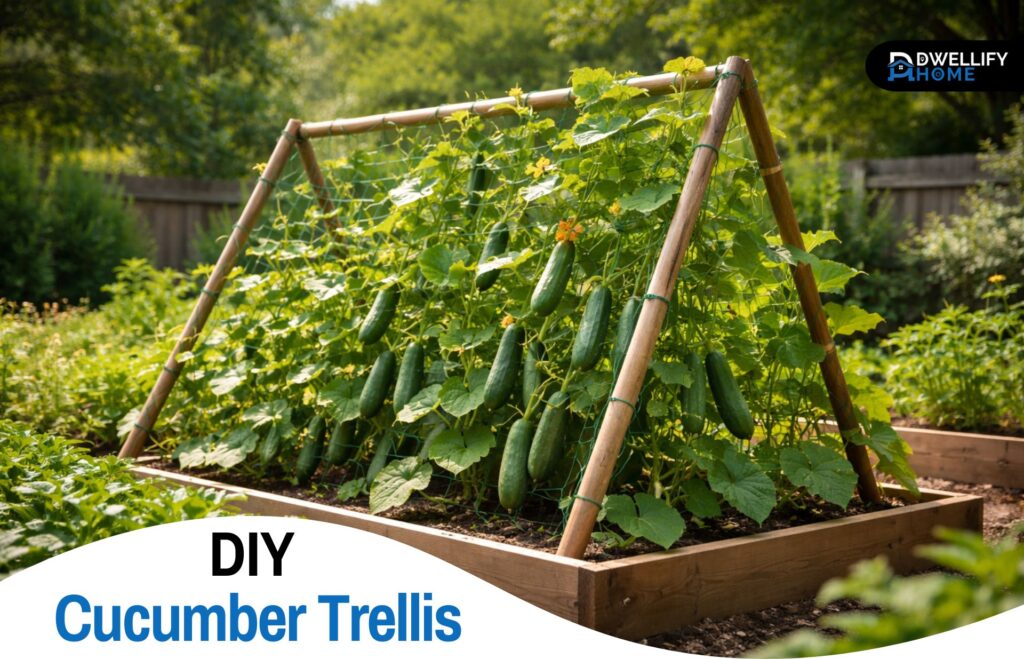
Next, choose the style. For a raised bed, an A-frame or upright panel works well. For a garden row, posts with netting are simple and effective. For larger outdoor beds, a cattle panel or arch gives strong support.
Set the main frame first. Posts should feel firm before you attach anything else. Then add the climbing surface, whether that’s netting, twine, wire mesh, or slats. Pull it tight. Loose netting sags quickly once the vines latch on.
Before planting, give the structure a shake. That quick test tells you a lot. A trellis that wobbles while empty won’t improve once the plants are full of foliage and fruit.
Best DIY Cucumber Trellis Ideas for Different Garden Setups
An A-frame is one of the most practical designs for home gardens. It’s sturdy, easy to access from both sides, and works especially well in raised beds.
A T-post and netting trellis is one of the simplest setups. It’s inexpensive, fast to build, and easy to adjust for different bed lengths.
A post-and-twine trellis works well for gardeners who want a low-cost option using basic materials. It’s best for lighter vines and calmer locations.
Bamboo teepees suit small spaces and container gardens. They’re quick to put together and look neat, though they’re better for compact or lighter-growing plants.
Fence-style trellises make sense along an existing fence or wall. They save space, but leave enough room for airflow and access so the plants don’t feel crowded.
Raised bed trellises and ladder-style supports are useful when you want a tidy, upright look that doesn’t spill into paths.
Cattle Panel and Arch Trellis Ideas
A cattle panel trellis is one of the strongest options you can build. It handles heavy vines well and lasts for years. That’s why experienced gardeners often switch to one after dealing with weaker setups that sag by midsummer.
An arch or tunnel shape works best when you’ve got the room. It creates a strong structure and makes harvesting easier because the cucumbers hang down where you can spot them. It’s more than some small gardens need, but in a larger bed it’s hard to beat for durability.
Pallet Cucumber Trellis Ideas
A pallet cucumber trellis can be a good low-cost option if the pallet is clean and structurally sound. It works best as a leaning support or upright panel tied firmly to stakes.
The main thing to watch is safety. Old pallets can have broken slats, hidden nails, or weak points that give way later. Check them closely before using one around edible plants.
DIY Cucumber Trellis Ideas for Small Spaces
In a tight garden, narrow upright designs usually work better than wide frames. A slim panel against the back of a raised bed can give you climbing space without eating up the middle of the bed.
For patios and compact backyards, vertical designs keep the footprint small. That’s where container trellises, wall-mounted supports, and narrow A-frames earn their place. They let the plant grow up instead of out into the only walking space you’ve got.
DIY Cucumber Trellis for Pots and Containers
Containers need lighter, more compact supports, but they still need to be secure. A bamboo tripod, small wire panel, or sturdy tomato cage often works well for one plant in a large pot.
The mistake here is underestimating the weight. Once the vine fills out, a loosely stuck support can tip the whole container. It helps to anchor the trellis firmly and use a heavy enough pot that won’t shift easily in wind.
How to Train Cucumbers to Climb a Trellis
Start early. Young vines are easier to guide than older ones. Once they grab hold, they usually do most of the work themselves.
Gently weave the vines through netting or tie them loosely with soft plant ties if they need help. Don’t cinch them tight. Cucumbers grow fast, and tight ties can cut into stems before you notice.
Avoid forcing stiff vines into place. That often leads to snapped growth tips, and the plant has to recover instead of climbing.
How to Keep a DIY Cucumber Trellis Strong All Season
Check the trellis every week or so once the plants start taking off. Tighten loose ties, straighten leaning posts, and fix sagging netting before it gets worse.
Wind and rain expose weak points fast. That top crossbar, the corners, and the points where netting attaches usually need the most attention. A small repair in June can prevent a full collapse in July.
Common DIY Cucumber Trellis Mistakes to Avoid
One common mistake is building too late. Another is choosing a design because it looks nice without thinking about the space or the plant’s growth habit.
Weak materials are another issue. Thin string, shallow posts, or brittle wood might look fine early in the season, then fail once the vines get heavy. Poor placement causes trouble too, especially when the trellis blocks light or makes picking awkward.
And don’t wait too long to train the vines. Letting them sprawl first makes them harder to redirect later.
How to Choose the Best DIY Cucumber Trellis for Your Garden
For beginners, a simple post-and-netting build is usually the easiest place to start. It’s affordable, straightforward, and does the job well.
For raised beds, an A-frame gives good support without making the bed hard to reach. For small spaces or pots, bamboo supports and compact panels are often enough.
For long-term outdoor growing, cattle panels and strong framed trellises hold up best. For the lowest cost, pallets or twine-based builds can work, as long as they’re put together carefully.
Expert Tips for Better Results
Keep harvesting. Cucumbers that stay too long on the vine slow the plant down.
Water consistently, especially with container-grown plants. Dry soil followed by a heavy soak can stress the plant and affect fruit quality.
Give the vines airflow and don’t let side growth become a tangled mat around the base. A tidy plant is easier to inspect, easier to pick, and usually healthier over the season.
Cucumber Trellis Pictures and Layout Inspiration
The most useful pictures are often the simplest ones. A clean raised bed with an A-frame, a cattle panel arch between beds, or a narrow vertical panel behind a container can tell you more than a decorative setup that looks good but isn’t practical.
When planning your own layout, look for examples that match your space. A backyard row, a patio pot, and a small raised bed all need different kinds of support.
FAQs
What is the best material for a DIY cucumber trellis?
Trellis netting, cattle panels, bamboo, and sturdy wire mesh are the most practical choices. The best one depends on how heavy your plants get and how permanent you want the trellis to be.
How tall should a cucumber trellis be?
Most home cucumber trellises work well around 5 to 6 feet tall. That gives vining plants enough climbing space without making harvesting awkward.
Can cucumbers grow well in pots with a trellis?
Yes. Container cucumbers do well with compact supports like bamboo tripods, small panels, or tomato-cage-style trellises, as long as the pot is large and stable enough.
When should I install a cucumber trellis?
Install it before planting or right after sowing. That avoids disturbing roots later and makes it easier to train young vines from the start.
What is the easiest cucumber trellis to build?
A simple post-and-netting setup is usually the easiest. It is affordable, quick to build, and works well in most backyard garden beds.
Conclusion
A DIY cucumber trellis doesn’t need to be complicated to work well. What matters is choosing a design that fits your space, building it strong enough to last the season, and guiding the vines before they turn into a sprawl on the ground.
Start with the setup that makes sense for your garden right now. A simple frame done properly will usually serve you better than a larger build that doesn’t fit the space or the plant. Once you’ve grown cucumbers vertically, it’s hard to go back.
Disclaimer
This article is for general educational purposes and should be used alongside local growing conditions, plant variety needs, and basic garden safety.

I’m Bilal Hassan, the founder of Dwellify Home. With 6 years of practical experience in home remodeling, interior design, and décor consulting, I help people transform their spaces with simple, effective, and affordable ideas. I specialize in offering real-world tips, step-by-step guides, and product recommendations that make home improvement easier and more enjoyable. My mission is to empower homeowners and renters to create functional, beautiful spaces—one thoughtful update at a time.