If you like the neat, classic look of boxwood but want something tougher and easier to live with, hoogendorn holly often ends up on the short list. I’ve planted and maintained it in residential landscapes, commercial borders, and tight foundation spaces for years, and it’s one of those shrubs that quietly does its job without demanding attention.
In this guide, I’ll walk you through what it really looks like over time, how big it gets, how fast it grows, where it shines, and where people usually go wrong. Think of this as a friendly garden walk-through, not a sales pitch.
Snippet-Ready Definition:
Hoogendorn holly is a compact, evergreen Japanese holly with dense, boxwood-like foliage. It’s valued for low maintenance, tidy growth, and reliable performance in hedges, borders, and foundation plantings.
Mission Statement
Our goal is to provide clear, practical, and experience-based plant guidance that helps homeowners make confident landscaping decisions and build healthy, long-lasting gardens.
Hoogendorn Holly at a Glance (Quick Facts)
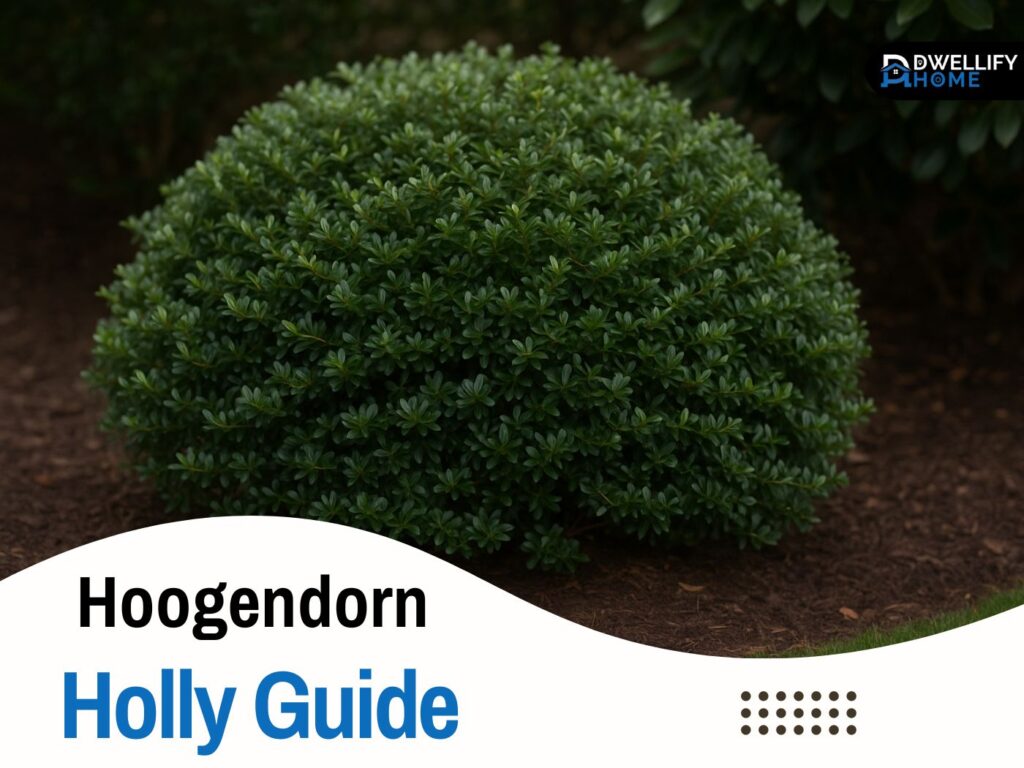
Hoogendorn is a compact Japanese holly with a dense, mounded shape and small, glossy leaves. It’s evergreen, low-maintenance, and well-suited to formal or semi-formal landscapes.
It performs best in USDA zones 5 through 8, prefers full sun to partial shade, and likes soil that drains well and leans slightly acidic. Once established, it handles dry spells better than most people expect.
What It Looks Like (And Why People Compare It to Boxwood)
At first glance, many homeowners assume it’s boxwood. The leaves are small, dark green, and tightly packed, giving it that tidy, clipped look even without heavy pruning.
The difference shows up over time. Hoogendorn tends to hold its shape naturally, forming a low mound rather than trying to stretch upward. In landscapes where boxwood struggles with disease or winter burn, this plant often stays greener and more consistent year-round.
Quick Comparison & Planting Guide Table
| Feature | Hoogendorn Holly |
| Mature Height | 2–3 feet |
| Mature Spread | 4–5 feet |
| Growth Rate | Slow to moderate |
| Sun Exposure | Full sun to partial shade |
| Soil Preference | Well-drained, slightly acidic |
| Pruning Needs | Minimal |
| Deer Resistance | Generally resistant |
| Best Uses | Low hedges, borders, foundations |
Quick Planting & Care Checklist (Practical Guide)
- Choose a sunny or lightly shaded spot with good airflow
- Avoid soggy or compacted soil at all costs
- Space plants about 3 feet apart for hedges
- Water regularly the first year, then reduce
- Prune lightly once a year to maintain shape
Hoogendorn Holly Size, Height, Spread & Growth Rate
Most mature plants reach about 2 to 3 feet in height and spread roughly 4 to 5 feet wide. That wider spread surprises people, so spacing matters more than height when planning a hedge or border.
The growth rate is slow to moderate. In real terms, that means you’re not trimming it every month, but you also won’t see instant coverage. From my experience, it fills in steadily over three to five years, which actually makes long-term maintenance easier.
Best Landscaping Uses (Where It Performs Best)
This shrub is a workhorse when used in the right places. I’ve seen it succeed most often in these roles:
- Low hedges along walkways or driveways
- Borders that need year-round structure
- Foundation planting where height control matters
- Mass plantings for a clean, evergreen base layer
It also works in large containers, especially in entryways, as long as drainage is excellent.
Planting Hoogendorn Holly the Right Way
Planting is where most long-term success is decided. Choose a spot with good airflow and avoid low areas where water collects. Poor drainage is the number one reason this plant fails.
Dig the hole just as deep as the root ball and at least twice as wide. Set the plant slightly high, backfill gently, and water deeply. Finish with a mulch ring, but keep mulch a few inches away from the stems. That simple step prevents rot and stress later on.
Care & Maintenance (Simple Routine That Works)
The first year is all about consistent watering. Don’t keep the soil soggy, but don’t let it dry out completely either. Once established, watering becomes occasional rather than routine.
Fertilizing should be light. A balanced, slow-release fertilizer in early spring is plenty. Overfeeding leads to soft growth that looks good briefly but causes problems long-term. Mulching helps regulate moisture and temperature, especially during hot summers and cold winters.
Pruning Hoogendorn Holly (Light Shaping vs Hard Cutback)
Guess what. Most pruning mistakes come from doing too much, not too little. This plant naturally keeps a tidy form, so light shaping once a year is usually enough.
If you need to reduce size, prune in late winter or early spring before new growth starts. Hard cutbacks are possible, but recovery is slow. I’ve seen plants bounce back, but it can take a full season or more to regain density.
Flowers, Berries & Pollination (Clear Confusion)
In spring, the plant produces small white flowers that most people barely notice. Berries, when they appear, are small and black in fall.
Here’s the important part. Many Hoogendorn plants are male and won’t produce berries at all. If berries matter to you, a compatible female plant and a pollinator nearby are required. Otherwise, enjoy it for foliage, which is really its main strength.
Hoogendorn Holly Problems (Symptoms, Causes, Fixes)
Most issues trace back to site conditions rather than pests. Yellowing leaves usually signal poor drainage or soil pH problems. Weak growth often points to shade or compacted soil.
Root rot is the most serious issue I see, especially in heavy clay soils. If drainage can’t be improved, replacing the plant is often the smartest choice. Spider mites and scale insects can appear during hot, dry weather, but good airflow and proper watering keep them in check.
Hoogendorn Holly vs Soft Touch Holly vs Boxwood (Which One Should You Choose?)
If you want a crisp, formal look with minimal pruning, Hoogendorn is the better choice. Soft Touch holly has a looser, softer texture and works better in natural-style gardens.
Compared to boxwood, Hoogendorn offers better disease resistance and fewer winter issues in many regions. Boxwood still has its place, but for low hedges with less fuss, this holly often wins in real landscapes.
Golden Hoogendorn Holly (What People Mean + Better Options)
People often ask about golden Hoogendorn holly. In most cases, they’re referring to variegated Japanese hollies with gold-edged leaves rather than a true golden version of this cultivar.
If color contrast is the goal, look for proven variegated varieties and place them where morning sun highlights the foliage without stressing the plant.
Buying Checklist (So You Get the Right Plant)
When shopping, check the roots first. Avoid plants with circling or mushy roots. Leaves should be evenly green with no spotting or dieback.
Match container size to your patience level. Larger plants cost more but give instant structure. Smaller ones take time but establish faster and often outperform long-term when planted correctly.
FAQs
How big do Hoogendorn hollies get?
Most plants reach about 2 to 3 feet tall and spread 4 to 5 feet wide. They stay low and mounded rather than growing upright.
Is Hoogendorn holly a sun or shade plant?
It grows best in full sun to partial shade. Too much shade can reduce density and slow growth.
Do deer eat Hoogendorn holly?
It’s considered deer resistant, though hungry deer may still browse it occasionally in high-pressure areas.
What is the difference between Helleri and Hoogendorn holly?
Helleri holly grows slightly taller and narrower, while Hoogendorn stays lower, wider, and more mounded, making it better for low hedges.
Does Hoogendorn holly need frequent pruning?
No. It naturally keeps a neat shape and usually needs only light annual trimming.
Conclusion
If you want a compact evergreen that stays neat, handles pruning well, and doesn’t demand constant care, hoogendorn holly is a smart, dependable choice. Get the drainage right, give it space to spread, and resist the urge to overwork it.
At Dwellify Home, I often recommend this shrub to homeowners who want structure without stress. Plant it once, care for it thoughtfully, and it’ll reward you with years of clean, reliable greenery.
Disclaimer
Plant performance can vary based on climate, soil conditions, and care practices. Always consider local growing conditions and consult a professional landscaper or extension service for site-specific advice.

I’m Bilal, the founder of Dwellify Home. With 6 years of practical experience in home remodeling, interior design, and décor consulting, I help people transform their spaces with simple, effective, and affordable ideas. I specialize in offering real-world tips, step-by-step guides, and product recommendations that make home improvement easier and more enjoyable. My mission is to empower homeowners and renters to create functional, beautiful spaces—one thoughtful update at a time.