Onions look simple, but growing great ones is all about timing and a few smart habits. I’ve grown onions in backyard beds, raised rows, and containers for years, and the pattern is always the same: strong leaves early lead to bigger, better bulbs later.
If you’ve ever wondered how onions grow from tiny starts into firm, flavorful bulbs, you’re in the right place. We’ll walk through the full process together—what triggers bulbing, how to plant seeds or sets, why spacing matters, and how to harvest and store onions so they last. No fluff. Just practical, garden-tested advice you can use this season.
Short intro about How Do Onions Grow:
Onions grow by first producing green leaves, then forming bulbs when daylight hours increase. Strong early leaf growth, proper spacing, and consistent care help onions develop into full, healthy bulbs.
Mission Statement:
Our goal is to help home gardeners understand how onions grow using clear, honest, experience-based guidance—so anyone can grow healthy onions with confidence and better results each season.
How Onions Grow (The Life Cycle in Plain Words)
From start to harvest
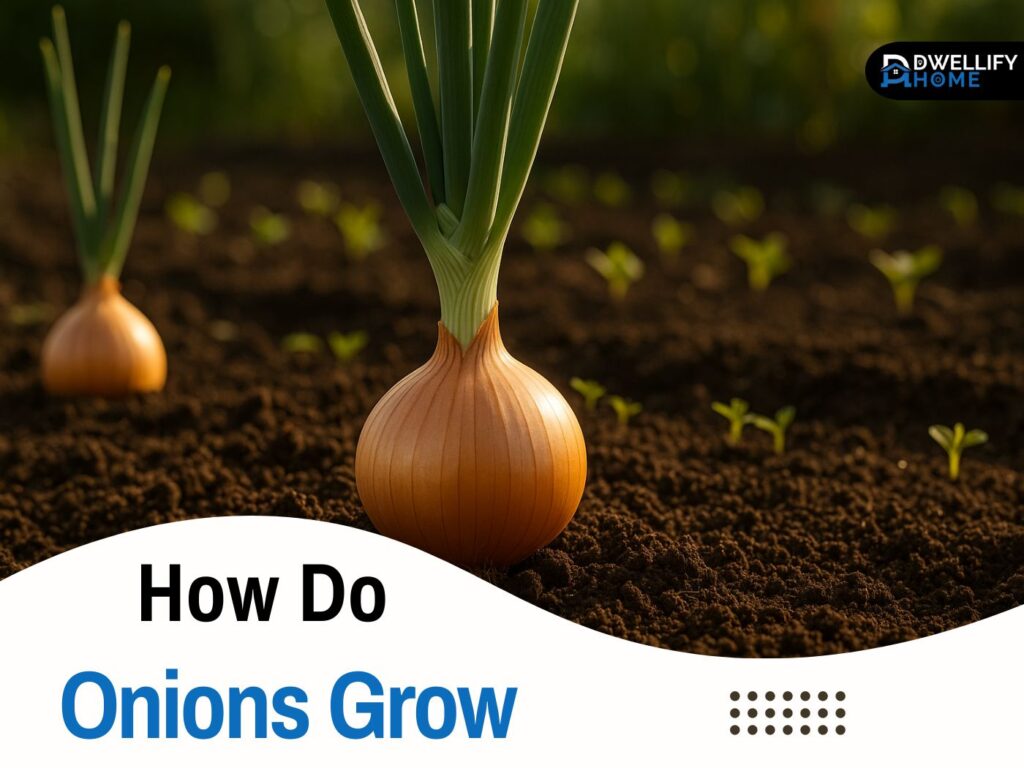
Onions grow in a clear sequence. You plant a seed, set, or transplant. Green leaves push up first and keep growing. Later, the plant shifts gears and swells at the base to form a bulb. That bulb is where the onion stores energy.
Guess what? The size of the bulb is closely tied to the number of healthy leaves the plant makes before bulbing starts. Each leaf becomes a ring in the onion. More leaves usually mean a bigger onion.
What actually triggers bulb formation
Bulbing isn’t random. It’s triggered by daylight length, not temperature. When days reach a certain number of daylight hours, the plant switches from leaf growth to bulb growth. That’s why choosing the right onion type for your location matters so much.
Quick Guide: How Do Onions Grow? (Step-by-Step)
Simple growth process most gardeners follow:
- Start onions from seeds, sets, or transplants
- Leaves grow first and store energy
- Day length triggers bulb formation
- Bulbs swell underground as tops mature
- Tops fall over when onions are ready to harvest
- Bulbs are cured and stored for long-term use
Comparison Table: Ways to Grow Onions
| Method | Best For | Bulb Size Potential | Time Needed |
| Seeds | Variety & control | High | Long |
| Sets | Easy growing | Medium | Short |
| Transplants | Reliable results | High | Medium |
| Kitchen Onion | Green shoots only | Low | Short |
Choose the Right Onion for Your Location (Long-Day vs Short-Day)
Onions fall into three main groups based on day length.
- Long-day onions bulb when days reach about 14 to 16 hours. These work best in northern regions.
- Short-day onions bulb around 10 to 12 hours of daylight, making them ideal for southern areas.
- Intermediate or day-neutral onions sit in the middle and work across many regions.
I’ve seen gardeners do everything right—good soil, steady watering—yet end up with pencil-thin onions. The problem was simple: the wrong day-length type. Get this choice right, and you’re already ahead.
Onion Seeds, Sets, or Transplants — Which One Should You Use?
You’ve got three ways to start onions, and each has a place.
Onion seeds give you the widest variety choices. They take longer, but if you start early, they produce excellent bulbs. If you like control and planning, seeds are a solid option.
Onion sets are small dormant bulbs. They’re easy and quick, which is why beginners like them. On top of that, they tolerate cooler soil. The downside is they can bolt or stay smaller if stressed.
Transplants are young plants grown from seed. In my experience, transplants often give the most consistent results for full-size bulbs, especially for gardeners who want reliability without a long seed-starting window.
When to Plant Onions (Timing That Makes or Breaks Size)
Onions are cool-season crops. They like to get established early while the weather is mild.
If you’re growing from seed, start them indoors well before your last frost date. This gives plants time to build leaves. Sets and transplants can go into the ground as soon as the soil can be worked.
The best part is this simple rule: early planting equals more leaves, and more leaves usually equal bigger onions.
Soil and Bed Prep (Where Onions Grow Best in the Ground)
When people ask how do onions grow in the ground successfully, I always point to soil first. Onions need loose, well-drained soil. They hate sitting in water.
Mix in compost before planting. It improves drainage and provides steady nutrition. Raised beds are great if your native soil is heavy or slow to drain.
Aim for soil that crumbles easily in your hand. That loose structure lets bulbs expand without resistance.
How to Plant Onions (Depth, Spacing, and Thinning)
Planting from seed
Sow onion seeds shallowly and keep them evenly moist. Once seedlings are up, thin them so they aren’t crowded. This step feels painful, but it’s essential for good bulbs.
Planting sets
Plant sets with just the tip showing above the soil surface. Space them so bulbs have room to grow.
Planting transplants
Set transplants slightly deeper than they grew before, firm the soil gently, and water well.
Spacing matters more than most people realize. If you want average onions, closer spacing works. If you want larger bulbs, give them extra room.
Onion Care During Growth (Light, Water, Feeding)
Onions need full sun. Less light means fewer leaves, and fewer leaves mean smaller bulbs.
Water consistently, especially during bulb swelling. Onions have shallow roots, so they dry out quickly. I tell gardeners to aim for evenly moist soil, not soggy.
Feeding is just as important. Onions are heavy feeders early on. Nitrogen helps build leaves. As bulbing begins, ease back so plants focus on firm bulbs instead of excess top growth.
Weed Control and Mulching (Small Habit, Big Results)
Here’s the thing—onions don’t compete well with weeds. Even small weeds can steal water and nutrients.
Hand-weed carefully and mulch to keep competition down. Straw, dried leaves, or pine needles work well. Mulch also keeps soil moisture steady, which onions appreciate.
How to Grow Onions in Pots (Container Guide)
Yes, you can grow onions in containers, and it works surprisingly well.
Choose a pot with good drainage and enough depth for roots. Use quality potting mix, not garden soil. Space plants so bulbs aren’t crowded.
Containers dry out faster, so check moisture often. Many gardeners ask how long do onions take to grow in pots. Timing depends on whether you use seeds or sets, but expect several months from planting to harvest.
How Many Onions Grow From One Bulb?
This one’s easy. Typically, one bulb grows into one onion. That’s it.
If you replant a bulb or part of one, you’ll usually get green shoots rather than a new full bulb. It’s fine for fresh greens, but it’s not the same as growing a storage onion.
How to Grow Onions From Onions Without Seeds (What Really Happens)
You can regrow onion bottoms in water or soil, but let’s set expectations. This method gives you greens, similar to scallions. It’s fun and useful for cooking, but it rarely produces a large bulb.
For full-size onions, seeds, sets, or transplants are the reliable route. I’ve tested this many times, and the results are consistent.
How Do I Get My Onions to Grow Bigger? (Expert Troubleshooting)
Bigger onion checklist
If bulb size is your goal, focus on these points:
- Choose the right day-length type
- Plant early
- Encourage strong leaf growth
- Space plants properly
- Water consistently
- Feed early, not late
- Keep beds weed-free
When bulbs stay small
Small onions usually trace back to late planting, crowding, or stress. Sometimes the variety just doesn’t match the location. Fixing these basics often makes a dramatic difference next season.
Common Pests and Diseases (Keep It Simple)
Onions are generally tough, but a few issues pop up.
Thrips can damage leaves, reducing bulb size. Good airflow and monitoring help. Onion maggots are less common but can be destructive. Crop rotation goes a long way in prevention.
Diseases usually show up when soil stays too wet or plants are crowded. Proper spacing and watering habits are your best defense.
Harvesting Onions (Knowing When They’re Ready)
Harvest timing matters. When most tops bend over and start to yellow, bulbs are ready.
Loosen soil gently and lift bulbs without bruising them. Don’t rush this step. Onions harvested too early won’t store well.
Curing and Storing Onions (For Long Shelf Life)
Curing is where storage success begins. Lay onions out in a dry, airy place so skins dry and turn papery.
Once cured, store onions somewhere cool and dry with airflow. Storage varieties last the longest, while sweet onions are best used sooner.
FAQs
Do onions grow in the ground or on top of the ground?
Onions grow mostly underground. The bulb forms below the soil surface while green leaves grow above ground. You may see the top of the bulb as it matures, which is normal.
Can I grow onions from an onion?
You can regrow an onion for green shoots, but it usually won’t produce a full bulb. For proper bulb onions, seeds, sets, or transplants work best.
How many onions do you get from one plant?
One onion plant produces one onion bulb. Each plant focuses its energy on growing a single bulb rather than multiple onions.
How long does it take for an onion to grow?
Most onions take about 90 to 150 days from planting to harvest, depending on whether you grow them from seeds, sets, or transplants.
Why are my onions small instead of forming big bulbs?
Small onions usually result from late planting, overcrowding, wrong variety for your location, or lack of nutrients and consistent water.
Conclusion — Growing Better Onions Starts With the Basics
Growing onions well isn’t about tricks. It’s about understanding how the plant works and supporting it at each stage. Choose the right variety, plant early, feed and water consistently, and harvest at the right time.
Do that, and you’ll pull onions from the soil that feel solid in your hand and taste even better on your plate. That’s the kind of result every gardener can be proud of.
Disclaimer:
This article is for general gardening information only. Growing results may vary based on climate, soil conditions, and care practices. Always adapt techniques to your local growing environment.

I’m Bilal, the founder of Dwellify Home. With 6 years of practical experience in home remodeling, interior design, and décor consulting, I help people transform their spaces with simple, effective, and affordable ideas. I specialize in offering real-world tips, step-by-step guides, and product recommendations that make home improvement easier and more enjoyable. My mission is to empower homeowners and renters to create functional, beautiful spaces—one thoughtful update at a time.