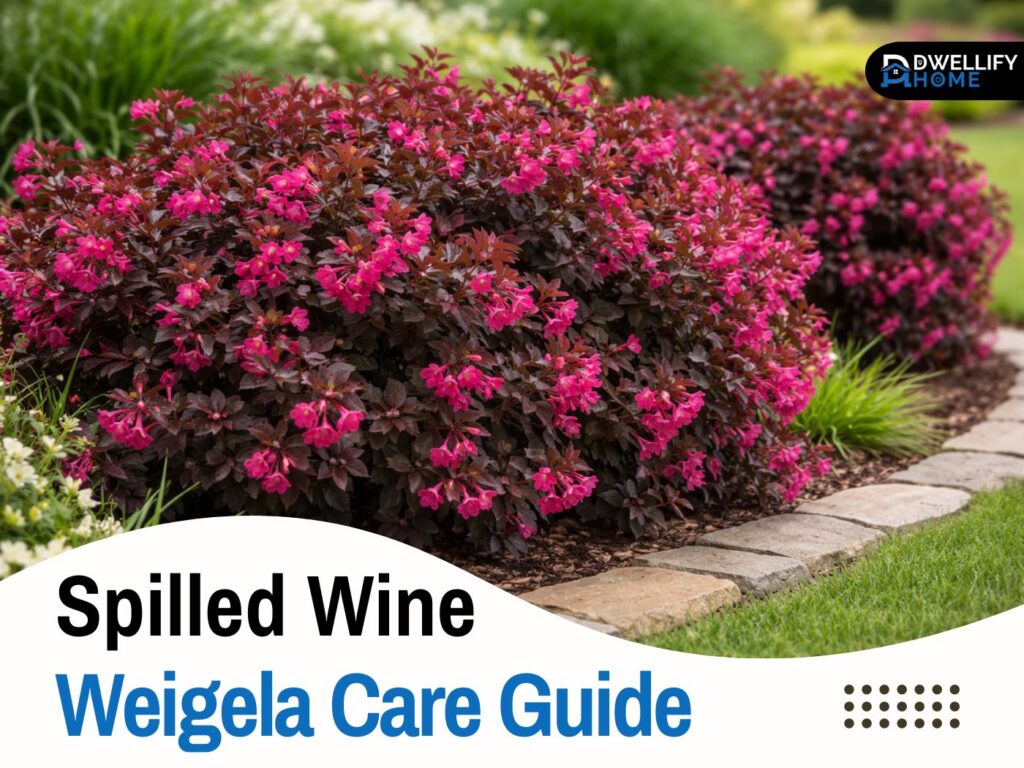
If you’ve been eyeing that deep burgundy shrub with bright pink flowers, you’re not alone. Spilled Wine weigela has become a favorite because it gives you rich foliage color for months, plus a cheerful flush of blooms that brings life to the garden.
Here’s the thing: this shrub is easy once you understand two basics. It wants enough sun to keep that dark leaf color, and it needs pruning at the right time so you don’t accidentally remove next season’s flowers. I’ve planted and maintained this shrub in home landscapes, foundation beds, and large mixed borders, and it’s one of the most rewarding “small-but-mighty” choices when you set it up correctly.
Snippet-Ready Definition:
Spilled Wine weigela is a compact flowering shrub known for deep burgundy foliage and bright pink spring blooms. It thrives in sun, stays low and wide, and adds long-lasting color to landscapes.
Mission Statement:
At Dwellify Home, our mission is to provide clear, experience-based guidance that helps homeowners make confident decisions about plants, design, and long-term landscape success.
Spilled Wine Weigela at a Glance (Quick Facts)
Spilled Wine is a compact, spreading weigela known for foliage that shifts from burgundy to a darker wine tone through the growing season, especially with good sun. It stays wider than tall, which is why it looks so good spilling over edges, softening hard lines, and filling the front of a bed without swallowing everything behind it.
A quick snapshot from the field: most healthy, established plants land around 2–3 feet tall and 3–4 feet wide. That spread is the big deal. People often plant it like a little ball shrub, then wonder why it’s nudging the walkway two years later.
It’s also a strong pollinator shrub. Those trumpet-shaped flowers draw hummingbirds and plenty of bees and butterflies when it’s in bloom. And yes, many gardeners choose it because it’s often described as deer resistant. I’ll talk more about that reality in a dedicated section, because it matters.
Quick Guide / Comparison Table
| Feature | Spilled Wine Weigela |
| Mature Size | 2–3 ft tall, 3–4 ft wide |
| Growth Habit | Low, spreading, wider than tall |
| Foliage Color | Burgundy to deep wine purple |
| Bloom Time | Late spring, light rebloom later |
| Sun Needs | Full sun preferred, tolerates part sun |
| Hardiness Zones | Commonly zones 4–8 |
| Deer Resistance | Moderate (not deer-proof) |
| Pruning Time | Right after spring flowering |
| Best Uses | Borders, edging, containers, mass planting |
Simple Care Bullet List (Reader-Friendly)
- Plant in full sun for best foliage color and blooms
- Use well-drained soil, avoid soggy areas
- Water regularly the first year, then only during dry spells
- Prune after flowering, never early spring
- Mulch roots in winter, especially in colder zones
- Protect containers during freezing weather
What Makes Spilled Wine Weigela Different (And Why It’s Popular)
Most shrubs give you one main “show” and then fade into the background. Spilled Wine doesn’t. The best part is the foliage carries the look from spring to fall. Even when it’s not flowering, it still reads as a design feature, almost like a burgundy accent plant built into your landscape.
In real landscapes, I’ve found it works especially well for people who want color but don’t want a high-maintenance routine. It doesn’t need constant shaping. It doesn’t demand perfect soil. And once it’s established, it handles normal summer stretches better than many flowering shrubs, as long as it isn’t sitting in soggy ground.
One more practical note: it’s very easy to place. You can tuck it at the front of a mixed border, use it as a low hedge, or repeat it in a rhythm along a walkway. That repeating wine-colored foliage is what makes a yard look “designed,” even if the rest of the plants are simple.
Spilled Wine Weigela Sun or Shade? (Light Requirements That Control Color + Bloom)
Let’s keep this simple. If you want the foliage to look its darkest and richest, full sun is your friend. In my experience, the sweet spot is a location that gets strong morning sun and plenty of midday light. With that kind of exposure, the leaves deepen into that signature wine tone and the shrub blooms more reliably.
Can it handle partial shade? Yes, but expect trade-offs. In part sun, the plant often stays healthy, but the foliage can look more greenish or muted and you’ll usually get fewer flowers. I’ve seen it do fine with a few hours of direct sun, especially in hot climates where a bit of afternoon shade can actually reduce stress. Still, if you’re choosing a spot and you have options, lean sunny.
A quick real-world tip: if your plant is “alive but unimpressive,” light is often the missing piece. Before you reach for fertilizer, look at the sun pattern across a full day. Sometimes moving the plant a few feet away from a shadow line changes everything.
Best Soil + Planting Setup (So It Thrives for Years)
This shrub isn’t fussy, but it does have one strong preference: it wants well-drained soil. “Moist but well-drained” sounds like a plant tag phrase, so here’s what it means in plain language. The soil should hold a bit of moisture after watering, but it should never stay wet for days.
If your bed holds water or feels swampy after rain, fix that before you plant. In landscapes I maintain, the plants that struggle are almost always the ones sitting in low pockets where water collects. If drainage is questionable, raise the planting area a few inches with a quality topsoil-compost blend and avoid heavy clay clumps right around the root ball.
Spacing matters more than most people think. Because the spilled wine weigela size is wider than tall, give it room to spread without rubbing against other shrubs. I like to plan for at least 3 feet of width per plant in most designs. That airflow keeps the foliage healthier and reduces stress.
Spilled Wine Weigela Care (Water + Feeding Without Overdoing It)
During the first year, consistent watering is what makes this shrub settle in and grow evenly. I tell homeowners to water deeply, then let the top few inches of soil dry slightly before watering again. That pattern encourages roots to grow outward instead of staying shallow.
Once it’s established, spilled wine weigela care is pretty forgiving. It can handle normal dry stretches, but it still performs better with occasional deep watering during hot periods, especially if it’s planted near pavement or a south-facing wall where heat builds up.
Now, fertilizer. Guess what? Overfeeding is a common mistake. Too much nitrogen can push leafy growth at the expense of flowers, and it can make stems softer and more prone to winter issues. If your soil is average, a light application of a balanced fertilizer in early spring is enough. Avoid feeding late in summer, because late growth can get nipped by early cold snaps.
A practical “experience check” I use: if the plant is growing steadily, the leaves look healthy, and it’s blooming on schedule, don’t fix what isn’t broken. Good light and decent watering usually beat extra fertilizer.
Spilled Wine Weigela Bloom Time (And What “Blooms on Old Wood” Means)
The spilled wine weigela bloom time is typically late spring into early summer, depending on your climate and how early spring warms up. You’ll often see the heaviest flowering in that first flush. After that, you may get scattered blooms later in the season, but it’s not usually a nonstop flower machine.
Here’s the thing that changes everything: this shrub blooms on old wood. Old wood means stems that grew last season and matured. Those stems hold the flower buds through winter, then open in spring. This is why pruning timing matters so much.
If you prune hard in late winter or early spring, you’re often removing the very stems that carry the spring flowers. I’ve walked into yards where someone “cleaned it up” in March and then felt disappointed in May. The plant didn’t fail. The timing did.
Spilled Wine Weigela Pruning (The #1 Place People Mess Up)
When to prune (timing that protects next year’s flowers)
The safest time to prune is right after the main flush of blooms. That gives you a window to shape the plant while still leaving time for new growth to mature and set buds for next year.
If you only do light pruning, you can treat it like a gentle haircut. Remove a few wayward tips, tidy the outline, and step back. This shrub looks best with a natural form, not a tight, sheared shape.
How to prune (light shaping vs renewal pruning)
Light shaping is usually all a dwarf weigela needs. But if the shrub gets woody over time, renewal pruning can help. That means removing a few of the oldest stems down near the base, letting younger stems take over. I like to do this gradually, not all at once, so you keep the plant full.
A quick “don’t do this” list that saves a lot of frustration:
- Don’t shear it into a box shape
- Don’t hard-prune in early spring if you want flowers
- Don’t remove more than you need just because it looks busy
If you’re unsure, prune lightly the first year you own it. You can always take more off, but you can’t put flower buds back once they’re cut.
Spilled Wine Weigela in Winter (In-Ground vs Containers)
Spilled wine weigela in winter (in-ground care)
In the ground, winter care is usually simple. In most suitable climates, it doesn’t need wrapping or special covers. What helps most is a 2–3 inch layer of mulch over the root zone, kept a little back from the stems so you don’t trap moisture against the base.
Some winter dieback can happen, especially after sharp temperature swings. That’s normal. In spring, wait until you see what’s truly alive before cutting. I’ve seen homeowners panic in early spring, prune too soon, and remove stems that would have leafed out a couple weeks later.
Winter care for potted Spilled Wine weigela
Containers are different. A pot exposes roots to colder air, and roots don’t like freeze-thaw cycles. If you’re growing it in a container, protect the pot in winter. You can move it near a sheltered wall, group pots together, and insulate the container sides with burlap or similar protection.
Also, don’t forget winter watering. If it’s in a pot under cover and the soil gets bone dry, that can stress the plant. Water lightly on a mild day when the soil isn’t frozen. It’s a small detail that makes a big difference.
Deer Resistant + Pest/Disease Reality Check
Let’s talk honestly about spilled wine weigela deer resistant claims. In many neighborhoods, deer will browse less on weigela than on their absolute favorites. But deer resistance isn’t a guarantee. If deer are hungry, or if your yard is part of their regular path, they may still nibble.
If you’ve had deer problems before, plan ahead. Use repellents early in the season, rotate products so deer don’t get used to one smell, and consider physical protection for young plants until they’re established.
As for pests and disease, this shrub is usually low drama. Most issues I see trace back to stress: too much shade, poor drainage, or inconsistent watering. Healthy plants in good light with decent airflow tend to shrug off minor problems.
Troubleshooting (Fast Answers to High-Intent Problems)
If your plant looks “fine” but isn’t performing, here are the common real-world causes I check first.
It’s not blooming much.
This is usually one of three things: not enough sun, pruning at the wrong time, or too much nitrogen. A young plant can also take a season to settle in. If it was planted recently, focus on root establishment and good light.
The foliage isn’t dark.
Light is again the top factor. In shade, it often shifts greener. Heat and summer sun can deepen the foliage color, but only if the plant isn’t stressed by drought.
It’s slow to leaf out in spring.
Weigelas can be late starters. Give it time, especially if nights stay cool. When you do prune, make small test cuts and look for green tissue inside the stem. That quick check prevents accidental over-pruning.
Landscape Uses + Design Ideas (Where It Looks Best)
Because it’s compact and spreading, this shrub shines in places where you want a low, colorful mass without blocking windows or swallowing paths. I’ve used it successfully for:
- Front-of-border plantings
- Edging along walkways
- Foundation beds to soften corners
- Mass planting for a bold color “stripe”
It also looks fantastic in containers, especially where it can drape slightly over the edge. That “spilling” habit is not a gimmick, it’s genuinely useful for making pots look fuller without needing trailing annuals.
For companion planting, think contrast. Chartreuse foliage, silvery leaves, and soft ornamental grasses make that wine-colored foliage pop. White flowers nearby also look crisp against the dark leaves.
FAQs
What are the cons of weigela?
Weigela blooms mainly in spring, not nonstop. It also requires correct pruning timing and enough sun, or flowering and foliage color can be disappointing.
Does spilled wine weigela bloom all summer?
No. It blooms heavily in late spring, with occasional light blooms later. Its main value through summer is the rich foliage color, not constant flowers.
Does weigela like sun or shade?
Weigela prefers full sun. It tolerates partial shade, but foliage color becomes lighter and flowering is reduced.
Where to plant Spilled Wine weigela?
Plant it in sunny areas along borders, walkways, foundations, or containers where its low, spreading habit can shine without crowding other plants.
Is Spilled Wine weigela deer resistant?
It is moderately deer resistant, meaning deer usually avoid it but may browse during food shortages.
Conclusion
If you remember just a few things, you’ll do great with this shrub. Give it enough sun so the foliage stays rich, keep the soil draining well, and don’t overfeed it. Then, prune at the right time, right after flowering, and you’ll protect the buds that fuel next year’s show.
The best part is that once it’s established, this plant fits into real life. You won’t need to hover over it. Set it up well, check on watering during extremes, and enjoy a shrub that brings steady color and a reliable burst of blooms without turning gardening into a full-time job.
Disclaimer:
This guide is based on professional horticultural experience and general growing conditions. Local climate, soil, and wildlife may affect results. Always adapt care practices to your specific location.

I’m Bilal Hassan, the founder of Dwellify Home. With 6 years of practical experience in home remodeling, interior design, and décor consulting, I help people transform their spaces with simple, effective, and affordable ideas. I specialize in offering real-world tips, step-by-step guides, and product recommendations that make home improvement easier and more enjoyable. My mission is to empower homeowners and renters to create functional, beautiful spaces—one thoughtful update at a time.