
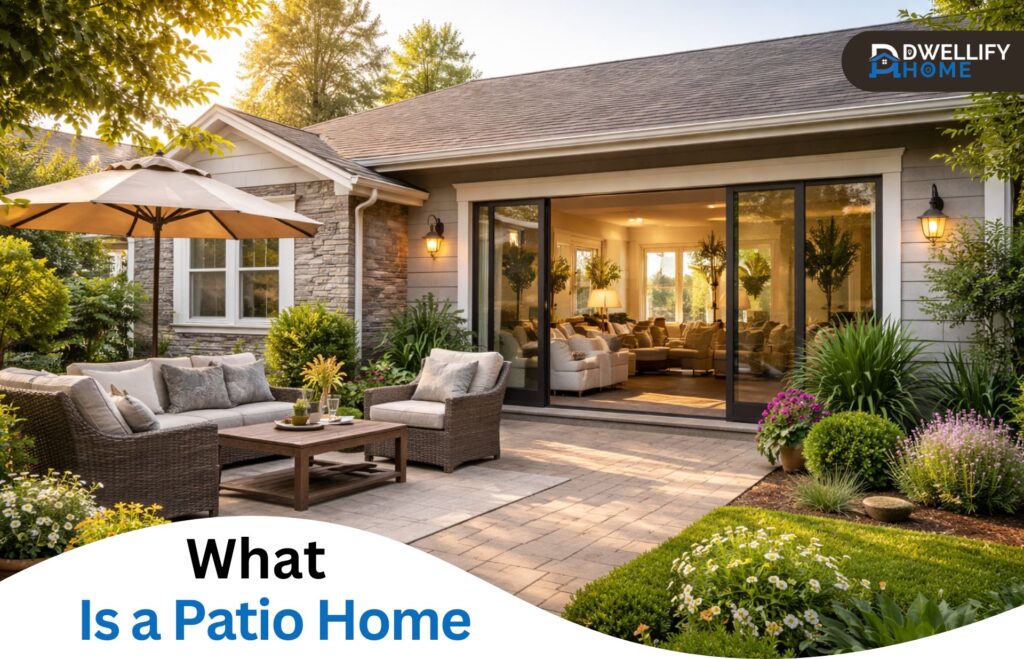
The term patio home gets used a lot in real estate, and it often means slightly different things depending on the builder, neighborhood, or local market. That’s where the confusion starts. I’ve seen buyers assume a patio home is just a condo with a small yard, while others think it means any one-story house with a patio out back. Neither is always true.
In most cases, a patio home is a smaller, low-maintenance home built on a compact lot. It’s often designed for easier living, with less yard work, a practical layout, and some kind of private outdoor space. A lot of patio homes are single-story, though not all of them are. Some are detached, some share a wall, and some sit in communities where an HOA handles part of the exterior upkeep.
That mix is exactly why it helps to look past the label and focus on what the property actually offers.
Snippet-Ready Definition
A patio home is a compact, low-maintenance home, often on a small lot with private outdoor space. People choose it for simpler upkeep, easier living, and less yard work.Mission Statement
Dwellify Home helps homeowners make practical, stylish, and informed home and living decisions with clear, trustworthy guidance.
What Is a Patio Home, Exactly?
A patio home is usually a home with a small footprint, limited yard space, and a layout meant to reduce maintenance. It often appeals to people who want the feel of a house without the amount of work that comes with a larger lot.
One thing worth knowing right away: patio home is not always a strict legal category. In many listings, it’s more of a practical description than a formal property type. That means two homes labeled as patio homes can be fairly different from one another.
In real life, I’ve seen patio homes that were detached and looked like small single-family houses. I’ve also seen attached versions that felt closer to a townhouse. The common thread was usually the same: smaller lot, easier upkeep, and a design focused on convenience.
Key Benefits
- Less exterior maintenance than many traditional homes
- Often easier to navigate because many are single-story or main-floor focused
- Usually includes some private outdoor space without a large yard to manage
- Can suit downsizers, retirees, and busy homeowners who want simpler upkeep
Why Is It Called a Patio Home?
The name makes people think the patio is the main feature, but that’s not always the case. Some patio homes do have a nice private patio or courtyard, while others just have a modest outdoor sitting area.
The term usually points more to the lifestyle than to one exact architectural feature. These homes are often arranged to make outdoor space feel usable without asking the owner to maintain a large yard. That’s part of the appeal. You get some private outdoor living, but not the kind of upkeep that comes with a bigger property.
Key Features of a Patio Home
Most patio homes share a few practical traits.
They’re usually built on smaller lots, so there’s less grass to mow and less landscaping to manage. The homes may sit closer together than traditional detached houses, which helps keep the neighborhood compact.
A lot of them are designed with main-floor living in mind. That’s a big reason they attract downsizers and buyers planning ahead for easier mobility later on. Not every patio home is one level, but many are.
Another common feature is some form of private outdoor area. It might be a patio, a small courtyard, or a fenced sitting space. It’s often enough for outdoor dining, a few plants, or a quiet place to sit, without becoming a weekend maintenance project.
You’ll also notice that many patio homes are part of communities with HOA support. That can mean exterior maintenance, lawn care, or shared area upkeep is partly covered, though the details vary a lot.
What Is a Detached Patio Home?
A detached patio home is exactly what it sounds like: a patio-style home that does not share a wall with another property.
This is where buyers sometimes get tripped up. They hear patio home and assume attached living. In reality, detached patio homes are common in some markets. They often sit on zero-lot-line or narrow lots, with the home placed closer to one side of the property to make the most of the outdoor space.
From a day-to-day standpoint, a detached patio home can feel more private than an attached one, but it still usually comes with the smaller lot and lower-maintenance setup that defines this style.
What Does a Patio Home Look Like?
Most patio homes look neat, compact, and practical. They tend to have efficient floor plans rather than oversized rooms or extra formal spaces that rarely get used.
From the outside, you’ll often see a smaller front yard, a modest driveway, and a tucked-in patio or backyard area. Some have a garage, some don’t. In newer communities, they may look very similar to nearby townhomes or small single-family homes, which is why the listing details matter more than the label alone.
People often search for pictures of patio homes because they’re trying to figure out whether the style feels more like a house, a condo, or a townhouse. The honest answer is that it can lean in different directions depending on the community.
Patio Home Ownership: What You Usually Own
Ownership is one of the most important details to check.
With some patio homes, you own both the home and the lot beneath it, much like a traditional single-family home. In others, the arrangement is more limited, and the community association controls certain exterior elements or shared spaces.
This is where reading the property details matters more than trusting the marketing language. I’ve seen buyers focus on layout and price, then get surprised later by lot-line rules, maintenance responsibilities, or restrictions on exterior changes.
Before buying, it’s smart to confirm:
- whether you own the land
- what the HOA maintains
- what parts of the exterior are your responsibility
- whether fences, patios, landscaping, or paint changes need approval
That step clears up a lot of confusion early.
Are Patio Homes Always Part of an HOA?
Not always, but many are.
An HOA often plays a big role in patio home communities because these neighborhoods are usually designed around lower-maintenance living. Lawn care, shared landscaping, roof standards, and exterior appearance may all be part of the arrangement.
That can be helpful, especially for owners who want less hands-on upkeep. At the same time, HOA fees and rules need a close look. Some communities are flexible. Others are much more structured.
A small monthly fee might be worth it if it covers landscaping and exterior maintenance. On the other hand, strict rules about rentals, pets, or exterior changes can become frustrating if they don’t match how you want to live.
Patio Home vs Townhouse
This is one of the most common comparisons, and it matters because the two can look similar on paper.
A townhouse is typically attached and usually built in a row, often with multiple floors. A patio home may be attached or detached, and it’s more often associated with smaller lots and easier one-level living.
The biggest difference usually comes down to layout and feel. Townhouses tend to be more vertical. Patio homes often feel more grounded and compact, with more focus on main-floor space and private outdoor use.
When comparing the two, look at:
- whether the home shares walls
- how much yard or patio space comes with it
- whether daily living happens mostly on one floor
- who handles exterior upkeep
Patio Home vs Condo
A condo and a patio home can both appeal to buyers who want less maintenance, but the ownership structure is often very different.
With a condo, you usually own the interior of the unit and share ownership of common areas through the association. With a patio home, you may own the home itself and possibly the lot as well, depending on the setup.
That difference matters more than people expect. It affects maintenance, privacy, insurance, and what changes you’re allowed to make. A patio home often offers a little more separation from neighbors and more direct control over your living space, even when there’s an HOA involved.
Patio Home vs Duplex
A duplex is defined by the building arrangement. It contains two separate living units in one structure.
A patio home is different. It’s usually defined more by lifestyle and layout than by unit count. It may be detached or attached, but the goal is usually low-maintenance living on a compact lot with some private outdoor space.
This comparison comes up when buyers see a side-by-side property and assume that anything attached is basically the same. It isn’t. The ownership setup, neighborhood design, and intended use can be very different.
Patio Home vs Single-Family Home
Compared with a traditional single-family home, a patio home usually offers less yard, less privacy, and less room to expand. In return, it often gives you less maintenance, simpler living, and a layout that works well for people who don’t need extra space they won’t use.
That tradeoff can be a very good one. I’ve worked with buyers who were tired of taking care of large lawns, empty upstairs rooms, and ongoing exterior chores. Moving into a patio-style home gave them a setup that matched how they actually lived.
Others missed the extra privacy and freedom of a larger lot. That’s why this choice is more about fit than about which option is better overall.
Pros and Cons of Patio Homes
The biggest advantage is convenience. Patio homes are often easier to maintain, easier to move around in, and easier to lock up and leave for a few days.
They can also work well for downsizing. You still get the feel of a home, often with a garage and private entrance, but without the workload of a larger property.
The downside is that tradeoffs do exist. Smaller lots mean less space outdoors. Homes may sit closer together. HOA fees and rules can limit flexibility. And because the term isn’t always used consistently, buyers sometimes assume they’re getting one ownership setup when they’re actually getting another.
That last point is easy to overlook, and it’s one of the most common mistakes I see.
Who Is a Patio Home Best For?
Patio homes usually make the most sense for people who want simpler daily upkeep.
They’re often a good fit for retirees, downsizers, busy professionals, and homeowners who like the idea of single-level or low-maintenance living. They can also work well for buyers who travel often and don’t want to come home to a large yard that needs constant attention.
In some markets, they also appeal to first-time buyers who want a house-like setup without stretching into a larger home that brings higher maintenance costs.
Who May Not Like a Patio Home?
This style isn’t right for everyone.
Buyers who want a large yard, more distance from neighbors, or fewer community rules may feel boxed in by patio home living. The same goes for people who want to customize everything outside, build additions later, or keep more separation between homes.
That doesn’t mean patio homes are limiting by default. It just means they work best when the lifestyle matches the layout.
Questions to Ask Before Buying a Patio Home
A few questions can save you from making the wrong assumption.
Ask whether the home is attached or detached. Ask whether you own the lot or just the structure. Ask what the HOA covers and what it doesn’t. Ask whether there are restrictions on pets, rentals, fencing, patios, landscaping, or exterior changes.
Also ask about privacy in practical terms. Standing in the backyard for five minutes tells you more than a brochure will. Look at window placement, fence lines, and how close the neighboring patios feel.
Those details are small on paper, but they shape how the home feels every day.
Common Myths About Patio Homes
One common myth is that a patio home is just another word for a condo. It’s not.
Another is that all patio homes share walls. Some do, some don’t.
A third myth is that patio homes are only for retirees. In practice, they attract a much wider range of buyers, especially people who want low-maintenance living without giving up the feel of a home.
And probably the biggest myth is that the term means the same thing everywhere. It doesn’t. That’s why careful reading of the listing and community documents matters so much.
How to Tell if a Listing Is Really a Patio Home
Start by ignoring the label for a minute and looking at the details.
Check the property description for clues about lot size, HOA coverage, and whether the home is attached or detached. Look for terms like zero-lot-line home, garden home, courtyard home, or cluster home. In some areas, those can overlap with patio home design.
Then review what you actually own and maintain. That tells you far more than the headline in the listing.
A good listing should make clear how the home is arranged, what kind of outdoor space comes with it, and what the monthly fees cover. If it doesn’t, ask.
FAQs
What is the difference between a townhouse and a patio home?
A townhouse is usually taller and attached in a row, while a patio home is often smaller, more compact, and commonly designed around easier upkeep and main-level living.
What is another name for patio homes?
Patio homes are also called garden homes, courtyard homes, cluster homes, and sometimes zero-lot-line homes, depending on the market.
What is the difference between a patio home and a condo?
A condo usually means you own the interior and share common property, while a patio home may include ownership of the home and sometimes the lot, depending on the community.
Who typically lives in patio homes?
Patio homes often appeal to retirees, downsizers, first-time buyers, and busy homeowners who want lower-maintenance living.
Are patio homes always attached?
No. Some patio homes share a wall, while others are detached. The term is used differently across builders and local markets.
Is a Patio Home the Right Fit?
A patio home can be a smart choice for someone who wants a home that feels manageable, comfortable, and easier to maintain. The appeal is usually simple: less yard work, less exterior hassle, and a layout that fits everyday life well.
The key is not to rely on the name alone. Look closely at the ownership setup, the HOA rules, the lot, and how the home is actually built. Once you do that, the label becomes much less confusing.
That’s really the heart of understanding what is a patio home. It’s not one exact formula. It’s a style of living built around convenience, smaller-scale ownership, and practical use of space. For the right buyer, that can be a very good fit.
Disclaimer
Information is for general educational purposes only and should not replace professional real estate, legal, or financial advice.

I’m Bilal Hassan, the founder of Dwellify Home. With 6 years of practical experience in home remodeling, interior design, and décor consulting, I help people transform their spaces with simple, effective, and affordable ideas. I specialize in offering real-world tips, step-by-step guides, and product recommendations that make home improvement easier and more enjoyable. My mission is to empower homeowners and renters to create functional, beautiful spaces—one thoughtful update at a time.