Table of Contents
- When a Roof Replacement Becomes the Better Choice
- What to Check Before Requesting Estimates
- Roof Replacement Costs
- How to Compare Roofing Materials
- What a Complete Roofing Estimate Should Include
- Questions to Ask a Roofing Contractor
- Permits, Insurance, and Solar Planning
- How to Prepare Your Home for the Work
- Warning Signs of a Poor Roofing Agreement
- A Simple Roof Replacement Planning Checklist
A roof replacement is a major home project, but careful planning can make the process more predictable. Whether a roof is showing its age, leaking after storms, or suffering widespread shingle damage, a professional reroof begins with understanding the condition of the entire roofing system, not simply choosing new shingles.
The best plans account for the visible roof surface and the components underneath it, including decking, flashing, underlayment, ventilation, and roof edges. By gathering details early, comparing complete written estimates, and carefully reviewing the contract, homeowners can reduce the risk of unexpected costs once work begins.
When a Roof Replacement Becomes the Better Choice
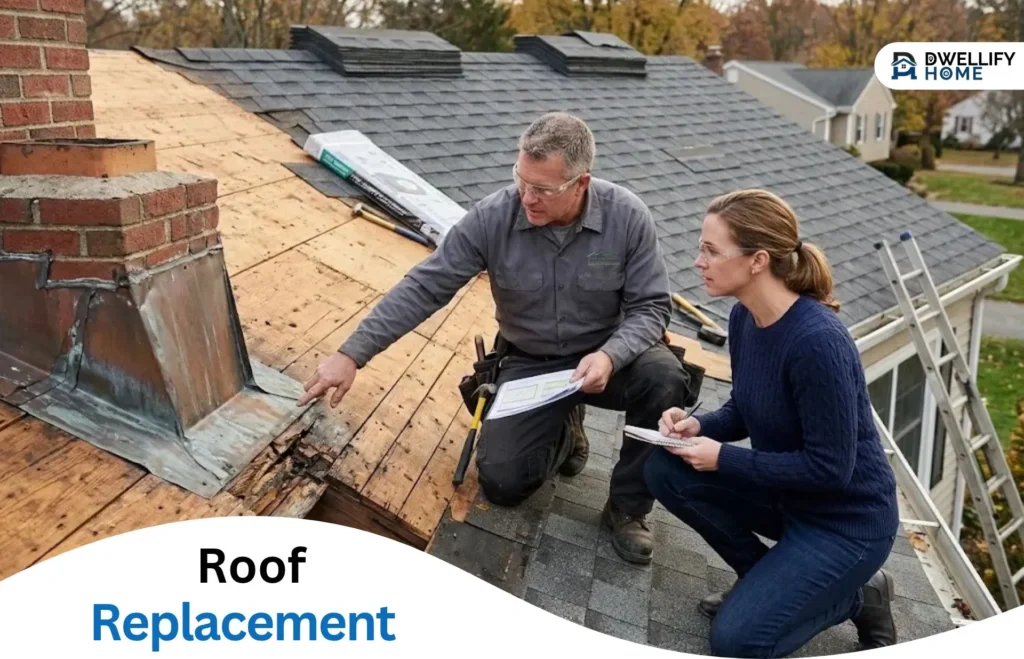
A repair can be appropriate when damage is limited, and the rest of the roof remains in sound condition. Replacement often becomes the better long-term option when leaks keep returning, shingles are failing across broad areas, or the roof is near the end of its expected service life. Missing, cracked, curled, or loose materials can all warrant a closer look.
One ceiling stain or active leak does not necessarily reveal the full extent of moisture intrusion. Water can travel before it becomes visible indoors, and problems such as soft decking or inadequate ventilation may not be apparent from the driveway. A useful inspection should include the roof surface and accessible attic areas whenever possible.
What to Check Before Requesting Estimates
Homeowners do not need to diagnose a roof themselves, but a little preparation helps contractors evaluate the project efficiently. Collecting records and documenting concerns also makes it easier to compare the recommendations you receive.
- Note the approximate age of the roof and any prior repairs.
- Look from the ground for damaged, displaced, or uneven roofing materials.
- Check ceilings and accessible attic areas for stains, damp insulation, or daylight where it should not appear.
- Review old invoices, warranty information, and insurance correspondence related to storm damage.
- Take ground-level photos and prepare questions before each appointment. Avoid climbing onto the roof unless you are trained and equipped to do so safely.
Roof Replacement Costs
Online roof-pricing ranges are useful only as broad starting points. The final project cost depends on roof area, slope, layout complexity, chosen material, labor, tear-off work, disposal, flashing, ventilation, permit requirements, and the condition of the decking beneath the existing covering.
A low proposal is not automatically a better value if it omits important parts of the system. Ask whether removal, disposal, cleanup, edge metal, flashing, ventilation work, and final inspection are included. It is also reasonable to discuss how concealed damage, such as deteriorated sheathing discovered after tear-off, will be documented, priced, and approved. Keeping a budget reserve for legitimate unforeseen repairs can prevent a difficult decision in the middle of the job.
How to Compare Roofing Materials
Material selection should balance budget, appearance, maintenance expectations, local weather exposure, and the home’s structure. The visible covering matters, but long-term performance also depends on the complete installed system.
Common Residential Options
- Asphalt shingles: A widely used option with many colors and profiles, often chosen for its balance of cost and design flexibility.
- Metal roofing: Available in several panel and shingle-style designs, with a reputation for durability and a distinctly different appearance from asphalt.
- Tile and slate: Long-lasting materials that can be heavy, so the home may need appropriate structural support before installation.
- Specialty products: These may offer a particular style or performance feature, but can require installers with specific experience.
Compare underlayment, flashing, drip edge, ventilation, and fastening methods alongside the material itself. A premium roof covering cannot compensate for poorly handled transitions around chimneys, walls, valleys, skylights, or vents.
What a Complete Roofing Estimate Should Include
A detailed written estimate lets homeowners compare the scope rather than a single bottom-line number. It should identify roof measurements, material type and color, removal of existing layers, disposal, underlayment, flashing, ventilation components, drip edge, and any stated allowance or rate for decking replacement.
The document should also clarify permit responsibility, anticipated scheduling, site protection, cleanup, payment timing, workmanship coverage, and manufacturer warranty information. If one proposal includes a component and another does not, ask why before assuming the difference is optional.
Questions to Ask a Roofing Contractor
- Who will supervise the project and be the primary point of contact?
- Will the old roof be removed before the new system is installed?
- How will damaged decking be photographed, explained, and approved?
- Who obtains permits when they are required?
- How will landscaping, siding, windows, and outdoor belongings be protected?
- What happens if weather affects the schedule?
- Which warranties cover materials, and which cover workmanship?
- What payment is due before work starts, and when is final payment expected?
The Federal Trade Commission advises homeowners to obtain multiple written estimates, review contracts carefully, and avoid paying the full amount before work is complete. Its guidance on avoiding home improvement scams also highlights pressure for an immediate decision, vague paperwork, and requests for full payment up front as reasons for caution.
Permits, Insurance, and Solar Planning
Permit requirements vary by jurisdiction and project scope, so confirm the local process before installation begins. If storm damage may be involved, notify the insurance carrier promptly and review the policy rather than assuming a claim will be approved. Keep inspection photos, estimates, correspondence, and receipts in one place.
If solar panels are installed or planned, coordinate the roof timeline before investing in a system that may need to be removed for future roofing work. The Department of Energy recommends considering roof age and remaining life when evaluating whether a roof is suitable for solar panels.
How to Prepare Your Home for the Work
Before the crew arrives, move vehicles, patio furniture, grills, planters, and decorations away from the house. Protect fragile items stored in the attic, since construction vibration can shift them. Keep children and pets away from the work area, confirm parking and material-delivery locations, and ask how daily cleanup and nail collection will be handled.
Warning Signs of a Poor Roofing Agreement
- The scope says “complete roofing work” but does not list materials or components.
- The contractor pressures you to sign immediately.
- The price is dramatically lower than other bids, but there is no clear explanation.
- The agreement does not explain the process for concealed damage or change orders.
- There is no stated warranty, payment schedule, or anticipated completion window.
- The contractor requests full payment before work starts.
A Simple Roof Replacement Planning Checklist
- Schedule a thorough inspection.
- Document exterior and interior warning signs.
- Review insurance details and local permit requirements.
- Request written estimates from qualified contractors.
- Compare the full scope of work, not price alone.
- Select materials that fit the home, budget, and maintenance goals.
- Review contract terms, warranties, payment schedule, and change-order process.
- Prepare the property and complete a final walkthrough after installation.
A roof replacement is easier to manage when decisions are made before tear-off begins. A careful inspection, a realistic budget, a complete written scope, and direct questions about the work can help homeowners move forward with greater confidence.
Some links in this article may involve affiliate commissions or paid partnerships. Dwellifyhome.com may receive compensation through these arrangements, helping us continue our online publishing work.