Sharing a shower sounds simple until you actually do it. One person gets the warm stream, the other ends up waiting, shivering, or doing that awkward half-rinse shuffle.
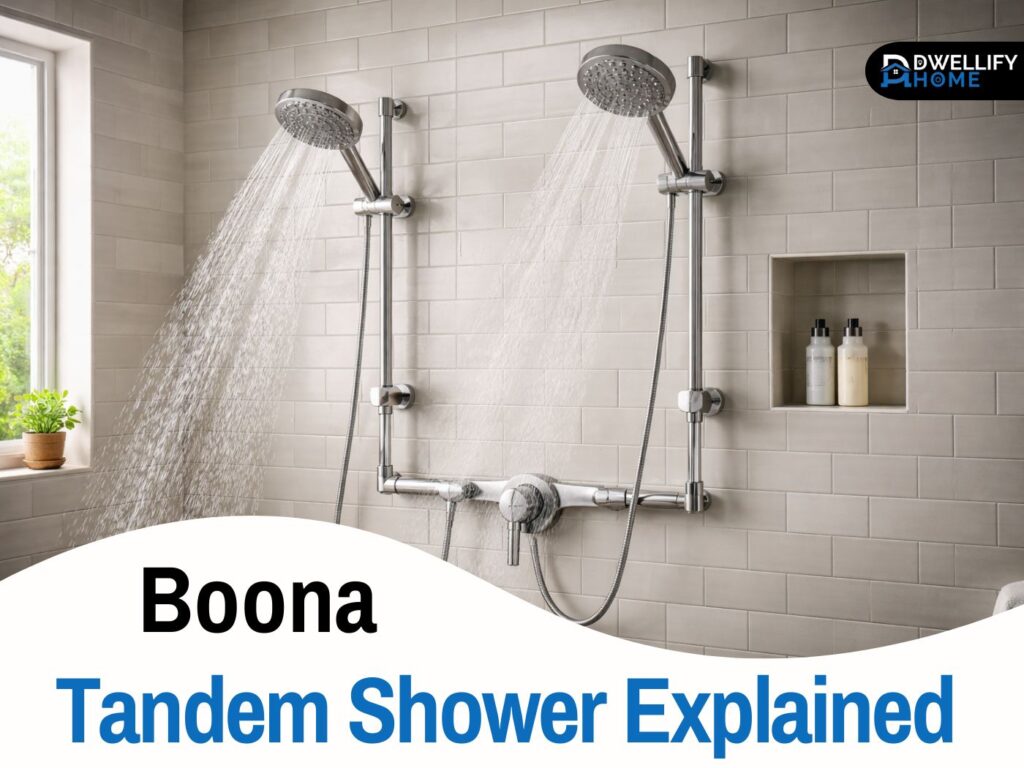
That’s why tandem shower setups have become popular. The Boona Tandem Shower is designed to give two people their own shower coverage in the same space, so the experience feels balanced instead of cramped.
In this guide, I’ll walk you through how this system works, what it’s like to install, how it behaves with real water pressure, and who it fits best. I’ll keep it straight and practical, like I would during an in-home consult.
Snippet-Ready Definition:
The Boona tandem shower is a dual showerhead system designed for shared showers, allowing two people to shower comfortably at the same time using one plumbing source without major bathroom remodeling.
Mission Statement:
At Dwellify Home, our mission is to help homeowners make confident, practical decisions about everyday home upgrades through clear guidance, real-world experience, and honest, easy-to-understand information.
Quick Summary: Is the Boona Tandem Shower Worth It?
If your goal is a more comfortable shared shower, this type of system can absolutely deliver. But it won’t magically create extra water pressure if your home already struggles.
It’s usually a good match if:
- Two people regularly use the shower at the same time
- Your shower width is standard and not extremely narrow
- Your current shower has at least average pressure
It may not be the best fit if:
- Your pressure already feels weak with one showerhead
- Your shower is narrow and feels tight with two people
- You prefer simple fixtures with fewer parts to maintain
A fast decision checklist:
- Measure your shower width accurately
- Check your current pressure and temperature stability
- Decide whether comfort and convenience are worth the cost
Quick Guide: Is the Boona Tandem Shower Right for You?
| Factor | Good Fit | Not Ideal |
| Shower Width | Standard or roomy showers | Very narrow stalls |
| Water Pressure | Average to strong | Already weak pressure |
| Installation | DIY-friendly, no renovation | If you dislike adjustments |
| Daily Use | Couples who shower together | Solo users only |
| Maintenance | Comfortable with light upkeep | Prefer zero maintenance |
Pros and Cons at a Glance
Pros
- More comfortable shared showering
- Better coverage than single-point dual heads
- No major plumbing changes required
- Can use one head or both
Cons
- Pressure feels lighter in low-pressure homes
- Fit can be tricky in narrow showers
- Costs more than basic dual shower heads
- Needs regular cleaning in hard water areas
Simple Step-by-Step: What to Check Before Buying
- Measure your shower width wall to wall
- Check current water pressure and temperature stability
- Look for wall obstacles like shelves or niches
- Confirm return and warranty terms
- Decide if shared comfort matters more than simplicity
What Is the Boona Tandem Shower, Exactly?
At its core, the Boona Tandem Shower is a two-showerhead setup built for shared use. Instead of one showerhead doing all the work from one spot, the system creates two zones so each person can rinse without fighting for the warm stream.
The experience is different from a typical dual showerhead because the goal isn’t just adding a handheld. The idea is to spread coverage across the shower space so it feels like two people actually belong in there.
Simple explanation (what you’re buying and what it replaces)
Most homes start with a single fixed showerhead connected to one shower arm. With a tandem system, the plumbing source is still the same, but the flow gets directed through a setup that supports two heads.
So you’re not doing construction. You’re upgrading the delivery and comfort inside the existing shower.
Tandem shower head vs. regular dual shower head (what’s actually different)
A standard dual shower head often means one fixed head plus a handheld, or two heads stacked near the same point. That can be useful, but it still tends to keep water coverage in one area.
A tandem shower head setup spreads the experience. Two people can stand more naturally, and each person can angle their showerhead to match height and preference.
Key Features That Matter in Real Life (Not Marketing)
In real bathrooms, homeowners care about the same few things every time: comfort, stability, pressure feel, and ease of maintenance.
Here are the features that usually matter most:
- Two showerheads aimed for shared coverage
- Independent control so you can run one head or both
- Spray settings that feel good for daily routines
- Solid mounting that stays put
My installer tip is simple. Don’t get lost in feature lists. Focus on what will feel good every morning. If it makes your shower easier and more comfortable, it’s doing its job.
Will It Fit Your Bathroom? (Sizing, Compatibility, and Common Setups)
Fit is the make-or-break factor. If the system doesn’t suit your shower width and wall surfaces, you’ll spend more time adjusting it than enjoying it.
This is also where many negative experiences begin. People assume all showers are the same size. They’re not.
How to measure shower width correctly (fast method)
Measure wall to wall at about chest level. That’s where most mounting systems sit, and it gives you the most accurate picture of usable space.
Also check these quick points:
- Are the walls flat where the system will contact them?
- Is there a built-in shelf, niche, or grab bar that blocks placement?
- Is the surface smooth and stable, like tile or fiberglass, without deep texture?
If your walls have heavy texture or uneven panels, mounting stability takes more attention.
Small shower solutions (when you may need an adapter or alternative)
If your shower is narrow, you might need an adapter or a different style of dual shower setup. Even if a system technically fits, the bigger question is whether two adults will actually feel comfortable standing inside.
A tight shower can turn a couples upgrade into a daily annoyance. If you already bump elbows, a simpler dual setup from one point may make more sense.
Boona Tandem Shower Install Guide (DIY, No Renovation Feel)
Most homeowners can handle installation, but the key is to go slowly and avoid forcing fittings. The biggest problems I see come from rushed threading or overtightening.
Tools and prep (what you actually need)
Get these ready:
- Adjustable wrench or smooth-jaw pliers
- Plumber’s tape
- A towel to protect finishes
- A mild cleaner to wipe surfaces
Before you mount anything, clean the wall contact area. Soap scum and conditioner buildup can cause slipping later.
Install steps (clean 6 to 8 steps, no fluff)
- Run your current shower and feel the baseline pressure
- Remove the existing showerhead carefully
- Clean the shower arm threads
- Wrap plumber’s tape clockwise, three to five wraps
- Attach the new connector by hand first
- Snug it gently with a wrench, do not crank hard
- Mount and position the system
- Test for leaks and stability with one head, then with both
A practical note from the field: most leaks happen because the connection is cross-threaded or taped the wrong direction. If it drips, remove it and redo the tape. That usually fixes it.
Safety and stability notes (protecting walls, correct tightness)
If the system uses pressure mounting, tighten gradually. You want firm contact without stressing the wall. Over-tightening can damage surfaces, especially on older tile or fiberglass.
Renter-friendly removal tips (leaves no mess if done right)
If you avoid drilling and keep the original hardware, removal is usually straightforward. Take it down slowly, clean the wall, and store the original showerhead so you can reinstall it later.
How to Use It as a Tandem Shower Head for Couples (Comfort Tips)
A tandem setup works best when each head is positioned with intention. A small angle change can make the shower feel dramatically better.
Try these usage tips:
- Aim both heads slightly inward so water meets more naturally in the center
- Stagger heights if one person is taller
- Use one head for shaving or hair washing, then switch to both for a fast rinse
In many homes, both heads get used during the quick rinse portion and one head gets used during the longer routine. That’s normal and it often saves hot water without sacrificing comfort.
Water Pressure Reality Check (What to Expect With Two Heads)
Let’s be honest about pressure. When two showerheads share the same water supply, you’re splitting flow. That can change the intensity at each head.
In homes with strong pressure, it still feels great. In homes with borderline pressure, the difference becomes noticeable.
Why pressure may feel different (simple plumbing explanation)
Your shower valve and supply lines deliver a limited amount of flow at one time. When you open two outlets, each outlet may feel lighter because the same supply is being divided.
Temperature stability can also shift slightly if the valve struggles to balance hot and cold under increased demand.
Boosting performance without risky hacks
Start with the safe basics:
- Confirm the shower valve is fully open
- Clean screens and spray faces
- Check for mineral buildup
- Make sure connections are not restricting flow
Some people consider removing flow restrictors. That can create compliance issues and it can also affect how the valve mixes temperature. If you do not fully understand your local rules and your system, it’s better to avoid that route.
Troubleshooting: Leaks, Wobble, Uneven Spray, and Weird Noises
Most problems are small and fixable. Here are the ones I see most often.
Leaks at joints
- Usually caused by missing tape, wrong tape direction, or a connection not seated properly
Fix: remove the fitting, re-tape clockwise, reinstall carefully by hand first
Wobble or slipping
- Often caused by mounting on a dirty wall or uneven contact points
Fix: clean the wall, re-seat the mount, tighten gradually
Uneven spray patterns
- Common in hard water areas
Fix: soak spray faces in warm vinegar-water, then rinse
Noises or vibrations
- Sometimes caused by air in the line or the valve reacting to split flow
Fix: run water for a minute, test one head, then both, and adjust gradually
A quick checklist before returns:
- Re-tape and re-seat connections
- Check mount contact points
- Clean spray faces
- Confirm shower width and placement
Maintenance and Cleaning (Hard Water, Mold, and Long-Term Performance)
A tandem system has more parts than a basic showerhead, so regular cleaning keeps it running smoothly.
A simple routine:
- Weekly: quick wipe down of surfaces
- Monthly: clean spray faces and check connection points
Descaling tips (vinegar soak method, safe cleaning)
Warm vinegar-water works well for mineral buildup. Avoid harsh abrasives, because they scratch finishes and can damage spray holes.
When to replace small parts (gaskets, washers)
If a drip continues even after proper tape, a washer or gasket might be worn. Replacing small parts is usually cheaper than dealing with constant leaks.
Boona Tandem Shower Reviews: What Buyers Consistently Say
Across similar tandem shower systems, feedback tends to fall into a predictable pattern.
Common positives:
- Shared showering feels more comfortable and less awkward
- Better coverage, especially when both people want warm water at the same time
- The setup feels like a meaningful daily upgrade
Common complaints:
- Price feels high compared to a basic dual shower head
- Pressure expectations do not match reality in low-pressure homes
- Fit issues happen in narrow showers
A helpful way to interpret reviews is to compare the reviewer’s bathroom setup with yours. Shower width and pressure make a huge difference in satisfaction.
Boona Tandem Shower Manual: Everyday Use and Care Notes
You don’t need a complicated manual to use a tandem shower system well, but you do need a few habits that prevent damage and frustration.
Everyday care points:
- Adjust angles gently and avoid forcing joints
- Do not overtighten fittings after your leak test passes
- Clean spray holes early, before buildup becomes stubborn
Safe tightening rules (avoid cracking fittings)
If you need a wrench, wrap the fitting with a towel and do small turns. Over-tightening can crack parts, especially mixed material connectors.
Basic care reminders
Keep threads clean. Start every connection by hand. If it feels gritty or crooked, stop and re-seat it. That one habit prevents most long-term issues.
Price, Warranty, Returns, and Where to Buy Safely
A tandem system usually costs more because it’s a more specialized setup with extra parts and more engineering than a standard showerhead.
My advice is to buy from a source that clearly explains warranty and returns. Fit can be personal. If it does not feel right in your shower, you want an easy return process.
Buying safely means checking:
- Exactly what parts are included
- Return window details
- Warranty coverage terms
- Whether adapters are needed for your shower size
Boona Tandem Shower Discount Code: How to Get a Real Deal (No Scams)
Discounts do exist, but it’s smarter to focus on legitimate savings rather than chasing random codes.
Reliable ways to save:
- Official sales
- Bundles that include accessories
- Newsletter sign-up offers if available
Red flags to avoid:
- Extreme discount claims that do not make sense
- Sites that demand personal data for a simple code
- Checkout pages that look suspicious or redirect strangely
A small discount is not worth losing return protection.
Boona Tandem Shower Shark Tank: What Happened and Why People Care
The Shark Tank angle mostly matters as context. It raised awareness, and with awareness comes more opinions, more attention, and sometimes copycat products that look similar but do not perform the same.
For a homeowner, the practical takeaway is simple. Ignore hype. Focus on fit, pressure, installation quality, and day-to-day comfort.
Boona Tandem Shower Net Worth: Business Context (Explained Carefully)
This topic gets discussed a lot online, but it’s important to keep it realistic.
Company valuation, yearly sales, and personal net worth are not the same thing. Without verified financial disclosures, most numbers are estimates.
If your real concern is long-term support, better signals are:
- Clear warranty terms
- Responsive customer support
- Transparent return policies
- Availability of replacement parts
Those factors matter more than any rough estimate.
Alternatives to Consider Before You Buy
If you want better shared shower comfort but feel unsure about a tandem setup, there are solid alternatives.
Dual shower head plus handheld combo
- Easy install
- Less risk with shower width
- Great flexibility for daily routines
Splitter plus second handheld
- Budget-friendly
- Simple concept
- Not as evenly comfortable as a true tandem layout
What to compare:
- Pressure feel with one head and with two
- Angle adjustability
- Ease of cleaning
- How crowded the shower feels with two people inside
Sometimes the simplest setup wins for long-term happiness.
FAQs
What happened to Boona after Shark Tank?
Boona gained wider attention after appearing on Shark Tank, which helped increase visibility. Like many featured brands, public interest grew, though exact business figures are not fully disclosed.
What are the cons of tandem shower heads?
The biggest downsides are reduced pressure in low-pressure homes, fit issues in narrow showers, and higher cost compared to standard shower heads.
Are dual showers worth it?
They can be worth it if two people often shower together and the bathroom has enough space and decent pressure. Comfort improves, but expectations need to be realistic.
Are tandem showers expensive to install?
Installation is usually not expensive because it doesn’t require remodeling. Most cost comes from the fixture itself, not labor, if installed carefully.
Can I use only one showerhead at a time?
Yes, many tandem shower setups allow you to run one head or both, which helps with daily routines and hot water control.
Conclusion
A tandem shower system can be a surprisingly meaningful upgrade because it improves something you use every day. It makes shared showers feel normal, warm, and less awkward.
The key is to be realistic. Measure your shower width, be honest about your pressure, and install it carefully. If those basics line up, the comfort improvement can be worth it.
If space is tight or pressure is weak, a quality dual shower head with a handheld may be a better fit. Either way, a clean install and simple maintenance routine will keep your shower performing well for years.
Disclaimer:
This article is for informational purposes only and reflects general installation and usage guidance. Individual bathroom setups, plumbing systems, and local regulations may vary. Always follow manufacturer instructions and consult a professional if unsure.

I’m Bilal, the founder of Dwellify Home. With 6 years of practical experience in home remodeling, interior design, and décor consulting, I help people transform their spaces with simple, effective, and affordable ideas. I specialize in offering real-world tips, step-by-step guides, and product recommendations that make home improvement easier and more enjoyable. My mission is to empower homeowners and renters to create functional, beautiful spaces—one thoughtful update at a time.