Some rooms feel calm the moment you walk in. Your eye moves easily from one area to the next, nothing feels abrupt, and the whole space seems connected without looking overly matched. That’s the idea behind cascade home décor.
At its core, this style is about flow. Instead of placing furniture and accessories as separate pieces, you arrange them so they lead into one another through shape, height, texture, color, and spacing. Done well, the room feels softer, more natural, and easier to live in. Done poorly, it can slip into clutter very quickly. The difference usually comes down to restraint and placement.
Snippet-Ready Definition
Cascade home décor is a decorating approach that creates visual flow through layered textures, staggered heights, and connected colors. It helps rooms feel balanced, natural, and cohesive without relying on rigid matching furniture or layouts.
Mission Statement
Dwellify Home helps homeowners make practical, stylish, and well-informed décor decisions by sharing clear guidance, real-world design insight, and thoughtful home styling ideas.
What Is Cascade Home Décor?
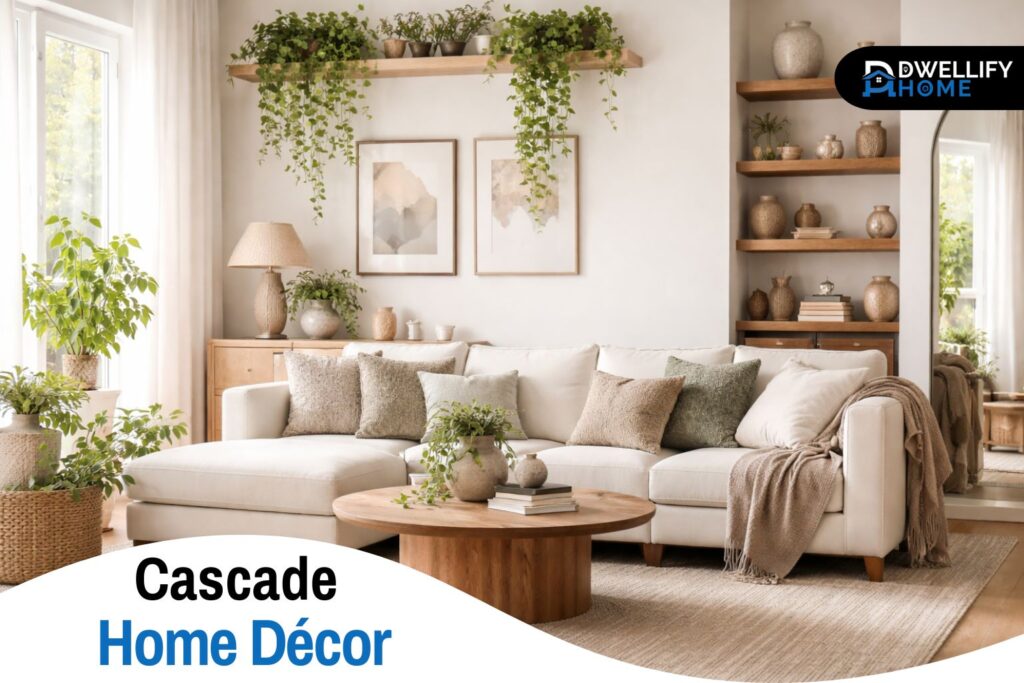
The meaning behind this style is fairly simple. It uses layers and visual rhythm to create a sense of movement across a room. That movement might come from trailing plants, staggered shelves, draped fabrics, repeated curves, or colors that shift gently rather than stop suddenly.
What makes it different from random layering is intention. A pile of cushions, too many baskets, and a few hanging plants don’t automatically create flow. In a well-styled room, each layer supports the next one. Heights are varied on purpose, textures repeat naturally, and there’s enough open space to keep the room from feeling crowded.
What Makes a Room Feel Cascading?
Most of the effect comes from soft transitions. A room feels cascading when your eye doesn’t hit a hard visual wall every few seconds. That can happen through layered textiles, furniture with lighter lines, and décor arranged from high to low rather than all at one level.
Color plays a big role too. Strong contrast has its place, but this look usually works better with tones that relate to one another. Think warm beige moving into camel and walnut, or soft greens paired with linen, clay, and matte cream. Natural materials help ground the room so the layers feel lived-in instead of decorative for the sake of it.
Key Benefits of Cascade Home Décor
- Creates natural visual flow across a room
- Makes interiors feel calm and connected
- Adds depth using layers instead of clutter
- Works in both small and large spaces
- Helps combine furniture, textiles, and décor more naturally
10 Simple Cascade Home Décor Ideas to Try
1. Use cascading plants to soften shelves, corners, and walls
Trailing plants are one of the easiest ways to introduce movement. A pothos on a high shelf, ivy falling from a bookcase, or a hanging planter near a window instantly breaks up rigid lines. They also help furniture feel less boxy.
The mistake I see most often is using too many small plants at once. One or two well-placed trailing plants usually work better than six scattered around a room. Let them fall naturally and give them enough surrounding space so they can actually be noticed.
2. Layer curtains, throws, and rugs for a flowing look
Textiles are where this style starts to feel comfortable rather than staged. A sheer curtain behind a heavier panel, a throw draped loosely over one side of a chair, or a runner layered near a larger rug can add softness without demanding attention.
The key is to vary texture more than pattern. Linen, cotton, wool, and woven fabrics create depth in a quiet way. Too many prints competing with each other tend to stop the visual flow instead of supporting it.
3. Style shelves with a clear high-to-low arrangement
Good shelf styling often follows a simple pattern: one tall anchor piece, a few middle-height objects, and smaller finishing items. That change in scale creates a descending rhythm that feels natural and balanced.
Try grouping objects in a way that gives the eye a path to follow. A vase, a stack of books, a small bowl, and one trailing plant can do more than a shelf packed edge to edge. Empty space matters just as much as the décor itself.
4. Mix lighting at different levels to guide the eye
A room with only overhead lighting usually feels flat. Layered lighting creates depth and helps one area connect to another. A pendant light, table lamp, and floor lamp used together can make a space feel more intentional and much warmer at night.
Keep the heights varied. When every light source sits at the same level, the room loses energy. Even in a small living room, one lamp on a side table and another across the room can create a better sense of movement.
5. Build a color palette that moves gently through the room
A flowing room usually has a color story rather than random accent colors. That doesn’t mean everything needs to match. It means the shades should relate. One tone can show up in the rug, another in the cushions, and a deeper version in the wood or ceramics.
This is where beginners often overdo it. They try to add movement by adding more colors. In reality, a tighter palette usually creates a stronger result. Three or four connected tones are often enough.
6. Choose furniture that keeps the room feeling open and connected
Furniture has a huge influence on whether a room feels heavy or fluid. Pieces with exposed legs, rounded corners, or slimmer profiles let the eye travel more easily than oversized, blocky furniture that visually cuts the room in half.
That doesn’t mean everything should be delicate. You still need anchor pieces. A solid sofa or dining table works well, but it helps when the surrounding pieces are lighter so the room has somewhere to breathe.
7. Arrange wall décor in a way that creates movement
Wall art works better in this style when it feels connected rather than overly symmetrical. A staggered arrangement of frames, a vertical grouping, or a shelf with art layered slightly behind objects can create a softer effect than a strict grid.
This is one place where less usually looks stronger. One thoughtful grouping often does more than trying to fill every blank wall. Let the arrangement lead the eye instead of shouting for attention.
8. Bring in wood, linen, ceramic, and woven textures for depth
Natural materials are what keep this look from feeling artificial. Wood adds warmth, linen softens edges, ceramic brings a handmade feel, and woven textures help connect different parts of the room.
A common mistake is mixing too many glossy or heavily finished surfaces. When everything is shiny, the room starts feeling hard. A balance of matte, textured, and natural finishes makes the layers feel believable.
9. Use this style in small spaces without making them feel busy
Small spaces can handle layering, but they need discipline. Focus on vertical movement through shelves, curtains, or plants rather than covering every surface with accessories. A narrow entryway, for example, may only need a mirror, a slim console, and one trailing plant.
Scale matters more in a compact room. A few medium pieces usually work better than lots of tiny ones. Small décor can quickly turn into visual noise, especially in apartments or tighter layouts.
10. Start with one focal point and let the rest of the room support it
Every room needs a starting point. It could be a shelf wall, a layered bed, a pendant light over the dining table, or a plant-filled corner. Once that focal point is set, the rest of the room should support it rather than compete with it.
This keeps the space feeling calm. Without a focal point, people often keep adding more and more pieces because the room still feels unfinished. Usually it isn’t missing more décor. It’s missing direction.
Room-by-Room Cascade Home Décor Ideas
In the living room, this look works best through rugs, lighting, shelving, and plant placement. Start with the seating area, then build outward. Let the rug anchor the room, use a throw or cushions to repeat color, and soften the edges with light and greenery.
In the bedroom, layered bedding and window treatments do most of the work. A bench at the foot of the bed, one textured throw, and a balanced mix of bedside lighting can make the room feel full without looking crowded. In dining areas and entryways, keep the styling simpler. A table centerpiece, a pendant, and one sideboard vignette are usually enough.
How to Keep Cascade Home Décor from Looking Cluttered
The easiest way to lose the look is to mistake layering for quantity. Flow doesn’t come from more objects. It comes from better relationships between the objects you choose. That means fewer accents, clearer spacing, and repetition that feels deliberate.
One practical rule helps a lot: when a room starts feeling busy, remove the smallest items first. Tiny pieces are often what create visual noise. Keep the larger shapes, better textures, and a little negative space. The room will usually look more finished, not less.
Common Mistakes to Avoid with Cascade Home Décor
One common mistake is ignoring height variation. When everything sits at the same level, the room feels flat no matter how nice the pieces are. Another is using bulky furniture that blocks sightlines and interrupts the flow you’re trying to create.
The other big one is over-mixing finishes, patterns, and colors. A layered room still needs consistency. Too much contrast from one item to the next makes the space feel restless. In most cases, editing is the fix, not shopping.
How to Shop More Carefully for the Look
Start with anchor pieces first. That could be the sofa, bed, rug, or dining table depending on the room. Once those are in place, it’s much easier to judge what kind of lighting, wall décor, and smaller accessories actually fit.
Pay close attention to material, scale, and finish. A beautiful item on its own can still feel wrong in the room if it’s too glossy, too small, or too visually heavy. This is also why showroom visits can be useful. Seeing proportions in person often saves you from buying décor that looked better online than it does in a real space.
Reviews, Showroom Thinking, and Style Confusion
Some people use this keyword because they want decorating ideas. Others may be looking for a furniture showroom, store reviews, or a local business with a similar name. That mix of intent is worth understanding because it shapes what readers expect.
From a style point of view, the useful takeaway is this: whether you’re browsing online, reading reviews, or visiting a showroom, focus on how pieces will work together at home. Don’t judge furniture only by how it looks under store lighting. Think about scale, fabric texture, and whether it supports the flow you’re trying to build.
How Cascade Home Design and Furnishings Fit Together
Layout and furnishings should always support one another. You can buy the right rug, lights, and accessories, but the room still won’t feel right if the arrangement stops movement. Good cascade home design starts with how the space works, then uses furnishings to strengthen that rhythm.
That’s why the best rooms rarely feel over-styled. The furniture placement is sensible, the pathways are clear, and the décor builds on the structure that’s already there. It feels natural because the foundation is doing half the work.
Expert Tips to Make It Feel More Intentional
Start with the lines already in the room. Windows, shelving, ceiling height, and furniture edges often tell you where movement should happen. Work with those features instead of fighting them.
Repeat shapes more than colors whenever possible. Curves in a lamp, vase, and chair can connect a room quietly. Lighting also deserves more attention than most people give it. In well-layered spaces, lighting is usually what makes everything else feel finished.
Conclusion
Cascade home décor works best when every layer has a purpose. The goal isn’t to fill a room. It’s to create movement, softness, and connection so the space feels balanced from one corner to the next.
A few thoughtful choices nearly always do more than a long list of decorative extras. Start with structure, add texture carefully, and let the room breathe. That’s usually where the best results come from.
Disclaimer
The information provided is for educational and inspiration purposes only. Always consider your personal space, budget, and design preferences when making home décor decisions.

I’m Bilal, the founder of Dwellify Home. With 6 years of practical experience in home remodeling, interior design, and décor consulting, I help people transform their spaces with simple, effective, and affordable ideas. I specialize in offering real-world tips, step-by-step guides, and product recommendations that make home improvement easier and more enjoyable. My mission is to empower homeowners and renters to create functional, beautiful spaces—one thoughtful update at a time.