
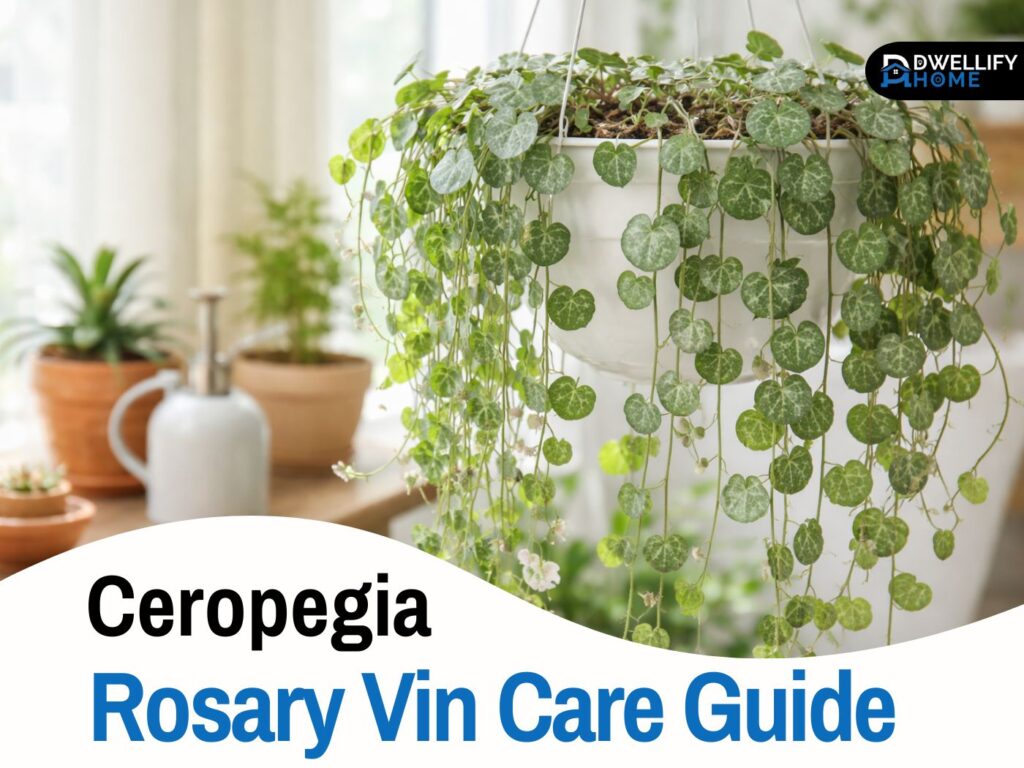
You’re probably talking about the rosary vine plant, also known as string of hearts. And I get the appeal. It’s one of those trailing houseplants that looks delicate and fancy, but once you understand it, it’s surprisingly forgiving.
Here’s the thing. Most people don’t “kill” this plant because they’re bad at plants. They lose it because they treat it like a thirsty pothos instead of a semi-succulent that likes to dry out. Once you fix that one habit, everything gets easier.
In this guide, I’ll walk you through exactly how I care for rosary vine indoors, how I make it fuller, how I propagate it, and what to do when it starts acting weird. I’m writing this the same way I’d explain it if you brought your plant to my potting bench and said, “Help. I really want this one to survive.”
Snippet-Ready Definition:
Ceropegia rosary vin, also known as string of hearts, is a trailing indoor plant with heart-shaped leaves that thrives in bright light, fast-draining soil, and light watering.
Mission Statement:
Our mission is to provide clear, experience-based home and plant guidance that helps everyday people grow healthier spaces with confidence, without confusion or unnecessary complexity.
What Is Ceropegia Rosary Vine?
Rosary vine is a trailing plant with small, heart-shaped leaves that sit along thin vines like a string of tiny charms. If you flip a leaf over, you’ll often see a purplish tone, especially if it’s grown in brighter light.
You’ll also hear it called string of hearts, chain of hearts, sweetheart vine, or by its botanical name, Ceropegia woodii. If you see people spelling it slightly differently online, don’t worry. It’s the same plant most of the time.
One of the coolest features is the little bead-like tubers that can form along the vines. Those “rosary beads” aren’t just decorative. They’re storage organs, and they can help you propagate the plant easily, which is why this plant is so fun to multiply.
Quick Care Comparison Table
| Care Factor | What Works Best | Common Mistake |
| Light | Bright indirect light, gentle sun | Keeping it in dark corners |
| Water | Let soil mostly dry before watering | Watering on a fixed schedule |
| Soil | Fast-draining succulent mix | Heavy, moisture-holding soil |
| Pot | Drainage holes, snug fit | Decorative pots with no drainage |
| Placement | Hanging baskets or bright shelves | Low airflow, crowded spaces |
Step-by-Step Indoor Care Guide (Simple)
- Place your rosary vine near a bright window with indirect light
- Use a well-draining cactus or succulent soil mix
- Water only when most of the soil feels dry
- Feed lightly during spring and summer only
- Prune and pin vines back to encourage fullness
Quick Care Cheat Sheet (Indoor Care at a Glance)
If you only remember one thing, remember this: rosary vine likes bright light and dry roots. That combination keeps the vines strong and the leaves close together.
Here’s the simple cheat sheet I give beginners:
- Light: Bright indirect light, plus a little gentle sun if you can manage it
- Water: Let the soil dry out most of the way before watering again
- Soil: Fast-draining mix, think cactus style, not heavy potting soil
- Pot: Must have drainage holes, slightly snug is fine
- Feeding: Light feeding in spring and summer
- Biggest mistake: Overwatering, especially in low light
The best part is you don’t need complicated schedules. If you learn to read the plant and the pot, you’ll water less often than you think, and it’ll look better for it.
Ceropegia Rosary Vine Indoor Care (Placement That Actually Works)
Light placement is where this plant either becomes a showpiece or turns into a long, sparse tangle. In real indoor conditions, I’ve found that rosary vine does best within a couple feet of a bright window.
A bright east window is almost always a safe win. South or west can work too, but you may need to pull it back a bit or use a sheer curtain if the sun is harsh. When it gets enough light, the leaves stay closer together and the plant looks fuller without you doing anything fancy.
Now about hanging vs shelf placement. Hanging baskets look gorgeous, but they also dry faster because air moves around the pot. On a shelf, the pot may stay damp longer. So if you’re someone who waters out of habit, hanging can actually protect you from overwatering because the soil dries more predictably.
Watering Rosary Vine the Safe Way
Let’s talk about watering, because that’s the make-or-break part of ceropegia rosary vine care. Rosary vine stores moisture in its leaves and tubers, so it doesn’t want constantly wet soil.
My favorite method is simple: water thoroughly, then wait until most of the pot is dry before watering again. Not the top inch. Most of it. If you’re not sure, stick a finger down two to three inches, or use a wooden skewer and see if it comes out cool and damp.
Here are a few signs you’re overwatering versus underwatering:
- Overwatering: yellowing leaves, soft stems, soil stays wet, musty smell
- Underwatering: leaves feel thin or slightly wrinkly, vines look less perky, pot feels extremely light
Season matters too. In spring and summer, it might need water every 10 to 20 days depending on your light and pot. In winter, it can stretch much longer. Guess what, winter is where people overwater the most, because growth slows down but their watering habit doesn’t.
Soil, Pot, and Drainage (Root-Rot Prevention Setup)
Rosary vine roots like airflow. Heavy soil stays wet too long, and that’s when rot starts. If you want an easy setup, use a cactus and succulent mix and add extra perlite or pumice. You’re aiming for a mix that drains quickly and doesn’t clump into a wet brick.
A pot with drainage holes is non-negotiable. If you love decorative cachepots, use them, but keep the plant in a nursery pot inside so excess water can escape. I’ve rescued more string of hearts plants from “cute pots with no holes” than I can count.
Pot material matters too. Terracotta dries faster and gives you a bigger safety buffer. Plastic holds moisture longer and can work fine, but only if your light is strong and your watering is cautious. If your home is low light, terracotta is your friend.
Temperature, Humidity, and Airflow Indoors
Rosary vine is happiest in normal indoor temperatures. If you’re comfortable in a t-shirt, it usually is too. The main thing is avoiding sudden extremes.
Keep it away from cold drafty windows in winter and away from blasting AC vents in summer. Those sudden swings can trigger leaf drop or slow growth. It’s not dramatic, but it’s annoying, because the plant takes time to fill in again.
Humidity is rarely a deal-breaker for this plant. It handles average home humidity well. What does matter is airflow around the pot and vines. Stagnant corners plus wet soil equals problems. A little air movement makes everything easier, especially if you’ve had pest issues before.
Feeding and Fertilizer (Less Is More)
This plant doesn’t need heavy feeding. In fact, over-fertilizing can give you weak, soft growth that looks stretched and can attract pests.
In spring and summer, I like a balanced houseplant fertilizer at a reduced strength. Once a month is plenty. If you’re using a slow-release fertilizer, use it lightly and don’t stack multiple products.
When autumn arrives, I taper off. In winter, I usually stop feeding entirely. On top of that, if your plant is stressed, like you just repotted it or it’s recovering from overwatering, skip fertilizer until it’s clearly growing again.
Pruning, Training, and Making It Look Fuller
People often ask how to make the rosary vine plant look thick and lush instead of long and stringy. There are two keys: brighter light and smart pruning.
When you prune, don’t just cut random pieces. Cut just above a leaf node. That’s where new growth can branch. After trimming, you can root the cuttings and add them back into the pot. That’s the fastest way to build a fuller plant without waiting a year.
Here’s a trick I use a lot. I “loop” or pin long vines back onto the soil surface, using small hairpins or bent wire. The nodes touching the soil can root, creating new growth points. It feels like cheating, but it’s completely natural for the plant.
Repotting Rosary Vine (When, Why, and How)
Rosary vine doesn’t need frequent repotting. It actually does well slightly snug in its pot. I usually repot only when roots are circling heavily or the soil has broken down and holds water too long.
The best time is spring or early summer. If you repot in winter, the plant may sit in damp soil longer because it’s not actively growing. That can lead to rot, especially in a cool home.
When you repot, size up gently. One pot size bigger is enough. Shake off some old soil, check roots for mushy sections, and replant into fresh fast-draining mix. Then wait a few days before watering. That little pause helps any tiny root damage callus over.
Ceropegia Rosary Vine Propagation (Beginner-Proof Methods)
If you’re interested in ceropegia rosary vine propagation, you’re in for a treat. This is one of the easiest trailing plants to multiply once you know a couple methods.
Stem cuttings (soil vs water)
You can root in water, but I personally prefer rooting in soil for this plant. Water rooting works, but sometimes the transition to soil causes setbacks. In soil, the roots form in the environment they’ll live in.
Cut a healthy vine with a few nodes, remove the bottom leaves, and press the nodes gently onto moist, airy mix. Keep it lightly moist, not wet, and give it bright light.
Tuber or bead method
Those bead-like tubers along the vine can be used to propagate. Set the tuber on the soil surface and lightly press it in. Don’t bury it deep. With warmth and light, it will root and send out growth.
Layering and pinning nodes
This is my lowest-fail method. Keep the vine attached to the mother plant and pin several nodes onto the soil in the same pot or a nearby pot. Once roots form, you can cut and separate. It’s slow but extremely reliable.
Ceropegia Rosary Vine Seeds (Realistic Expectations and How It’s Done)
People search for ceropegia rosary vine seeds, but honestly, most home growers won’t see seeds often. Indoors, pollination is inconsistent, and the plant doesn’t always flower heavily unless conditions are just right.
If you do get seeds, freshness matters. Plant them quickly on a fine, airy seed mix and keep them warm with bright light. Don’t bury them deeply. Mist lightly and use a clear cover to hold humidity, but ventilate daily to prevent mold.
That said, if your goal is more plants, propagation by cuttings or tubers is faster, easier, and gives you a clone of the plant you already love.
Flowers and Blooming (What to Expect)
String of hearts flowers are small and unusual, like tiny tubular lanterns. They’re not showy like orchids, but they’re fascinating up close.
Blooming usually happens when the plant is mature, receiving strong light, and not being overwatered. I’ve had plants bloom more reliably when they’re slightly snug in the pot and getting a bit of morning sun.
If your plant isn’t flowering, don’t panic. A healthy vine with tight leaf spacing is a better sign than flowers. Focus on light and correct watering, and blooms often follow with time.
Is Ceropegia Rosary Vine Poisonous?
A lot of people ask if ceropegia rosary vine poisonous for pets. In everyday houseplant conversations, string of hearts is often considered a safer choice compared to many toxic houseplants. Still, I always tell pet owners the same practical truth: even “safer” plants can cause mild stomach upset if a pet chews a lot of foliage.
So if you’ve got curious cats or dogs, it’s smart to hang it out of reach. You’re not just avoiding toxicity concerns, you’re also protecting the plant, because chewing destroys the vine tips that create fullness.
One important warning. Don’t confuse rosary vine with rosary pea. They’re completely different plants, and the names can mislead people. If you’re ever unsure, check the botanical name before trusting random posts online.
Common Problems (Fast Fixes)
When rosary vine looks unhappy, it usually gives clear clues. You just need to know what to look for.
Yellow leaves or mushy stems
This is usually overwatering or soil staying wet too long. If it’s mild, let it dry and improve light. If it’s severe, you may need to unpot, trim rotted roots, and replant into fresh dry mix. Then wait before watering again.
Long gaps between leaves, leggy growth
That’s a light issue. Move it closer to a brighter window. In my experience, people often think their plant is in “bright light” but it’s actually in medium light. Rosary vine can survive in medium light, but it won’t look its best.
Leaf drop or shriveling
If leaves are dropping and soil is wet, that’s stress from rot risk. If leaves are shriveling and the pot is bone dry and light, it’s underwatering. The fix depends on which one it is, so check the soil before you do anything else.
Pests and Diseases (What to Watch For Indoors)
The most common pests I see on string of hearts are mealybugs and spider mites. Mealybugs look like tiny white cottony clusters, often near nodes. Spider mites are harder to see, but you’ll notice stippling on leaves and fine webbing.
If you catch pests early, you can usually manage them without drama:
- Rinse the vines gently with lukewarm water
- Wipe leaves and nodes with diluted insecticidal soap or alcohol on a cotton swab
- Repeat weekly for a few rounds, because pests have life cycles
Fungus gnats usually point to soil staying too wet. Letting the soil dry more between watering is often the real solution.
Varieties and Look-Alikes People Search For
You’ll often see variegated forms for sale, with pink and cream tones. They’re beautiful, but they usually need more light to stay colorful. In lower light, variegation fades and growth stretches.
You may also see plants marketed under slightly different names. The safest move is to look for the botanical name on the listing, and check photos for the classic heart-shaped leaves and trailing habit.
If you’re buying locally, compare a healthy plant to a struggling one. A healthy string of hearts has tighter spacing between leaves and firm, plump foliage. A stressed plant looks sparse, with long bare stretches of vine.
Ceropegia Rosary Vine for Sale (Buying Checklist)
If you’re searching ceropegia rosary vine for sale, here’s what I’d check in the store before spending money. These quick checks save you weeks of headaches.
Look for:
- Leaves that are firm, not limp or translucent
- Tight spacing between leaves, not long bare vines
- No sticky residue, cottony fluff, or webbing
- A potting mix that isn’t soggy or sour-smelling
When you bring it home, I recommend a short quarantine. Keep it separate from other plants for a week or two. That way, if pests show up, you’ve contained the problem.
Shipping tip, too. If it arrives cold or very dry, don’t instantly soak it. Let it settle for a day, then water based on soil dryness. Sudden changes cause stress, so gentle transitions work best.
FAQ
How to care for rosary vines?
Give them bright indirect light, let the soil dry between watering, and use fast-draining soil. Overwatering is the most common problem, especially in low light.
Are strings of hearts hard to care for?
No. Once you understand their watering needs, they’re low-maintenance and forgiving. Most issues come from too much water, not neglect.
Is a rosary plant a succulent?
It’s considered a semi-succulent. The leaves and tubers store water, which is why it prefers drying out between waterings.
Is Ceropegia an indoor plant?
Yes. Ceropegia rosary vine grows very well indoors and is commonly kept as a hanging houseplant in bright rooms.
Why is my rosary vine leggy?
Leggy growth usually means it needs more light. Move it closer to a brighter window and prune to encourage bushier growth.
Conclusion
If you take anything away from this guide, let it be this: rosary vine rewards patience. It likes bright light, a fast-draining setup, and watering only when it’s truly needed. When you give it those basics, it becomes one of the easiest and most satisfying trailing plants to grow.
And once you start propagating it, the fun really begins. A few cuttings, a little pinning, and suddenly you’ve got a fuller pot, a backup plant, and maybe even gifts for friends.
So if you came here searching ceropegia rosary vin, I hope you’re leaving with the confidence to care for it indoors, troubleshoot issues calmly, and grow it into the lush, trailing plant you pictured in your head.
Disclaimer:
This content is for general educational purposes only. Plant care results may vary based on environment, climate, and individual conditions. Always observe your plant and adjust care accordingly.

I’m Bilal Hassan, the founder of Dwellify Home. With 6 years of practical experience in home remodeling, interior design, and décor consulting, I help people transform their spaces with simple, effective, and affordable ideas. I specialize in offering real-world tips, step-by-step guides, and product recommendations that make home improvement easier and more enjoyable. My mission is to empower homeowners and renters to create functional, beautiful spaces—one thoughtful update at a time.