
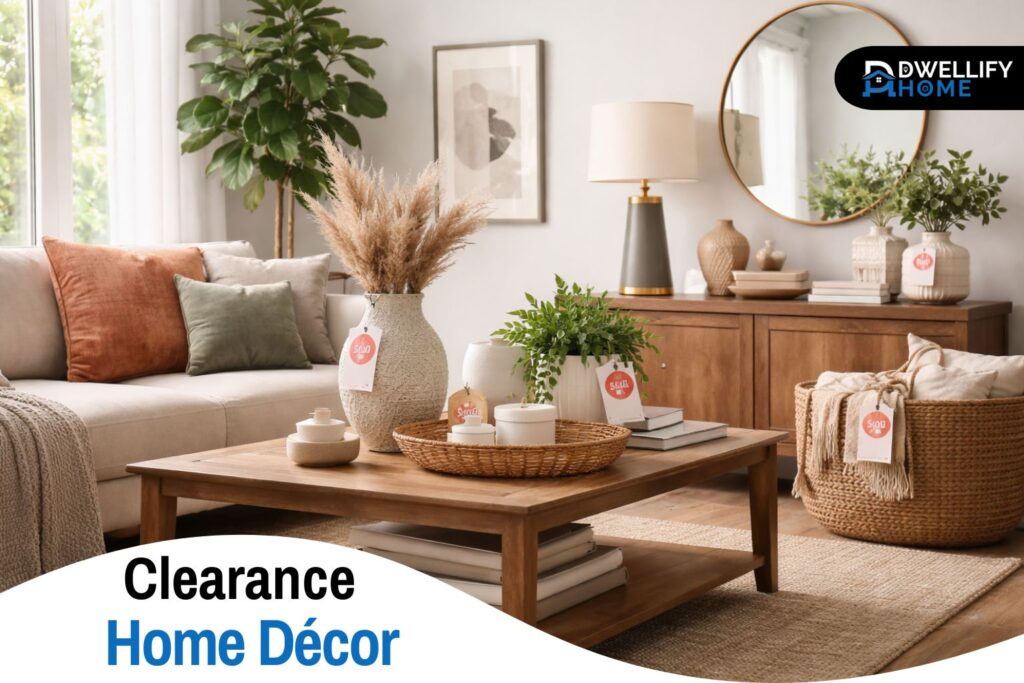
A good clearance find doesn’t feel like a compromise. It feels like something you would’ve happily brought home anyway, just at a better price. That’s the difference. Over the years, the biggest mistake I’ve seen isn’t buying discounted pieces. It’s buying the wrong discounted pieces just because the markdown looks tempting.
A lower price can help you stretch your budget, refresh a room, or finish a space that still feels incomplete. Still, a discount doesn’t fix bad proportions, weak materials, or a style that never suited your home in the first place. The smartest approach is to shop with the same standards you’d use at full price, then let the savings work in your favor.
Snippet-Ready Definition:
Clearance home décor refers to discounted decorative items sold to clear out inventory, seasonal stock, or discontinued collections. It allows homeowners to refresh their spaces with stylish accents while spending less than full retail prices.Mission Statement
Dwellify Home helps homeowners create comfortable, stylish spaces through practical advice, thoughtful design ideas, and clear guidance for everyday decorating decisions.
1. What Clearance Home Décor Really Means
Clearance usually means a store wants an item gone quickly. That can happen because a season ended, packaging changed, a collection was discontinued, or stock needs to move out to make room for something new. That’s different from a regular sale, where the item may still be part of the main assortment.
You’ll also see terms like open-box, closeout, final markdown, and seasonal clearance. Those labels matter. Open-box can be a great buy for mirrors, lamps, or decorative accessories if the item itself is fine. Final markdown can also be worthwhile, but only when you’re confident about the size, finish, and return policy. Once you know why something is marked down, it gets much easier to judge whether it’s a smart purchase or just a rushed one.
2. Why People Shop Clearance Home Décor
Most people shop discounted home decor for one simple reason: they want their home to feel better without overspending. That makes sense. Small pieces like trays, vases, throw pillows, candleholders, and wall accents can change the look of a room faster than most bigger purchases.
Clearance also makes sense when you’re finishing a space instead of starting from scratch. Maybe the sofa is already in place, the rug works, and the room just needs warmth or contrast. That’s where clearance home items can be useful. You’re not trying to invent a whole design plan from a bargain bin. You’re filling a real gap with more control and less cost.
3. Start With the Best Clearance Categories
Some categories usually give better value than others. Wall décor clearance is often worth checking because framed prints, mirrors, and simple art pieces can be expensive at full price, yet heavily reduced when collections rotate. Lamps, ceramic vases, baskets, trays, and candles also tend to offer solid value because they’re easy to place and don’t need to match perfectly across a room.
Soft furnishings can work well too, especially throw pillows, small rugs, and lightweight blankets. Seasonal décor is another strong area, but only if you’re willing to buy ahead. A wreath, lantern, or neutral holiday accent can be a good buy after the season ends. What usually gives the fastest visual upgrade are the smaller pieces that add texture and shape without taking over the room.
4. Choose Pieces That Still Look Stylish
The easiest way to avoid regret is to focus on timeless shapes and finishes. Simple glass, ceramic, wood-look textures, black metal, woven materials, and muted colors usually blend into more homes than bold novelty pieces. A marked-down item doesn’t need to be boring, but it should still make sense with the room you already have.
Trend leftovers are where people often get stuck. A clearance shelf full of loud slogans, overly themed items, or very specific colors can look appealing because it’s cheap. Then it gets home and never fits anywhere. I usually tell people to pause and ask one question: would this still feel right in the room six months from now? That question saves a lot of money.
5. Check Quality Before You Check the Discount
Price should never be the first filter. Material, finish, and construction tell you far more. A ceramic vase with a clean shape, a framed mirror with decent weight, or a woven basket with sturdy structure will usually hold up better than lightweight plastic made to imitate better materials.
Shopping online takes a little more care. Zoom in on corners, seams, edging, and texture. Read dimensions slowly. A lot of disappointing purchases happen because an item looked substantial in the photo and turned out much smaller or flimsier in person. A good deal is not just about the percentage off. It’s about whether the piece still looks and functions the way you need it to.
6. Shop With a Plan, Not Just a Low Price
Walking into a clearance section without a plan often leads to random buys that don’t work together. A better method is to make a short room-by-room list. Maybe the entryway needs a tray, the bedroom needs softer bedside lighting, and the living room needs one larger wall piece. That kind of list keeps you focused.
It also helps to keep basic measurements and color notes on your phone. I’ve seen people buy wall art that was too small for the space, baskets that couldn’t fit the shelf, and lamps that looked right online but were too short beside the chair. One strong piece that fits well will always do more for a room than three cheap items bought without a purpose.
7. Use Clearance to Layer a Room, Not Overfill It
Discounted pieces work best when they add depth, not clutter. A lamp can warm up a dark corner. A tray can make a coffee table feel finished. A textured pillow can soften a room that looks flat. Those are small moves, but they create a more thoughtful result than filling shelves with bargain accessories just because they were available.
Mixing clearance finds with full-price staples usually gives the best balance. Let the larger, foundational items do the heavy lifting, then use discounted home decor for accents and finishing detail. That keeps the room from feeling mismatched. It also makes each clearance piece look more intentional, which is exactly what you want.
8. Know the Best Time to Shop
Timing matters more than most people think. End-of-season periods are usually the strongest time to shop, especially for holiday décor, outdoor accents, and transitional home accessories. Retailers often cut prices further once they need shelf space back.
That said, buying ahead only works when the item has long-term value. A neutral planter, a simple wreath base, or understated wall accents can be easy to use next year. Very trend-driven seasonal pieces are riskier. They may be cheap, but they also tend to date quickly or end up stored away and forgotten.
9. Where to Find Good Clearance Home Décor
Big-box retailers, department stores, outlet sections, and discount home decor stores online can all be useful. Kohl’s home decor clearance, Target clearance sections, open-box listings, and overstock-style pages are often worth a quick scan, especially for smaller accessories and wall décor. At Home is another place shoppers watch closely, though selection can vary a lot by location and season.
Online shopping gives you reach, while in-store shopping gives you a better sense of scale, color, and finish. Wholesale-style sources can sometimes work for decorators or larger projects, but for most homes, standard clearance channels are easier to manage. Local resale shops, outlet stores, and open-box inventory can also be surprisingly good, especially for mirrors, baskets, lamps, and decorative furniture accents.
10. How to Shop Clearance Home Décor Online Without Regret
Online clearance shopping requires a slower eye. Product photos can hide a lot, especially with reflective finishes, scaled staging, or cropped shots. Read reviews with attention to size, color accuracy, packaging, and breakage. Those comments usually tell you more than the product description.
Shipping and returns matter too. A discounted mirror can stop being a deal once fragile-item fees or difficult returns are involved. The same goes for oversized wall art or bulky decorative furniture. Before you place the order, check the measurements, materials, shipping cost, and return policy in one go. That habit cuts down most online regret.
11. Use Store Tools to Find Better Deals
Retailer emails, app offers, saved carts, and sale alerts can help, especially when an item is already reduced and then gets a second markdown. This is one of the few times store tools are worth using. You don’t need to chase every promotion, but it helps to watch pieces you genuinely want.
The key is to compare with discipline. A bigger markdown doesn’t automatically mean better value. Sometimes the better purchase is the simpler, sturdier piece with fewer style risks. That’s why it helps to decide what you need before you start tracking discounts. The deal should support your plan, not replace it.
12. Know When Clearance Is Worth It and When It Isn’t
Final sale can be fine for straightforward items like baskets, vases, or candleholders. It becomes riskier with lighting, oversized wall décor, fragile materials, or anything that depends heavily on color matching. Damaged packaging is often acceptable. Actual chipped edges, warped frames, or unstable bases usually are not.
A good rule is this: the more specific the item, the more cautious you should be. A very large art piece, a sharply trendy accent chair, or a heavily patterned rug may be too hard to place even at a discount. Sometimes the smartest decision is to leave it behind.
13. Smart Clearance Picks by Room
Living rooms usually benefit most from lamps, pillows, trays, vases, and wall accents. Bedrooms do well with softer lighting, mirrors, small benches, throws, and simple decorative storage. Entryways benefit from baskets, bowls, hooks, and compact mirrors that add function as well as style.
Bathrooms and home offices often need less than people think. A good tray, a lidded basket, or one clean decorative object can be enough. Dining areas tend to respond well to centerpieces, candleholders, and wall art. In every room, the best buys are usually the ones that solve a visible gap instead of creating new clutter.
14. Common Clearance Home Décor Mistakes to Avoid
The biggest mistake is buying for price instead of fit. Right behind that is ignoring proportion. A beautiful mirror that’s too small for the wall or a lamp that’s too short for the table won’t feel right no matter how low the price was.
Another common problem is buying too many trendy pieces at once. That’s when a room starts looking accidental. Texture, finish, and color balance matter more than shoppers realize. A space feels calmer when materials repeat in a subtle way. One woven element, one ceramic surface, one dark metal finish. That kind of consistency makes even budget finds look better.
15. A Simple Checklist Before You Buy
Before you buy, run through a quick check:
- Does the size work for the exact spot?
- Does the material look convincing in real life?
- Is the condition acceptable?
- Can you return it if it doesn’t work?
- Do reviews mention breakage, poor finish, or misleading photos?
- Will it work with what you already own?
- Would you still want it if it weren’t on clearance?
That last question is the most useful one. It keeps you from mistaking urgency for value.
Key Benefits of Buying Clearance Home Décor
- Helps decorate a home on a tighter budget
- Makes it easier to refresh a room without replacing major furniture
- Offers access to quality décor pieces at lower prices
- Useful for seasonal decorating and finishing touches
- Allows experimentation with new styles at lower risk
FAQs
Is clearance home décor lower quality?
Not necessarily. Many clearance items are discounted because stores need shelf space for new collections. The quality can be the same as full-price products, so checking materials and construction is important.
Where can I find good clearance home décor online?
Large retailers, department store clearance sections, outlet pages, and discount home decor stores online often offer rotating markdowns. Open-box listings and overstock inventory can also provide good options.
What types of décor are best to buy on clearance?
Smaller accents like wall art, lamps, vases, trays, baskets, pillows, and seasonal decorations usually provide the best value because they are easy to place and don’t need to match perfectly.
Is it better to shop clearance décor in-store or online?
Both have advantages. In-store shopping helps you judge color, size, and finish more accurately. Online shopping offers wider selection and price comparisons across different stores.
How can I avoid buying décor that looks cheap?
Focus on simple shapes, neutral finishes, and materials like ceramic, glass, wood, or metal. Checking dimensions and reading reviews also helps prevent disappointing purchases.
The Best Clearance Home Décor Finds Are the Ones You’d Choose Even at Full Price
Good shopping comes down to judgment, not just timing. The best discounted pieces are the ones that still fit your home, your style, and the way you actually live. They don’t need excuses, and they don’t need to be hidden in a corner because they were only bought for the price.
Clearance home décor works best when you treat it like editing, not collecting. Buy with a plan, pay attention to materials and scale, and let the markdown be the bonus rather than the reason. That’s how a lower price becomes a smart choice instead of a costly distraction.
Disclaimer
Information provided on Dwellify Home is for educational and informational purposes only and should be used as general guidance when making home décor decisions.

I’m Bilal, the founder of Dwellify Home. With 6 years of practical experience in home remodeling, interior design, and décor consulting, I help people transform their spaces with simple, effective, and affordable ideas. I specialize in offering real-world tips, step-by-step guides, and product recommendations that make home improvement easier and more enjoyable. My mission is to empower homeowners and renters to create functional, beautiful spaces—one thoughtful update at a time.