A room with color has a different kind of energy. It feels lived in, personal, and a lot more memorable than a space built entirely around safe neutrals. The trick is knowing how to bring color in without making the room feel random or tiring to live with.
That’s where a lot of homes go off track. The problem usually isn’t using too much color. It’s using color without a plan. A bright room can feel calm and balanced when the shades relate to each other, repeat in the right places, and have something grounding them. Once that part clicks, decorating gets much easier.
Snippet-Ready Definition:
Colorful home décor uses intentional color through furniture, textiles, art, and accessories to make living spaces feel lively and personal while maintaining balance and visual harmony.Mission Statement
Dwellify Home helps homeowners make practical, stylish, and confident decorating decisions through clear guidance and real-life design insights.
What colorful home décor really means
Colorful home décor isn’t about filling a room with the brightest versions of every shade you like. In practice, it’s more about choosing a few colors that bring life to the space and using them with intention. That could mean a rust-colored rug, blue-green curtains, patterned pillows, or a gallery wall that ties the whole room together.
In real homes, color usually works best when it comes through layers. A painted wall can help, but it’s not the only answer. Art, textiles, lighting, ceramics, books, and small decorative objects often do just as much heavy lifting. That’s good news because it gives you flexibility. You can change the mood of a room without committing to a full redesign.
How to make colorful home décor look cohesive
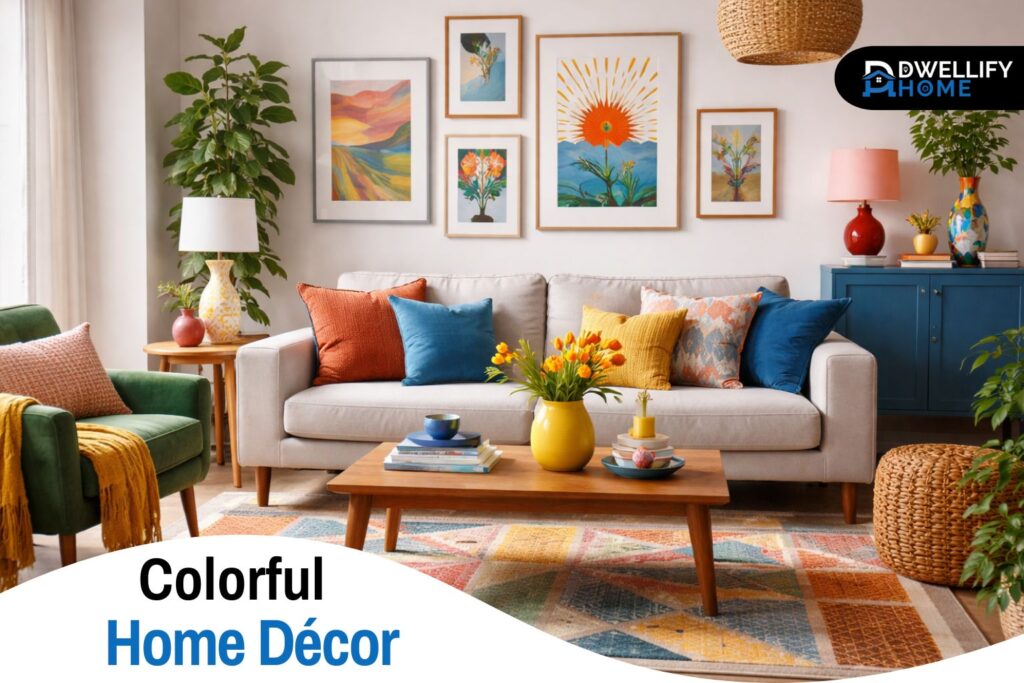
The easiest way to keep a colorful room from feeling messy is to choose one lead color and one or two supporting shades. From there, repeat them in different parts of the room. A common example is a rug with coral, navy, and mustard, followed by navy in a lamp base, coral in cushions, and mustard in artwork or a throw.
It also helps to give bright colors something quieter to sit against. Wood tones, white walls, black accents, linen upholstery, and natural textures all help bold shades feel more settled. This is one of those details beginners often overlook. Color usually looks better when there’s a little visual breathing room around it.
1. Start with a colorful rug
A rug is one of the easiest ways to introduce color because it gives you a ready-made palette. Instead of guessing which shades work together, you can pull two or three colors straight from the pattern and echo them elsewhere in the room. That makes the space feel connected without much effort.
This approach works especially well in living rooms and bedrooms where the floor takes up a large visual area. I’ve seen rooms come together quickly once the rug is chosen first. Without that anchor, people often buy accessories one at a time and end up with pieces that don’t really belong together.
2. Use wall art to introduce color naturally
Wall art is one of the safest ways to add personality because it brings in color without affecting the function of the room. A single oversized piece can set the mood right away, while a gallery wall can introduce several tones in a way that still feels deliberate.
This is also one of the best options for renters or anyone who isn’t ready to paint. A colorful print above a sofa, bed, or console can shift the whole feeling of the room. It’s especially useful in neutral homes where the furniture is already in place and you want a cleaner way to add interest.
3. Add colorful home decor accessories in small doses
Accessories are where a lot of people should start. Pillows, vases, trays, candles, ceramics, and decorative books let you experiment without much risk. You can test stronger shades, move them around, and remove them easily if they don’t work.
The key is not to scatter them randomly. Grouping colorful home decor accessories in small clusters tends to look more intentional than spreading them evenly across every surface. A shelf with blue glass, a brass object, and two stacked books usually looks better than ten unrelated pieces competing for attention.
4. Try peel-and-stick wallpaper or a mural
Wallpaper can do something small accessories can’t. It changes the atmosphere of the room in one move. Peel-and-stick versions make it much easier to try bold color or pattern in places like entryways, powder rooms, kids’ rooms, or behind a bed.
A common mistake here is using a busy wall treatment and then ignoring it when styling the rest of the room. Wallpaper looks better when at least one or two colors from it appear somewhere else, even in a small way. That’s what turns it from a background choice into part of the room’s overall design.
5. Choose one colorful statement furniture piece
One strong furniture piece can carry more impact than a dozen smaller accents. A green velvet chair, a blue painted cabinet, or a rust sofa gives the eye something clear to land on. It also helps stop the room from feeling undecided.
This is a smart move for people who like color but don’t want a fully bold room. Let the statement piece do the work, then keep the surrounding elements simpler. In practice, that balance usually feels more grown-up and easier to live with than trying to make every item interesting on its own.
6. Layer colorful textiles and soft furnishings
Textiles soften color. That matters because a room with only hard, bright surfaces can feel sharp or overly styled. Curtains, throws, bedding, cushions, and upholstered stools help color feel warmer and more comfortable.
Layering also gives you control. You might not want a bright wall in the bedroom, but you may be perfectly happy with a patterned quilt, a deep ochre throw, and a pair of printed pillows. This is one of the easiest ways to create colorful home décor that still feels restful rather than loud.
7. Mix patterns without making the room feel busy
Pattern mixing tends to go wrong when everything is similar in scale. A large floral, a narrow stripe, and a small geometric print often work better together than three medium-sized patterns competing for attention. Varying the scale gives the eye a place to sort things out.
The other rule that helps is keeping a shared color running through the mix. That common thread is what makes patterned textiles feel collected instead of chaotic. In real rooms, this often matters more than matching perfectly. You want connection, not sameness.
8. Bring in color through lighting and decorative details
Lighting is often overlooked in colorful interior design, but it can add more character than people expect. A painted lamp base, a colored glass pendant, or even a patterned lampshade can introduce just enough contrast to wake up a quiet corner.
Decorative details help in the same way. Side tables, tiles, plant pots, and trays don’t need much space to make a difference. These smaller elements are useful when the main furniture is neutral and you want color to feel layered rather than obvious.
9. Style shelves and surfaces with collected colorful objects
Shelves are one of the best places to show personality, but they need editing. A few colorful home decor objects with different heights and textures usually work better than filling every inch. Books, ceramics, baskets, glassware, and plants all add color in a way that feels natural.
Try arranging items by tone instead of by category. For example, warm reds, clay tones, and amber glass tend to sit well together even if the objects themselves are different. That kind of grouping makes styled shelves look thoughtful rather than busy.
10. Match colorful home décor to your decorating style
Color looks different depending on the style of the room. In a modern space, it may show up through one clean-lined chair and a few bold prints. In a bohemian room, it often comes through layered textiles, mixed patterns, and collected accessories. Mid-century spaces usually suit earthy oranges, olive, teal, and mustard particularly well.
This part matters because copying someone else’s palette doesn’t always work in your home. The most successful colorful home decor ideas fit the architecture, furniture shape, and mood of the space. A bright eclectic room and a quiet minimal room can both use color well, but they won’t use it in the same proportions.
How to choose the right colorful home décor for your room
Start with the feeling you want. A kitchen might benefit from lively color, while a bedroom often needs a softer approach. Once you know the mood, choose one anchor item such as a rug, artwork, or fabric and build from there.
Pay attention to the room’s fixed elements too. Flooring, cabinetry, countertops, and natural light all affect how color reads. A shade that looks cheerful in a sunny room can feel flat in a dim one. That’s why it helps to bring samples home and look at them in the actual space before committing.
Colorful home décor ideas for small spaces
Small spaces can handle color well, but they need a bit more discipline. It’s usually better to repeat a smaller palette than to use lots of different accents. A compact room feels stronger when the colors relate clearly to each other.
Use walls, art, textiles, and lighting to do the work instead of filling the room with bulky statement pieces. A small entryway can feel full of life with wallpaper, a painted lamp, and one bold runner. It doesn’t need five decorative stools and a crowded console table.
Paint-free ways to add colorful home décor
Not every home needs a paintbrush. Art prints, throws, cushions, removable wallpaper, lamps, and decorative objects can add just as much personality with less commitment. This works well for renters, but it’s also practical for people who like to refresh a room seasonally.
A paint-free approach is often easier to control because you can build slowly. That tends to lead to better decisions. Instead of choosing a wall color in a rush, you learn which shades you genuinely enjoy living with by testing them through smaller pieces first.
Where to use colorful home décor in each room
Living rooms usually respond well to rugs, cushions, art, and one statement chair. Bedrooms tend to benefit more from layered bedding, curtains, and softer color placement. Kitchens can handle bright bar stools, tile, or small countertop accessories without feeling overdone.
Entryways and bathrooms are good places to be a little braver. Since you don’t spend all day in them, stronger wallpaper, bold paint, or patterned accents can work especially well there. These rooms are often where people can take design risks without getting tired of them.
Common mistakes to avoid with colorful home décor
The biggest mistake is adding colors one by one without a clear palette. That’s how rooms start to feel disconnected. Another common issue is forgetting contrast. Bright pieces need something calmer nearby or they lose their impact.
It’s also easy to rely too much on trends. A room usually lasts longer when the larger choices are grounded and the bolder trends come through smaller items. That way, you can update the look without replacing everything.
Where to shop and how to refresh with the seasons
Whether you shop from colorful home decor stores, local markets, vintage sellers, or online sources like colorful home decor Amazon finds, the same rule applies: buy with a plan. Don’t collect pieces just because they’re attractive on their own. Ask whether they support the room you’re building.
Seasonal updates are easiest when the anchor pieces stay the same. Swap pillow covers, table decor, florals, and lighter throws in warm months, then bring in deeper textiles and richer tones when the weather changes. That keeps the room feeling fresh without turning decorating into a full-time project.
Key Benefits of Colorful Home Décor
- Adds personality and warmth to otherwise neutral rooms
- Makes spaces feel more lively and welcoming
- Allows flexible styling through textiles and accessories
- Helps highlight architectural features or focal points
- Makes small design updates feel noticeable and intentional
FAQs
What is the 3-5-7 rule for decorating?
The 3-5-7 rule suggests arranging decorative objects in odd-numbered groups. Odd numbers feel more natural to the eye and create a balanced, relaxed display on shelves, tables, or mantels.
What decor is trending in 2026?
Current trends lean toward layered color, natural materials, textured textiles, colorful minimalism, vintage accents, and personal objects that make a home feel collected rather than perfectly matched.
What is the 3 color rule in interior design?
The 3 color rule recommends using one dominant color, one secondary color, and one accent color. This structure keeps rooms visually balanced while still allowing personality and contrast.
How do I make my home more colorful?
Start with a colorful rug, artwork, or textiles. Repeat those colors through pillows, lamps, and accessories so the palette feels connected instead of scattered throughout the room.
Can colorful décor still look calm and balanced?
Yes. Color works best when paired with neutral elements such as wood, white walls, or natural fabrics. Repeating a small palette across the room keeps bold shades from feeling chaotic.
Conclusion
Color works best when it feels intentional, not forced. A home doesn’t need every surface to be bold to feel lively. In most cases, the strongest rooms are the ones where color is repeated thoughtfully, balanced with texture and neutrals, and tied to the way the space is actually used.
That’s what makes colorful home décor feel lasting rather than trendy. Start with one good anchor, build the palette slowly, and let each piece earn its place. The room will feel more personal, more welcoming, and much easier to enjoy every day.
Disclaimer
The information provided is for educational and inspirational purposes and may not suit every home or design preference.

I’m Bilal, the founder of Dwellify Home. With 6 years of practical experience in home remodeling, interior design, and décor consulting, I help people transform their spaces with simple, effective, and affordable ideas. I specialize in offering real-world tips, step-by-step guides, and product recommendations that make home improvement easier and more enjoyable. My mission is to empower homeowners and renters to create functional, beautiful spaces—one thoughtful update at a time.